Sign in

You're signed outSign in or to get full access.

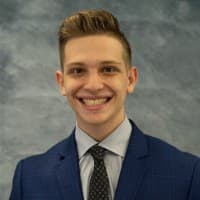
Mitchell Rubin

Mitchell Rubin

Research Analyst at Raymond James Financial Inc.

Tampa, FL, US

Mitchell Rubin is an Equity Research Associate at Raymond James, specializing in financial analysis with a focus on companies within the investment banking sector. In this role, he supports research coverage for firms such as Willis Towers Watson and EverQuote, contributing to the evaluation of operational cash flows and strategic financial performance. Rubin began his current position at Raymond James in September 2024 and holds nearly a year of experience with the firm, drawing on a career that dates back to 2001 as indicated by public employment records. He is known for his strong analytical skills within equity research, and his professional credentials include active engagement in sector and cash flow forecasting, though specific securities licenses and FINRA registrations are not explicitly listed.

Mitchell Rubin's questions to EverQuote (EVER) leadership

Question · Q4 2025

Mitchell Rubin asked if the disciplined approach to carrier spending in Q1 2026, following record Q4 levels, was broad-based or concentrated, and requested more details on the deferred tax benefit recorded in the quarter.

Answer

CEO Jayme Mendal stated that the disciplined spending approach in Q1 is a dynamic observed with multiple carriers, reflecting a strategic pivot towards profitable policy growth and a desire for flexibility throughout the year. He explained that the $38.4 million deferred tax benefit was a non-cash, one-time charge primarily driven by the release of the valuation allowance against deferred tax assets, enabled by EverQuote's sustained profitability.

Ask follow-up questions

Fintool

Fintool can predict EverQuote logo EVER's earnings beat/miss a week before the call

Question · Q3 2025

Mitch Rubin asked for an update on California's progress with carrier participation and the potential impact of a full panel of carriers. He also inquired about further room for improvement in managing non-advertisement costs, or if most incremental leverage would come from technology investments.

Answer

Jayme Mendal (CEO, EverQuote) reported California is steadily ramping, a top three to five state in Q3, with meaningful upside, hoping for a steady-state environment in 2026. Joseph Sanborn (CFO, EverQuote) stated they continuously seek efficiency, with headcount up 10% but operating costs flat year-over-year due to technology investments (e.g., AI, copilots) driving productivity and automation, which will be a primary source of leverage.

Ask follow-up questions

Fintool

Fintool can write a report on EverQuote logo EVER's next earnings in your company's style and formatting

Question · Q2 2025

Mitchell Rubin of Raymond James, on behalf of Greg Peters, asked for color on the revenue trend in the home insurance vertical and inquired about the expected quarterly cadence of the new share repurchase program.

Answer

CFO Joseph Sanborn highlighted the home vertical's strong Q2 performance, with 23% year-over-year growth, attributing it to a more stable underwriting environment. He also explained that the new share repurchase program will be executed opportunistically based on market conditions and does not have a pre-planned quarterly cadence.

Ask follow-up questions

Fintool

Fintool can auto-update your Excel models when EverQuote logo EVER reports

Question · Q4 2024

Mitch Rubin, on behalf of Greg Peters, inquired about the 2025 free cash flow outlook and the impact of the vacated FCC rule on cash operating expenses.

Answer

CFO Joseph Sanborn stated that adjusted EBITDA remains a good proxy for operating cash flow and expects this to continue in 2025. He clarified the FCC rule change does not directly impact cash operating expenses, which are expected to increase modestly in the second half of the year to fund strategic investments while maintaining current EBITDA margin levels.

Ask follow-up questions

Fintool

Fintool can alert you when EverQuote logo EVER beats or misses

Mitchell Rubin's questions to AMERICAN COASTAL INSURANCE (ACIC) leadership

Question · Q4 2025

Mitchell Rubin asked for color on how underwriting margins, catastrophe profiles, and reinsurance structures in the new E&S markets (South Carolina, Texas, nationwide via ACES and AmRisc) differ from American Coastal's existing Florida book.

Answer

President and CEO Bennett Bradford Martz indicated that named windstorm exposure is relatively similar in Texas and South Carolina, though these states might run at a slightly higher combined ratio. He confirmed a focus on the same commercial residential property classes. Martz expressed excitement about the AmRisc partnership, a two-year deal expected to generate roughly $100 million in full-year premiums, with recognition starting in March. Regarding the 32% debt-to-total capital ratio against a 25% target, Martz stated no immediate need to address the debt maturing in late 2027, prioritizing underwriting profit and book value growth to organically reduce the ratio. He anticipates reducing total debt by $50 million-$75 million during refinancing and noted that share repurchases are an option, especially given the stock's perceived undervaluation.

Ask follow-up questions

Fintool

Fintool can predict AMERICAN COASTAL INSURANCE logo ACIC's earnings beat/miss a week before the call

Question · Q4 2025

Mitchell Rubin from Raymond James asked about American Coastal's expansion into South Carolina, Texas, and broader E&S markets via ACES and the AmRisc partnership, specifically inquiring how underwriting margins, catastrophe profiles, and reinsurance structures in these new markets compare to the existing Florida book. He also questioned the company's prioritization of deleveraging, funding ACES, and capital return in 2026, given the current debt-to-total capital ratio of 32% against a long-term target of 25%.

Answer

President and CEO Bennett Bradford Martz stated that new markets like Texas and South Carolina have similar named windstorm exposure to Florida but may run at slightly higher combined ratios, focusing on the same commercial residential property classes. He expressed excitement about the AmRisc partnership, expecting $100 million in full-year premiums. Regarding capital allocation, Martz noted no immediate need to address debt maturing in 2027, prioritizing underwriting profit and book value growth to organically reduce the debt-to-capital ratio. He indicated a likely reduction of $50-$75 million in total debt upon refinancing and mentioned share repurchases as an option given the stock's perceived undervaluation, alongside continued special dividends.

Ask follow-up questions

Fintool

Fintool can write a report on AMERICAN COASTAL INSURANCE logo ACIC's next earnings in your company's style and formatting

Mitchell Rubin's questions to SiriusPoint (SPNT) leadership

Question · Q4 2025

Mitchell Rubin asked about the evolving mix between insurance and reinsurance, which currently stands at roughly two-thirds insurance, and if there is a longer-term target for this balance. He also inquired about the expected cadence of the $100 million share buyback, specifically whether it would be front-loaded, evenly paced, or opportunistic.

Answer

CEO Scott Egan indicated a strategic preference to grow insurance over reinsurance to achieve lower volatility, noting that insurance and services gross written premiums grew 26% in 2025 compared to 3% for reinsurance. He emphasized that reinsurance remains a crucial part of their market approach and MGA partnerships, but no specific long-term target for the mix was provided. CFO James McKinney and CEO Scott Egan stated that the $100 million share buyback would be opportunistic but with a programmed approach, potentially front-loaded given current market valuation, and executed throughout the year to maximize shareholder value.

Ask follow-up questions

Fintool

Fintool can predict SiriusPoint logo SPNT's earnings beat/miss a week before the call

Question · Q4 2025

Mitchell Rubin (Raymond James) inquired about the future evolution of SiriusPoint's business mix, given that roughly two-thirds of premiums now come from insurance and services, and whether there is a longer-term target for the balance between insurance and reinsurance. He also asked about the anticipated cadence of the $100 million share buyback program, specifically if it would be front-loaded, evenly paced, or opportunistic based on valuation.

Answer

CEO Scott Egan reiterated the strategic aim to grow insurance over reinsurance for lower volatility, but stressed the continued importance of reinsurance as a flexible tool for market approach and MGA partnerships. He noted that insurance and services GWP grew 26% in 2025 compared to 3% for reinsurance, indicating the expected trend, but declined to set a specific target due to potential fluctuations. Regarding the share buyback, CFO James McKinney and CEO Scott Egan stated it would be opportunistic but likely play out throughout the year, with potential for some front-loading depending on market price, prioritizing what is best for shareholders.

Ask follow-up questions

Fintool

Fintool can write a report on SiriusPoint logo SPNT's next earnings in your company's style and formatting

Mitchell Rubin's questions to RLI (RLI) leadership

Question · Q4 2025

Mitch Rubin inquired about the underlying loss trend in the transportation portfolio, asking for quantification and the level of rate increases RLI believes will be required in 2026 to maintain rate adequacy. He also asked for additional detail on how technology investments have impacted underwriting performance, specifically submission-to-bind ratios in transactional surety.

Answer

Craig Kliethermes (President and CEO) stated that RLI anticipates continuing to seek double-digit rate increases (10-15%) in auto businesses due to elevated severity trends since COVID, emphasizing that RLI will get smaller if it cannot cover trend. Jen Klobnak (COO) detailed technology investments in three main areas: improving customer experience by simplifying application questions and modernizing systems (e.g., Insurity upgrade for surety bonds), driving efficiencies through AI and automation (e.g., summarizing submissions/claims, updating loss runs), and enhancing the feedback loop between underwriting, claims, and analytics with granular, daily data and dashboards for better decision-making.

Ask follow-up questions

Fintool

Fintool can predict RLI logo RLI's earnings beat/miss a week before the call

Question · Q4 2025

Mitch Rubin asked about the underlying loss trend in the transportation portfolio, the required rate increases for 2026, and how RLI's technology investments have impacted underwriting performance, particularly submission-to-bind ratios in transactional surety.

Answer

Craig Kliethermes (President and CEO) stated RLI anticipates continuing double-digit rate increases (10-15%) in auto businesses due to elevated severity trends since COVID, and will reduce volume if rates don't cover the trend. Jen Klobnak (COO) detailed technology investments in three areas: improving customer experience (simplified applications, modern systems like Surety upgrades), enhancing efficiencies (AI, automation for administrative tasks), and strengthening the feedback loop (data infrastructure, granular dashboards for underwriting and claims decisions).

Ask follow-up questions

Fintool

Fintool can write a report on RLI logo RLI's next earnings in your company's style and formatting

Mitchell Rubin's questions to American Integrity Insurance Group (AII) leadership

Question · Q2 2025

Mitchell Rubin of Raymond James, on behalf of Greg Peters, requested additional details on the favorable reserve development during the quarter. He also asked about the expansion into insuring homes with older roofs and how that strategy impacts the company's view on Probable Maximum Loss (PML).

Answer

President Jon Ritchie clarified that the favorable reserve development was driven by prior accident years, with non-catastrophe losses coming in lower than anticipated. Regarding older roofs, he explained that while they carry a higher PML than new roofs, the premium collected compensates for the increased risk. Founder and CEO Bob Ritchie added that with over 80% of the current portfolio consisting of new roofs, the impact to the overall PML from this expansion will be well-balanced and is priced accordingly.

Ask follow-up questions

Fintool

Fintool can predict American Integrity Insurance Group logo AII's earnings beat/miss a week before the call

Question · Q2 2025

Mitchell Rubin of Raymond James asked for additional details on the quarter's favorable reserve development and how the expansion into insuring homes with older roofs is impacting the company's view on Probable Maximum Losses (PMLs).

Answer

President Jon Ritchie explained that the favorable development stemmed from prior accident years' non-catastrophe losses performing better than anticipated. Regarding older roofs, Jon Ritchie and Founder & CEO Bob Ritchie acknowledged that while older roofs have a higher PML, the premium collected compensates for the risk, and the impact is well-balanced given that over 80% of the current portfolio consists of new roofs.

Ask follow-up questions

Fintool

Fintool can write a report on American Integrity Insurance Group logo AII's next earnings in your company's style and formatting