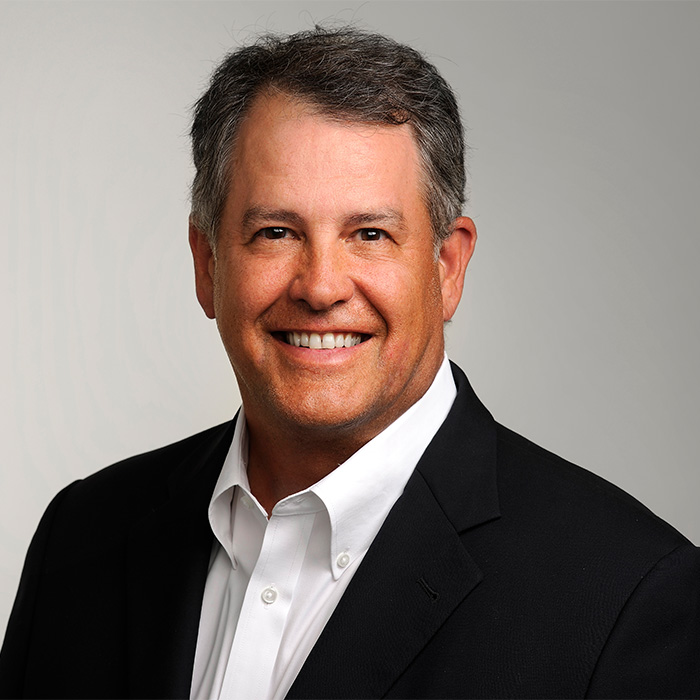
Gayn Erickson
 AEHR TEST SYSTEMS
About Gayn Erickson
Gayn Erickson, age 60, has served as President, Chief Executive Officer and director of Aehr Test Systems since January 2012. He holds a B.S. in Electrical Engineering from Arizona State University and has 35+ years of executive, operations, marketing, sales and R&D program management experience in semiconductor test at Verigy, Agilent and Hewlett-Packard’s Automated Test Group dating back to the late 1980s . Recent pay-versus-performance disclosures show Compensation Actually Paid to the CEO of $2.26M in FY2025 vs. $(0.93)M in FY2024 and $6.95M in FY2023, with net income of $(3.9)M in FY2025, $33.2M in FY2024, and $14.6M in FY2023, and TSR framing of a fixed $100 investment at $114 (FY2025), $137 (FY2024) and $394 (FY2023) based on differing base dates in each table .
Past Roles
| Organization | Role | Years | Strategic Impact |
|---|---|---|---|
| Verigy Ltd. | Corporate officer; SVP & GM, Memory Test business | Feb 2006–Oct 2011 | Led memory test business; senior leadership in semiconductor test |
| Agilent Technologies | VP, Marketing & Sales, Semiconductor Memory Test | Prior to 2006 | Drove commercial strategy for memory test products |
| Hewlett-Packard (Automated Test Group) | Early career in semiconductor test | Late 1980s | Foundation in ATE industry, cross-functional technical experience |
External Roles
| Organization | Role | Years | Notes |
|---|---|---|---|
| None disclosed | — | — | Company filings do not list external public company boards for Erickson |
Fixed Compensation
| Metric | FY 2023 | FY 2024 | FY 2025 |
|---|---|---|---|
| Salary paid ($) | 348,270 | 459,508 | 473,654 |
| Non-equity incentive plan compensation ($) | 266,758 | 127,742 | 245,677 |
| Personal performance bonus paid ($) | 40,000 | 70,000 | 120,000 |
| Company performance cash bonus paid ($) | 151,586 | 0 | 0 |
| Booking commissions paid ($) | 75,172 | 40,642 | 125,677; program discontinued after FY2025 |
| All Other Compensation ($) | 47,760 | 45,317 | 51,872 (incl. $37,922 health/life and $10,178 401(k)) |
Performance Compensation
Cash incentives
| Component | Metric/Design | FY 2023 | FY 2024 | FY 2025 |
|---|---|---|---|---|
| Profit-based cash bonus target ($) | Corporate financial goals | Up to 70% of base; payout approved at 120% of target | Up to 111.8% of base; not earned | 100,000 target; not earned |
| Personal performance bonus target ($) | Individual milestones | 60,000 target; 40,000 paid | 130,000 target; 70,000 paid | 294,000 target; 120,000 paid |
Equity incentives
| Grant date | Type | Metric | Target | Actual/Payout | Vesting |
|---|---|---|---|---|---|
| Oct 27, 2023 | RSU (time-based) | Service | 25,239 | Ongoing | 1/16 every 3 months after grant, 4-year full vest |
| Oct 27, 2023 | RSU (performance) | Cumulative revenue target for certain markets through May 31, 2026 | 30,431 | Not achieved as of FY2024; outstanding into FY2025 | 100% upon achievement; continued service required |
| Jul 11, 2024 | RSU (time-based) | Service | 63,931 | Ongoing | 1/16 every 3 months after grant, 4-year full vest |
| Jul 11, 2024 | RSU (performance) | Cumulative revenue target for certain markets through May 31, 2026 | 77,962 | Not achieved as of May 30, 2025 | 100% upon achievement; continued service required |
| Jul 11, 2024 | RSU (hybrid; perf. + time-based) | FY2025 financial goals (25% perf. tranche) + quarterly vest thereafter (up to 200% max) | 33,818 (200% max possible) | Earned at 200% max for portion: 13,528 earned; 27,054 cancelled | 25% based on FY2025 goals, then 1/16 quarterly for 3 years |
Pay mix: In FY2025, 60.7% of the CEO’s target total direct compensation was “at-risk” (performance-based), vs. 46.2% for other NEOs .
Equity Ownership & Alignment
| Metric | FY 2023 | FY 2024 | FY 2025 |
|---|---|---|---|
| Total beneficial ownership (shares) | 330,482 | 364,082 | 417,102 (incl. 291,088 via Erickson Revocable Trust; 17,050 RSUs vesting within 60 days) |
| % of shares outstanding | 1.1% | 1.2% | 1.4% |
| Shares pledged as collateral | Prohibited by policy | Prohibited by policy | Prohibited by policy |
| Hedging (options/derivatives) | Prohibited by policy | Prohibited by policy | Prohibited by policy |
Outstanding equity at FY2025 year-end:
| Equity category | Count (#) | Market value ($) |
|---|---|---|
| Unvested time-based RSUs | 51,944 | 495,546 (at $9.54) |
| Earned performance RSUs (FY2025 perf. component) | 13,528 | 129,057 |
| Unachieved performance RSUs (2024 grant to FY2026 metric) | 77,962 | 743,757 |
Director and executive ownership guidelines: Directors must maintain ownership equal to at least one year of cash compensation; CEO, as an inside director, does not receive director fees and is not paid for board service .
Employment Terms
| Term | Change in Control (double-trigger within CIC period) | Outside Change in Control |
|---|---|---|
| CIC period | 3 months before to 24 months after CIC for CEO | n/a |
| Salary multiple | 24 months of base salary (lump sum) | 12 months (lump sum) |
| Target annual cash incentive multiple | 200% of target (lump sum) | Prorated target for year of termination |
| Prorated target cash incentive | Yes, for period employed in fiscal year | Yes |
| Equity acceleration | Full acceleration of time-based awards; performance awards deemed achieved at greater of target or expected attainment as of termination | 12 months’ additional vesting on time-based awards; performance awards deemed at target |
| Healthcare | Company-paid COBRA up to 24 months | Company-paid COBRA up to 12 months |
| Death/Disability | Death: same as outside CIC (except healthcare); Disability: outside CIC terms plus company-paid supplemental benefits for 12 months | |
| Clawback | Nasdaq/SEC-compliant policy effective Aug 14, 2023; 3-year lookback on erroneously awarded incentive comp | |
| Restrictions | Insider Trading Policy prohibits short sales, derivatives, hedging, margin purchases, and pledging | |
| Severance conditions | Requires effective release of claims; continued compliance with restrictive covenants; return of company property; arbitration provision |
Board Governance
- Board service: Director since 2012; inside director; not independent under Nasdaq/SEC rules .
- Committees: Audit, Compensation, Corporate Governance & Nominating committees comprise independent directors; Erickson (CEO) is not a member of these committees .
- Board leadership: Roles separated—Rhea J. Posedel is independent Chairman; Erickson is CEO; no lead independent director due to independent chair .
- Attendance: All directors attended 100% of Board and committee meetings in FY2025; FY2024 attendance was at least 75% for all incumbents .
- Director compensation: As an inside director, Erickson receives no compensation for board service ; director retainers/RSU grants apply only to non-employee directors .
Compensation Structure Analysis
- Mix shift to RSUs: Executives received only RSUs in FY2024 and FY2025, indicating a shift away from stock options and toward RSUs .
- At-risk emphasis: 60.7% of CEO’s FY2025 target pay was performance-based, consistent with pay-for-performance .
- Discretionary elements: Compensation Committee retains discretion on annual incentive plans and may modify or adjust payouts .
- Equity plan governance: 2023 Plan prohibits repricing without shareholder approval and subjects all awards to clawback; non-employee director annual cap $750k .
Say-on-Pay & Shareholder Items
- Advisory say-on-pay proposals were on the ballot in 2024 and 2025; results non-binding; Board recommends “FOR” .
- Voting results disclosed via Form 8-K post-meeting; 2025 meeting held Oct 20, 2025 .
Equity Plan Activity & Burn Rate
- As of Aug 28, 2025: ~588,041 options outstanding (WAE $4.55) and 1,127,812 RSUs outstanding; available shares under 2023 Plan ~278,606; Board proposed adding 2,500,000 shares to 2023 Plan .
- Historical burn rates: 1.51% (FY2023), 0.78% (FY2024), 2.14% (FY2025) .
Related Party Transactions
- Policy requires Audit Committee review of related-party transactions; no specific related-party transactions disclosed for Erickson in recent proxies .
Investment Implications
- Significant at-risk, performance-based pay (60.7% in FY2025) aligns CEO incentives to measurable outcomes, but net income variability and TSR resets vs differing base dates highlight sensitivity to multi-year cycles .
- Large outstanding performance RSU block (77,962 units tied to cumulative revenue through FY2026) creates clear revenue-driven incentives and potential future share supply upon vesting; portion of FY2025 performance-based RSUs earned at 200% max underscores aggressive targets and payouts when hit .
- Enhanced double-trigger CIC economics (24 months salary; 200% target cash incentive; full equity acceleration) reduce retention risk but increase potential transaction costs and dilution under a sale scenario .
- Governance mitigants include an independent Chairman, prohibitions on hedging/pledging, and a compliant clawback policy, all supportive of alignment and risk oversight .
- Shift from options to RSUs lowers strike-price risk and may reduce volatility-driven behavior; discontinuation of CEO booking commissions after FY2025 limits short-term booking incentives, potentially reducing near-term selling pressure linked to commission payouts .