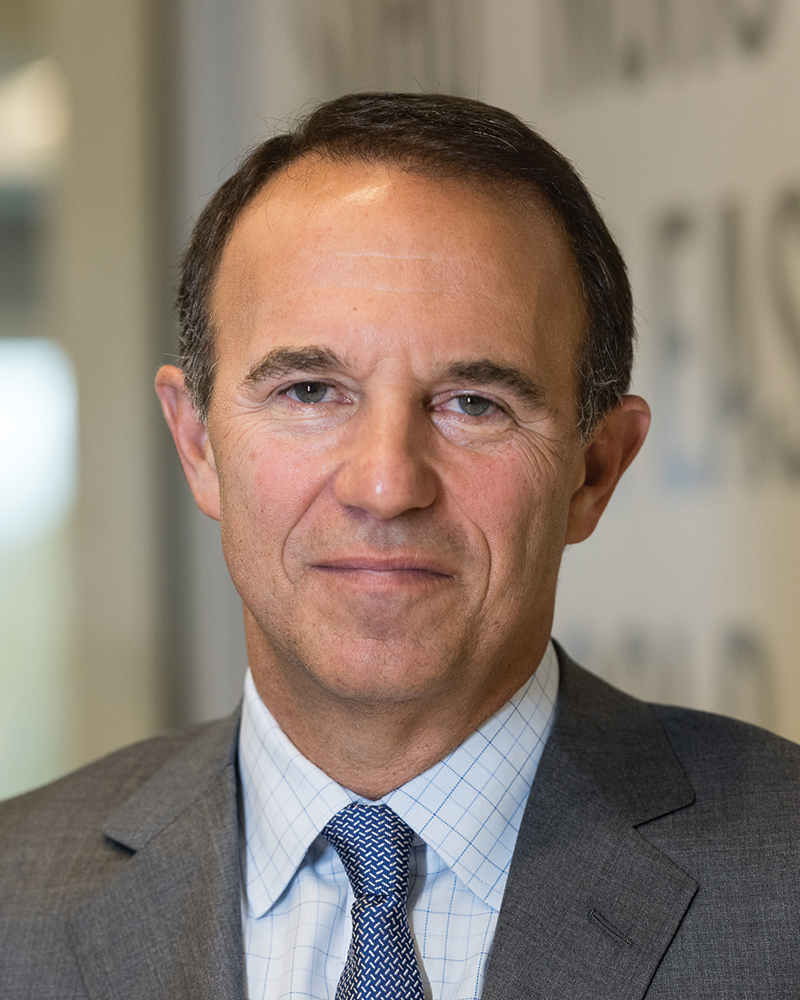
Kenneth F. Bernstein
About Kenneth F. Bernstein
Kenneth F. Bernstein is President and Chief Executive Officer of Acadia Realty Trust (AKR) and a Trustee of the Board; he has served as CEO since January 2001 and as President/Trustee since August 1998. He holds a BA from the University of Vermont and a JD from Boston University School of Law; the 2023 proxy listed his age as 61 at that time, and noted extensive real estate, legal, and leadership credentials including prior COO experience and broad industry governance roles . Pay-versus-performance disclosures show cumulative TSR and FFO-per-share consistency with the Company’s emphasis on relative TSR and FFO measures: 2024 CEO “compensation actually paid” aligned with TSR of 111.88 and FFO per diluted Share/OP Unit of 1.12; 2023 TSR was 75.85 and FFO 1.28 .
Past Roles
| Organization | Role | Years | Strategic impact |
|---|---|---|---|
| Acadia Realty Trust | President and Trustee | Since Aug 1998 | Executive leadership and Board oversight since RDC asset acquisition |
| Acadia Realty Trust | Chief Executive Officer | Since Jan 2001 | Long-tenured CEO guiding Core Street Retail and Investment Management strategy |
| RD Capital, Inc. | Chief Operating Officer | 1990–Aug 1998 | Led day-to-day operations across RDC management companies and affiliates |
| Battle Fowler LLP | Associate (Attorney) | Pre-1990 (not specified) | Real estate legal foundation supporting later executive roles |
External Roles
| Organization | Role | Years | Strategic impact |
|---|---|---|---|
| International Council of Shopping Centers (ICSC) | Board of Trustees; Chairman | Chairman 2017–2018; Board tenure not specified | Sector leadership; shapes retail real estate policy and best practices |
| NAREIT | Co-Chair, Board of Governors (prior) | Not disclosed | REIT industry governance and advocacy |
| Urban Land Institute (ULI); Real Estate Roundtable | Member | Not disclosed | Thought leadership across real estate development and policy |
| YPO-WPO Real Estate Network | Founding Chairman; Board of Advisors | Not disclosed | Executive network building; information flow across leaders |
| Golub Capital | Board of Trustees | Not disclosed | Cross-industry financial insights and capital markets connectivity |
Fixed Compensation
| Metric (USD) | 2021 | 2022 | 2023 | 2024 |
|---|---|---|---|---|
| Base Salary | $700,000 | $850,000 | $850,000 | $850,000 |
| Stock Awards (grant-date fair value) | $3,683,258 | $3,608,086 | $3,359,692 | $3,315,800 |
| Non-Equity Incentive Plan Compensation | $1,253,033 | $1,686,550 | $1,903,182 | $2,059,264 |
| All Other Compensation | $8,988 | $9,438 | $10,188 | $10,638 |
| Total | $5,645,279 | $6,154,074 | $6,123,062 | $6,235,702 |
Key design points:
- CEO salary set near 25th percentile of peer group and remained flat in 2024; base salaries for other NEOs increased ~3% to stay competitive .
- AKR granted no stock options or similar instruments in 2024, emphasizing full-value equity and LTIP units over options .
Performance Compensation
Annual Incentive Structure and 2024 Outcomes (CEO)
| Metric | Weighting | Threshold | Target | Maximum | Actual |
|---|---|---|---|---|---|
| FFO/share (before special items) | 22.5% | $1.11 | $1.14 | $1.17 | $1.16 |
| Core Leasing Activity (value) | 20.0% | $5.0M | $6.0M | $7.0M | $15.8M |
| Net Debt/EBITDA | 10.0% | 6.75x | 6.25x | 5.75x | 5.50x |
| Transactional Activity (value) | 17.5% | $100.0M | $300.0M | $750.0M | $597.3M |
| Strategic Plan Execution (score) | 10.0% | 1.00 | 3.00 | 5.00 | 4.00 |
| Individual (score) | 20.0% | 1.00 | 3.00 | 5.00 | See Below (not quantified) |
| Non-Equity Incentive Paid | — | — | — | — | $2,059,264 |
Note: 2023 individual performance score for CEO was 3.85 (illustrative of methodology; 2024 score not disclosed in the excerpt) . 2023 annual incentives earned for CEO totaled $2,024,845 before elective conversions .
Bonus Exchange Program (deferral into LTIP Units at 20% discounted share price; subject to 5-year vesting for CEO and 2-year post-vest holding)
| Year | Cash Paid | Elective LTIP Units (value) |
|---|---|---|
| 2024 | — | $2,775,105 |
| 2023 | — | $2,531,056 |
Long-Term Incentives (Equity Mix, Vesting, and Performance Metrics)
- Time-based LTIP Units/RSUs: 50% of annual equity award; ratable vesting over 5 years; CEO subject to additional 2-year post-vest holding period .
- Performance-based LTIP Units/RSUs: 50% of annual equity award; 3-year performance period; relative TSR vs Nareit indices and same-property NOI growth; CEO awards vest 60% at period end, remaining 40% ratably over next two years, plus 2-year post-vest hold .
2025 award cycle (granted in 2025; 3-year performance period):
| Metric | Weighting | Threshold (50%) | Target (100%) | Maximum (200%) |
|---|---|---|---|---|
| Relative TSR vs. Nareit Shopping Center Index | 50% | 25th pct | 50th pct | 75th pct |
| Relative TSR vs. Nareit Retail Index | 25% | 25th pct | 50th pct | 75th pct |
| Same-Property NOI Growth | 25% | 2–3% | 3% | 4% |
Status of performance-based awards (as of 12/31/2024):
| Award | Performance Period | Status |
|---|---|---|
| 2018 Award | 1/1/2018–12/31/2020 | 18% of target earned |
| 2019 Award | 1/1/2019–12/31/2021 | 0% earned |
| 2020 Award | 1/1/2020–12/31/2022 | 0% earned |
| 2021 Award | 1/1/2021–12/31/2023 | 63% of target earned |
| 2022 Award | 1/1/2022–12/31/2024 | 155% of target earned (60th pct vs Nareit Shopping Center; 71st pct vs Nareit Retail) |
| 2023/2024 Awards | In progress | Tracking above target |
Vesting realizations (2024):
| CEO | Shares Acquired on Vesting | Value Realized on Vesting |
|---|---|---|
| 2019–2023 grants vesting 1/6/2024 | 204,288 | $3,436,124 (closing price $16.82) |
Equity Ownership & Alignment
| Date (as-of) | Beneficial Ownership (shares) | Percent of Class |
|---|---|---|
| Mar 7, 2023 | 2,002,232 | 2.10% |
| Mar 5, 2024 | 2,218,520 | 2.15% |
| Mar 11, 2025 | 2,547,290 | 2.13% |
Ownership guidelines and alignment:
- CEO ownership guideline: 10x base salary; met as of 12/31/2024; unearned PSUs excluded from calculation .
- Anti-hedging/anti-pledging: Short sales, derivatives, margin accounts, and pledging prohibited; all Trustees/executives in compliance as of the proxy date .
- Option usage: AKR did not grant stock options in 2024 .
Employment Terms
| Provision | Key Terms |
|---|---|
| Agreement term | Amended and restated 3/31/2014; extended CEO position for three years; renewable for successive yearly periods; annual compensation review by Board/Comp Committee |
| Non-compete / non-solicit | 15-month post-termination non-compete and non-poaching under certain termination circumstances |
| Severance (Death/Disability/Without Cause/Good Reason) | Lump sums including: unpaid accrued salary; 3x current salary; 3x average cash value of bonuses for last two years; pro-rated cash bonus at average; reimbursement of expenses; immediate vesting of all incentive awards; 2-year health coverage (except death) |
| Change-of-Control (double-trigger) | If CoC followed by termination Without Cause or for Good Reason within 12 months: same payments as above; no additional CoC benefit |
| Clawback | Policy to recoup erroneously awarded incentive compensation in event of restatement; no recoveries required for 2024 or prior disclosed period; filed as exhibit to 10-K |
Board Governance
- Board composition and independence: Seven of eight Trustees standing for election are independent; Audit, Compensation, and Nominating & Corporate Governance committees are fully independent .
- Leadership structure: Independent Lead Trustee presides over executive sessions; executive sessions of independent Trustees occur at each regularly scheduled Board meeting .
- Committees: Audit Committee members are independent with designated financial experts; committee rosters disclosed (e.g., Denien (Chair)/Thurber/McIntyre/Spitz in 2024) .
- Governance practices: Majority voting with resignation policy; annual election; no poison pill; Board refreshment initiatives; anti-hedging/anti-pledging; annual say-on-pay proposal; ESG oversight via Nominating & Corporate Governance Committee .
Director compensation (for non-employee Trustees; employees receive none):
| Component | 2024 | 2025 |
|---|---|---|
| Annual cash fee | $75,000 | $80,000 |
| Annual equity fee | $100,000 | $120,000 |
| Lead Trustee cash/equity (in lieu of standard) | $175,000 / $100,000 | $125,000 / $150,000 |
| Committee chair fees | Audit $25,000; Others $15,000 | Audit $25,000; Others $20,000 |
| Employees serving as Trustees | No separate compensation |
Dual-role implications:
- Bernstein serves as CEO and Trustee and is not classified independent . A robust Lead Trustee and fully independent key committees mitigate governance concerns typically associated with combined leadership roles .
Performance & Track Record
Selected operating performance and capital allocation commentary:
- 2024: Core same-property NOI growth of 5.9% in Q3; raised dividend; reduced pro-rata Net Debt/EBITDA to 5.6x; significant acquisitions/pipeline with equity funding .
- Q4 2024: Same-property NOI growth of 5.7%; ~$611M of accretive acquisitions; dividend increased; 2025 projected FFO Before Special Items of $1.35 mid-point and 5–6% same-property NOI growth .
- 2025: Continued momentum—Q3 same-property NOI +8.2% (street retail +13%); pro-rata Net Debt/EBITDA reduced to ~5.0x; ~$487M YTD acquisitions with additional equity raised .
- Capital strategy: Emphasis on leverage-neutral acquisitions, OP unit issuance, capital recycling, and accretive growth to earnings, NAV, and above organic growth targets .
Pay-versus-performance (FFO and TSR context):
| Metric | 2021 | 2022 | 2023 | 2024 |
|---|---|---|---|---|
| FFO per diluted Share/OP Unit | 1.26 | 1.02 | 1.28 | 1.12 |
| Cumulative TSR | 88.66 | 61.04 | 75.85 | 111.88 |
Compensation Structure Analysis
- Equity-heavy mix with long vesting and mandatory post-vest holding for CEO signals alignment and reduces near-term selling pressure; options are de-emphasized (none granted in 2024) .
- Annual incentive metrics remain formulaic, anchored 70%+ to financial/operational outcomes (FFO/share, leasing, leverage, transactional activity) and strategic/individual components, supporting pay-for-performance rigor .
- Peer positioning: CEO salary around 25th percentile and flat in 2024; other NEO salaries modestly increased (~3%) with bonus opportunity lifted from 75% to 85% of base to align with peers—suggests more at-risk pay without inflating fixed comp .
Risk Indicators & Red Flags
- Change-of-control economics include triple salary and triple average bonus plus immediate vesting—generous benefits but using a double-trigger; no additional CoC benefit beyond standard package .
- Anti-hedging/anti-pledging policies and ownership guidelines enforced; no pledging permitted and compliance affirmed—reduces alignment risk .
- Clawback policy exists; no restatements requiring recovery during disclosed periods—mitigates risk of pay misalignment .
Equity Ownership & Director Service Notes
- Bernstein’s beneficial ownership rose from ~2.00M shares (2023) to ~2.22M (2024) to ~2.55M (2025), maintaining ~2.1–2.2% of class—demonstrating increasing alignment over time .
- As a management Trustee, he receives no separate director compensation; independent committees and Lead Trustee structure provide oversight balance .
Investment Implications
- Alignment: Substantial equity, long vesting, and post-vest holds plus rising beneficial ownership underpin strong long-term alignment; anti-pledging reduces forced-sale risks .
- Incentive design: Annual and long-term metrics tied to FFO/share, leasing productivity, leverage, relative TSR, and NOI growth should correlate with operational execution and capital allocation decisions; recent awards paid meaningfully when TSR outperformed (2022 cycle paid 155% of target), indicating sensitivity to shareholder outcomes .
- Retention and transition: Evergreen employment with 15-month non-compete and double-trigger CoC terms suggests low near-term departure risk; however, generous severance and immediate vesting upon specified terminations are noteworthy from a governance standpoint .
- Trading signals: The elective conversion of annual cash bonuses into discounted LTIP Units and long holding requirements dampen near-term selling pressure; watch for vesting events and the status of multi-year TSR/NOI awards to gauge potential future realized values .
- Governance: CEO as Trustee balanced by independent Lead Trustee and fully independent key committees; no poison pill; regular executive sessions—overall governance mitigants are in place for dual-role concerns .