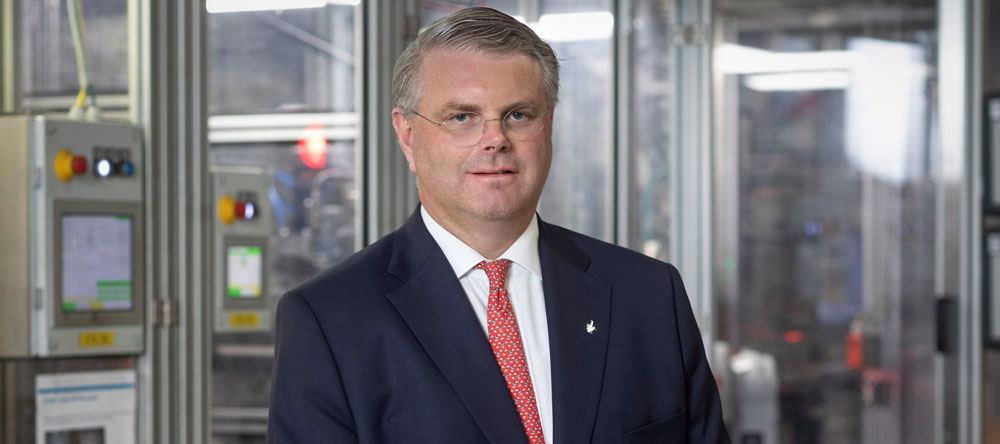
Mikael Bratt
 AUTOLIV
About Mikael Bratt
Mikael Bratt, age 58, has served as Autoliv’s President and CEO since June 29, 2018 and as a director since September 2018; he studied business administration at the University of Gothenburg and previously spent ~30 years at Volvo, including EVP Group Trucks Operations (since 2008) and earlier CFO of the Volvo Group . Performance under his tenure is reflected in strong pay-versus-performance metrics: Adjusted Operating Income rose to $1,007 million in 2024 versus $920 million in 2023, and Net Income reached $648 million in 2024; Autoliv’s cumulative TSR ended 2024 at $125 (value of a fixed $100 investment), after $143 in 2023 .
Past Roles
| Organization | Role | Years | Strategic Impact |
|---|---|---|---|
| Autoliv | President, Passive Safety | May 2016–Jun 2018 | Led core safety segment pre-CEO promotion, continuity into CEO role |
| Volvo Group | EVP, Group Trucks Operations | 2008–2018 | Global operations leadership for trucks; execution, scale, efficiency |
| Volvo Group | Chief Financial Officer | — | Group-level finance leadership; capital allocation, financial discipline |
External Roles
| Organization | Role | Years | Strategic Impact |
|---|---|---|---|
| Gränges AB (public, Sweden) | Director | Current | Metals/industrial adjacency; supply chain insights |
| Höganäs AB (private, Sweden) | Director | Sep 2020–Apr 2023 | Materials technology exposure; industrial network |
Fixed Compensation
Multi-year CEO compensation (USD) from the Summary Compensation Table.
| Metric | 2022 | 2023 | 2024 |
|---|---|---|---|
| Salary | $1,078,210 | $1,183,988 | $1,217,983 |
| Stock Awards (grant-date fair value per FASB 718) | $570,351 | $878,778 | $907,275 |
| Non-Equity Incentive Compensation | $589,540 | $1,073,279 | $1,036,194 |
| All Other Compensation | $502,471 | $539,465 | $562,547 |
| Total Compensation | $2,740,571 | $3,675,510 | $3,723,999 |
Additional program parameters:
- Annual bonus target 60% of base salary (max 120%) for CEO .
- 2024 “All Other” detail includes defined contribution retirement ($534,004), perqs (company car/healthcare $18,030), vacation supplement ($10,513) .
Performance Compensation
Annual Incentive Structure (2024)
Annual non-equity incentive metrics and outcomes (CEO participates in group program).
| Metric | Weight | Target Definition | Actual 2024 | Payout vs Target | Notes |
|---|---|---|---|---|---|
| Adjusted Operating Income | 50% | 70–130% of 2023 AOI, linear scale; 2x cap at ≥130% | $1,007m (109% of 2023 AOI) | Drives 152% overall payout outside Europe | |
| Adjusted Cash Conversion | 50% | 50–90%, linear scale; 2x cap at ≥90% | 85% | Drives 152% overall payout outside Europe |
Annual payout history:
| Year | Payout (% of Target) |
|---|---|
| 2020 | 100% |
| 2021 | 166% |
| 2022 | 94% |
| 2023 | 164% (105% Europe Division) |
| 2024 | 152% (153% Europe Division) |
Long-Term Incentive (PSUs) Structure and Outcomes
CEO LTI is 100% PSUs; regular RSUs and PSUs have minimum three-year vesting; PSUs are granted in three one-year tranches with combined cliff vest ~Q1 three years after grant (e.g., 2024 grant vests Q1 2027). Metrics: EPS (60%), Relative Organic Sales Growth vs LVP (25%), GHG Emissions (15%) .
2022–2024 PSU results (performance certified Feb 2025):
| Tranche | Metric | Weight | Threshold | Target | Max | Actual | Payout |
|---|---|---|---|---|---|---|---|
| 2022 (A) | Adjusted EPS | 60% | $4.0 | $6.0 | $8.0 | $4.4 | 20% |
| Rel. Organic Sales Growth | 25% | 0pp | 4pp | 8pp | 6.6pp | 165% | |
| GHG Emissions (Ktons) | 15% | 451 | 430 | 409 | 430 | 100% | |
| Final Payout | — | — | — | — | — | 68% | |
| 2023 (B) | Adjusted EPS | 60% | $4.0 | $6.0 | $8.0 | $8.19 | 200% |
| Rel. Organic Sales Growth | 25% | 0pp | 4pp | 8pp | 8.8pp | 200% | |
| GHG Emissions (Ktons) | 15% | 410 | 373 | 336 | 358 | 140.5% | |
| Final Payout | — | — | — | — | — | 191% | |
| 2024 (C) | Adjusted EPS | 60% | $6.0 | $8.0 | $10.0 | $8.32 | 116% |
| Rel. Organic Sales Growth | 25% | 0pp | 4pp | 8pp | 1.6pp | 40% | |
| GHG Emissions (Ktons) | 15% | 372 | 338 | 304 | 306 | 194.1% | |
| Final Payout | — | — | — | — | — | 109% |
Vesting:
- 2022 PSUs (A, B, C): Earned based on performance and vest Q1 2025 .
- 2023 PSUs (A, B): Earned; vest Q1 2026; 2023 (C) contingent on 2025 performance .
- 2024 PSUs (A): Earned; vest Q1 2027; 2024 (B, C) contingent on 2025/2026 goals .
Change-in-control treatment: Double-trigger for unvested equity when awards are assumed; single-trigger if not assumed .
Equity Ownership & Alignment
- Beneficial ownership: 23,307 shares (less than 1% of outstanding); company-wide outstanding shares were 77,721,831 as of Feb 28, 2025 . Company policy prohibits hedging, short-selling, and pledging by officers and directors .
- Stock ownership guidelines: CEO required to hold ≥2x annual base salary in company stock; executives must retain 75% of net shares until compliant .
Outstanding equity awards (as of Dec 31, 2024):
| Type | Not Vested (#) | Market/Payout Value ($) | Notes |
|---|---|---|---|
| RSUs/earned PSU tranches (2024 line) | 3,127 | $293,281 | Includes 2024 PSU Tranche A earned; vests Q1 2027 |
| Unearned PSU tranches (2024 B/C, target level) | 5,737 | $538,073 | Performance years 2025/2026; vests Q1 2027 |
| RSUs/earned PSU tranches (2023 line) | 10,171 | $953,938 | Vests Q1 2026 (Tranche A/B) |
| Unearned PSU tranches (2023 C, target level) | 3,390 | $317,948 | 2025 performance; vests Q1 2026 |
| RSUs/earned PSU tranches (2022 line) | 11,520 | $1,080,461 | Earned; vests Q1 2025 |
Options: No stock options have been granted since 2015 and none are outstanding .
Ownership and alignment implications:
- Scheduled vesting in Q1 2025, Q1 2026, Q1 2027 creates potential supply from net-share settlements; pledging/hedging bans reduce misalignment risks .
Employment Terms
Key contractual economics and protections:
- Notice periods: CEO 12 months; others 6 months .
- Non-compete: Up to 12 months; company pays salary differential, capped at 60% of prior gross monthly salary, ceases once cap reached; not payable if retirement .
- Severance: Lump-sum 1.5x base salary upon involuntary termination without cause or resignation for Good Reason, plus salary/benefits during notice .
- Change in control: Double-trigger acceleration when awards are assumed; single-trigger if not assumed .
- Tax gross-ups: No §280G excise tax gross-ups .
- Clawback: Board may recoup beyond mandatory NYSE restatement clawback, including harmful conduct, policy violations, and other misconduct .
Estimated CEO payouts (illustrative, event assumed Dec 31, 2024):
| Scenario | Lump Sum Severance | Notice Period Salary/Bonus | Non-Compete Differential | Benefits During Notice | Equity Vesting | Car | Total |
|---|---|---|---|---|---|---|---|
| Resignation without Good Reason | — | $1,136,178 | $681,707 | $535,984 | $1,080,461 | $16,050 | $3,450,378 |
| Termination without Cause/Good Reason Resign | $1,704,267 | $1,136,178 | — | $535,984 | $1,080,461 | $16,050 | $4,472,938 |
| CIC only (awards assumed) | — | — | — | — | $0 | — | $0 |
| CIC + Qualifying Termination | $1,704,267 | $1,136,178 | — | $535,984 | $3,183,702 | $16,050 | $6,576,179 |
| Death/Retirement | — | — | — | — | $3,183,702 | — | $3,183,702 |
Board Governance
- Director since 2018; not independent (current officer); no committee assignments listed for Bratt .
- Board leadership: Independent, non-CEO Chairman (Jan Carlson); independent directors meet in executive session at least four times per year .
- Attendance: Each director nominee attended ≥80% of applicable meetings in 2024; Board met four times in 2024 .
- Committee architecture: ARC (Audit and Risk), LDCC (Leadership Development and Compensation), NCGC (Nominating and Corporate Governance); all committee members are independent .
Director compensation:
- Employee directors (including CEO-director Bratt) receive no separate board compensation .
Compensation Peer Group and Governance
- Philosophy: Target market median for base and total direct compensation, primarily by country of service, with peer groups and consultant input (Meridian; Towers Watson; Mercer); CEO significantly influences non-CEO packages; LDCC retains independent authority and conducts executive sessions on CEO pay .
- Swedish Peer Group used for Sweden-based executives (Bratt, Westin): AB Volvo, Ericsson, SSAB, Alfa Laval, Sandvik, Stora Enso, Assa Abloy, Scania, Volvo Cars, Atlas Copco, Skanska, Electrolux, SKF .
- U.S. Peer Group (for U.S. executives): Continental, Johnson Controls, Yazaki, Stanley Black & Decker, BorgWarner, Dana, Rockwell Automation, Terex, Timken, Trinity Industries, Parker-Hannifin, Trane Technologies, Dover, Adient, Lear .
- Say-on-pay: Supported by ~97.6% (2022), ~97.1% (2023), ~97.0% (2024); annual frequency adopted .
Performance & Track Record
Select pay-versus-performance metrics:
| Metric | 2020 | 2021 | 2022 | 2023 | 2024 |
|---|---|---|---|---|---|
| Net Income ($mm) | $188 | $437 | $425 | $489 | $648 |
| Adjusted Operating Income ($mm) | $482 | $683 | $598 | $920 | $1,007 |
| Autoliv TSR (value of $100) | $110 | $126 | $96 | $143 | $125 |
Strategic/operational highlights:
- Consistent use of PSUs since 2019; introduction of GHG metric since 2022 to support sustainability targets; minimum 3-year vesting on RSUs/PSUs .
- 2024 investor engagement: management met >600 investors, covering >70% of outstanding shares; feedback influenced sustainability and financing reporting enhancements .
Notable events affecting management continuity:
- CFO Fredrik Westin announced resignation (effective by Jan 1, 2026 after 6-month notice through Dec 31, 2025); replacement search underway .
Risk Indicators & Red Flags
- Equity award governance: Double-trigger CIC acceleration (when assumed); plan prohibits option repricing; no options outstanding; reduces repricing/option overhang risks .
- Pledging/hedging prohibited; strong recoupment policy broader than NYSE minimums .
- Scheduled multi-year vesting creates periodic supply from net-share settlements; monitor Q1 2025, Q1 2026, Q1 2027 vesting windows .
- CFO transition in 2025–2026 period introduces near-term execution risk until successor named .
Equity Ownership & Director Service History
- Beneficial ownership: Bratt 23,307 shares (company total 77,721,831 shares outstanding as of Feb 28, 2025; less than 1%) .
- Directorship: Director since 2018; member of Gränges AB board; former Höganäs AB director (Sep 2020–Apr 2023) .
Expertise & Qualifications
- Education: Business administration, University of Gothenburg .
- Core credentials: Deep automotive operations and finance; led Autoliv Passive Safety; Volvo Group executive management; current external industrial board role .
Compensation Committee Analysis
- LDCC membership: Frédéric Lissalde (Chair), Leif Johansson, Xiaozhi Liu, Martin Lundstedt; all independent; uses Meridian as independent advisor; considers market data and trends; reviews risk .
- Governance controls: Equity grant policy (timing, no backdating), ownership guidelines, recoupment policy, risk assessment .
Director Compensation
- Employee director (CEO Bratt) does not receive separate board compensation .
Investment Implications
- Pay-for-performance alignment: CEO’s LTI is fully performance-based PSUs tied to EPS, relative organic sales growth, and GHG; annual bonus formulas linked to Adjusted Operating Income and Cash Conversion; multi-year payouts demonstrate sensitivity to fundamentals and TSR .
- Retention risk appears mitigated by robust vesting schedules and non-compete economics (salary differential) for executives; double-trigger CIC protects continuity while avoiding windfall single-trigger acceleration when assumed .
- Trading signals: Monitor Q1 vesting seasons (2025–2027) for potential net-share settlement supply; pledging/hedging prohibitions reduce alignment risks; ownership guideline retention requirement further aligns behavior .
- Governance quality: High say-on-pay support, independent LDCC with external consultant, strong clawback, no option repricing, no §280G gross-up; overall shareholder-friendly constructs .
- Execution watchlist: CFO transition underway into 2026; continued delivery on EPS/organic sales growth metrics critical to PSU outcomes and pay-versus-performance optics .