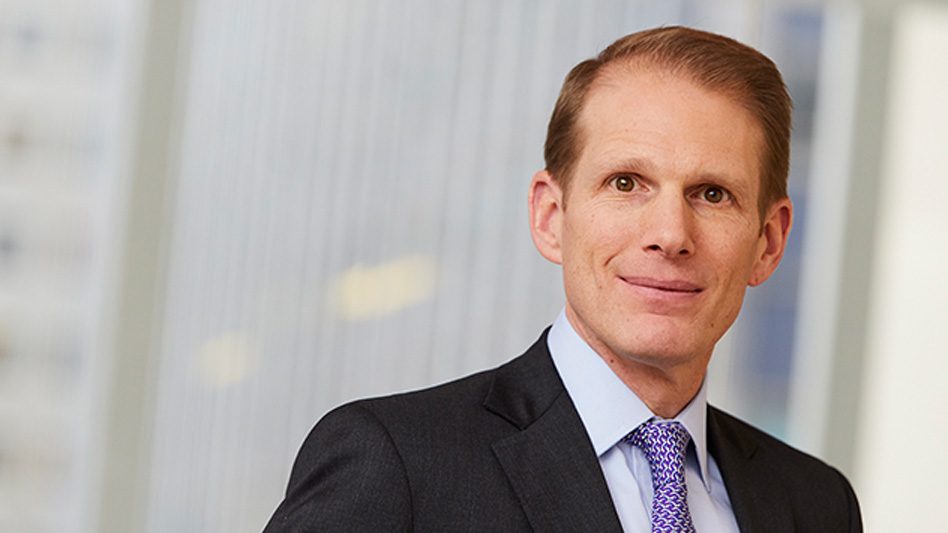
Jason A. Gottlieb
 Artisan Partners Asset Management
About Jason A. Gottlieb
Jason A. Gottlieb, age 55, becomes Chief Executive Officer of Artisan Partners Asset Management Inc. effective June 4, 2025, and is expected to join the Board; he has served as President since January 2021 and previously as Executive Vice President and Chief Operating Officer of investments after joining the firm in October 2016 as Managing Director of investment operations . Prior to Artisan, he was a partner and managing director at Goldman Sachs, leading the Alternative Investment & Manager Selection Group and serving as a portfolio manager on the Goldman Sachs Multi-Manager Alternatives Fund, experience the Board cites in nominating him for director due to his substantial industry background and strategic contributions . Company performance context: APAM delivered 2024 revenue of $1,111.8 million (+14% YoY), average AUM of $160.2 billion (+15% YoY), ending AUM of $161.2 billion (+7.3% YoY), GAAP operating margin of 33.0% and declared $3.48/share in dividends; adjusted operating margin expanded 220 bps in 2024, aligning with compensation metrics emphasizing long-term growth and stability .
Past Roles
| Organization | Role | Years | Strategic Impact |
|---|---|---|---|
| Artisan Partners Asset Management Inc. | President | Jan 2021–Jun 2025 (Transition Date) | Board cites proven leadership and extensive knowledge of and strategic contributions to the business |
| Artisan Partners Asset Management Inc. | Executive Vice President; Chief Operating Officer of investment operations | Feb 2017–Jan 2021 | Led investment operations; experience viewed as qualifying for Board service |
| Artisan Partners Asset Management Inc. | Managing Director, Investment Operations | Oct 2016–Feb 2017 | Joined firm to manage investment operations |
External Roles
| Organization | Role | Years | Strategic Impact |
|---|---|---|---|
| Goldman Sachs | Partner & Managing Director; Leader, Alternative Investment & Manager Selection Group; Portfolio Manager, Multi-Manager Alternatives Fund | Pre-2016 | Deep alternatives leadership and PM experience cited in APAM press release and proxy bio |
Fixed Compensation
| Metric | FY 2022 | FY 2023 | FY 2024 |
|---|---|---|---|
| Base Salary ($) | $300,000 | $300,000 | $300,000 |
| Non-Equity Incentive (Cash Bonus) ($) | $3,058,000 | $3,200,000 | $3,400,000 |
| Stock Awards (grant-date value reported in SCT) ($) | $1,924,716 | $1,413,596 | $1,506,868 |
| All Other Compensation ($) | $53,982 | $56,524 | $63,127 |
| Total Compensation (SCT) ($) | $5,336,698 | $4,970,120 | $5,269,995 |
Performance Compensation
| Component | FY 2022 | FY 2023 | FY 2024 |
|---|---|---|---|
| Equity – Standard Grant ($) | $706,798 | $753,434 | $774,200 |
| Equity – Career Grant ($) | $706,798 | $753,434 | $774,200 |
| Performance-Based Cash Award ($) | $3,058,000 | $3,200,000 | $3,400,000 |
| Total Direct Compensation ($) | $4,771,596 | $5,006,868 | $5,248,400 |
| Performance-Based as % of Total | 94% | 94% | 94% |
PSU Performance Assessment (granted 2021; 3-year period ended 12/31/2023)
| Metric | Weighting | Target | Actual | Payout | Vesting Treatment |
|---|---|---|---|---|---|
| Service condition | Eligibility requirement | Employed through performance period | Met | Contributed to eligibility | 50% of eligible PSUs delivered; 50% remain career-vested |
| Relative Adjusted Operating Margin vs peer median | Not specified | ≥ peer median | Met | Enabled 100% eligibility (not max) | 50% delivered; 50% career-vested |
| Relative TSR vs peer median | Not specified | ≥ peer median | Not met | Max (150%) not achieved | N/A beyond eligibility |
| Peer group (for 2022 PSU cohort) | — | — | — | — | AllianceBernstein, BlackRock, Federated Hermes, Franklin Resources, Invesco, Janus Henderson, Lazard, T. Rowe Price, Victory Capital, Virtus Investment Partners |
Program design avoids fixed weightings and formulaic targets; the Compensation Committee sets maximums tied to adjusted operating income and applies negative discretion, aligning awards with long-term strategic objectives and financial results (AUM, revenue, margin, fee rate, investment performance) .
Equity Ownership & Alignment
| Item | Detail |
|---|---|
| Beneficial ownership – Class A shares | 260,249 Class A shares; less than 1% of Class A outstanding |
| Earned PSUs outstanding (subject to qualified retirement vesting) | 63,588 PSUs |
| Unvested equity – market value at 12/31/2024 | $8,156,554 |
| Ownership guideline | 3x base salary for executive officers; CEO at 8x; Gottlieb at 35x base salary as of 12/31/2024 |
| Hedging/pledging | Hedging prohibited; pledging restricted per insider trading policies |
| Director compensation | Executives do not receive separate director compensation |
Outstanding Equity Awards – Vesting Schedule (as of 12/31/2024)
| Category | Feb 2025 | Feb 2026 | Feb 2027 | Feb 2028 | Feb 2029 | Qualified Retirement |
|---|---|---|---|---|---|---|
| Restricted Stock (#) | 7,631 | 7,631 | 7,631 | 7,631 | 3,592 | 64,781 |
| Performance Share Units (#) | 26,982 | — | — | — | — | 63,588 |
Employment Terms
| Term | Detail |
|---|---|
| Employment status | At-will; no employment agreement; offer letter at commencement |
| Start date at APAM | October 2016 (Managing Director, Investment Operations) |
| Years in current role | President since Jan 2021; CEO effective June 4, 2025 |
| Severance | No formal severance program; may be negotiated case-by-case |
| Change-of-control | Double-trigger: accelerated vesting if terminated without cause or resigns for good reason within 2 years post-CoC |
| Other acceleration | Death/disability accelerate vesting; certain career awards vest after 5 years if terminated without cause and ≥10 years of service |
| Non-compete / non-solicit | 1-year post-employment covenants in equity award agreements (enforcement may be limited by jurisdiction) |
| Clawback | Mandatory recovery policy for erroneously awarded incentive compensation following restatements (no-fault) |
| Tax gross-ups | No “golden parachute” tax gross-ups |
Board Governance
- Board service and independence: Gottlieb is nominated and expected to be elected to the Board concurrent with becoming CEO; as an executive he will be non-independent, with the Board expecting five of seven directors to be independent post-Annual Meeting .
- Leadership structure: CEO and Chair roles separated—Eric Colson will serve as Executive Chair and Chair of the Board; Stephanie DiMarco transitions to Lead Independent Director, enhancing independent oversight; Lead Independent Director presides over executive sessions of independent directors .
- Committees: Audit, Compensation, and Governance & Sustainability Committees are 100% independent; committee memberships are disclosed, with independent chairs and planned transitions post-Annual Meeting; executives do not serve on independent committees .
- Meetings and attendance: In 2024, the Board held 5 meetings; committees held 4–7 meetings; all directors attended at least 75% of applicable meetings; independent directors meet in executive session at each regular Board meeting .
Compensation Committee and Shareholder Feedback
- Committee composition and advisor: Compensation Committee comprised independent directors (Chair: Jeffrey A. Joerres) and retains McLagan as independent consultant; committee report included in proxy .
- Say-on-pay: 2024 advisory vote received approximately 96% approval; targeted engagement with top holders in 2024 yielded no concerns about the program .
Director Compensation (for non-employee directors; executives excluded)
| Component | 2024 Program |
|---|---|
| Cash retainer | $75,000 standard; additional retainers for committee chairs and independent Chair; many directors elected to receive RSUs in lieu of cash |
| Equity | $125,000 RSUs standard; dividend equivalent rights; delivery upon change-in-control or termination of service |
| Note | Executives (e.g., Gottlieb) do not receive Board compensation |
Compensation Structure Analysis
- Mix and vesting design: Executive compensation is primarily performance-based (Gottlieb: 94%); equity awards split between standard five-year pro-rata vesting and “career shares” that vest upon qualified retirement, keeping a substantial portion of equity at risk throughout career .
- Cash vs equity balance: For NEOs, equity comprised roughly 31–37% of performance-based pay in 2024, with the remainder in cash to mitigate liquidity-driven sales of vested shares and fund seed investments in firm strategies .
- Metric framework: Committee avoids formulaic weightings, instead evaluating strategic objectives and key measures (AUM/revenue/sales growth, adjusted operating margin, fee rate, investment performance) over multi-year horizons; maximum awards are set versus adjusted operating income and reduced via negative discretion .
Risk Indicators & Red Flags
- Hedging/pledging: Hedging prohibited; pledging restricted—reduces misalignment risk; no disclosure of any shares pledged by Gottlieb .
- Severance/change-of-control economics: No cash severance program; equity features double-trigger acceleration; limited guaranteed comp; absence of tax gross-ups—shareholder-friendly .
- Governance structure: Separation of CEO and Chair with Lead Independent Director mitigates dual-role concerns and supports oversight of executive performance and pay .
- Retention dynamics: Career vesting and equity at risk across tenure promote retention; non-compete/non-solicit exist but enforcement varies by jurisdiction .
- Program stability: APAM notes potential friction if incentive structures are modified; ongoing monitoring advisable as alternatives expansion and resource allocation evolve .
Investment Implications
- Alignment: High equity ownership (35x salary) and career vesting create strong long-term alignment and reduce near-term selling pressure; hedging prohibited and pledging restricted support shareholder alignment .
- Transition and execution: Succession to CEO with an Executive Chair and Lead Independent Director maintains governance balance; Gottlieb’s alternatives and operational background supports APAM’s strategy to expand degrees of freedom and alternatives while protecting margins and fee integrity .
- Pay-for-performance and capital returns: Discretionary, multi-year metric framework tied to AUM/revenue/margin/investment performance aligns with value creation; 2024 delivered higher revenue, EPS and margin expansion alongside $3.48/share dividends, indicating capacity to sustain dividends while funding talent and growth .
- Watch items: Monitor insider Form 4 activity around equity vesting windows, the evolution of performance conditions for future equity awards, and any structural changes to compensation linked to the CEO transition; continue tracking say-on-pay outcomes and shareholder feedback for signals of investor confidence .