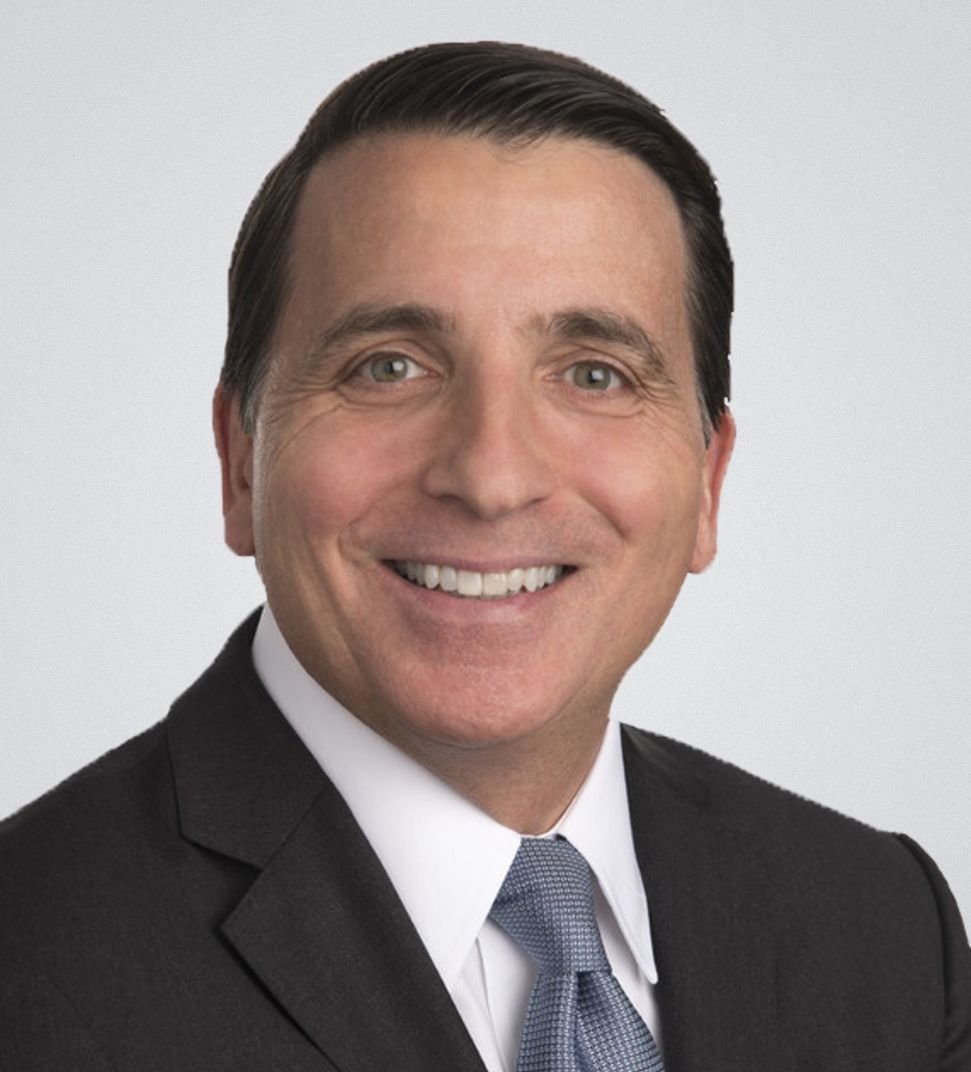
Thomas Appio
About Thomas J. Appio
Thomas J. Appio (age 63) is Chief Executive Officer of Bausch Health Companies Inc. (BHC) and a director since May 2022; he is not independent and currently serves on the Science & Technology Committee. He previously led Bausch + Lomb/International (2018–2021), was EVP Company Group Chairman, International (2016–2018), held multiple leadership roles at Bausch + Lomb pre‑acquisition, and spent 23 years at Schering‑Plough. He holds a B.S. in Accounting from Arizona State University (W. P. Carey) . Under Appio, BHC reported 10% revenue growth in 2024 (to $9.625B), positive AIP outperformance (120% payout for NEOs), and stronger adjusted EBITDA and operating cash generation versus 2023 .
Company performance under current tenure (consolidated):
| Metric | FY 2023 | FY 2024 |
|---|---|---|
| GAAP Revenues | $8,757M | $9,625M |
| GAAP Net Income (Loss) attributable to BHC | $(592)M | $(46)M |
| Adjusted EBITDA (non‑GAAP) | $3,014M | $3,307M |
| GAAP Cash from Operations | $1,032M | $1,597M |
Past Roles
| Organization | Role | Years | Strategic impact |
|---|---|---|---|
| Bausch Health | Chief Executive Officer; Director (non‑independent) | May 2022–Present | Led portfolio execution; 2024 NEO AIP at 120% vs target on improved Adj. EBITDA/Revenue; strengthened cash flow |
| Bausch Health | EVP, Company Group Chairman, International | Aug 2016–Jul 2018 | Led international footprint and operations |
| Bausch + Lomb (pre‑acquisition) | VP North Asia/Japan; Managing Director Greater China & Japan | Pre‑2013 | Built/expanded Asia ophthalmology presence |
| Schering‑Plough | Multiple leadership/operations roles | ~23 years | Broad global pharma operating experience |
| Bausch Health | President & Co‑Head, Bausch + Lomb/International | Aug 2018–Oct 2021 | Drove eye‑health business globally |
External Roles
- No other public company directorships disclosed in BHC’s proxy biography for Appio .
Board Governance
- Board service: Director since 2022; 2024 Board attendance 9/9 (100%). Committee: Science & Technology (S&T) . In 2023 he attended Board 8/8 (100%) and S&T 3/3 (100%) .
- Independence and dual‑role: Appio is not independent due to his CEO role and is ineligible for Audit & Risk, Talent & Compensation, and Nominating & Corporate Governance committees. BHC separates Chair and CEO; John A. Paulson is Non‑Executive Chair, and independent directors hold regular executive sessions—mitigating CEO/director dual‑role concerns .
Fixed Compensation
| Component | 2023 | 2024 | 2025 |
|---|---|---|---|
| Base Salary | $1,200,000 (approved for 2023) | $1,236,000 (3% increase) | $1,236,000 (unchanged for 2025) |
| Target Annual Bonus (% of salary) | 125% | 125% | 150% (raised in Feb‑2025) |
| Actual Annual Bonus | $1,545,000 (103% of target) | $1,854,000 (120% of target) | — |
Notes: CEO’s compensation is majority variable (92% at target in 2023; 91% in 2024), emphasizing pay‑for‑performance .
Performance Compensation
Annual Incentive Plan (AIP) – Design and Results
AIP design emphasizes companywide financials (75% weight: Adjusted EBITDA 60%, Revenue 40%) and strategic priorities (25%), with 0–200% payout curve .
2023 AIP (company-level)
| Metric | Weight | Threshold | Target | Stretch | Actual | Achieved | Payout |
|---|---|---|---|---|---|---|---|
| Adjusted EBITDA (non‑GAAP) | 60% | $2,139M | $2,377M | $2,852M | $2,367M | 99.6% | 98.0% |
| Revenue | 40% | $4,154M | $4,615M | $5,538M | $4,579M | 99.2% | 96.1% |
| Combined Financial Payout | — | — | — | — | — | — | 97.2% |
| Strategic Priorities | 25% | — | — | — | — | — | 119% |
| CEO Total AIP Payout | — | — | — | — | — | — | 103% (bonus $1.545M) |
Adjustments for 2023 accounted for FX, LOE timing, and a third‑party product recall; see table in proxy. These increased combined payout by 2.0% .
2024 AIP (company-level, excluding B+L)
| Metric | Weight | Below Threshold | Threshold | Target | Stretch | Adjusted Actual | Achieved | Payout |
|---|---|---|---|---|---|---|---|---|
| Adjusted EBITDA (non‑GAAP) | 60% | < $2,216M | $2,216M | $2,462M | $2,954M | $2,616M | 106.3% | 131.4% |
| Revenue | 40% | < $4,391M | $4,391M | $4,879M | $5,855M | $4,908M | 100.6% | 103.0% |
| Combined Financial Payout | — | — | — | — | — | — | — | 120.0% |
| Strategic Priorities | 25% | — | — | — | — | — | — | 120% |
| CEO Total AIP Payout | — | — | — | — | — | — | — | 120% (bonus $1.854M) |
AIP adjustments for 2024 addressed FX and unplanned product discontinuations due to rebate changes; they raised the financial metrics payout by 11% .
Long‑Term Incentives (LTI)
- Mix and quantum: In 2023 and 2024, CEO awards granted 60% PSUs and 40% time‑based RSUs; Appio’s approved values: $11.0M (2023) and $11.0M (2024) .
- PSU metrics: 3‑year Adjusted Operating Cash Flow (AOCF) with a Relative TSR modifier vs Russell 1000 Pharma & Biotech + NYSE ARCA Pharma Index; payout 0–200% with ±25% TSR modifier band (25th–75th percentile) .
- Vesting: RSUs vest in equal tranches on each of the first three anniversaries; stock options (for non‑CEO NEO mix) vest in equal tranches over three years and are exercisable for 10 years .
2023 PSU performance grid (AOCF, 2023–2025):
| Performance vs Plan | Below Threshold | Threshold | Target | Stretch |
|---|---|---|---|---|
| AOCF (non‑GAAP) | <$585M | $585M | $650M | $715M |
| Payout | 0% | 50% | 100% | 200% |
| TSR Modifier | ≤25th: −25%; 50th: 100%; ≥75th: +25% |
2024 PSU performance grid (AOCF, 2024–2026):
| Performance vs Plan | Below Threshold | Threshold | Target | Stretch |
|---|---|---|---|---|
| AOCF (ex‑B+L) | <$734M | $734M | $815M | $897M |
| Payout | 0% | 50% | 100% | 200% |
| TSR Modifier | ≤25th: −25%; 50th: 100%; ≥75th: +25% |
Equity Ownership & Alignment
Ownership and equity interests:
| Item | As of Mar 15, 2024 | As of Mar 14, 2025 |
|---|---|---|
| Common shares held | 420,274 shares ($3,866,521) | 627,220 shares ($4,484,623) |
| RSUs | 949,082 unvested | 1,156,029 unvested |
| Stock options | 852,455 total; 664,011 vested / 188,444 unvested | 852,455 vested |
| Beneficial ownership (SEC definition) | 1,084,285; <1% of class | 1,479,675; <1% of class |
| Shares pledged | None (policy prohibits pledging; none pledged) | |
| Ownership guideline | 6x base salary for CEO; hold 50% net shares until met | 6x base salary; hold‑until‑met |
| Compliance with guideline | CEO in compliance | CEO in compliance |
Vesting and potential selling pressure:
- RSUs/Options generally vest ratably over three years; PSUs vest at end of 3‑year performance period, aligning retention and performance. Anti‑hedging/anti‑pledging policies and 50% hold‑until‑met requirement reduce near‑term selling pressure despite regular vesting cadence .
Employment Terms
- Agreement and term: Initial 3‑year CEO term commenced Sept 1, 2021; auto‑renews for successive one‑year periods .
- Salary/bonus terms: Initial CEO base $1,000,000 and initial target bonus 120% (later raised to 125% for AIP design; and to 150% for 2025 target). Maximum annual bonus 200% of target .
- Equity: Initial CEO promotion grant $5,000,000 (50% PSUs/50% RSUs); ongoing LTI at Compensation Committee discretion .
- Separation bonus (B+L): Performance‑based separation bonus remaining unvested amounts: $250,000; first 50% paid in Oct 2021 upon internal readiness milestone .
- Severance: CEO cash severance equal to 2x base salary + target bonus on qualifying termination; NEOs generally 1.5x, or 2x upon change‑in‑control termination. Equity vests on double‑trigger (no single‑trigger acceleration) .
- Clawbacks: Dodd‑Frank Rule 10D‑1 recoupment for restatements and separate misconduct clawback for detrimental conduct or restatements tied to misconduct (applies to cash and equity) .
- Anti‑hedging/anti‑pledging: Prohibited for officers and directors .
- Restrictive covenants: Non‑compete and non‑solicit during employment and for two years post‑termination .
- Tax gross‑ups/SERP: No 280G gross‑ups; no supplemental executive retirement plan .
Compensation Structure Analysis
- Increased at‑risk mix and performance rigor: Reintroduced PSUs in 2023 with 3‑year AOCF and relative TSR; CEO LTI kept at 60% PSUs, 40% RSUs, reinforcing long‑term alignment .
- Moderate fixed pay growth vs higher performance payouts: CEO salary rose 3% in 2024 to $1.236M while 2024 AIP paid at 120% on above‑target performance (Adjusted EBITDA and Revenue excluding B+L) .
- Shareholder support: Say‑on‑pay approval improved from ~92% (2023) to ~97% (2024), indicating investor approval of structure and outcomes .
- Risk/Shareholder protections: Double‑trigger equity vesting, no repricing, no hedging/pledging, robust clawbacks, and no excise tax gross‑ups .
Director Compensation and Roles (as a Director)
- Committee role: Science & Technology Committee member; not independent. Attendance was 100% at Board (2023: 8/8; 2024: 9/9) and S&T (2023: 3/3) .
- Independence and leadership separation: Non‑executive Chair (Paulson) and executive sessions of independent directors address CEO/director dual‑role governance concerns .
- As an employee‑director, Appio is not eligible for non‑employee director compensation .
Say‑on‑Pay, Peer Group, and Committee Practices
- Say‑on‑pay approvals: 2023 ~92%; 2024 ~97%, reflecting strong investor support .
- Peer groups: Committee references median market data; updated peer set over time (e.g., 2023 added Catalent, Hologic; 2024 removed Horizon, added Steris). Committee uses Pay Governance as independent advisor; no conflicts .
Risk Indicators & Red Flags
- Positive indicators: High say‑on‑pay support; double‑trigger equity; robust clawbacks; anti‑hedge/pledge; no repricing; no gross‑ups; no SERP .
- Potential pressure points: Regular RSU/PSU vesting over multi‑year cycles; however, 50% hold‑until‑guideline mitigates selling pressure. Beneficial ownership is <1% of outstanding shares (limited direct ownership percentage), but CEO meets 6x salary ownership guideline and holds significant unvested equity at risk .
Investment Implications
- Alignment and incentives: High at‑risk mix (PSUs with AOCF and relative TSR, plus 50% hold‑until‑met) tie Appio’s realized pay to deleveraging/CF generation and relative returns, aligning with BHC’s stated priorities (debt reduction, cash flow, operating focus) .
- Execution checks: 2024 AIP outperformance and improved financials support management credibility; 2025 higher CEO bonus target (150%) heightens emphasis on delivery. Watch PSU outcomes (2023–2025, 2024–2026) for realized pay trajectory and signal of multi‑year execution .
- Governance quality: Separation of Chair/CEO, strong committee independence, and robust recoupment and anti‑hedge/pledge policies lower governance risk; high say‑on‑pay approvals reduce headline risk .
- Trading signals: Upcoming vesting events can create episodic flow, but hold‑until‑met policy and no pledging dampen forced‑sale risk. Monitoring Form 4s around vest dates and AOCF/TSR PSU windows remains prudent; none are disclosed in the proxy, and proxies show no pledged shares .