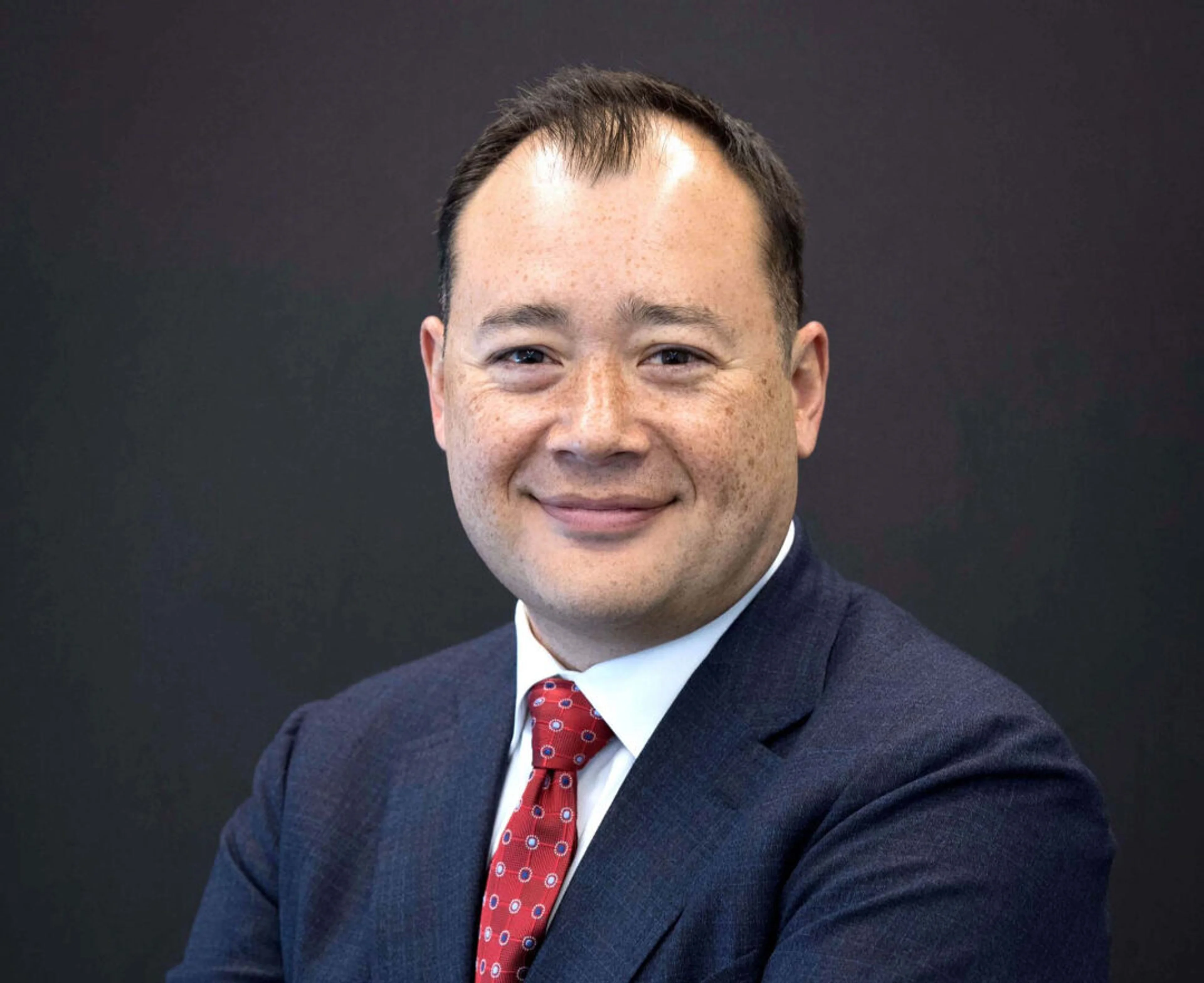
Christopher P. Kalnin
About Christopher P. Kalnin
Christopher P. Kalnin, 47, is BKV’s founder (2015), Chief Executive Officer since May 2020, and a Class I director since 2020; he holds an HBA in Finance from the University of Western Ontario and an MBA from Northwestern University’s Kellogg School of Management . BKV’s 2024 annual bonus program paid at a 1.18 company multiplier on KPI performance, and his PRSU program measures absolute TSR, relative TSR, and average annual ROCE over the 2024–2026 period, indicating explicit linkage of pay to shareholder value and returns . BKV is a controlled company (BNAC ~75.41% ownership), with separate Chair and CEO roles; the board designates a Lead Independent Director among independents, reflecting some mitigation of dual-role concerns despite reduced independence typical of controlled structures .
Past Roles
| Organization | Role | Years | Strategic Impact |
|---|---|---|---|
| BKV Corporation | Chief Executive Officer; Director (Class I) | CEO since May 2020; Director since 2020 | Led formation and growth; CEO accountable for ESG/EHSR oversight at exec level . |
| Kalnin Ventures (fund manager of BKV O&G/owned by Banpu) | Managing Director; Group CEO | MD: Jun 2014–May 2020; Group CEO: Jan 2019–May 2020 | Built upstream platform later integrated into BKV; value creation for Banpu . |
| Level 3 Communications | VP Strategic Business Operations & Planning; Senior Director | VP: Jan 2014–Jun 2014; SD: Feb 2012–Dec 2013 | Strategic ops planning for global telecom provider . |
| PTT Exploration (PTTEP) | Strategy Advisor & Chief of Staff to CEO | Jan 2010–Jul 2011 | Strategy support for E&P leader in Thailand . |
| McKinsey & Company | Engagement Manager | Oct 2005–Jan 2010 | Strategy/operations advisory across sectors . |
| Credit Suisse First Boston | Senior Analyst | Jul 2000–Jul 2003 | Investment banking analytic foundation . |
External Roles
| Organization | Role | Years | Notes |
|---|---|---|---|
| Banpu (SET: BANPU) | Member, Executive Committee | Appointed Sep 2023 | Authority to manage Banpu’s North America businesses . |
| BKV-BPP Power JV | Board member (appointed by BKV) | Since 2021 | JV board of 10; five appointed by BKV including Kalnin . |
| BKV Corporation | Director (Class I) | Since 2020 | Other public boards: None . |
Fixed Compensation
| Metric | 2023 | 2024 |
|---|---|---|
| Base Salary ($) | 692,692 | 700,000 |
| Target Bonus (% of salary) | 120% | 120% |
| Actual Annual Bonus Paid ($) | 772,800 | 991,200 |
CEO Employment Agreement (Key Terms)
- Base salary set at $700,000 in 2023 and 2024, with annual review .
- Target annual cash bonus: 120% of base salary (performance‑based; may pay above/below target) .
- Non‑compete and non‑solicit covenants: 18 months post‑termination; confidentiality and IP covenants apply .
- Severance if terminated without cause or for good reason: lump sum equal to 200% of (base salary + target bonus) plus up to 18 months COBRA premium reimbursement, subject to release and covenant compliance .
Performance Compensation
Annual Bonus Design and 2024 Outcomes (Company KPI Scorecard)
| Category | Weight | Target | Actual Achievement | Company Multiplier Contribution |
|---|---|---|---|---|
| “Lagging” (Shareholder value: Adj. EBITDAX, FCF, adj. net income, breakeven unit costs, corporate refinancing) | 50% | 100% | 88% | 0.44 |
| “Leading” (Ops/strategy: production, YE reserves, capex delivery, people & culture) | 25% | 100% | 183% | 0.46 |
| ESG/EHSR and CCUS delivery | 25% | 100% | 110% | 0.28 |
| Total | 100% | 100% | — | 1.18 |
- CEO individual multiplier aligned to company KPI Scorecard: 1.18 for 2024 (0.92 for 2023), as approved by the Board .
- 2024 bonus paid to CEO: $991,200 (based on program above) .
Long-Term Incentives (Grants and Metrics)
| Award | Grant Date | Granted (Target) | Vesting/Performance | Notes |
|---|---|---|---|---|
| 2024 TRSUs | Sep 27, 2024 | 77,777 | ~1/3 vested Jan 1, 2025; remainder in two substantially equal tranches on Jan 1, 2026 and Jan 1, 2027, subject to service | Time-based retention. |
| 2024 PRSUs | Sep 27, 2024 | 116,666 | Performance period: Jan 1, 2024–Dec 31, 2026; vests based on annualized TSR, relative annualized TSR, and average annual ROCE | Max payout 233,332 shares . |
Outstanding Equity at FY-End 2024 (CEO)
| Award | Unvested Units (#) | Market/Payout Value ($) |
|---|---|---|
| PRSUs (target) | 116,666 | 2,774,317 |
| TRSUs (time-based) | 51,852 | 1,233,041 |
Change-in-Control and Termination Treatment (Select 2024 Awards)
- CEO 2024 PRSUs/TRSUs: Death/Disability → Full vest at target (PRSUs) / Full vest (TRSUs); Termination without cause or good reason → PRSUs: full vest at target if prior to final six months, or remain outstanding for actual performance in final six months; TRSUs: full vest; CIC with assumption → PRSUs measured at greater of target or actual‑to‑date and remain service‑based; unassumed awards vest at greater of target or actual‑to‑date (PRSUs) and TRSUs vest .
Equity Ownership & Alignment
| Holder | Shares Beneficially Owned | % of Outstanding | Notes |
|---|---|---|---|
| Christopher P. Kalnin | 2,300,318 [includes 875,754 held by spouse] | 2.72% | No pledging; hedging/pledging prohibited by policy . |
| Shares Outstanding (Record Date 4/21/2025) | 84,708,373 | — | Record date for proxy voting . |
Stock ownership/retention policies:
- CEO ownership guideline: 5x base salary; compliance transition period: 3 years; as of 12/31/2024, all NEOs in compliance with transition guidance .
- Post‑IPO sale restrictions: for 3 years and 6 months from IPO (Sep 27, 2024), NEOs may not sell more than 25% of their shares in any 12‑month period (net of tax/withholdings), reducing near‑term selling pressure .
- Hedging and pledging by executives and directors are prohibited .
Vesting calendar and potential flow:
- TRSUs: tranches on Jan 1, 2026 and Jan 1, 2027 (subject to service), creating predictable but staggered vesting; PRSUs eligible to vest based on 2024–2026 performance post‑period, aligning payouts to TSR/ROCE outcomes .
Employment Terms
- CEO Employment Agreement effective Aug 4, 2020; salary set at $700,000 in 2023/2024; target bonus 120% of salary .
- Separation: If terminated without cause or for good reason, lump sum equal to 200% of (salary + target bonus) plus up to 18 months COBRA premium reimbursement, subject to release/covenant compliance; 18‑month non‑compete/non‑solicit .
- Equity treatment as summarized in Performance Compensation (termination and CIC provisions) .
Board Governance
- Board service: Class I Director since 2020; no standing committee assignments .
- Board structure: Separate Chair (C. Vongkusolkit) and CEO; as Chair is not independent, independents annually appoint a Lead Independent Director; 2024 board met 12 times; committee meetings 19; board/committee attendance rates (overall) 92%/97% .
- Independence: Four of twelve directors are NYSE‑independent (Davis, Miller, Patel, Mashinski); as a controlled company, BKV does not require a majority‑independent board nor fully independent comp/nom-gov committees; Audit & Risks must be fully independent within one year of listing .
- BNAC control: BNAC held ~75.41% as of 4/21/2025; Stockholders’ Agreement gives BNAC board designation rights, chair designation while ≥25%, and requires CEO to be included on the Board, underscoring dual-role implications and sponsor influence .
Related Party and Structure Considerations
- BNAC (Banpu affiliate) owns ~75.41% and holds registration rights and board designation rights; BKV will continue relying on controlled-company exemptions while control persists .
- BKV-BPP Power JV: jointly controlled 50/50 with Banpu Power US; Kalnin is among five BKV appointees; historical intercompany loans to the JV from BNAC/BPPUS at SOFR+4.6% (Temple I facility), non‑recourse to BKV .
- Clawback policy: Dodd‑Frank compliant clawback adopted, effective at IPO (Sep 27, 2024) and applies to incentive comp for 3 fiscal years preceding a restatement .
Investment Implications
- Alignment and retention: CEO’s large beneficial stake (2.30M shares, 2.72%) plus sale caps (≤25% per 12 months for 3.5 years) and 5x salary ownership guideline reduce near‑term selling pressure and reinforce alignment with long‑term TSR/ROCE outcomes .
- Pay-for-performance: 2024 cash bonus paid at a 1.18 company multiplier and PRSUs tied to absolute/relative TSR and ROCE (2024–2026), increasing sensitivity to shareholder returns and capital efficiency vs. peers .
- Downside protection/turnover risk: CEO severance of 2x (salary+target bonus) is moderate by energy large-cap norms; 18‑month non‑compete mitigates competitive leakage but could also limit external mobility (recruited attrition risk) .
- Governance overhang: Controlled-company status and BNAC rights (including CEO board inclusion) constrain board independence; compensation committee includes a non‑independent chair, though WTW serves as independent advisor and was found conflict‑free, partly mitigating governance risk .
- Calendar watch (trading/vesting): TRSU vesting dates (Jan 1, 2026; Jan 1, 2027) and PRSU performance resolution post‑2026 are potential liquidity windows, though sale caps and anti‑hedging policies temper immediate selling pressure signals .
Director Service Snapshot (for dual-role context)
- Board service history: Director since 2020 (Class I); committees: none; independence: not independent (executive) .
- Governance features: Separate Chair and CEO; Lead Independent Director among independents; controlled company with BNAC designation rights and CEO inclusion requirement under Stockholders’ Agreement .
Multi‑Year Compensation Summary (CEO)
| Component | 2023 | 2024 |
|---|---|---|
| Salary ($) | 692,692 | 700,000 |
| Stock Awards ($, grant date fair value) | – | 2,800,700 |
| Non‑Equity Incentive Plan Compensation ($) | 772,800 | 991,200 |
| All Other Compensation ($) | 19,860 | 27,060 |
| Total ($) | 1,485,352 | 4,518,960 |
Ownership and Outstanding Awards (CEO)
| Metric | Value |
|---|---|
| Beneficial Ownership (Shares; % of Outstanding) | 2,300,318; 2.72% |
| Unvested TRSUs at 12/31/2024 | 51,852 |
| Unvested PRSUs at 12/31/2024 (Target) | 116,666 |
| Ownership Guideline | 5x base salary (within 3 years; NEOs in compliance with transition guidance) |
| Hedging/Pledging | Prohibited |
| Sale Restrictions (Post‑IPO) | ≤25% of shares sellable per 12 months for 3.5 years from 9/27/2024 (net of tax/withholdings) |
Investment Takeaways for Analysts and PMs
- High insider alignment with structured sale caps and explicit TSR/ROCE performance metrics supports medium‑term value orientation and reduces near‑term overhang from insider selling .
- 2024 bonus outcome (1.18x) signals operational/strategy outperformance offsetting below‑target “lagging” metrics, useful for assessing momentum vs. KPI design and bonus leverage into 2025 .
- Governance risk is non‑trivial under controlled‑company status and sponsor rights; however, separated Chair/CEO, Lead Independent Director framework, clawback policy, and independent comp advisor provide partial safeguards investors should monitor for efficacy .
- Vesting windows (TRSUs in early 2026/2027; PRSUs after 2026) define potential liquidity events, but anti‑hedging/pledging and sale caps meaningfully constrain any abrupt supply, tempering trading signal strength .