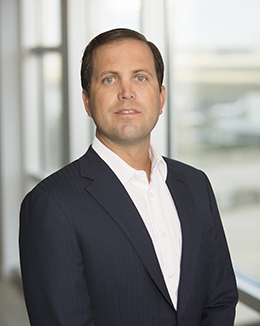
Trevor Baldwin
About Trevor Baldwin
Trevor Baldwin, age 39, is Chief Executive Officer (since May 2019) and a non‑independent director (since September 2019) of The Baldwin Group (BWIN). He holds a BA in Risk Management & Insurance from Florida State University and previously worked in private equity at HealthEdge Investment Partners . Under his leadership, Baldwin grew revenues to $1.4B in 2024 with 17% organic growth, expanded adjusted EBITDA by 25% with a 200 bps margin increase, and nearly doubled adjusted free cash flow (+97%); cumulative TSR from 12/31/2019 to 12/31/2024 reached 241.5 (starting at $100), reflecting solid value creation amid deleveraging and operating execution .
Past Roles
| Organization | Role | Years | Strategic impact |
|---|---|---|---|
| The Baldwin Group | Chief Executive Officer | May 2019–present | Leads firm-wide strategy, operations, finance, HR; drives growth, margin, FCF, integration, deleveraging . |
| The Baldwin Group | President & Chief Operating Officer | Pre‑2019 | Scaled operations; led Commercial Risk Management Group; foundation for later national platform . |
| The Baldwin Group (holdco) | Co‑founder | 2011 | Established holding company for investment in brokerage; platform for M&A and national growth . |
| Middle market business (BWIN) | Commercial Risk Advisor; later Managing Director | 2009 onward (pre‑2019) | Built healthcare/private equity client franchise; led Commercial Risk Management Group . |
| HealthEdge Investment Partners | Investment professional | Pre‑2009 | Finance/PE experience; informs capital allocation and M&A judgment . |
External Roles
| Organization | Role | Years | Notes |
|---|---|---|---|
| Emerald Bay Risk Solutions, LLC | Manager | Current (per proxy) | Industry‑adjacent leadership role . |
| The HopeWill Foundation | Board Member | Current (per proxy) | Community/charitable involvement . |
Fixed Compensation
| Component | 2024 | Notes |
|---|---|---|
| Base Salary ($) | 400,000 | Base salaries set below 25th percentile vs peers; no 2025 increase for NEOs . |
| Perquisites | None material (no excessive perqs) | 401(k) and benefits available; CEO not shown with 2024 “All Other Comp” . |
| Pension/SERP/Deferred comp | None (no defined benefit or nonqualified deferred comp) | — |
Performance Compensation
Annual Incentive Plan (AIP) – 2024 design and outcome (paid 100% in fully vested shares)
| Item | Detail |
|---|---|
| Target Opportunity ($) | 1,200,000 |
| Metric Weights | Organic Revenue Growth 40%; Adjusted EBITDA 40%; Personal Objectives 20% . |
| Performance Curves (CEO) | Organic growth Threshold 7%, Target 10%, Superior 20% ; Adjusted EBITDA Threshold $295.0m, Target $322.0m, Superior $346.0m (company‑level) . |
| 2024 Actuals | Organic growth 17% → 234% of Target (Top Four); Adjusted EBITDA $312.485m → 82% of Target . |
| Personal Objectives | Achieved between Target and Superior . |
| Payout | $2,170,000 (181% of target), paid in fully vested Class A shares (54,290 shares) . |
Table: AIP performance summary
| Metric | Threshold | Target | Superior | Actual 2024 | % of Target (CEO cohort) |
|---|---|---|---|---|---|
| Organic revenue growth (%) | 7% | 10% | 20% | 17% | 234% |
| Adjusted EBITDA ($) | 295,000,000 | 322,000,000 | 346,000,000 | 312,485,000 | 82% |
2025 update: Target AIP increased by 33% for the CEO to further emphasize pay‑for‑performance; base salaries unchanged .
Long‑Term Incentive Plan (LTIP) – 2024 awards
| Element | CEO Design (Top Four) | Key terms |
|---|---|---|
| Vehicle | 100% PSUs | Cliff vest after 3 years; payout 0–350% of target based on goals; negative absolute TSR caps the TSR component at Target . |
| Metrics/Weights | 50% Relative TSR vs compensation peers; 50% 3‑yr adjusted diluted EPS CAGR . | TSR thresholds: 40th/55th/90th percentile; EPS CAGR: 25.0%/29.1%/32.8% (Threshold/Target/Superior) . |
| CEO Target Grant Value | $2,000,000 | Target PSUs: 68,138; Threshold 34,068; Superior 238,488 . |
| Settlement condition | Payout upon committee determination after 12/31/2026; continued employment through 3/15/2027 . |
Results from prior cycle (2012–2024 performance period for 2022 PSUs): 154% payout; Baldwin earned 43rd and 58th percentile on TSR components and 19.5% 3‑year organic revenue CAGR; CEO received 76,937 PSUs; vested Q1 2025 .
Equity Ownership & Alignment
| Item | Detail |
|---|---|
| Beneficial ownership (as of 4/7/2025) | Class A: 39,010 shares; Class B: 2,117,388 shares; combined voting power: 1.8% . |
| Ownership structure | Class A includes 11,334 shares directly and 27,676 via TLB 2020 Trust (sole trustee). Class B held by TLB 2020 Trust . Member of a Voting Group led by Board Chair Lowry Baldwin . |
| Outstanding unearned PSUs at 12/31/2024 | 2024 cycle: 238,488 units ($9.24m); 2023: 210,744 units ($8.17m); 2022: 102,349 units ($3.97m) market value at $38.76 . |
| Unvested RSAs at 12/31/2024 | 3,411 (2021 grant, vesting through 2026; $132,210) and 9,891 (2022 grant, vesting through 2027; $383,375) at $38.76 . |
| Ownership guidelines | CEO required to hold 5x base salary within five years; pledged shares do not count; includes unvested time‑based awards and vested-but-unsettled performance awards; excludes unearned PSUs and pledged shares . |
| Hedging/pledging | Hedging prohibited; pledging disallowed for count toward guidelines; no pledging disclosed for CEO . |
| Trading policy | Pre‑clearance and limitations for officers/directors . |
Note: Company does not currently grant stock options/SARs; equity mix is PSUs/RSAs, reducing option‑related overhang risk .
Employment Terms
| Provision | Key terms (CEO) |
|---|---|
| Employment agreement | Effective Oct 28, 2019; salary $400,000; eligible for annual bonus and equity under Omnibus Plan per committee discretion . |
| Restrictive covenants | Non‑compete, client/colleague non‑solicit, confidentiality . |
| Clawback | Dodd‑Frank/Nasdaq 5608 compliant recoupment for restatements . |
| CIC structure | No single‑trigger vesting policy; in CIC without termination: continue vesting if plan assumed or accelerate if not assumed; with qualifying termination within CIC period (double‑trigger): 2x base (Group 1 executives), pro‑rated AIP at Target, accelerated vesting, up to 12 months COBRA . |
| No CIC tax gross‑ups | Company does not provide 280G/4999 gross‑ups . |
| Severance (no CIC) | If terminated without cause or resign for good reason: 1.5x base over 18 months, pro‑rated AIP at Target, continued vesting of time‑based equity, up to 12 months COBRA . |
| Retirement benefits | If eligible (age/service): pro‑rated AIP at Target, continued vesting of time‑based and performance equity . |
Illustrative estimated values as of 12/31/2024 (CEO)
| Scenario | Severance ($) | AIP ($) | COBRA ($) | RSAs ($) | PSUs ($) | Source |
|---|---|---|---|---|---|---|
| Retirement | — | 2,170,000 | — | 515,585 | 17,795,104 | |
| Qualifying separation (no CIC) | 600,000 | 2,170,000 | 23,500 | 515,585 | — | |
| CIC (no termination) | — | 2,170,000 | — | 515,585 | 17,795,104 | |
| CIC + qualifying separation | 800,000 | 2,170,000 | 23,500 | 515,585 | 17,795,104 |
Board Governance (including dual roles)
- Role: Non‑independent Class II director (term expires at 2027 meeting) and member of the Executive Committee; CEO since May 2019 .
- Board leadership: Board Chair is founder Lowry Baldwin (Trevor’s father); Lead Independent Director is Chris Sullivan. 8/10 directors are independent; committees (Audit, Compensation, Nominating & Governance, Technology & Cyber) are fully independent .
- Attendance: 2024 Board met 13 times (95% attendance); committees 4–5 meetings with 92–100% attendance .
- Stockholder agreements: Legacy Holders retain significant approval rights and may designate a majority of directors as long as ownership thresholds are met; 2024 Stockholders Agreement and related consent arrangements address governance during ongoing litigation; Independent Committee established and later disbanded if new agreement operative .
- Director compensation: Employee‑directors (e.g., CEO) do not receive additional director pay .
Governance implication: While roles of CEO and Chair are separated, the Chair is a family member with substantial voting influence via Class B and Voting Group, necessitating robust independent committee oversight and lead independent director engagement .
Compensation Structure Analysis
- High at‑risk mix: CEO salaries set below 25th percentile; heavy emphasis on performance‑based PSUs and stock‑settled AIP aligns outcomes with shareholder returns and growth .
- Metrics rigor: AIP targets (10% organic growth, $322m adj. EBITDA) and LTIP hurdles (≥55th percentile TSR and ~29%+ 3‑yr adj. EPS CAGR for target) are demanding; 2024 underperformance on EBITDA tempered AIP despite strong organic growth, demonstrating balance .
- Equity over options: Company does not grant options; use of PSUs/RSAs reduces repricing risk; negative TSR cap limits windfalls .
- Governance safeguards: Clawback in place; no single‑trigger vesting or tax gross‑ups; hedging prohibited; robust stock ownership guidelines .
Say‑on‑Pay & Shareholder Feedback
| Year | Say‑on‑Pay support |
|---|---|
| 2024 AGM | ~91% approval |
Equity Ownership & Director Interlocks (selected)
| Holder | Ownership highlight |
|---|---|
| Trevor Baldwin | 39,010 Class A; 2,117,388 Class B; 1.8% combined voting power; member of Voting Group . |
| Lowry Baldwin | 20,314,358 Class B (42.1% of Class B), plus shared Voting Group power; Board Chair and father of CEO . |
Related‑party context: Family relationships disclosed; company has a formal related‑party transactions policy overseen by the Audit Committee .
Performance & Track Record
- Growth and profitability: 2024 revenue $1.389B; organic growth 17%; adjusted EBITDA $312.5m (+25% YoY) with 22.5% margin (+200 bps); adjusted FCF $134.9m (+97%) .
- Capital and leverage: Net leverage reduced to ~4.1x; opportunistic refinancings and issuance of $600m 7.125% senior secured notes; pricing improvement on term loan; building MGA/reinsurance platforms .
- TSR: Value of $100 invested at 12/31/2019 grew to $241.50 by 12/31/2024; peers at $192.83 .
- 2022 PSU outcomes (2012–2024 performance period): 154% payout based on relative TSR and 19.5% organic revenue CAGR .
Compensation Committee Analysis
- Committee: Independent; members Ellyn Shook (Chair), Jay Cohen, Chris Sullivan, Myron Williams; FW Cook serves as independent consultant .
- Market positioning: CEO target comp levels below median (TDC ~18% below peer median in 2024); no formulaic percentile targeting; 2025 increased AIP targets to reinforce pay‑for‑performance .
- Delegations: CEO has limited authority to grant equity to non‑Section 16 officers and set individual objectives below the executive level under committee‑defined parameters .
Risk Indicators & Red Flags (monitoring items)
- Concentrated governance: Family Chair with significant Class B/voting agreements; historical stockholder approval rights over key actions (mitigated by Independent Committee constructs) .
- Equity overhang/supply: Significant unearned PSU overhang and annual stock‑settled bonuses may create periodic supply once awards vest/settle .
- Policy strengths: No hedging; no single‑trigger vesting; no CIC tax gross‑ups; clawback in place .
- Related‑party environment: Disclosed family relationships and third‑party business with select stakeholders; formal RPT policy and audit oversight .
Investment Implications
- Alignment and incentives: Baldwin’s pay mix strongly favors performance (PSUs and stock‑settled AIP) with rigorous TSR/EPS CAGR hurdles; large outstanding PSU balances and ownership guidelines support retention and shareholder alignment .
- Selling pressure and liquidity: Expect recurring issuance/settlement from AIP (fully vested shares) and PSU cycles, which could introduce episodic selling pressure around vesting/settlement windows; hedging is prohibited and no options are outstanding .
- Governance considerations: Separation of Chair/CEO is offset by familial relationship and Holders’ rights; independent committees, lead independent director, and established policies partially mitigate independence concerns—important for institutional governance assessments .
- Downside protection: No single‑trigger vesting or tax gross‑ups reduces shareholder‑unfriendly outcomes; clawback provides recourse in restatement scenarios .
- Pay‑for‑performance: 2024 AIP paid above target driven by strong organic growth and personal objectives, though EBITDA shortfall constrained payouts—evidence of a balanced plan; prior PSU vesting at 154% reflects multi‑year value creation .