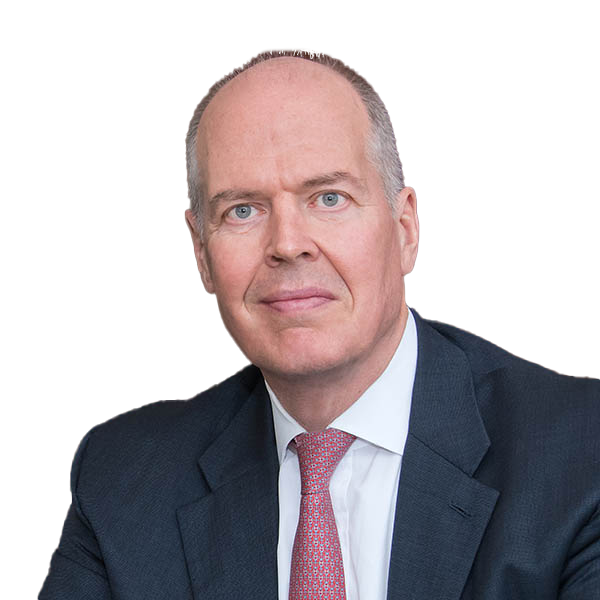
Jerome Grisko
About Jerome Grisko
Jerome P. Grisko, Jr. is Chief Executive Officer (since March 2016) and President (since February 2000) of CBIZ, and has served on the board since November 2015; he is 63 and a former M&A attorney at Baker & Hostetler (partner from 1995) . CBIZ’s five‑year TSR translated a $100 initial investment into $303.52 by year-end 2024, while 2024 management targets were met on both Pre‑Tax income ($185.8M) and Organic Growth in Revenue (OGIR, 4.9%) used for annual incentives . Under long‑term incentives, the 2022 PSU cycle paid at 130% of target, with Adjusted EPS of $2.67 and TGIR outcomes at the maximum multiplier, evidencing multi‑year execution against financial goals .
Past Roles
| Organization | Role | Years | Strategic impact |
|---|---|---|---|
| CBIZ | Chief Executive Officer | Appointed March 2016 | Leads strategy, M&A, and organic growth initiatives; long-tenured operating leader |
| CBIZ | President | Since Feb 2000 | Oversees companywide execution and growth |
| CBIZ | Chief Operating Officer | Feb 2000–Mar 2016 | Ran operations through multi‑year expansion |
| CBIZ | SVP, M&A and Legal Affairs | Dec 1998–Feb 2000 | Built M&A program and legal infrastructure |
| CBIZ | VP, M&A | Sep 1998–Dec 1998 | Initiated corporate development |
External Roles
| Organization | Role | Years | Strategic impact |
|---|---|---|---|
| Baker & Hostetler LLP | Partner (from 1995); Associate prior | 1987–1998 | M&A and corporate law expertise underpinning CBIZ’s acquisition program |
Fixed Compensation
- Base salary: $950,000 in 2024; the Compensation Committee did not increase his base salary in 2024 .
- Perquisites include company‑paid life insurance required by his employment agreement, private club dues, automobile/transport, and related tax gross‑ups; 2024 “All Other Compensation” totaled $239,944 (life insurance $82,941; club dues $21,217; auto/transport $19,904; insurance premiums $3,457; 401(k) $10,350; tax gross‑ups $102,076) .
| Year | Salary ($) | Stock Awards ($) | Non‑Equity Incentive ($) | All Other Comp ($) | Total ($) |
|---|---|---|---|---|---|
| 2024 | 950,000 | 3,066,177 | 1,111,500 | 239,944 | 5,367,621 |
| 2023 | 950,000 | 2,745,345 | 1,277,370 | 240,814 | 5,213,529 |
| 2022 | 943,750 | 2,163,082 | 1,518,300 | 257,251 | 4,882,383 |
Performance Compensation
Annual Cash Incentive (EIP) – 2024
- Structure and metrics: 70% financial (Pre‑Tax income and OGIR) and 30% Individual Performance Award (IPA). CEO’s IPA opportunity equals 30% of base Target Award (TA) .
- 2024 targets and outcomes (Marcum excluded per plan): Pre‑Tax target range $184.8–$192.8M; OGIR target range $1,654.8–$1,694.6M (4.0%–6.5%). Actuals: Pre‑Tax $185.8M (TM=1.0); OGIR $1,665.1M (4.9%, TM=1.0) .
- CEO payout: Base TA $855,000 (90% of $950,000); Pre‑Tax award $598,500; OGIR award $256,500; IPA $256,500; total $1,111,500 .
| Component | Weight | Target | Actual | Multiplier | Payout ($) |
|---|---|---|---|---|---|
| Pre‑Tax Income | 70% of TA | $184.8–$192.8M | $185.8M | 1.0 | 598,500 |
| OGIR | 30% of TA | $1,654.8–$1,694.6M (4.0%–6.5%) | $1,665.1M (4.9%) | 1.0 | 256,500 |
| Individual Performance Award | 30% of Base TA | — | Full award granted | — | 256,500 |
| Total EIP (2024) | — | — | — | — | 1,111,500 |
Notes:
- The Committee did not apply discretionary adjustments to 2024 Pre‑Tax or OGIR results; Marcum’s results were excluded per pre‑established plan terms .
- 2024 EIP measurement uses non‑GAAP definitions for Pre‑Tax and OGIR, consistent with plan design .
Long‑Term Incentives (LTI)
- Mix: Approximately 50% time‑based RSUs and 50% PSUs; RSUs vest one‑third annually over three years; PSUs cliff‑vest after a three‑year performance period .
- 2024 grants (Feb 8, 2024): RSUs 23,204; PSUs (target) 23,204; PSU maximum 46,408; total grant date fair value $3,066,177 .
- PSU metrics:
- Adjusted EPS (70%) and Total Growth in Revenue (TGIR, 30%), both non‑GAAP; earned range 50%–200% of target for the 2024 cycle (three‑year period ending 12/31/2027) .
- 2022 PSU cycle (three‑year period ending 12/31/2024):
- Adjusted EPS result $2.67/share (multiplier 1.05); TGIR $1,704.6M (multiplier 2.0); weighted outcome 1.30x; CEO earned 36,884 PSUs (vs 28,372 target) .
| LTI Element | Metric / Terms | 2024 CEO Grant | Vesting / Performance |
|---|---|---|---|
| RSUs | Time-based | 23,204 units | 1/3 per year over 3 years |
| PSUs (target) | Adjusted EPS (70%); TGIR (30%) | 23,204 units | 3‑year period; 50%–200% payout; shares withheld for taxes on settlement |
| PSU (2022 cycle result) | 3‑yr ended 12/31/2024 | 36,884 units earned | 130% of target based on results |
2025 adjustments: Base salaries for NEOs (ex‑CFO) raised ~5%–13%; LTI targets +25%–75%; PSU max payout raised to 300% of target for the 2025–2028 cycle to reflect scale/integration ambitions post‑Marcum .
Equity Ownership & Alignment
Beneficial Ownership and Alignment Policies
- Shares beneficially owned: 1,087,654 (2.01% of outstanding); includes 387,578 in a fixed irrevocable trust, 177,914 in a spousal trust, 302,000 in a spousal lifetime access trust, and 220,162 owned of record (incl. RSUs) .
- Pledging/hedging: Prohibited for officers and directors; none of the listed directors/executives has pledged shares .
- Ownership guidelines: CEO recommended to maintain stock valued at 5x base salary; all directors/NEOs are in compliance .
| Ownership detail | Amount |
|---|---|
| Total beneficial ownership (shares) | 1,087,654 |
| Percent of shares outstanding | 2.01% |
| Trust and direct holdings breakdown | 387,578 fixed irrevocable trust; 177,914 spousal trust; 302,000 spousal lifetime access trust; 220,162 owned of record incl. RSUs |
| CEO ownership guideline | 5x base salary; in compliance |
| Pledging/Hedging | Prohibited; none pledged |
Unvested/Outstanding Awards (12/31/2024)
| Award type | Units | Market value ($) |
|---|---|---|
| Unvested RSUs (2024 grant) | 23,204 | 1,898,783 (at $81.83) |
| PSUs (2024 grant, at max) | 46,408 | 3,797,567 (at $81.83) |
| Unvested RSUs (2023 grant) | 18,907 | 1,547,160 |
| PSUs (2023 grant, at max) | 56,722 | 4,641,561 |
| Unvested RSUs (2022 grant) | 9,457 | 773,866 |
| PSUs (2022 cycle, actual) | 36,884 | 3,018,218 |
Recent equity delivery and sales mechanics:
- In 2024, 113,833 stock awards vested for the CEO (realized value $7,512,060 at vest); the company withholds shares to cover tax obligations upon vesting, which reduces open‑market sale pressure .
Deferred compensation:
- CEO balance in the non‑qualified deferred compensation plan: $6,830,635 as of 12/31/2024 .
Employment Terms
- Employment agreement (Sept 1, 2016): Salary floor of not less than $642,000; annual bonus opportunity tied to pre‑established goals; annual equity grants of at least 80% of the grant date fair value awarded to the CEO in May 2016; company‑paid life insurance and club dues with tax gross‑ups; company automobile; Section 409A compliance .
- Severance/Change‑in‑Control (CIC):
- Double‑trigger within 24 months post‑CIC: 3x (base salary + Average Bonus); outside CIC for termination without cause/for good reason: 2x (base salary + Average Bonus) .
- Equity acceleration on termination without cause/for good reason; options (if any) remain exercisable to original expiration .
- Continued health/welfare benefits for two years; title to company vehicle at termination other than for cause; restrictive covenants (non‑disclosure, non‑interference, non‑disparagement) and release required .
- Clawback policy: Dodd‑Frank/NYSE‑compliant recoupment policy adopted Aug 9, 2023 .
- Hedging/pledging: Prohibited by policy .
Board Governance
- Board service: Director since November 2015; not independent due to executive role .
- Leadership structure: Independent, non‑executive Chair (Rick L. Burdick); CEO and Chair roles are separated to preserve oversight .
- Committees: Audit (Marabito—Chair, France, Sherman, Slotkin), Compensation & Human Capital (Burdick—Chair, Slotkin, Wiley, Young), Nominating & Governance (Wiley—Chair, Burdick, DeGroote, France); CEO not listed as a member of these committees .
- Meeting attendance/executive sessions: Each director attended at least 75% of Board and committee meetings in 2024; independent directors met four times in executive session .
Director compensation and independence context:
- Independence determinations affirm Grisko is not independent; the board maintains a majority of independent directors and independent committee composition .
Compensation Program Design, Peer Group, and Shareholder Feedback
- Compensation philosophy: Target total compensation for NEOs at approximately the 50th percentile (±15%) versus a custom peer group and survey group; significant portion of pay at risk .
- Peer group (selected examples among 24): Brown & Brown, Paychex, FTI Consulting, Insperity, Heidrick & Struggles, ExlService, Huron Consulting, Verisk, Korn Ferry, Kforce, CRA International (full list in proxy) .
- 2025 changes reflecting increased scale post‑Marcum: Base salary and LTI target increases; PSU max to 300% to incentivize integration/outperformance .
- Say‑on‑Pay and investor engagement: 2024 say‑on‑pay received a significant majority approval; ISS recommended “For”; management met with holders of ~42% of outstanding shares in 2024 to discuss governance/compensation .
Risk Indicators & Red Flags
- Positive alignment: No pledging or hedging; clawback compliant with Dodd‑Frank; no option repricing allowed under the omnibus plan .
- Watch items: Tax gross‑ups for CEO life insurance and club dues (immaterial relative to total pay per Committee) .
- Discretion: EIP design includes qualitative IPA; 2024 IPA paid at full opportunity for NEOs based on assessed contributions .
Investment Implications
- Pay-for-performance alignment: Annual EIP paid at target on both Pre‑Tax and OGIR with clear target ranges and no discretionary financial adjustments; multi‑year PSUs tied to Adjusted EPS and TGIR paid above target for the 2022 cycle (130%), aligning realized pay with growth and profitability .
- Retention and selling pressure: Large, scheduled RSU/PSU vesting supports retention; the company withholds shares for taxes at vest, mitigating open‑market selling pressure; CEO’s meaningful ownership (2.01%) and anti‑pledging policy align with shareholders .
- Change‑in‑control economics: Double‑trigger 3x salary+bonus and equity acceleration represent material value in a sale, which can be a catalyst consideration for event‑driven investors .
- 2025 incentives leverage: Raising PSU cap to 300% increases upside sensitivity to multi‑year performance and Marcum integration success, potentially amplifying management focus on earnings/revenue outcomes that drive TSR .
- Governance mitigants: Independent Chair, fully independent key committees, and robust clawback/anti‑hedging policies offset common CEO‑director dual‑role concerns .