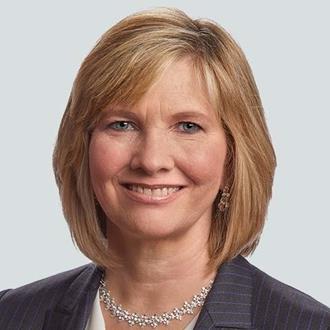
Denise Dignam
 Chemours
About Denise Dignam
Denise M. Dignam is President & CEO of The Chemours Company and a director since 2024; age 59; B.S. Chemical Engineering from Drexel University . Appointed interim CEO on Feb 28, 2024 and President & CEO on Mar 22, 2024, following leadership of the Titanium Technologies (TT) and Advanced Performance Materials (APM) segments . Under her tenure in 2024, Chemours reported Net Sales of $5.8B (down 5% YoY), Adjusted EBITDA of $786M (down 22% YoY), and returned $148M in dividends; TT delivered ~$140M in cost savings and APM launched a new PFA line supporting semiconductors . The Board affirmed an independent Chair structure and strengthened governance, remediating all previously identified material weaknesses by year-end 2024 .
Past Roles
| Organization | Role | Years | Strategic Impact |
|---|---|---|---|
| The Chemours Company | President & CEO | 2024–present | Set “Pathway to Thrive” pillars; focus on Adjusted EBITDA and capital efficiency; governance and controls remediation oversight . |
| The Chemours Company | President, Titanium Technologies | 2023–2024 | Led TT Transformation Plan; achieved ~$140M 2024 savings; margin improvement . |
| The Chemours Company | President, Advanced Performance Materials | 2021–2023 | Reshaped portfolio to Clean Energy & Advanced Electronics; record performance; PFA capacity expansion for semiconductor markets . |
| The Chemours Company | VP, Global Operations, Fluoroproducts | 2019–2021 | Oversaw global operations; supply chain and manufacturing performance . |
| The Chemours Company | Global Sr. Business Director, Fluoropolymers | 2016–2019 | Commercial leadership; portfolio and customer value initiatives . |
| The Chemours Company | North America Business Director, Fluoropolymers | 2015–2016 | Regional business leadership . |
| DuPont | Director, Global Supply Chain, Fluoroproducts | 2013–2014 | Led global supply chain for fluoroproducts . |
| DuPont | Various management roles | 1988–2013 | Sales, marketing, operations, strategy across chemistries . |
External Roles
| Organization | Role | Years | Strategic Impact |
|---|---|---|---|
| Kulicke & Soffa Industries (NASDAQ: KLIC) | Director; Nominating & Governance Committee | 2023–present | Semiconductor/electronics board experience; governance oversight . |
| American Chemistry Council | Member | 2024–present | Industry policy and sustainability engagement . |
| National Mining Association | Member | 2023–present | Materials supply chain and policy engagement . |
| Society of Chemical Industry (America) | Member | 2024–present | Industry innovation network . |
| U.S. Chamber of Commerce | Board Member | 2022–2023 | Business policy perspectives . |
Fixed Compensation
| Metric | 2022 | 2023 | 2024 |
|---|---|---|---|
| Base Salary ($) | $462,500 | $531,667 | $904,167 (prorated; CEO as of 3/22/24) |
| Target Bonus ($) | N/A in SCT | N/A in SCT | $1,170,000 target; 120% of $975,000 CEO salary (post-promotion design) |
| Actual Annual Incentive Paid ($) | $442,913 | $166,808 | $864,923 |
Multi-year compensation mix (SCT):
| Component ($) | 2022 | 2023 | 2024 |
|---|---|---|---|
| Salary | $462,500 | $531,667 | $904,167 |
| Stock Awards | $373,608 | $1,046,719 | $2,075,156 |
| Option Awards | $219,993 | $412,480 | $1,909,580 |
| Non-Equity Incentive | $442,913 | $166,808 | $864,923 |
| All Other Compensation | $71,650 | $75,059 | $134,154 |
| Total | $1,570,664 | $2,232,733 | $5,887,980 |
Performance Compensation
2024 AIP design and outcomes:
- Metrics and weighting: Adjusted EBITDA 50%; corporate Discretionary Free Cash Flow (DFCF) and Average Net Working Capital Days (ANWC) combined 20%; role-specific focus metrics 20% (corporate functions emphasize cost); sustainability metrics included (Great Place to Work score, energy efficiency); max bonus 200% .
- Outcomes: Corporate AIP achievement 84.3%; TT 59.6%; TSS 75.6%; APM 56.4% .
| Metric | Weighting | Target | Actual | Payout Reference |
|---|---|---|---|---|
| Adjusted EBITDA (Corporate) | 50% | Not disclosed | Contributed to Corporate AIP 84.3% | CEO annual incentive paid $864,923 |
| DFCF (Corporate) | Part of 20% | Not disclosed | Contributed to Corporate AIP 84.3% | See above |
| ANWC Days (Corporate) | Part of 20% | Not disclosed | Contributed to Corporate AIP 84.3% | See above |
| Role-specific focus (Corporate functions cost) | 20% | Not disclosed | Not separately disclosed | See above |
| Sustainability (GPTW score; energy efficiency) | Incorporated | Not disclosed | Not separately disclosed | See above |
2024–2026 LTIP structure:
- Equal weighting among PSUs, PSOs, NQSOs, RSUs; PSUs transitioned to Economic Value Added (EVA) 70% weight; Relative TSR (rTSR) 30%; awards determined after 3-year period; PSOs/NQSOs/RSUs vest annually in three equal installments over 3 years; 10-year term for options .
- 2022–2024 PSU payout: 0 shares earned; threshold not achieved on Adjusted Net Income and FCF conversion; rTSR modifier had no impact .
Equity Ownership & Alignment
Beneficial ownership (as of Feb 28, 2025):
| Category | Shares | % of Class |
|---|---|---|
| Direct | 19,067 | <1% |
| Indirect | — | — |
| Right to Acquire within 60 days | 93,127 | <1% |
| Total | 112,194 | <1% |
Outstanding/unvested equity (as of Dec 31, 2024; close $16.90):
| Instrument | Count | Value ($) |
|---|---|---|
| RSUs (unvested) | 35,269 | $596,038 |
| PSUs (unearned; equity incentive) | 35,739 | $603,961 |
| PSOs (unexercisable) | 95,792 @ $30.25 (exp. 5/8/2034) | Not valued in table |
| NQSOs (unexercisable) | 92,108 @ $27.50 (exp. 5/8/2034) | Not valued in table |
2024 grants (May 8, 2024):
| Award Type | Shares/Options | Exercise Price | Grant Date FV ($) | Vesting |
|---|---|---|---|---|
| RSU | 34,431 | N/A | $946,853 | 3 equal annual tranches |
| PSU (target) | 34,431; 50–200% earn-out range | N/A | $1,128,304 | 3-year performance (FY2024–FY2026) |
| NQSO | 92,108 | $27.50 | $946,870 | 3 equal annual tranches; 10-year term |
| PSO | 95,792 | $30.25 (10% premium) | $961,710 | 3 equal annual tranches; 10-year term |
Ownership policies and trading:
- Executive stock ownership guidelines: CEO 5x salary; 5 years to comply; retain 100% of net shares until met .
- Anti-hedging and anti-pledging policies; pledging prohibited absent special exception .
- Form 4 activity: routine RSU tax-withholding of 466 shares (Code F) on Aug 1, 2025 at $11.50; direct holdings post-event ~187,478 shares (no open-market sale) .
Employment Terms
- Change-in-control (CIC) severance plan (double-trigger): lump sum equal to 3x salary + target annual bonus (CEO); pro-rated target bonus for year of termination; continued health/dental/financial counseling/outplacement for 3 years; 18-month non-compete and non-solicit for CEO; no tax gross-ups .
- Equity treatment on CIC: full vesting; PSUs vest at target .
- Potential payments table (CEO; illustrative as of Dec 31, 2024): termination w/o cause or resignation for good reason in connection with CIC totaling ~$9.52M, including cash and equity components (assumes $16.90 stock price) .
Board Governance
- Board service: Director since 2024; principal occupation President & CEO; only non-independent director among 12 nominees; independent Board Chair; all committees comprised of independent directors .
- Committees: As CEO/employee-director, not listed on standing committees; Audit, CLDC, NCG, and EHS&O are independent-only .
- Meetings/attendance: Board met 19 times in FY2024; each director attended at least 75% of Board/committee meetings .
- Director compensation program (non-employee directors): $105,000 cash retainer; $160,000 annual equity; chair and committee chair retainers; employee-directors (e.g., CEO) do not receive these director fees .
- Governance developments: Material weaknesses remediated; strengthened finance leadership; adopted clawback policy compliant with SEC Rule 10D-1; anti-hedging/anti-pledging policies .
- Board Chair transition: Dawn Farrell resigned effective Sep 2, 2025; successor Chair pending at filing date .
Director Compensation (program context)
| Element | Annual Amount |
|---|---|
| Cash Retainer | $105,000 |
| Equity Award | $160,000 |
| Non-Executive Chair Retainer | $150,000 |
| Audit Chair | $22,500 |
| CLDC Chair | $17,500 |
| NCG Chair | $17,500 |
| EHS&O Chair | $17,500 |
Performance & Track Record
- Strategic and operational execution: TT delivered ~$140M cost savings; APM completed PFA capacity expansion for semiconductors; TSS expanded Opteon YF capacity amid regulatory transitions .
- Financial results (FY2024): Net Sales $5.8B; Adjusted EBITDA $786M; dividends paid $148M; context includes pricing pressure, FX, and corporate costs offset by TT savings .
- Pay-for-performance: 2024 CEO pay elements 85% at-risk; NEOs 69% at-risk; 5-year average Say-on-Pay support ~94.8–95% .
Compensation Structure Analysis
- Increased emphasis on capital efficiency via EVA (70% of PSUs) and reduced rTSR weight (30%) in LTIP; options and PSOs vest ratably over 3 years, aligning retention and performance .
- AIP shifted to 80% common corporate metrics and reduced cash-flow weighting; instituted DFCF and ANWC Days (20%) to encourage sustained working capital discipline; Adjusted EBITDA at 50% weight .
- No single-trigger CIC; no option repricing; no tax gross-ups (except limited circumstances); clawback policies adopted per SEC Rule 10D-1 .
Risk Indicators & Red Flags
- Hedging/pledging prohibited; insider trading policy enforced .
- Internal controls: all material weaknesses remediated as of Dec 31, 2024 .
- 2022–2024 PSUs paid zero due to under-threshold performance—signals discipline but also cyclical execution challenges .
Compensation Peer Group (benchmarking)
| Peer Companies |
|---|
| Albemarle; Avient; Axalta; Cabot; Celanese; DuPont; Eastman; Element Solutions; H.B. Fuller; Huntsman; Olin; Trinseo; Tronox; Westlake |
Say-on-Pay & Shareholder Feedback
- Say-on-Pay support strong: 5-year ~94–96%; CLDC cites alignment of 2024 pay outcomes with performance .
Equity Ownership & Director Guidelines
- Executive ownership guidelines (CEO 5x salary; 5-year window; 100% net share retention until met) .
- Director guidelines: 6x cash retainer; 5-year compliance window .
Employment Contracts & Covenants
- CIC plan: 3x salary+target bonus; pro-rata bonus; 3-year benefits; 18-month non-compete for CEO; PSUs vest at target; double-trigger only; no tax gross-ups .
Investment Implications
- Alignment: Heavy at-risk pay and EVA-centric PSUs should push capital discipline and ROIC, with ratable option vesting balancing retention and performance .
- Selling pressure: No discretionary open-market sales noted; RSU tax-withholding events are routine; anti-hedging/pledging and ownership rules reduce misalignment risk .
- Execution risk: 2022–2024 PSUs earned at 0 highlights cyclicality and target-setting difficulty; however, TT savings and semiconductor-facing expansions provide operating offsets under the Pathway to Thrive strategy .
- Governance: Independent Chair structure, remediated controls, and robust clawback/anti-pledging policies support quality of oversight; Chair transition in 2025 bears monitoring for continuity .