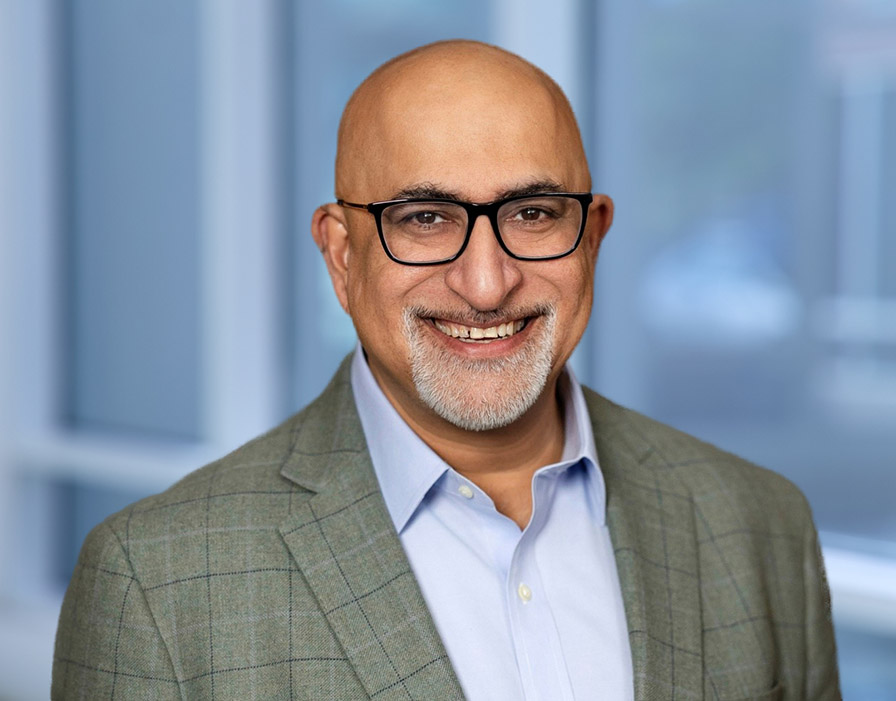
Vikram Karnani
About Vikram Karnani
Vikram Karnani is President and Chief Executive Officer of Collegium Pharmaceutical (COLL) and a director since November 2024; age 50, not independent under Nasdaq rules due to his CEO role . He previously led commercial and medical functions at Amgen (joined via the Horizon acquisition in October 2023) and held multiple senior commercial roles at Horizon from 2014–2023; earlier roles include Fresenius Kabi and Fenwal, spanning business development, strategy and therapeutics leadership; he holds an MBA from Kellogg (Northwestern), an MS in Electrical Engineering from Case Western Reserve University, and a BS in Electrical Engineering from the University of Bombay . Collegium delivered 2024 net product revenues of $631.4M (+11% YoY), achieved a corporate scorecard payout of 145.4% on targets emphasizing Adjusted EBITDA, net revenue, M&A, exclusivity extensions, and operational goals, and ended 2024 with $162.8M cash and securities while repurchasing $60M of stock—all performance inputs to management’s annual incentive outcomes .
Past Roles
| Organization | Role | Years | Strategic Impact |
|---|---|---|---|
| Amgen Inc. | EVP & President, Global Commercial Operations and Medical Affairs | Since Oct 2023 (joined via Horizon acquisition) | Led global commercial and medical affairs; integration experience and large-cap biopharma commercial leadership . |
| Horizon Therapeutics plc | EVP & President, International | Aug 2020–Oct 2023 | Expanded international footprint; senior P&L responsibility . |
| Horizon Therapeutics plc | EVP & Chief Commercial Officer | Mar 2018–Aug 2020 | Led global commercial organization and execution . |
| Horizon Therapeutics plc | SVP, Rheumatology Business Unit | Feb 2017–Mar 2018 | Business unit leadership in rheumatology . |
| Horizon Therapeutics plc | General Manager, Specialty Business Unit | Jul 2014–Feb 2017 | Specialty commercial scaling . |
| Fresenius Kabi AG | Vice President, Therapeutics & Cell Therapy | Oct 2011–Jul 2014 | Built therapeutics and cell therapy businesses . |
| Fenwal Inc. | Business development, corporate strategy, strategic marketing | Nov 2008–Oct 2011 | Growth initiatives pre-acquisition by Fresenius Kabi . |
External Roles
| Organization | Role | Years | Notes |
|---|---|---|---|
| None | — | — | No current other public directorships disclosed . |
Fixed Compensation
| Metric | FY 2024 |
|---|---|
| Base Salary ($) | $875,000 |
| Target Bonus (% of Salary) | 75% |
| Signing Bonus ($) | $500,000 (repayable if resignation without good reason or termination for cause within 1 year) |
| Salary Earned ($) | $97,596 (partial year) |
| Non-Equity Incentive Earned ($) | $130,711 (prorated for 50 days of employment; corporate multiplier 145.4%, individual 100%) |
Performance Compensation
| Metric | Weight | Target | Actual | Payout |
|---|---|---|---|---|
| Total Net Revenue ($) | 30% | $622.4M | $631.4M | 34.5% |
| Non-GAAP Adjusted EBITDA ($) | 40% | $354.8M | $401.2M | 43.5% |
| Business Development | 20% | ≥1 transaction generating ≥$150M revenue | Closed Ironshore (Jornay PM) | 30.0% |
| Loss of Exclusivity & Label Enhancements | 15% | 6-month pediatric extension for Nucynta | Achieved | 15.0% |
| COP Optimization | 10% | Complete end-to-end Belbuca value chain (ARx) | PAS approved 9/10/24 | 15.0% |
| Environmental Stewardship | 5% | GHG baseline & first emissions calc | Completed baseline | 7.5% |
| Total Corporate Achievement | — | — | — | 145.4% |
Long-term equity is heavily performance-linked: PSUs are earned annually and over a 3-year period based on relative TSR vs the S&P Pharmaceutical Select Industry Index (20% weight for each of 2024–2026 annual segments and 40% for the 2024–2026 cumulative segment), with 0–200% payout ranges; recent TSR results translated into 97–100% payouts for annual segments and 169% for a prior cumulative segment, illustrating use of market-based metrics .
Equity Ownership & Alignment
| Item | Detail |
|---|---|
| Beneficial Ownership (Common Shares) | 0 shares; less than 1% ownership of outstanding shares . |
| Outstanding Options | 130,344 unexercisable options (exercise price $31.41; 10-year term), standard vesting: 25% at 1-year, remainder quarterly over next 3 years (1) . |
| Unvested RSUs | 105,972 time-based RSUs; vesting per disclosure: 4-year schedule (25% at 1-year, then annual installments) for new-hire grant (4). |
| Unvested PSUs (Target/Max) | 105,972 target PSUs; maximum reported unearned PSUs 211,944 (reflects 200% cap across annual/cumulative segments) (17). |
| Anti-Hedging/Pledging | Hedging, short sales, options on company stock, and pledging prohibited by policy . |
| Ownership Guidelines | CEO required to hold 3x base salary in stock; compliance or within transition period as of Jan 1, 2025 . |
Grant-date fair values for his November 12, 2024 new-hire equity package:
- Options: $2,228,622
- RSUs: $3,328,581
- PSUs (aggregate of four line items): $4,494,491
- Total stock awards: $7,823,072
Employment Terms
| Provision | Without Change in Control | With Change in Control (Double Trigger) | Death/Disability |
|---|---|---|---|
| Severance Duration | 18 months salary continuation for CEO . | Lump sum 2x base salary for CEO; CoC window: from 1 month pre- to 12 months post-CoC . | Immediate vesting of all unvested equity; pro-rata annual bonus; 12 months COBRA . |
| Bonus Component | 150% of target bonus paid over severance period for CEO . | 200% of target bonus (lump sum) for CEO . | Pro-rata annual bonus paid at normal timing . |
| Equity Acceleration | Time-based awards that would have vested during severance period vest; performance awards vest based on goals through termination date . | Time-based awards fully and immediately vest; PSUs vest per plan/award terms . | All unvested equity fully vests . |
| COBRA | Company-paid premiums for 18 months (CEO) . | Company-paid premiums for 24 months (CEO) . | Company-paid premiums for 12 months . |
| Restrictive Covenants | Non-compete, non-solicit, no-hire; 18 months post-employment for CEO; perpetual confidentiality . |
Board Governance
- Board service and roles: Director since 2024; no committee memberships; no other public directorships .
- Independence: Not independent under Nasdaq due to CEO role; 8 of 9 current directors independent, including all committee members; strong independent oversight framework .
- Leadership structure: CEO and Chairman roles separated; Lead Independent Director in place; Mr. Santini appointed Chairman at/after the 2025 Annual Meeting—mitigates dual-role concerns and enhances independence .
- Board/committee activity: Regular executive sessions; all directors attended at least 75% of 2024 meetings; refreshed committees with independent chairs .
Compensation Program Context
- Pay-for-performance design: Heavy variable pay via annual cash tied to net revenue and Adjusted EBITDA and long-term equity via relative TSR PSUs; clawback policy compliant with SEC/Nasdaq; no excise tax gross-ups; no option repricing; limited perquisites; anti-hedging/pledging; stock ownership guidelines .
- Say-on-pay: 2024 support ~99% approvals, indicating strong shareholder endorsement of pay design .
- Peer benchmarking: Compensation decisions benchmarked to a biopharma peer group including ACADIA, Catalyst, Pacira, Supernus, Travere, among others; in Sept 2023 COLL’s market cap was ~48th percentile of peers and revenue ~81st percentile—supporting competitive but performance-anchored positioning .
- Grants timing governance: Regular February grant cycle; new-hire grants timed to start date; disclosure indicates no use of MNPI in timing .
Compensation & Equity Detail (FY 2024)
| Component | Amount |
|---|---|
| Salary ($) | $97,596 |
| Bonus (Signing) ($) | $500,000 |
| Stock Awards ($) | $7,823,072 |
| Option Awards ($) | $2,228,622 |
| Non-Equity Incentive ($) | $130,711 |
| All Other Compensation ($) | $124 |
| Total ($) | $10,780,125 |
Vesting Schedules and Potential Selling Pressure
- Options: 25% vest at year 1, remaining quarterly over 3 years; 10-year term; exercise price $31.41—potential in-the-money status depends on current price; staged vesting reduces abrupt selling pressure but creates periodic option exercisability windows (1) .
- RSUs: New-hire RSUs vest over 4 years (25% at year 1, remainder annually); creates annual settlement events that can lead to periodic insider Form 4 sales for tax liquidity, subject to trading window and policy (4).
- PSUs: Annual and cumulative TSR measurement (2025–2027) with payouts up to 200%; settlement contingent on relative TSR performance; potential sizable share delivery at vest dates, but hedging/pledging ban and compliance with windows mitigate misalignment risks (17).
Equity Ownership & Guidelines Compliance
- Beneficial ownership: 0 reported shares; ownership guidelines require CEO at 3x salary over five years; company states directors and executive officers were compliant or within transition timeline as of Jan 1, 2025—CEO is expected to build ownership through RSU/PSU settlements and open-market holdings .
Employment Contracts, Severance, and Change-of-Control Economics
- Without CoC: 18 months salary continuation and 150% of target bonus for CEO; partial equity acceleration limited to what would vest in the severance window—designed as retention while avoiding full acceleration absent a CoC .
- With CoC (double trigger): 2x salary and 200% target bonus lump sum; immediate vesting of time-based equity; COBRA 24 months; PSUs per plan—generous but within industry norms; CoC window includes terminations one month before to 12 months after CoC to avoid timing gaming .
- Death/Disability: Pro-rata bonus and full vesting; COBRA 12 months .
- Non-compete/non-solicit/no-hire: 18 months; robust post-employment protections that reduce transition and competitive risk .
Risk Indicators and Governance Controls
- Clawback: Mandatory recoupment of erroneously awarded incentive comp after material restatement (3-year look-back) .
- Anti-hedging/pledging: Prohibitions reduce misalignment and leverage risk; no option repricing permitted without shareholder approval under the proposed 2025 plan .
- Director compensation caps and minimum vesting under the 2025 Equity Incentive Plan strengthen governance .
Investment Implications
- Alignment: Karnani’s package is heavily equity- and TSR-linked, with 0 reported share ownership at record date offset by sizable RSU/PSU/options that vest over 3–4 years—supportive of long-term value creation but with near-term ownership optics to monitor until guideline compliance is achieved (4) .
- Retention and CoC: Strong retention via 18-month non-compete and staged equity; CoC terms (2x salary, 200% bonus, full time-based acceleration) are generous but standard for specialty pharma—be aware of M&A scenarios potentially crystallizing awards and cash outflows .
- Performance signals: 2024 corporate payout of 145.4% (beats on revenue and Adjusted EBITDA, strategic M&A, exclusivity extensions) underpins credible operating execution; PSUs tied to relative TSR align management with shareholder returns—monitor TSR versus the S&P Pharma Select Index through 2026 for PSU settlement magnitude .
- Trading/supply dynamics: Annual RSU settlements and potential PSU vesting could create periodic insider liquidity needs; anti-hedging/pledging and window policies mitigate risk; watch Form 4 filings around vesting dates for supply signals (4) .
Notes: All figures and terms cited from Collegium Pharmaceutical’s 2025 Definitive Proxy Statement (DEF 14A) dated March 28, 2025.