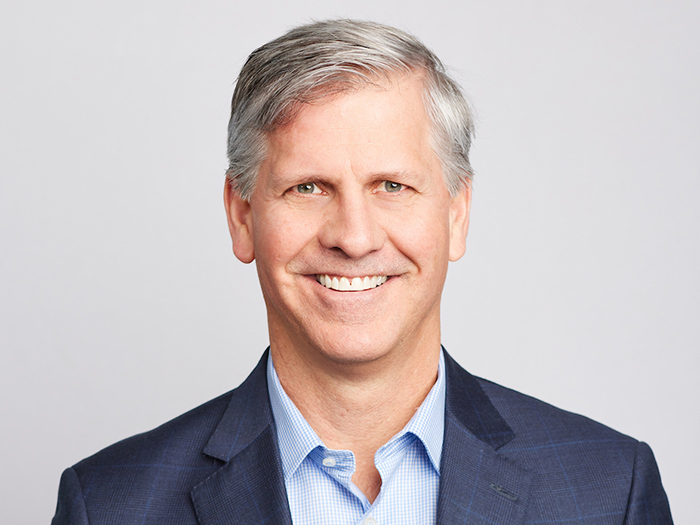
Michael Combs
About Michael Combs
Michael G. Combs, age 61, is Chairman of the Board, Chief Executive Officer, and President of CorVel; he became Chairman in November 2024, CEO in January 2019, and President in April 2017, after serving as CIO from April 2015 to April 2017 and joining CorVel in 1991 as a software engineer; he holds a bachelor’s in computer science from San Diego State University . Fiscal 2025 performance used by the Compensation Committee emphasized revenue growth (+13% YoY) and net income growth (+27% YoY); pay-versus-performance disclosures show EPS of $1.83 and a CorVel TSR index value of 200 for FY2025 . Combs is not independent under Nasdaq rules due to his executive role; the Board has designated a Lead Independent Director to mitigate combined Chair/CEO governance risks .
Past Roles
| Organization | Role | Years | Strategic Impact |
|---|---|---|---|
| CorVel Corporation | Chairman of the Board | Nov 2024–present | Governance leadership; unified strategy with combined Chair/CEO structure |
| CorVel Corporation | Chief Executive Officer | Jan 2019–present | Led revenue and net income growth; focus on CERIS, AI, margin expansion |
| CorVel Corporation | President | Apr 2017–present | Operational leadership and growth initiatives |
| CorVel Corporation | Chief Information Officer | Apr 2015–Apr 2017 | Technology modernization; enterprise systems |
| CorVel Corporation | VP MedCheck Dev.; VP Information Services; Deputy CIO | Prior to 2015 | Built IT/product capabilities supporting managed care |
| CorVel Corporation | Software Engineer | Oct 1991–early tenure | Engineering foundations; joined company in 1991 |
External Roles
| Organization | Role | Years | Strategic Impact |
|---|---|---|---|
| Science Applications International Corporation (SAIC) | Software Engineer (Naval Oceans System Center) | Pre-1991 | Defense software engineering experience; technical depth |
Fixed Compensation
| Metric | FY 2023 | FY 2024 | FY 2025 |
|---|---|---|---|
| Base Salary ($) | $625,777 | $626,539 | $651,442 |
| All Other Compensation ($) | $3,012 | $3,212 | $3,262 |
Performance Compensation
Annual Cash Incentives (structure and outcomes)
| Metric | 2022 | 2023 | 2024 |
|---|---|---|---|
| Target Bonus (% of salary) | 75% | 75% | 75% |
| Weighting (Corporate financial vs MBO) | 75% financial / 25% MBO | 75% financial / 25% MBO | 75% financial / 25% MBO |
| Actual Bonus Paid (% of salary) | 47.8% | 54.4% | 52.9% |
| Non-Equity Incentive Paid ($) | $284,755 | $337,218 | $441,306 |
| Key Performance Themes | Revenue, net income, margins; CERIS/AI; client growth | Revenue, net income, margins; CERIS/AI; client growth | Revenue, net income, margins; CERIS/AI; client growth |
Equity Incentives (options)
| Element | Details |
|---|---|
| Vehicles | Stock options (mix of time-based and performance-based) |
| Time-based vesting terms | 25% at 1-year cliff; remaining vest monthly over 3 years; 5-year expiration |
| Performance option metric | Earnings growth (targets not publicly disclosed due to competitive sensitivity) |
| FY2025 grant (Combs) | Option award grant date 1/14/2025; fair value $95,669; exercise price $110.18 |
| FY2025 option exercises | 14,043 shares exercised; value realized $1,038,119 |
Equity Ownership & Alignment
| Item | Value |
|---|---|
| Beneficial ownership (shares) | 101,510 shares; <1% of outstanding |
| Options exercisable (selected lots) | 21,000 @ $52.00 exp 11/03/2027; 15,939 @ $49.63 exp 05/12/2027; 9,360 @ $65.72 exp 12/08/2026; 252 @ $39.83 exp 05/06/2026; 156 @ $34.44 exp 02/04/2026 |
| Options unexercisable (time-based) | 15,000 @ $52.00 exp 11/03/2027 |
| Performance options unearned | 3,000 @ $110.18 exp 01/14/2030; 14,621 @ $52.00 exp 11/03/2027 |
| FY2025 options exercised and value | 14,043 shares; $1,038,119 realized |
| Stock ownership guidelines | No minimum ownership guidelines for executive officers |
| Hedging/pledging | Hedging prohibited by insider trading policy; pledging not addressed in proxy |
Employment Terms
| Provision | Details |
|---|---|
| Employment agreement | None; executives serve at will |
| Severance | No cash severance; no payments on resignation/termination/death/disability |
| Change-in-control (CIC) | Options generally accelerate and become exercisable immediately prior to CIC; exceptions if assumed/replaced or substituted by successor; committee may also provide acceleration post-CIC terminations |
| Trigger structure | Single-trigger acceleration with substitution/assumption exceptions, not a double-trigger cash parachute |
| Clawback policy | Recoup incentive compensation based on restated financials per Exchange Act Rule 10D-1 and Nasdaq standards (3-year lookback; applies regardless of misconduct) |
Board Governance and Director Service
- Board service: Appointed to Board and elected Chairman November 26, 2024; currently serves as both Chairman and CEO/President .
- Independence: Not independent under Nasdaq due to executive role; Board designates Lead Independent Director (R. Judd Jessup) with defined duties to offset combined Chair/CEO .
- Committees: All standing committees comprised of independent directors; Combs does not serve on Audit, Compensation, or Nominating & Governance committees per nominee summary .
- Board/committee meetings: Six meetings in FY2025; all directors other than two (Clemons, Macino) met 100% attendance across Board/committee service; executive sessions of independent directors at least twice per year .
- Director compensation: Combs receives no additional compensation for Board service .
Compensation Structure Analysis
- Mix and design: Emphasis on variable, equity-linked pay; options as primary LTI to align with shareholder value (value only on stock appreciation) .
- Annual bonus alignment: 75% tied to corporate financials (revenue/net income/margins), 25% tied to MBOs (CERIS expansion, AI deployment, client growth); actual payouts vary with performance (e.g., 52.9% of salary for 2024) .
- Equity award rigor: Performance options vest on earnings growth; targets undisclosed; vesting and expiration terms standardized, limiting guaranteed equity .
- Governance and dilution: 3-year average burn rate 0.51% (FY2023–FY2025) and equity overhang ~5.4%; repricing prohibited without shareholder approval .
Say-on-Pay & Shareholder Feedback
- 2023 say-on-pay approval ~92%, supporting the program’s pay-for-performance alignment; committee retained design into FY2025 amid strong financial results .
Compensation Committee Analysis
- Composition: Compensation Committee comprised of independent directors Alan R. Hoops (Chair) and Jeffrey J. Michael; the latter is President/CEO of Corstar, a >10% beneficial owner of CorVel .
- Process and benchmarking: Uses Alera Group survey data; references 50th percentile of service-sector peers by revenue; no formal peer group adopted .
Performance & Track Record
| Metric | FY 2021 | FY 2022 | FY 2023 | FY 2024 | FY 2025 |
|---|---|---|---|---|---|
| Net Income ($000s) | 46,356 | 66,410 | 66,365 | 76,252 | 95,165 |
| Diluted EPS ($) | 0.85 | 1.22 | 1.26 | 1.47 | 1.83 |
| CorVel TSR (Value of $100) | 188 | 309 | 349 | 256 | 200 |
- Compensation actually paid trends track improvements in EPS and net income; TSR volatile but strong multi-year value creation .
Director Compensation (for context on governance)
| Item | FY2025 Policy |
|---|---|
| Non-employee director cash fees | $23,000 per in-person Board meeting; $1,000 per telephonic Board meeting; $1,000 per committee meeting; Audit Chair retainer $4,000 plus $1,000 per committee meeting |
| Director equity | Annual and onboarding option grants with four-year vesting; grant sizes per role/tenure |
Equity Incentive Plan Context
| Metric | FY 2023 | FY 2024 | FY 2025 | 3-Year Avg |
|---|---|---|---|---|
| Burn Rate (%) | 0.97% | 0.34% | 0.22% | 0.51% |
| Options Outstanding (#) | — | — | 1,185,727; WAE $51.07 | |
| Overhang (%) | — | — | ~5.4% |
Investment Implications
- Alignment: High variable pay with option-heavy LTI and earnings-linked performance options supports pay-for-performance; absence of executive stock ownership guidelines modestly weakens alignment versus best practices .
- Retention and selling pressure: Standard four-year vesting with multiple outstanding option lots and recent exercises ($1.04M realized) indicate ongoing liquidity windows; monitor upcoming vesting/expirations for potential supply from insider exercises .
- Governance risk/mitigation: Combined Chair/CEO role introduces oversight concerns; mitigated by a Lead Independent Director and fully independent committees; note interlock risk with a major shareholder (Corstar) represented on the Compensation Committee .
- Change-in-control economics: No cash severance; single-trigger equity acceleration with assumption/substitution exceptions limits parachute risk but could accelerate option value in a sale scenario .
- Dilution discipline: Low burn rate and moderate overhang suggest controlled equity usage; repricing is prohibited without shareholder approval, reducing adverse governance actions risk .