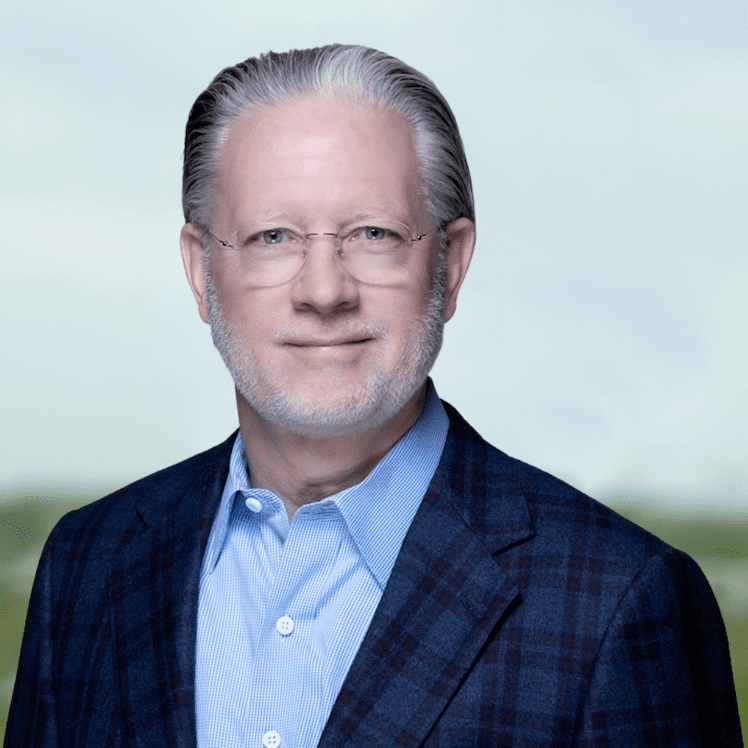
Joseph B. Armes
About Joseph B. Armes
Joseph B. Armes, age 63, is Chairman, CEO and President of CSW Industrials (CSWI). He has served as CEO and Chairman since September 2015 and as President since February 2018; previously he was CEO and President of Capital Southwest Corporation (June 2013–September 2015) and its Chairman (January 2014–August 2017) . Under his leadership, CSWI delivered FY2025 revenue of $878.3m (+10.8% YoY), adjusted EBITDA of $227.9m (+13.9% YoY), adjusted EPS of $8.41 (+20.0% YoY), and operating cash flow of $168.4m (+2.5% YoY) . Over FY2016–FY2025, CSWI achieved total revenue CAGR of 14.1% and adjusted EBITDA CAGR of 16.5%, with average adjusted gross margin 44.1% and adjusted EBITDA margin 22.5% . The FY2023 performance-share cycle (Apr 1, 2022–Mar 31, 2025) reached a 151.5% TSR (95th percentile vs Russell 2000), vesting at 200% (max) .
Past Roles
| Organization | Role | Years | Strategic Impact |
|---|---|---|---|
| CSW Industrials, Inc. | Chairman, CEO and President | 2015–present | Combined CEO/Chairman structure with lead independent director; drove record FY2025 results and multi-year growth . |
| Capital Southwest Corporation | CEO and President | 2013–2015 | Led prior to CSWI spin-off; governance experience leveraged at CSWI . |
| Capital Southwest Corporation | Chairman of the Board | 2014–2017 | Extended governance continuity post spin-off . |
External Roles
| Organization | Role | Years | Notes |
|---|---|---|---|
| Switchback Energy Acquisition Corp. | Director | 2019–2021 | Public company directorship . |
| RSP Permian, Inc. | Director | 2013–2018 | Public company directorship . |
| Capital Southwest Corporation | Director | 2013–2017 | Public company directorship . |
Board Governance
- Board service at CSWI: Director since 2015; management (non-independent) director; serves as Chairman; no committee memberships .
- Dual-role implications: CSWI combines Chairman and CEO roles; mitigations include a lead independent director who presides over executive sessions and shares agenda-setting and oversight responsibilities; seven of eight nominees are independent; all committees are fully independent .
- Board attendance: In FY2025 the Board held seven meetings and each director attended at least 75% of Board and committee meetings .
- Director compensation: Armes receives no additional pay for board service (compensated solely as an executive) .
Fixed Compensation
| Metric | FY2023 | FY2024 | FY2025 |
|---|---|---|---|
| Base Salary ($) | 700,000 | 800,000 | 850,000 |
| Total Compensation ($) | 4,276,487 | 5,963,245 | 6,330,479 |
Additional fixed-structure details:
- FY2025 CEO base salary increased 6.3% to $850,000 based on market benchmarks and performance .
- No executive perquisites beyond those generally provided to all employees (e.g., 401(k), ESOP) .
Performance Compensation
Annual Incentive Plan (AIP) structure and FY2025 outcome:
| AIP Element | Weight | Target Definition | FY2025 Result | Payout | Vesting/Payment |
|---|---|---|---|---|---|
| Consolidated EBITDA | 60% | Pre-set annual target (May 2024) | 107% of target | $711,399 | Cash (FY2026 payment) |
| Consolidated Operating Cash Flow | 15% | Pre-set annual target (May 2024) | 85% of target | $141,385 | Cash (FY2026 payment) |
| Individual Performance | 25% | Qualitative goals | 107% of target | $295,000 | Cash (FY2026 payment) |
| Total AIP Award | 100% | Target $1,105,000 (130% of salary) | Weighted 104% | $1,147,784 | Cash |
Key AIP design notes:
- CEO target AIP: 130% of base salary; payout range 0–200% with thresholds and caps; metrics: EBITDA, OCF, and individual performance; acquisitions excluded from measured performance; straight-line interpolation between threshold/target/maximum .
- In FY2025 management delivered $219.8m measured EBITDA (+10.8% YoY) and $167.3m measured OCF (+0.9% YoY) for AIP purposes, after adjustments per policy .
Long-Term Incentive Program (LTIP) design and FY2025 awards:
| Component | Weight | Metric | Vesting | FY2025 CEO Grant | Accounting Basis |
|---|---|---|---|---|---|
| Performance Shares | 60% (CEO) | Relative TSR vs Russell 2000 | Cliff at 3 years; 0–200% vest; if TSR <0, cap at 100% | 8,236 target PSUs (grant 5/28/2024) | Monte Carlo $331.56/sh; $2,730,728 FV |
| Restricted Stock | 40% (CEO) | Time-based | Ratably over 3 years | 4,089 RS (grant 10/1/2024) | $364.56/sh; $1,490,686 FV |
- CEO LTIP target: 375% of base; FY2025 increased performance-share mix to 60% to raise at-risk pay; CEO at-risk pay 83.5% of target .
- For the FY2023 LTIP (Apr 1, 2022–Mar 31, 2025), relative TSR performance ranked at the 95th percentile, vesting PSUs at 200% (max) .
- Beginning FY2025, target (100%) PSU payout requires >median TSR (51st percentile) to raise rigor .
Equity Ownership & Alignment
Ownership levels and guidelines:
- Beneficial ownership (6/30/2025): 67,741 shares (<1% of outstanding) .
- Stock ownership guideline: 6x base salary; CEO required shares at 3/31/2025: 17,495; current ownership recognized for policy: 70,668 shares (24.2x salary) at $291.52/share assumption .
- Hedging/pledging: Prohibited (no pledging, short sales, hedging or margin) .
- Say-on-Pay 2024 support: 97.6% approval .
- Insider selling signals: No stock options outstanding; RS/PS vesting creates periodic share supply; CEO realized value from vesting of 20,046 shares in FY2025 ($5.65m gross), typical for tax withholding/liquidity around vesting .
Outstanding awards and vesting schedule (as of 3/31/2025):
| Award Type | Shares/Units | Key Terms | Next Vest/Notes |
|---|---|---|---|
| Unvested Restricted Stock (annual LTIP) | 11,673 | Time-based | 6,593 vest 10/1/2025; 3,717 vest 10/1/2026; 1,363 vest 10/1/2027 . |
| Performance Shares (FY2023 cycle) | 7,689 (incl. DEUs) | TSR vs Russell 2000 (2022–2025) | Vested at 200% effective 4/1/2025 . |
| Performance Shares (FY2024 cycle) | 12,519 (incl. DEUs) | TSR vs Russell 2000 (2023–2026) | Assumes 200% in table valuation; cliff at 3 years . |
| Performance Shares (FY2025 cycle) | 8,263 (incl. DEUs) | TSR vs Russell 2000 (2024–2027) | Assumes 200% in table valuation; cliff at 3 years . |
| CEO Retention/Succession RS (LTIP) | 31,496 | Cliff vest 4/26/2026 | Special 2022 arrangement . |
| CEO Retention/Succession RSUs (LTIP) | 20,051 | 40% vest after successor CEO hire (not earlier than Apr 2025); 60% after successor CEO’s first anniversary | Subject to recruitment milestone; retention lever . |
Notes: All values in company tables use $291.52/share at 3/31/2025 where applicable; PSU counts include accrued dividend equivalents; option awards: none outstanding .
Employment Terms
- Employment agreement: Effective October 1, 2015; initial two-year term with automatic one-year renewals; Board nominates him for director service during term .
- Non-compete/non-solicit: 24 months post-termination .
- Clawback: NYSE-compliant Dodd-Frank recoupment policy for the prior three years upon restatement; no fault required .
- CIC and Severance Plan: CEO is Level One participant.
- Without Cause/For Good Reason (no CIC): Lump sum equal to 2x (base salary + greater of prior-year AIP or current target), pro-rata bonus (greater of prior-year actual or current target), up to 24 months of benefits, and immediate vesting of equity that would vest within two years; equity treatment per award terms .
- Change in Control: All unvested equity fully vests upon CIC (single-trigger for equity); if terminated without Cause/for Good Reason within 2 years post-CIC, severance = 3x (salary + target AIP), pro-rata bonus, up to 24 months benefits; best-of-net 280G cut vs full pay (no excise tax gross-ups) .
- Quantified economics (as of 3/31/2025, $291.52/sh):
- Termination without Cause/for Good Reason: Total $32,087,644 (incl. $3,910,000 termination payment; $1,324,690 pro-rata bonus; $26,824,796 equity vesting; $28,158 benefits) .
- CIC + Termination: Total $34,042,644 (incl. $5,865,000 termination payment; $1,324,690 pro-rata bonus; $26,824,796 equity vesting; $28,158 benefits) .
- Death/Disability: Total $22,318,297 (incl. pro-rata bonus $1,324,690 and full equity vesting $20,979,528) .
Compensation Structure Analysis
- Mix and at-risk: CEO at-risk pay 83.5% of target; LTIP target 375% of salary with higher performance-share weighting (60%) in FY2025 to reinforce performance linkage .
- AIP rigor: Reinstated annual target setting in FY2025; adjusted payout matrices and maintained 0–200% caps; excludes acquired, unbudgeted results; FY2025 achieved near-target blended payout (104%) .
- LTI rigor: From FY2025, target PSU payout requires >median (51st percentile) relative TSR; 200% cap and negative TSR cap at 100% reduce windfalls .
- Governance safeguards: Independent comp consultant; no option repricing; no hedging/pledging; double-trigger cash severance; no excise tax gross-ups; robust ownership guidelines .
- Potential red flag: Single-trigger full vesting of all equity upon CIC, which some investors view as misaligned; mitigated by double-trigger for cash and modern clawback .
Say-on-Pay & Shareholder Feedback
- Say-on-Pay support: 97.6% approval in 2024, a record for CSWI, indicating strong shareholder endorsement of the program .
- Engagement: In FY2025, CSWI engaged investors representing 54% of shares outstanding and 90% of top-20 active holders; topics included compensation and governance; Board incorporates feedback in comp design .
Compensation Peer Group (Benchmarking)
- FY2025 compensation peer group included AAON, Armstrong World, Barnes Group, Columbus McKinnon, EnPro, ESCO, Franklin Electric, Gibraltar, Helios, Innospec, Kadant, Mueller Water, PGT Innovations, SPX Technologies, Standex .
- Target positioning: 50th percentile (market median) used as reference point, with adjustments for performance and scope; CEO at-risk mix increased in FY2025 .
Performance & Track Record (Selected Highlights)
| Metric | FY2024 | FY2025 |
|---|---|---|
| Revenue ($m) | — | 878.3; +10.8% YoY |
| Adjusted EBITDA ($m) | — | 227.9; +13.9% YoY |
| Adjusted EPS ($) | — | 8.41; +20.0% YoY |
| Operating Cash Flow ($m) | — | 168.4; +2.5% YoY |
| TSR for FY2023 PS cycle | — | 151.5% (95th percentile) → 200% vest |
| Long-term CAGRs (FY16–FY25) | Rev: 14.1%; Adj. EBITDA: 16.5% | Margins: Avg adj. GP 44.1%, adj. EBITDA 22.5% |
Strategic drivers:
- ~$1.0B cumulative M&A since FY2016; ~$227m capital returned via dividends/repurchases since 3Q18 .
- FY2025 records amid mixed markets; execution consistent with employee-centric and safety culture (TRIR 1.2; LTIR 0.06) .
Risk Indicators & Red Flags
- Hedging/pledging: Prohibited (reduces alignment risk) .
- Clawback: Implemented and NYSE-compliant (mitigates restatement risk) .
- Related-party transactions: None required to be reported for FY2025 .
- CIC equity acceleration: Single-trigger equity vesting upon CIC (potential governance concern) .
- Say-on-Pay: Strong support, reducing compensation risk indicators .
Investment Implications
- Alignment and retention: Very high personal ownership (24.2x salary) and stringent ownership policy, plus increased performance-share weighting, support long-term alignment; special 2022 CEO retention/succession awards create meaningful retention hooks tied to succession milestones .
- Incentive rigor vs outcomes: AIP/PSU constructs prioritize EBITDA, OCF, and relative TSR; FY2025 AIP paid near target (104%), while FY2023 PSU cycle vested at 200% on top-decile relative TSR—reflecting robust performance but also near-term vest-driven supply risk around vest dates .
- Event risk: CIC framework provides double-trigger cash severance but single-trigger equity vesting; combined CEO/Chairman role mitigated by a strong lead independent director and independent committees; governance profile otherwise shareholder-friendly (no hedging/pledging, no repricing, no gross-ups) .
- Trading signals: Monitor upcoming vest dates and succession-condition vesting (e.g., RS cliff 4/26/2026; RS scheduled vests Oct 1 each year) for potential insider selling pressure, and watch relative TSR trajectory versus Russell 2000 for PSU accrual expectations .