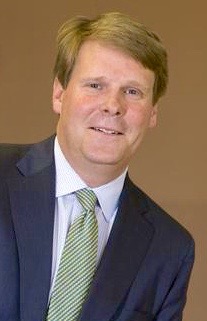
Robert G. Culp, IV
About Robert G. Culp, IV
President & CEO of Culp, Inc. since January 1, 2020; director since 2020; age 54; with the company since 1998, including President of Culp Home Fashions (2004–2019), COO (Oct 2018), and President (Mar 2019) before becoming CEO. Under his tenure, the board maintains separation of Chair and CEO, with a lead independent director and fully independent key committees, and CULP implemented aggressive pay-for-performance designs and cost restructuring amid a difficult home furnishings cycle . Company performance indicators disclosed in the proxy show three-year TSR index values declining (value of $100 investment: 84.52→71.21→59.44 for FY2023–FY2025) and net losses of $(31.5)mm, $(13.8)mm, and $(19.1)mm, respectively; adjusted loss from operations improved ~15% YoY in FY2025 after restructuring initiatives targeting $10–$11mm annualized savings .
Past Roles
| Organization | Role | Years | Strategic impact |
|---|---|---|---|
| Culp, Inc. | President & CEO | 2020–present | Led restructuring and integration of divisions; pivoted comp to 100% performance-based RSUs; maintained governance separation of Chair/CEO . |
| Culp, Inc. | President | Mar 2019–2019 | Elevated from COO to President in 2019, preceding CEO appointment . |
| Culp, Inc. | Chief Operating Officer | Oct 2018–Mar 2019 | Oversaw operations across segments prior to CEO role . |
| Culp Home Fashions (CULP) | President | 2004–2019 | Led mattress fabrics division; deep industry operating experience . |
External Roles
No external public company directorships or committee roles for Mr. Culp were disclosed in the 2025 or 2023 DEF 14A biographies .
Fixed Compensation
| Metric | FY2024 | FY2025 |
|---|---|---|
| Base salary ($) | 500,000 | 500,000 (CEO salary frozen since FY2023) . |
| All other compensation ($) | 115,417 (401k match, life insurance, deferred comp contribution, perqs) | 115,947 (same categories) . |
Notes: Company maintained below-median salary positioning versus peers and froze NEO salaries in FY2025; CEO salary also frozen in FY2023–FY2024 .
Performance Compensation
Annual Incentive Plan (AIP) – FY2025 design and outcome
- Metrics and weights (Executive Shared Services, applicable to CEO): Adjusted Operating Income (Loss) 60%; Adjusted Operating Cash Flow 20%; Net Sales 20%; 40% negative moderator on cash flow and revenue components if adj. operating income below threshold; no payout if significantly below threshold .
- Outcome: No AIP payout for any NEOs in FY2025 (below threshold on all metrics) .
| Measure | Threshold | Target | Maximum |
|---|---|---|---|
| Adjusted Operating Income (Loss), $ | (3,428,000) | 12,632,000 | 18,632,000 |
| Net Sales, $ | 222,919,000 | 238,000,000 | 254,000,000 |
| Adjusted Operating Cash Flow, $ | (2,500,000) | 2,000,000 | 6,500,000 |
| AIP payout result | — | — | 0% (no payout) |
AIP opportunity sizing for CEO in FY2025:
| Level | Amount ($) |
|---|---|
| Threshold | 100,000 |
| Target | 500,000 |
| Maximum | 1,000,000 |
Long-Term Incentives (LTIs)
- FY2025 grants: 100% Performance-Based RSUs (PBRSUs), 3-year cumulative adjusted operating income goal; +/-25% TSR moderator vs peer group; earned shares vest after ~3 years if performance and service conditions met .
- CEO FY2025 grant: 107,527 target PBRSUs (grant-date fair value $575,269) .
- Realization outlook: No PBRSUs earned under FY2023 program; FY2024 PBRSUs did not vest/are not expected to vest; FY2025 PBRSUs not expected to vest based on outlook (below threshold) .
| Grant | Type | Target units | Payout range | TSR modifier | Status/expectation |
|---|---|---|---|---|---|
| FY2025 | PBRSU | 107,527 | 0%–200% of target | +/-25% vs peer TSR | Not expected to vest (below threshold trajectory) . |
| FY2024 | PBRSU | — | — | — | No vest/expected none (below threshold) . |
| FY2023 | PBRSU | — | — | — | No vest (below threshold) . |
Equity Ownership & Alignment
| Item | Detail |
|---|---|
| Beneficial ownership | 403,220 shares (3.2% of 12,605,306 SO) as of 7/29/2025 . |
| Ownership breakdown | ~104,030 shares via 401(k); 1,740 shares in trust for daughter; 1,740 in trust for son (CEO sole trustee) . |
| Unvested time-based RSUs | 13,935 units vesting 7/11/2025; 22,361 units vesting 7/17/2026 . |
| Outstanding performance-based awards (unearned) | FY2022 PBRSU: 8,361 units (presented at threshold); FY2023 PBRSU: 4,472 units (presented at threshold, with 0 earned for FY2024–FY2025 to date); FY2025 PBRSU: 21,505 units (presented at threshold) . |
| Pledging/hedging | Prohibited; no executive officers or directors have pledged company securities . |
| Ownership guidelines | CEO 3x base salary; as of 4/27/2025 all directors and NEOs subject for 5+ years met guidelines (except CFO still in retention phase) . |
Note: “Outstanding performance-based awards” counts in table are the proxy’s disclosure convention (presented at threshold where applicable), not earned amounts; performance programs are tracking below threshold per Compensation Discussion and Analysis .
Employment Terms
| Provision | Terms (CEO) |
|---|---|
| Employment agreement | None (company does not provide employment agreements) . |
| Change-in-control (CIC) | Double trigger; 1.99x total cash comp (salary + target bonus) lump sum upon qualifying termination in connection with CIC, plus prior-year bonus if unpaid . |
| Non-compete after CIC termination | Additional 1x total cash comp paid over 12 months in exchange for 12-month non-compete/non-solicit . |
| Excise tax gross-ups | None; payouts reduced to avoid 280G excise tax . |
| CIC equity vesting | PBRSUs/RSUs vest at target upon CIC plus qualifying termination; estimated CEO equity value $970,418 as of FY2025 year-end . |
| Estimated CIC payout (as of 4/27/2025) | Change of Control Payment: $1,990,000; Non-Compete Payment: $1,000,000; Total: $2,990,000 . |
| Clawback | SEC/NYSE-compliant clawback for incentive comp (including “little r”) with recovery of excess for prior 3 fiscal years . |
| Anti-hedging/anti-pledging | Prohibits hedging; strongly discourages pledging; pre-clearance required; none pledged . |
Board Governance
- Roles: CEO and director (since 2020); not independent. Board Chair is non-employee (Saxon); Lead Independent Director (Jackson) presides over regular executive sessions .
- Committees: CEO sits on Executive Committee (Saxon—Chair; Culp; Jackson) and Strategy Committee (Culp; Jones; Tyson) .
- Independence: 6 of 8 director nominees independent; all Audit/Compensation/Governance committees 100% independent .
- Meeting cadence: FY2025 Board 14 meetings; all directors then on the Board attended ≥75% of meetings and their committees .
- Policy guardrails: One-share, one-vote; no poison pill; robust stock ownership; anti-hedging/pledging .
Director Compensation (Context)
Employee directors (including the CEO) receive no additional director pay; non-employee directors receive cash retainers and annual RSU grants; CEO receives no director compensation .
Compensation & Incentives Detail
Summary Compensation (CEO)
| Metric | FY2024 | FY2025 |
|---|---|---|
| Salary ($) | 500,000 | 500,000 |
| Bonus ($) | — | — |
| Stock awards ($, grant-date fair value) | 556,348 | 575,269 |
| Non-equity incentive ($) | 105,000 (FY2024 AIP) | — (no payout) |
| Above-market deferred comp earnings ($) | 4,498 | 5,235 |
| All other compensation ($) | 115,417 | 115,947 |
| Total ($) | 1,281,263 | 1,196,451 |
FY2025 LTI Grant Detail (CEO)
| Grant date | Instrument | Target units | Grant-date fair value ($) |
|---|---|---|---|
| 8/8/2024 | PBRSU (3-year AOI, TSR modifier) | 107,527 | 575,269 |
Performance & Track Record
| Fiscal year | TSR index (value of $100) | Net loss ($000s) |
|---|---|---|
| 2023 | 84.52 | (31,520) |
| 2024 | 71.21 | (13,819) |
| 2025 | 59.44 | (19,103) |
Operationally, management executed a restructuring plan in FY2025 (Quebec plant closure; Stokesdale optimization; Haiti consolidation; China finishing restructuring) targeting $10–$11mm annualized savings; adjusted operating loss improved ~15% YoY to $(9.0)mm despite reported operating loss $(18.4)mm including $9.4mm restructuring-related items .
Compensation Peer Group and Governance Feedback
- Peer group methodology refined for FY2025 to remove significantly larger companies and add closer-size peers; examples include additions (Jerash Holdings, Crown Crafts) and removals (Ethan Allen, Insteel, Lovesac, Rocky Brands, Superior Group) .
- Independent consultant (Pearl Meyer) supports design/benchmarking; committee fully independent .
- Say-on-Pay: 67.6% approval in 2023 prompted outreach with holders of >39% of shares; program changes led to ~83% approval in 2024 .
- Design shifts responsive to investors: 100% PBRSUs for NEOs in FY2025; tightened gatekeepers/moderators; adoption of clawback aligned to SEC/NYSE rules .
Vesting Schedules and Potential Liquidity Events
- Time-based RSUs scheduled to vest: 13,935 (7/11/2025) and 22,361 (7/17/2026) for CEO; any earned PBRSUs under FY2025 program would vest after the three-year period (though outlook indicates below-threshold performance) .
- Company policy prohibits hedging and discourages pledging; any transactions subject to insider trading policy windows/pre-clearance .
Board Service: Dual-role Implications
- CEO serves as a director and on the Executive and Strategy Committees; Board Chair is a non-employee; lead independent director structure with regular executive sessions mitigates dual-role influence. Compensation, Audit, and Governance committees remain fully independent, reducing conflicts and preserving oversight .
Risk Indicators and Red Flags
- No hedging/pledging; no employment agreements; double-trigger CIC; no excise tax gross-ups (shareholder friendly) .
- 2023 Say-on-Pay dip (67.6%) improved after responsive changes (~83% in 2024) .
- Activist shareholder cooperation agreements (22NW) introduced Strategy Committee and board nominees; standstill caps stake and requires voting alignment during period—potential for constructive pressure and capital allocation focus .
Investment Implications
- Alignment: CEO’s realized pay is meaningfully variable—no FY2025 AIP payout and multi-year PBRSUs not vesting—indicating stringent pay-for-performance alignment; ownership of ~3.2% plus guideline compliance reinforces skin-in-the-game .
- Retention risk vs. motivation: Salary freezes since FY2023 and multiple cycles of non-vesting PBRSUs may constrain realized compensation, which can motivate turnaround execution but also elevate retention risk if market opportunities arise .
- Trading/flow considerations: Time-based RSU vesting (July 2025 and July 2026) may create periodic liquidity events; however, anti-hedging/insider trading policies and lack of pledging mitigate forced-sale risk .
- Governance and strategy: Independent board structure, lead independent director, and activist cooperation (Strategy Committee) suggest continued oversight on capital allocation and restructuring; if operating recovery lifts AOI and TSR, future PBRSU realizations could resume, improving alignment optics .