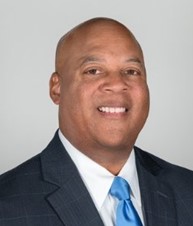
James R. Ray
About James R. Ray
James R. Ray, 61, is President and CEO of Commercial Vehicle Group (CVG) and a non‑independent Director, having joined CVG’s board in March 2020 and been appointed CEO in December 2023 . He holds an MS in Manufacturing Management (Kettering University) and a BS in Electrical & Electronics Engineering (Howard University) . In 2024, CVG’s TSR fell to a $39.12 value of an initial $100 investment and reported a net loss of $35.7M with Adjusted Operating Income of $6.5M, contextualizing pay-for-performance outcomes under Ray’s tenure as CEO through year-end 2024 .
Past Roles
| Organization | Role | Years | Strategic Impact |
|---|---|---|---|
| Stanley Black & Decker | President, Engineered Fastening | 2013–Nov 2020 | Led global industrial P&L and operational leadership roles |
| TE Connectivity | Global P&L and engineering leadership | Not disclosed (part of 25+ years) | Electronics/electrical engineering operations aligned with CVG’s strategy |
| Delphi | Global P&L and engineering leadership | Not disclosed (part of 25+ years) | Automotive operations and engineering leadership |
| General Motors | Global engineering leadership | Not disclosed (part of 25+ years) | Automotive engineering and operations |
External Roles
| Organization | Role | Years | Notes |
|---|---|---|---|
| Spirit AeroSystems, Inc. | Independent Director | Current (as of 2025) | Serves concurrently with CVG CEO role |
Fixed Compensation
| Metric | 2023 | 2024 |
|---|---|---|
| Base Salary ($) | $10,385 | $900,000 |
| All Other Compensation ($) | $362,359 | $13,800 (401(k) match) |
Notes: 2023 reflects partial-year CEO transition; All Other Compensation includes company retirement plan contributions .
Performance Compensation
Annual Incentive Plan (AIP) – 2024 Outcome and 2025 Design
| Metric (Weight) | Threshold | Target | Superior | Actual | Payout (% of target) |
|---|---|---|---|---|---|
| Operating Income Margin (60%) | 1.9% | 2.9% | 3.9% | 0.9% | 0% |
| New Revenues ($M) (20%) | 80 | 100 | 120 | 105.4 | 127% |
| Operating Working Capital % Sales (20%) | 22.0% | 20.0% | 18.0% | 21.1% | 75% |
| Weighted AIP Payout | — | — | — | — | 40% before discretion; reduced to 0% by Committee |
Target AIP opportunity for 2024 and 2025: CEO 100% of salary; CFO 65%; CLO 75%; CHRO 60% . 2025 metrics weighting remains Revenue (20%), Operating Income Margin (60%), Operating Working Capital % Sales (20%); CEO and corporate officers are 100% tied to enterprise results .
Long-Term Incentive Plan (LTI) – Structure, Grants, Vesting
| Type | Grant Date | Target Value | Performance Measure(s) | Vesting |
|---|---|---|---|---|
| Time-based Restricted Stock (RS) | Dec 20, 2023 | Included in 2023 stock awards ($1,521,843) | N/A | Ratable over 3 years; “Rule of 70” cliff vesting applies |
| Performance Shares (PS) | Mar 28, 2024 | $880,000 target; $1,760,000 max | Relative TSR vs peer group; ROIC Year 1 | Earned after 3-year period (Jan 1, 2024–Dec 31, 2026) |
| Cash Performance Awards | Mar 28, 2024 | $880,000 target; $1,760,000 max | Relative TSR; ROIC | Vests Dec 31, 2026; payout based on performance |
Additional design details:
- CEO 2024 LTI target was $3,200,000; restricted share component 45% (moving to 40% for 2025) .
- No stock options granted in 2024 across NEOs; none outstanding as of the filing .
- 2024 3-year TSR award paid 0% to certain NEOs for 2022–2024 window; CEO’s PS and cash awards are on 2024–2026 window .
Equity Ownership & Alignment
| Item | Amount |
|---|---|
| Total Beneficial Ownership (shares) | 265,939 |
| Ownership (% of outstanding) | 0.8% |
| Unvested RS at 12/31/2024 | 144,731 (vesting 12/31/2025 and 12/31/2026) |
| Performance Shares (target) outstanding | 140,060 (0–200% payout range; performance period ends 12/31/2026) |
| Options (exercisable/unexercisable) | None |
| Shares pledged as collateral | None; “No shares beneficially owned…are pledged as security” |
| 2024 Stock Vested (CEO) | 86,081 shares; $256,686 value realized |
Stock Ownership Guidelines and Sale Restrictions:
- CEO must hold shares equal to 5× base salary; cannot sell awarded shares for at least one year post-vesting and until guidelines are met (tax withholding exceptions allowed) .
- Anti-hedging and anti-pledging policy in place; margin accounts prohibited; limited pledging may be approved by the Board only with demonstrated repayment capacity (no margin) .
Implication: Scheduled RS vesting in 2025–2026 and performance awards maturing by 12/31/2026 create potential supply; sale restrictions and ownership guidelines mitigate near-term insider selling pressure .
Employment Terms
| Provision | Details |
|---|---|
| Change-in-Control Agreement | Executed Dec 2023 (CEO) |
| Severance (no COC) | 24 months salary continuation; prior-year earned AIP; prorated current-year AIP |
| Severance (COC + termination within 13 months) | 24 months base + target annual bonus; COBRA 18 months; immediate vesting of RS; earned but unpaid incentive; PS may be settled at target at Committee discretion |
| Non-compete / Non-solicit | 12 months post-termination |
| Clawback | Restatement-driven recoupment of excess incentive and time-based equity for prior 3 fiscal years, per NYSE 303A.14 and Rule 10D-1 |
| Anti-hedging/pledging | Hedging and pledging prohibited; limited pledging only with prior Board approval and no margin accounts |
Potential Payments (as of 12/31/2024; estimates):
| Scenario | Severance Payment | RS Value | Stock Performance Award | Cash Performance Award | Benefits/Legal | Total |
|---|---|---|---|---|---|---|
| Death/Disability | $900,000 | $358,933 | — | — | — | $1,258,933 |
| Retirement | — | $358,933 | $694,698 | $78,575 | — | $1,132,206 |
| Involuntary (no COC) | $1,800,000 | $358,933 | $694,698 | $78,575 | $27,000 COBRA | $2,959,206 |
| COC only | — | — | $694,698 | $78,575 | — | $773,273 |
| COC + termination ≤13 months | $2,700,000 | $358,933 | $694,698 | $78,575 | $27,000 COBRA; $150,000 legal | $4,009,206 |
Note: PS treatment and vesting under COC/termination scenarios per plan provisions (Committee may deem targets met at 100%) .
Board Governance
| Attribute | Detail |
|---|---|
| CVG Board Service | Director since March 2020; non‑independent due to CEO role |
| Independence structure | Independent, non‑executive Chairman (Griffin retiring; Johnson expected to become Chairman post‑2025 meeting) |
| Committee memberships | Audit, Compensation, NG&S composed entirely of independent directors; CEO not on committees |
| Attendance | 100% Board and committee attendance by directors in 2024; CEO’s board attendance not singled out but Board attendance was 100% |
| Executive sessions | Independent directors met in executive session eight times in 2024; two times YTD 2025 |
Dual-role implications: CVG separates the CEO and Chair roles, maintaining an independent Chair and fully independent key committees, which mitigates typical CEO/Chair concentration risks and promotes oversight of management compensation and strategy .
Director Compensation (context; CEO is management director)
- Non‑employee directors receive $85,000 cash retainer; Chair fees: Board $80,000; Audit Chair $20,000; Compensation Chair $15,000; NG&S Chair $10,000; plus annual restricted stock (~$120,000) with one‑year cliff vest . James Ray’s independent director grant from May 2023 (13,716 shares) cliff vested May 10, 2024 .
Compensation Committee Analysis and Peer Group
- Compensation Committee: Independent directors; 2024 meetings = 5; responsibilities include CEO evaluation, executive pay decisions, plan oversight, and risk review .
- Consultant: Meridian Compensation Partners engaged; Committee determined independence; provides benchmarking and design advice .
- Peer groups: Compensation/TSR peer group includes industrials such as Astec Industries, Columbus McKinnon, Federal Signal, Gentherm, Modine, Wabash, etc. (full list in proxy) .
- Pay positioning: For 2025, base, target annual incentives, and LTI targeted near the 50th percentile/median; payouts above median require outperformance .
- Pay mix: 82% of CEO target compensation is variable (“at risk”) .
Say‑on‑Pay & Shareholder Feedback
- 2024 say‑on‑pay approval: ~88.2% support; Committee viewed this as strong endorsement and maintained approach, continuing to align pay with performance .
Performance & Track Record
| Measure | 2024 |
|---|---|
| Compensation Actually Paid (CEO) ($) | 981,427 |
| TSR (value of initial $100 investment) | 39.12 |
| Peer Group TSR (value of initial $100) | 177.98 |
| Net Income (Loss) ($) | (35,734,000) |
| Adjusted Operating Income ($) | 6,482,000 |
Pay-for-performance linkage evidenced by zero AIP payout via negative discretion due to broader company performance, despite certain metric achievements .
Risk Indicators & Red Flags
- Clawback policy compliant with Rule 10D‑1; broad coverage over bonus, STI, time‑based equity, RSUs, PSUs .
- Anti‑hedging/pledging/margin prohibitions; limited pledging only with prior Board approval; no pledged shares for CEO disclosed .
- No tax gross‑ups in COC agreements .
- No stock option repricing permitted without shareholder approval under equity plan .
Compensation Structure Analysis
- Equity-heavy LTI with 3-year performance horizon (TSR and ROIC) increases alignment; absence of options reduces repricing risk .
- Committee exercised negative discretion to zero AIP payout in 2024 despite partial KPI attainment, signaling tight alignment to shareholder outcomes .
- Ownership guidelines and one‑year post‑vesting hold requirements constrain short-term selling, supporting alignment and retention .
Investment Implications
- Alignment: High variable pay mix (82%) and multi‑year TSR/ROIC metrics support long‑term value orientation; 2024 zero AIP underscores discipline .
- Retention and transition risk: CEO’s COC terms (2× base + target bonus, immediate RS vesting, benefits continuation) are competitive and may reduce attrition risk during strategic shifts or transactions .
- Insider selling pressure: Material RS vesting in 2025 and 2026 and PS/cash performance awards maturing in 2026 could add supply; mitigated by one-year post‑vesting sale restrictions and ownership guideline compliance requirements .
- Governance quality: Independent Chair and fully independent committees reduce dual‑role concerns and enhance oversight, supporting investor confidence .
- Performance watch‑outs: 2024 TSR underperformance versus peers and net loss increase execution scrutiny for 2025 bonus metrics (Revenue/OI Margin/OWC), with pay set near market median and above‑median payouts contingent on outperformance .