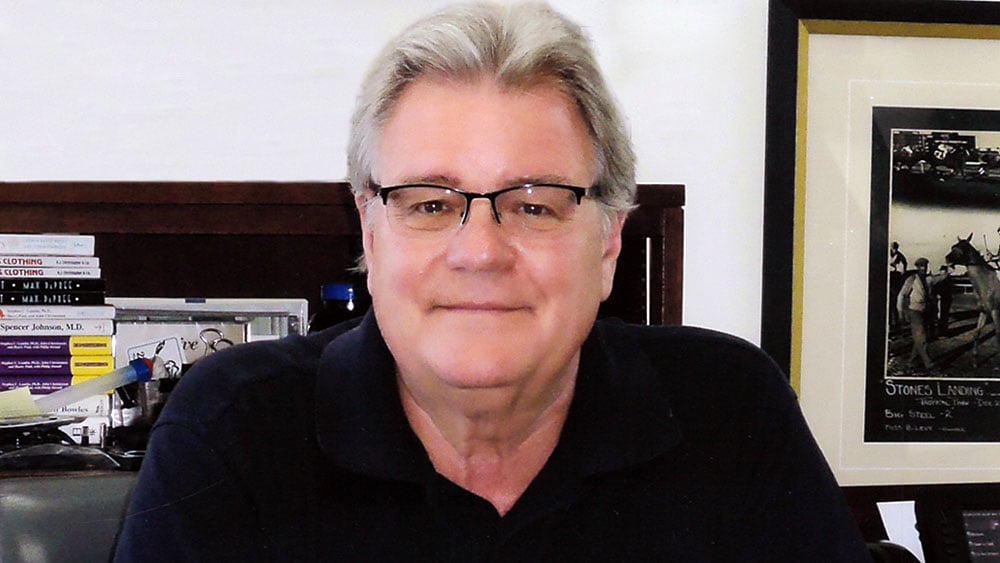
John Casella
 CASELLA WASTE SYSTEMS
About John Casella
John W. Casella (age 74) serves as Chairman, Chief Executive Officer, and Secretary of Casella Waste Systems; he has been a director since 1993 and Chairman since 2001, and will transition to Executive Chairman effective January 1, 2026 as part of a CEO succession plan . He joined his brother Doug a year after the company’s founding and has led the company for ~five decades, driving expansion across the eastern U.S. . Under his leadership, FY2024 revenue increased by $292.7 million (23.1%) with Adjusted EBITDA up $66.0 million (22.4%), and 5‑year TSR rose 129.9% (12/31/2019–12/31/2024); FY2024 net income declined due to higher D&A from acquisitions, while Adjusted Free Cash Flow increased 23.4% .
Past Roles
| Organization | Role | Years | Strategic Impact |
|---|---|---|---|
| Casella Waste Systems, Inc. | Chief Executive Officer | 1976–2025 | Led multi-decade growth of an integrated solid waste and resource solutions platform across the eastern U.S. |
| Casella Waste Systems, Inc. | Chairman of the Board | 2001–present | Chairs classified board; oversees strategy, with Lead Director providing independent counterbalance |
| Casella Waste Systems, Inc. | Director | 1993–present | Long-tenured director with deep industry expertise |
External Roles
- Not disclosed in the filings reviewed.
Fixed Compensation
| Year | Base Salary ($) | Target Bonus % of Salary | Actual Bonus Payout ($) | Actual Payout vs Target |
|---|---|---|---|---|
| 2024 | 763,732 | 150% | 1,306,845 | 114.1% |
| 2023 | 739,692 | 150% | 653,199 | 58.9% |
| 2022 | 647,149 | — | 1,675,105 | — |
Performance Compensation
- Annual cash incentive design (FY2024) tied to Company performance only; four metrics with a Free Cash Flow “gate.” Weightings: Adjusted Operating Income (45%), Adjusted Free Cash Flow (45%), Improvement in Total Recordable Incident Rate (5%), Improvement in Turnover Rate (5%) .
- FY2024 results produced an overall payout of 114.1% of target; Committee adjusted AOI and FCF targets pro‑rata for the Whitetail acquisition to preserve goal rigor and avoid windfalls .
| Metric (FY2024) | Weight | Minimum (0%) | Threshold (60%) | Target (100%) | 150% Payout | Maximum (200%) | Actual | Payout % |
|---|---|---|---|---|---|---|---|---|
| Adjusted Operating Income ($mm) | 45% | 102.7 | 106.6 | 110.1 | 113.2 | 118.5 | 104.3 | 24.1% |
| Adjusted Free Cash Flow ($mm; Gate $128.3mm) | 45% | 129.0 | 145.1 | 146.1 | 148.3 | 154.7 | 158.3 | 200% |
| Improvement in TRIR | 5% | 5.25 | 5.09 | 4.99 | — | — | 5.08 | 64.8% |
| Improvement in Turnover Rate | 5% | 29.4% | 28.1% | 27.2% | — | — | 26.6% | 100% |
| Overall Payout | — | — | — | — | — | — | — | 114.1% |
Equity Ownership & Alignment
- Beneficial ownership (as of March 31, 2025): John holds 512,887 Class A shares and 494,100 Class B shares (50% of Class B), for 6.85% combined voting power; the dual‑class structure concentrates voting influence despite modest Class A economic ownership .
| Holder | Class A Shares | % Class A | Class B Shares | % Class B | Combined Voting % |
|---|---|---|---|---|---|
| John W. Casella | 512,887 | * | 494,100 | 50.0% | 6.85% |
- Unvested/Outstanding equity (12/31/2024): RSUs vest in 3 equal annual installments; PSUs vest at end of 3‑year period on Adjusted FCF and Adjusted EBITDA with a Relative TSR multiplier; RSUs have change‑in‑control accelerated vesting if terminated without cause within 12 months .
| Award Type | Grant Date | Unvested/Unearned Shares | Notes |
|---|---|---|---|
| RSUs | 3/11/2022 | 1,470 | Time‑based; annual vesting over 3 years |
| RSUs | 3/10/2023 | 4,199 | Time‑based |
| RSUs | 3/12/2024 | 5,060 | Time‑based |
| PSUs (2023 grant, target) | 3/10/2023 | 18,896 | 3‑yr performance (2023–2025) with Relative TSR multiplier |
| PSUs (2024 grant, target) | 3/12/2024 | 15,181 | 3‑yr performance (2024–2026) with Relative TSR multiplier |
- 2024 realized vesting: 2022 PSU cohort vested at 220% of target; John received 29,106 shares (performance above max on financial goals plus a 110% Relative TSR multiplier at the 71.7th percentile) .
- Options: No options outstanding as of 12/31/2024; John exercised 27,940 options during 2024 .
- Ownership guidelines: CEO must hold ≥3× base salary; all executive officers (except the newly joined CFO) were compliant as of March 1, 2025 .
- Hedging/pledging policy: Prohibits hedging and pledging/margin transactions for executives and directors, with rare pledge exceptions requiring CFO/GC review and Audit Committee approval for directors/executives .
Performance Compensation (Equity) Details
| Date | Instrument | Amount/Terms | Vest/Measurement | Fair Value |
|---|---|---|---|---|
| 3/12/2024 | RSUs | 5,060 units | 3 equal annual installments (service-vesting) | $474,982 |
| 3/12/2024 | PSUs | 15,181 target (max 36,434) | Performance in FY2026 on Adjusted FCF (50%) and Adjusted EBITDA (50%); Relative TSR multiplier (80–120%) vs Russell 2000 over 2024–2026 | $1,599,318 |
| 2022 PSU vest | PSUs (2022 grant) | 220% achievement (29,106 shares to John) | Metrics achieved at 200%; TSR at 71.7th percentile → 110% multiplier | — |
The Compensation Committee adjusted PSU targets pro‑rata for Whitetail (2024) and Whitetail/Royal (2025–2026) acquisitions to preserve rigor and align pay with shareholder outcomes .
Employment Terms
- Contract/term: Employment agreement (initial 3‑year term, auto‑renews annually) .
- Non‑compete/non‑solicit: 2‑year non‑compete within 300 miles of any company facility; 2‑year non‑solicit of customers/employees after termination (non‑compete inapplicable if he voluntarily resigns without severance unless the company pays base salary/benefits during the period) .
- Severance (without cause): 3× (i) highest prior base salary (paid per payroll) plus (ii) the higher of most recent bonus or 50% of base salary (lump sum), plus accrued comp and 3 years of benefits .
- Good reason/change‑in‑control: If he resigns for “good reason” (requires a change‑in‑control plus specified adverse changes) or “qualified good reason” (specified adverse changes), he receives severance as above plus an excise tax gross‑up intended to offset any Section 4999 excise taxes . Equity plan uses double‑trigger CIC vesting; RSUs vest if terminated without cause within 12 months post‑CIC .
- Clawback: Amended and Restated Clawback Policy (Oct 2023) to recoup excess incentive‑based compensation for the prior 3 years upon an accounting restatement, with enhanced recovery for misconduct/fraud .
Board Governance
- Board structure: Classified board (3 classes); John is a Class III director (term through 2027) and serves as Chairman and CEO; Joe Doody is Lead Director. All committees (Audit; Compensation and Human Capital; Nominating and ESG) are fully independent .
- Meetings/attendance: The Board met 7 times in FY2024; each incumbent director attended ≥75% of combined Board and committee meetings .
- Independence: John is not independent; a majority of directors are independent per Nasdaq rules .
- Say‑on‑pay results: 97.7% support at 2024 Annual Meeting; 96%+ support in 2023, indicating strong shareholder alignment on pay design .
Compensation Structure Analysis
- Mix and at‑risk pay: Majority of CEO compensation is performance‑based; 75% of annual equity granted in PSUs; caps on bonus payouts; no long‑term cash incentives .
- Metric selection and rigor: Annual plan focuses on Adjusted Operating Income and Adjusted FCF with safety/turnover ESG metrics; acquisition‑related goal adjustments preserve rigor and avoid windfalls .
- Equity emphasis and outcomes: High PSU weighting with FCF/EBITDA targets and TSR modifier; recent cohorts (2021, 2022) vested at 220% on strong financial performance and above‑median TSR .
- Peer group/context: Peer set used for context includes GFL Environmental, Waste Connections, Waste Management, and Republic Services (not targeted 1:1 due to size) .
Related Party Transactions (Governance Risk Indicators)
- Casella Construction, Inc. (owned by John Casella, his son, and his brother/vice chairman): Company purchased $7,761,659 in services in FY2024 (with $477,265 outstanding at year‑end); company also provides services to Casella Construction ($242,125 revenue in FY2024). Large related‑party construction bids follow strict multi‑bid and third‑party tabulation procedures .
- Real estate leases with Casella Associates, LLP (owned by John and Doug Casella): $34,127 monthly aggregate rent with CPI escalators; HQ lease runs to Feb 2039; Montpelier facility to May 2039 .
- Historical landfill post‑closure obligations (Bola, Inc., owned by John and Doug): $14,561 paid in FY2024; $16,824 accrued as of 12/31/2024 .
- Family employment: Son/daughter employed (compensation and equity awards disclosed) .
Equity Grants and Vesting Schedules (Detail)
| Year | RSUs (#) | PSUs Target (#) | PSU Max (#) | Notes |
|---|---|---|---|---|
| 2024 | 5,060 | 15,181 | 36,434 | RSUs vest over 3 years; PSUs measured in 2026 with TSR multiplier |
| 2023 | 6,298 | 18,896 | 45,350 | PSUs measured in 2025 with TSR multiplier |
Director Service, Roles, and Dual-Role Implications
- Service history: Director since 1993; Chairman since 2001; CEO and Chair dual role with Lead Director to balance agendas, information flow, and executive sessions of independents .
- Committee roles: John does not serve on the independent Board committees; committee membership comprised solely of independent directors .
- Independence and control: Dual‑class structure (10 votes per Class B share) provides the Casella family with significant voting influence (John and Doug collectively hold 100% of Class B), which can raise minority shareholder protection considerations, though Say‑on‑Pay support remains high .
Say‑on‑Pay & Shareholder Feedback
- Advisory support: 97.7% “FOR” in 2024; 96.6% “FOR” in 2023, signaling strong investor endorsement of program design .
- Consultant: Pay Governance LLC engaged as independent advisor to the Compensation and Human Capital Committee .
Expertise & Qualifications
- Long‑tenured industry operator with deep experience in solid waste operations, strategic planning, and regulatory/public policy; led acquisitions and integration programs; recognized for sustainability focus and employee safety/retention metrics embedded in incentives .
Work History & Career Trajectory
- Joined company leadership in 1976 and has served as CEO since then; led growth from a regional hauler to a diversified resource solutions company .
Compensation Committee Practices
- Committee composed entirely of independent directors; uses an independent consultant; administers clawback; evaluates risk in compensation; adjusts acquisition impacts to maintain goal rigor .
Employment & Change‑of‑Control Economics (Key Terms)
| Provision | Summary |
|---|---|
| Severance (termination without cause) | 3× highest base salary (payroll schedule) + the higher of most recent bonus or 50% of base (lump sum) + accrued amounts; 3 years of benefits |
| Good Reason / Qualified Good Reason | Good Reason requires a change‑in‑control plus adverse changes; Qualified Good Reason covers specified adverse changes; both trigger severance and excise tax gross‑up |
| Non‑compete / Non‑solicit | 2 years; non‑compete within 300 miles of any company facility; non‑solicit of customers/employees |
| CIC equity vesting | Double‑trigger under plan; RSUs vest if terminated without cause within 12 months post‑CIC |
| Clawback | 3‑year lookback on incentive compensation upon restatement; enhanced recovery for misconduct/fraud |
Investment Implications
- Pay-for-performance alignment: High PSU weighting and rigorous FCF/EBITDA targets with a TSR overlay tie realized pay to value creation; recent 220% PSU vestings corroborate strong execution but also introduce larger equity deliveries that can create near‑term selling pressure as shares vest .
- Governance watch‑items: Dual role (Chair/CEO) is mitigated by an empowered Lead Director and fully independent committees; however, the dual‑class structure and recurring related‑party transactions (construction, real estate) elevate governance risk and may influence minority investor perceptions and cost of capital .
- Retention and transition: Strong severance protections, strict non‑compete, and ownership guidelines reduce retention risk; announced CEO succession (John to Executive Chairman; effective 1/1/2026) provides visibility into leadership continuity while modestly reducing key‑man risk .
- Incentive design durability: The committee’s practice of pro‑rata target adjustments for acquisitions preserves incentive rigor and reduces windfall risk amid active M&A, supporting confidence in future pay‑performance linkage .
Peer benchmarking (GFL, WCN, WM, RSG) is used for context rather than strict targeting, reflecting the company’s smaller scale vs. large‑cap peers and reducing peer‑driven pay inflation risk .