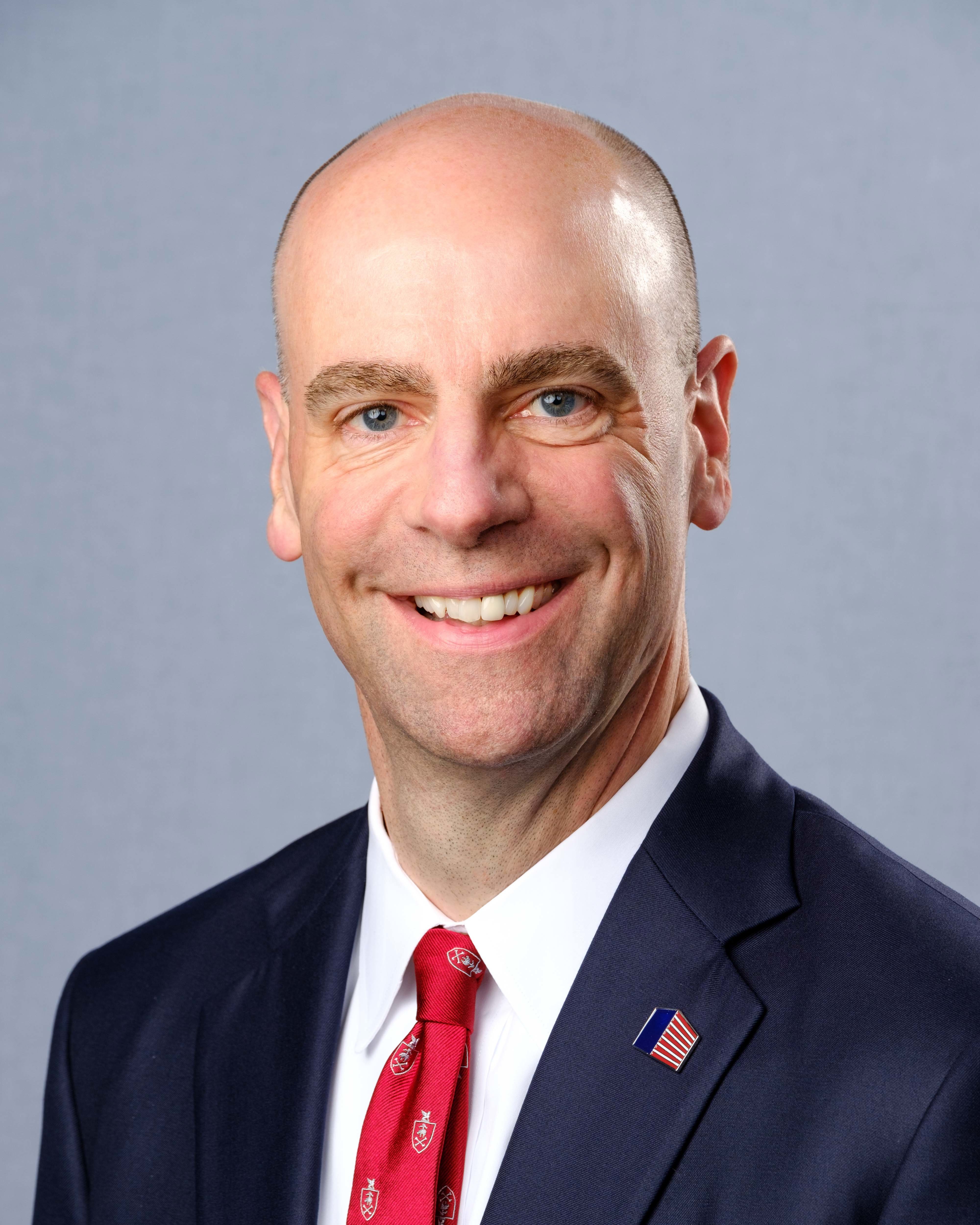
Damon T. Hininger
About Damon T. Hininger
Damon T. Hininger, 55, is CoreCivic’s Chief Executive Officer (CEO) and a director, serving as President & CEO from October 2009 through December 2024 and CEO since January 2025; he joined the company in 1992, rising through facility operations, customer relations, COO, President, and CEO roles . He holds a B.S. from Kansas State University and an MBA from Belmont University; he received the American Correctional Association E.R. Cass Award in 2022 . 2024 performance under his leadership included Adjusted EBITDA of $330.8M, Normalized FFO per share of $1.70, and robust TSR: 1-year 50%, 3-year 118%, 5-year 33% . CXW’s stock rose from $14.53 to $21.74 in 2024, supported by capital allocation actions and occupancy growth .
Past Roles
| Organization | Role | Years | Strategic impact |
|---|---|---|---|
| CoreCivic (formerly CCA) | Chief Executive Officer | Jan 2025–present | Continues capital allocation and growth strategy; responsible for overall execution . |
| CoreCivic | President & Chief Executive Officer | Oct 2009–Dec 2024 | Led REIT-to-C conversion; debt reduction and buybacks; TSR 1- and 3-year strong in 2024 . |
| CoreCivic | President & Chief Operating Officer | 2008–2009 | Oversaw operations and performance . |
| CoreCivic | SVP, Federal & Local Customer Relations (VP since 2002) | 2002–2008 | Expanded federal/state relationships; revenue visibility . |
| CoreCivic | Multiple facility/operations roles; Correctional Officer (entry) | 1992–2002 | Ground-up operational experience (started at Leavenworth Detention Center) . |
External Roles
| Organization | Role | Years | Notes |
|---|---|---|---|
| Belmont University | Trustee; Massey School Board of Advisors | n/a | Higher-education governance and business advisory . |
| United Way of Metropolitan Nashville | Trustee | n/a | Community engagement . |
| Nashville Public Education Foundation | Director | n/a | K-12 education advocacy . |
| Men of Valor | Director | n/a | Reentry and rehabilitation support . |
| Kansas State University Foundation | Director | n/a | University advancement . |
| Boy Scouts of America, Middle Tennessee Council | Executive Board member | n/a | Community service leadership . |
Fixed Compensation
| Metric | 2022 | 2023 | 2024 |
|---|---|---|---|
| Salary actually paid ($) | 1,014,374 | 1,060,751 | 1,092,582 |
| Base salary rate ($) | n/a | n/a | 1,110,000; +3% YoY |
Performance Compensation
Annual Cash Incentive – 2024 Design and Outcome (CEO)
| Component | Target/Scale | 2024 Result | Payout impact |
|---|---|---|---|
| Adjusted EBITDA | Sliding scale; CEO 72.5%–197.5% of base, target 135% at $306.75M | $330.8M | 184.0% of base, pre-modifier |
| Short-Term Goals (4 STGs) | 5%, 5%, 5%, 15% of base (success/fail) | 0 achieved | 0% added |
| Strategic Business Goals (SBGs) modifier | 0.8x–1.2x (0–4 goals) | 3 of 4 achieved (1.1x) | 1.1x applied |
| Total cash bonus | Target 135% of base ($1,474,986) | 202.4% of base ($2,211,822) | 202.4% of base |
Performance metrics and definitions: Adjusted EBITDA as primary financial metric; STGs focused on capacity/utilization and new services; SBGs emphasized culture, human rights, reentry program quality, and workforce stability .
Long-Term Equity – 2024 Grants and Mechanics (CEO)
| Award type | Grant date | Units | Grant-date fair value | Vesting conditions |
|---|---|---|---|---|
| Performance-based RSUs | Feb 15, 2024 | 107,143 | $1,800,002 (Monte Carlo $16.80) | 3 annual tranches; each tranche vests 50–150% on Normalized FFO target and is rTSR-modified (0.8x–1.2x) vs Russell 2000 . |
| Time-based RSUs | Feb 15, 2024 | 84,270 | $1,200,005 ($14.24) | 1/3 annually over 3 years on later of anniversary or audited financials delivery . |
| Special one-time PBRSU | Feb 15, 2024 | 70,225 | $1,000,004 ($14.24) | Cliff vests on/after Feb 15, 2026 only if 2025 Normalized FFO/share > 2024’s $1.70; all-or-nothing (no rTSR modifier) . |
2024 LT performance outcome: Normalized FFO/share of $1.70 hit max (150%); 3-year rTSR at 91st percentile (modifier 1.2x), so the 2024 PBRSU tranche vested at 180% of grant for 2024 performance; identical rTSR-driven 180% vesting applied to 2022/2023 award tranches vesting in 2025 .
| 2024 LT performance inputs | Value |
|---|---|
| Normalized FFO/share (2024) | $1.70 (→ 150% PBRSU factor) |
| 3-year rTSR percentile | Top quartile (modifier 1.2x) |
| Effective PBRSU vesting for 2024 tranche | 180% of grant (1.5×1.2) |
Equity Ownership & Alignment
| Item | Detail |
|---|---|
| Beneficial ownership | 798,886 shares; <1% of outstanding (109,318,283 shares at 3/21/2025) . |
| Stock ownership guideline | Required: 87,138 shares; Held: 798,886; Met—deadline 10/15/2014 . |
| Unvested/uneared RSUs at 12/31/2024 | Three RSU lines outstanding: 120,477 ($2.619M); 191,992 ($4.174M); 290,209 incl. special award ($6.309M) at $21.74 share price . |
| 2024 RSUs vested (shares/value realized) | 299,914 shares; $4,276,774 value on vesting . |
| Hedging/pledging | Prohibited by policy (directors and officers) . |
| Insider policy & clawbacks | Robust insider trading policy (filed as 10-K exhibit); no hedging/pledging; Dodd-Frank-compliant recoupment policy and broader Board clawback for misconduct/adverse events . |
Employment Terms
| Element | Terms |
|---|---|
| Severance (without Cause / for Good Reason) | Cash severance = 1.0× base salary (plan effective 1/1/2024) . |
| Change in Control (CIC) – double trigger | Lump sum 2.99× base salary, plus up to 12 months of benefits; all RSUs accelerate on CIC; no excise tax gross-ups . |
| Potential payouts (as of 12/31/2024) | CIC only: RSU acceleration $13,102,220; CIC+QT total $16,466,628; Death/Disability total $14,602,220 . |
| Non-compete / confidentiality | Executives entered Confidentiality, IP and Non-Competition Restrictive Covenants Agreement when severance plan adopted . |
| Deferred compensation | 2024 CEO deferral $133,122; company match $126,798; aggregate balance $3,895,361 . |
| Perquisites | 401(k) match ($17,250), executive DCP match, life/disability premiums; optional concierge physician benefit (not used by CEO in 2024) . |
Board Governance
- Director since October 2009; not independent by virtue of employment .
- Separation of Chair and CEO since October 2009; independent Chair (Mark A. Emkes); no Lead Independent Director required under current structure .
- Committee roles: Member, Executive Committee (with Chair Emkes) .
- Board/committee attendance: 8 regular Board meetings; independents held 9 executive sessions; average attendance ≈98% (all ≥82%) in 2024 .
- Related-party transactions: None requiring disclosure since start of last fiscal year .
- Say-on-Pay: 97.99% approval at 2024 annual meeting .
Compensation Structure Analysis
- Mix and pay-for-performance: 2024 CEO target pay skewed to performance; 63.6% of CEO total direct compensation performance-based; substantial equity emphasis .
- YoY changes: 2024 base salary rate +3% to $1.11M; stock awards $4.0M (incl. special award), bonus $2.21M vs 2023 stock $2.8M, bonus $1.79M—reflecting strong operating and share price outcomes .
- Shift to RSUs vs options: Company uses RSUs (time- and performance-based); no option grants—reduces risk-taking and preserves value in down markets .
- One-time award: $1.0M PBRSU to CEO (70,225 units) with single FFO/share test for 2025; all-or-nothing and not rTSR-modified—retention-oriented but performance-gated .
- Clawbacks and no tax gross-ups: Dodd-Frank and broader misconduct recoupment policies; no excise or other severance gross-ups .
Say-On-Pay & Shareholder Feedback
| Year | Approval |
|---|---|
| 2024 | 97.99% approval of NEO compensation |
Compensation Peer Group (for benchmarking and rTSR context)
- Peer group used for compensation remained unchanged in 2024 (e.g., GEO Group, Americold Realty Trust, Boyd Gaming, FirstCash, Marriott Vacations, etc.); Exequity is the independent consultant .
- rTSR comparisons for PBRSUs use Russell 2000 to align with small-cap investor expectations .
Performance & Track Record
| Metric | 2024 | 3-year (’21–’24) | 5-year (’19–’24) |
|---|---|---|---|
| TSR | 50% (90th percentile vs peer group) | 118% (96th percentile) | 33% (40th percentile) |
| Adjusted EBITDA | $330.817M | — | — |
| Normalized FFO/share | $1.70 | — | — |
Director Service and Dual-Role Implications
- Hininger is CEO and a director; he is not Board Chair and is classified as non-independent; Board structure separates Chair/CEO and maintains fully independent Audit, Risk, Compensation, and Nominating & Governance Committees, with regular executive sessions—mitigating dual-role and independence concerns .
Equity Ownership & Director Compensation (Board context)
- Director stock ownership guidelines require 4× annual retainer in shares; directors largely in compliance or on path; independent Chair and non-employee directors receive cash retainers plus annual RSUs (2024 ≈$135k; raised to ≈$155k for 2025) .
Employment Terms: Potential Payments Snapshot (CEO)
| Scenario | Total Value |
|---|---|
| Change in Control only (RSU acceleration) | $13,102,220 |
| Qualifying termination upon Change in Control | $16,466,628 |
| Involuntary termination without Cause | $1,110,000 |
| Death/Disability | $14,602,220 |
Investment Implications
- Alignment: Strong pay-performance linkage via Adjusted EBITDA, Normalized FFO/share, and rTSR-modified PBRSUs; CEO far exceeds ownership requirements; hedging/pledging prohibited—supporting shareholder alignment .
- Retention vs risk: One-time 2024 PBRSU (cliff) and multi-year PBRSU design enhance retention; severance plan (1× salary) and 2.99× CIC double-trigger are competitive but not excessive; no tax gross-ups and robust clawbacks reduce governance risk .
- Vesting/flow dynamics: 2024 vesting volume was meaningful (≈300k shares vested for CEO); future vesting tied to audited results release dates could create periodic liquidity windows; policy prohibits hedging/pledging and imposes trading controls .
- Governance: Separate independent Chair, high board attendance, independent key committees, no related-party transactions, and strong say-on-pay (98%) indicate low governance friction and high investor support .
- Performance momentum: 2024 saw strong TSR and maximum FFO/share performance; continued capital allocation (debt refinancing, buybacks) underpins equity value, but incentive metrics emphasize sustained FFO and relative TSR to maintain payouts .