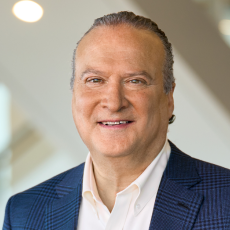
Robert I. Blum
 CYTOKINETICS
About Robert I. Blum
Robert I. Blum, 61, is President & CEO of Cytokinetics and a director since January 2007; he holds B.A. degrees in Human Biology and Economics from Stanford and an M.B.A. from Harvard Business School . Cytokinetics’ pay-versus-performance table shows strong multiyear stockholder return dynamics (value of $100 investment), alongside continued net losses consistent with pre‑commercial biopharma scale-up . The Board maintains a separated Chair/CEO structure (Chair: Dr. John T. Henderson), and classifies Blum as non‑independent given his executive role .
| Performance Indicator | 2020 | 2021 | 2022 | 2023 | 2024 |
|---|---|---|---|---|---|
| Company TSR – $100 initial investment | $196 | $430 | $432 | $787 | $443 |
| Peer Group TSR – $100 initial investment | $126 | $125 | $111 | $115 | $114 |
| Net Loss (thousands) | $127,290 | $215,314 | $388,955 | $522,664 | $587,118 |
Past Roles
| Organization | Role | Years | Strategic Impact |
|---|---|---|---|
| Cytokinetics | President & CEO; Director | 2007–present | Led financing, late‑stage development, and pre‑commercial buildout . |
| Cytokinetics | President | 2006–2007 | Transition to CEO leadership . |
| Cytokinetics | EVP Corp Dev & Commercial Ops; Chief Business Officer | 2004–2006 | Built BD/commercial platform . |
| Cytokinetics | EVP Corp Dev & Finance; CFO | 2004 | Finance leadership . |
| Cytokinetics | SVP Corp Dev & Finance; CFO | 2001–2003 | Early finance/BD leadership . |
| Cytokinetics | VP Business Development | 1998–2001 | Foundational partnering . |
| COR Therapeutics | Director, Marketing; Director, Business Development | 1991–1996/1996– | Commercial and BD experience . |
| Marion Laboratories; Syntex | Various commercial roles | — | Pharma commercial foundations . |
External Roles
| Organization | Role | Years | Notes |
|---|---|---|---|
| Gamida Cell Ltd. | Chairman, Board of Directors | 2018–2023 | External public‑company governance experience . |
Fixed Compensation
| Year | Base Salary ($) | Target Bonus % (NEIP) | Actual NEIP Paid ($) |
|---|---|---|---|
| 2024 | 825,550 | 75% (CEO; corporate 100%, individual 0%) | 681,079 |
| 2023 | 790,000 | Not disclosed (program in place) | 533,250 |
| 2022 | 742,410 | Not disclosed (program in place) | 395,705 |
- CEO annual cash incentive is capped at 120% of base salary .
- 2024 say‑on‑pay support: ~96% “FOR” at the 2024 annual meeting, indicating broad investor support of the program .
Performance Compensation
| Grant (3/14/2024 unless noted) | Instrument | Quantity / Terms | Grant-Date Value ($) | Vesting / Performance |
|---|---|---|---|---|
| Stock Options | Options | 71,032 @ $63.75 strike | 3,059,995 | Monthly vest through 3/14/2028 . |
| RSUs | RSU | 61,490 units | 3,919,988 | 40% on 3/14/25, 40% on 3/14/26, 20% on 3/14/27 . |
| PSUs – Milestone I | PSU | Target 46,118; threshold 11,530 | 2,940,023 | In Dec-2024, 50% of Milestone I PSUs were earned and 50% forfeited; aggregate 25% of 2024 PSUs deemed earned, half vested immediately and half vests on the anniversary of certification . |
| PSUs – Milestone II | PSU | Target 46,118; threshold 11,530 | 2,940,023 | As of 12/31/2024, performance not yet evaluated; remained capable of satisfaction . |
Additional 2024 activity and signals:
- Options exercised (2024): 113,767 shares; value realized $6,777,863; Stock vested: 94,529 shares; value $6,184,899 (potential liquidity flow, typically via 10b5‑1) .
- Compensation mix moved to include PSUs in 2024 after shareholder feedback; Committee may adopt more “commercial‑stage” PSU metrics post‑launch experience (target 2026+) .
- Annual awards are now policy‑timed (March 15) and new‑hire awards on the 15th calendar day per adopted timing policy in 2025 .
Equity Ownership & Alignment
| Item | Detail |
|---|---|
| Beneficial Ownership | 1,621,936 shares; 1.4% of outstanding . |
| Composition | 252,613 common held directly; 2,083 in each of two 2003 irrevocable trusts; 1,365,157 shares underlying options exercisable within 60 days (SEC 60‑day standard) . |
| Unvested Awards on 12/31/2024 | RSUs: 61,490 ($2,892,490); PSUs: Milestone I earned portion reflected; Milestone II 46,118 target; options detailed by grant/price/term (see Outstanding Awards table) . |
| Stock Ownership Guidelines | CEO must hold 3x base salary; officers retain 100% of net shares until compliant; directors 3x cash retainer . |
| Hedging/Pledging | Prohibited; officers/directors/employees may only trade via 10b5‑1 plans . |
| Clawback | Dodd‑Frank‑compliant incentive compensation recoupment policy adopted Oct 2023 . |
Employment Terms
| Change‑in‑Control (CIC) Economics (as of 12/31/2024) | Amount ($) |
|---|---|
| Salary | 1,651,100 |
| Bonus | 536,608 |
| Equity Acceleration – Awards | 8,732,412 |
| Equity Acceleration – Options (unvested spread) | 1,548,308 |
| Benefits Continuation | 98,855 |
| Total | 12,567,283 |
Key terms and protections:
- Double‑trigger vesting for NEO equity upon CIC plus qualifying termination; no option repricing; CEO NEIP cap 120% of salary .
- CEO has a legacy excise tax gross‑up for parachute payments (grandfathered from 2007 agreement); other executives do not receive gross‑ups .
- EIP CIC mechanics: if awards aren’t assumed, time‑based equity accelerates; performance awards deemed at target; if assumed and non‑employee director later terminated not at own request, full vesting is provided for director awards .
- Severance conditioned on customary confidentiality, IP, and non‑competition covenants; Section 409A compliant timing if applicable .
Board Governance
- Board role: CEO and Class II director; not independent by virtue of employment .
- Leadership: Separate Chair (Henderson); Board policy favors separation and appoints a Lead Independent Director if Chair/CEO were combined; current structure cited as appropriate during commercialization buildout .
- Committees: Blum serves on no Board committees (Audit, Compensation & Talent, Governance, Compliance, Science & Technology, Transactions all comprised of independents) .
- Attendance: Board held 10 meetings in FY2024; each director attended at least 75% of meetings/committees .
- Stockholder engagement and feedback have influenced program design (e.g., PSUs, board over‑boarding policy, classified board reevaluation) .
Compensation Structure Analysis
- Cash vs equity mix: CEO compensation heavily equity‑weighted; 2024 total $14.37m with $12.86m in equity grant-date value; NEIP paid $681k, consistent with high at‑risk design .
- Shift to PSUs and dollar‑denominated equity targets: 2024 introduced PSUs in response to investor input; equity awards sized by target value, improving pay calibration amid share price volatility .
- Risk controls: mandatory 10b5‑1 trading, hedging/pledging bans, clawback policy, and no option repricing; CEO NEIP capped .
- Peer group and positioning: 2024 peers include mid/large‑cap late‑stage biopharmas (e.g., Sarepta, Neurocrine, BridgeBio, Ascendis; full list in filing); targets generally set around median with pay for performance differentiation .
Vesting Schedules and Insider Selling Pressure
- 2024 CEO grants drive monthly option vesting through March 2028 and RSU cliffs in March 2025/2026/2027; PSU Milestone I partial certification in Dec‑2024 created immediate and anniversary‑date vesting events (25% of 2024 PSUs deemed earned; half vested immediately) .
- 2024 option exercises and RSU vesting realized ~$13.0m of gross value for the CEO, executed under a policy that requires 10b5‑1 plans for insiders; ongoing scheduled vesting and any future PSU certifications may create periodic supply, subject to plan sales and tax withholding .
Equity Ownership & Director Service Snapshot
| Item | Detail |
|---|---|
| CEO Beneficial Ownership | 1,621,936 shares; 1.4% of outstanding . |
| Option/RSU/PSU Overhang | CEO outstanding options and unvested RSUs/PSUs detailed in Outstanding Awards table (exercise prices $6.67–$63.75; terms to 2034) . |
| Board Committees | Independent-only committees; CEO serves on none . |
| Independence / Dual-role | CEO is non‑independent director; separate Chair mitigates CEO/Chair concentration . |
Employment & Contracts
- At‑will employment with CIC severance protections (salary, bonus, equity acceleration, benefits) as quantified above; six‑month delay if required by Section 409A .
- Non‑compete and confidentiality obligations are part of severance conditions .
- No pension/SERP; no nonqualified deferred compensation plans .
Say‑on‑Pay & Shareholder Feedback
- 2024 say‑on‑pay ~96% FOR; Committee adopted PSUs and dollar‑value equity sizing and monitors dilution and share usage vs peers .
- Stock ownership and retention guidelines reinforce alignment; recoupment policy implemented in 2023 .
Compensation Peer Group (2024)
- Representative constituents: ACADIA, Amicus, Apellis, Arrowhead, Ascendis, Blueprint, BridgeBio, Denali, Halozyme, Immunovant, Intra-Cellular, Insmed, Ionis, Karuna, Legend Biotech, Madrigal, Mirati, Neurocrine, Sarepta, Ultragenyx, Vaxcyte .
- Selection criteria: market cap ~$3–12.5B, employee count 100–1,300, sub‑$1.7B revenue, late‑stage pipeline comparability .
- Philosophy: target total cash and LTI generally around median for target performance .
Risk Indicators & Red Flags
- Legacy excise tax gross‑up for CEO in a CIC (grandfathered) is shareholder‑unfriendly by today’s standards; however, policy states no gross‑ups for others and maintains double‑trigger vesting .
- Dilution management: 2025 proposal to add 5,000,000 shares to the EIP; as of 3/31/2025 options outstanding 11.7m (WAE $33.89), unvested RSU/PSU 2.55m, 1.88m shares available (incl. inducements); Board argues alignment with peers’ usage .
- Insider trading safeguards: strict 10b5‑1, hedging/pledging prohibitions reduce misalignment risks .
Investment Implications
- Alignment: High equity mix with ownership guidelines, clawback, and hedging/pledging bans support long‑term alignment; introduction of PSUs enhances pay‑for‑performance sensitivity around milestone achievement and potential commercialization execution .
- Retention: Multi‑year vesting and substantial unvested equity (plus CIC protections) create strong retention hooks for the CEO through anticipated launch and scale‑up, though the legacy gross‑up is a noted governance blemish .
- Trading/supply: Regular monthly vesting and periodic PSU certifications, combined with policy‑required 10b5‑1 plans, suggest predictable windows of potential insider supply; 2024 exercises/vestings were sizable, but ongoing impact depends on plan sales and tax withholding mechanics .
- Governance: Separate Chair, independent committees, and strong investor engagement mitigate dual‑role concerns and support governance quality during a pivotal transition to commercialization .