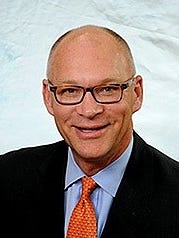
J. Bradley Scovill
About J. Bradley Scovill
President & Chief Executive Officer and Director of Citizens & Northern Corporation and Citizens & Northern Bank since March 2, 2015; Director since 2015. Age 65. B.S. in Finance from The Pennsylvania State University. Prior roles include President & COO of Kish Bancorp/Kish Bank (executive for more than five years), plus executive management positions at PNC Bank and Sterling Financial Corporation, Lancaster, PA .
Performance context during his tenure (Pay vs Performance disclosure): CZNC 5‑year TSR index value fell to 85.52 vs NASDAQ Bank Index peer group at 128.85 in 2024; Net Income was $25.958M in 2024; company-selected measure PPNR‑NCOs/Average Equity was 12.34% in 2024 (prior years shown below) .
Past Roles
| Organization | Role | Years | Strategic impact |
|---|---|---|---|
| Kish Bancorp, Inc. / Kish Bank | President & Chief Operating Officer | >5 years (pre‑2015) | Led banking operations prior to joining CZNC (regional community bank experience) |
| PNC Bank | Executive management positions | Not disclosed | Large-bank operating and leadership experience |
| Sterling Financial Corp. (Lancaster, PA) | Executive management positions | Not disclosed | Regional bank executive experience |
External Roles
No public company directorships or external public roles are disclosed for Mr. Scovill in the proxy biography section .
Fixed Compensation
| Metric ($) | FY 2022 | FY 2023 | FY 2024 |
|---|---|---|---|
| Salary | 535,000 | 575,000 | 592,000 |
| Bonus | 0 | 0 | 0 |
| Stock Awards (grant date fair value) | 224,429 | 132,301 | 577,792 |
| Non‑Equity Incentive Plan Compensation (annual cash incentive) | 62,942 | 146,168 | 205,012 |
| All Other Compensation | 265,749 | 372,118 | 70,441 |
| Total | 1,088,120 | 1,225,587 | 1,445,245 |
Notes: “All Other Compensation” includes employer contributions to stock/retirement plans, insurance premiums, dividends on restricted stock, and perquisites; for 2024 items and amounts are detailed in the All Other Compensation table (e.g., stock plan $6,900; 401(k) $16,500; insurance premiums $7,020; dividends $9,942; perqs $30,079) .
Performance Compensation
Short‑Term Incentive (Annual) – 2023 detail for Scovill
| Metric | Weight | Target | Actual | Payout (% of base salary) |
|---|---|---|---|---|
| Corporate earnings (Award Matrix Result) | 50% | 100% | 97.32% | 17.0% |
| KPI: Growth in Annual Avg Deposits | 7.5% | 6.2% | (1.2)% | 0.0% |
| KPI: Total Revenue | 7.5% | $117.2M | $106.7M | 0.0% |
| KPI: Efficiency Ratio | 7.5% | 61.50% | 69.51% | 0.0% |
| KPI: Total Wealth Mgmt Revenue | 7.5% | $9.7M | $9.3M | 1.4% |
| Individual performance | 20% | — | — | 7.0% |
| Total | 100% | — | — | 25.4% |
2024 overview: NEO payouts ranged from 26.6%–34.6% of base salary; corporate award funded at 126% of target based on (PPNR‑NCOs)/Average Equity of 12.01% vs peer median 10.94% (12 months ended 9/30/24). KPIs contributed 8.0%–12.2%; individual performance 2.5%–6.0% of base salary .
Long‑Term Incentives (LTI) – 2024 grants to Scovill
| Award Type | Grant Date | Shares Granted | Grant Date Fair Value ($) | Vesting / Conditions |
|---|---|---|---|---|
| RSA (time‑based) | 1/31/2024 | 4,033 | 86,246 | 1/3 annually over 3 years; time‑based |
| PRSA (performance‑based) | 2/20/2024 | 4,492 | 86,246 | 1/3 annually, subject to meeting annual performance; 50% based on PPNR‑NCOs/Average Equity percentile ≥35; 50% based on PPNR‑NCOs/Average Assets percentile ≥65 vs peer group |
| Restricted Stock (Employment Agreement grant) | 7/30/2024 | 20,000 | 405,300 | Vests in full on 4/30/2027; accelerates on termination without Cause or for Good Reason per agreement |
Additional notes: 2024 PRSA performance conditions were met across 2022–2024 grants; all potential PRSA shares for those years vested based on 2024 performance . No stock options were granted in 2022–2024 .
Equity Ownership & Alignment
- Beneficial ownership (as of Feb 5, 2025): 128,945 shares; less than 1% of class. At that date there were no outstanding stock options company‑wide for insiders .
- Outstanding unvested equity at 12/31/2024: 35,292 shares; market value $656,431 .
- Shares vested in 2024: 8,438 shares; realized value $174,582 .
- Stock ownership guidelines: CEO must own ≥3x prior‑year base salary; EVPs ≥1x. All NEOs currently meet the minimum requirements .
- Anti‑hedging: Directors and officers are prohibited from hedging company stock (puts, calls, swaps, collars, exchange funds, etc.) .
| Ownership item | Amount |
|---|---|
| Beneficial ownership (2/5/2025) | 128,945 shares |
| Unvested restricted stock (12/31/2024) | 35,292 shares; $656,431 value |
| 2024 stock vested | 8,438 shares; $174,582 value |
| Options outstanding | 0 (none outstanding at 2/5/2025) |
| Ownership guideline (CEO) | ≥3x prior‑year salary; in compliance |
| Anti‑hedging policy | Hedging prohibited |
Employment Terms
- Agreement effective March 2, 2015; amended June 26, 2017; August 24, 2018; and May 22, 2024; current term ends April 30, 2027 (extendable by mutual agreement ≥6 months prior to expiration). Employment grant of 20,000 restricted shares on 7/30/2024 vests 4/30/2027; accelerates upon certain terminations (without Cause/for Good Reason) .
- Non‑compete/non‑solicit: 24 months post‑termination within 35 miles of any office (for CEO and CFO). Includes customary nondisclosure and mutual non‑disparagement .
- Severance multiples and benefits continuation (double‑trigger on Change in Control): CEO 2.99x with 3 years benefits continuation upon/after a Change in Control; 1.0x with 1 year benefits continuation otherwise .
- No 280G excise tax gross‑ups; payments are cut back to avoid or optimize 4999 excise tax .
- Perquisites include automobile allowance/use and country club membership for CEO ; 2024 “All Other Compensation” line items detailed in proxy .
- Clawback: Executive compensation (annual cash bonus and equity) subject to recoupment upon financial restatement under Nasdaq clawback standards .
Potential payments (as of 12/31/2024):
| Scenario | Cash ($) | SERP Benefit ($) | Health & Welfare ($) | Equity Acceleration ($) |
|---|---|---|---|---|
| Termination without Cause / Good Reason – Before Change in Control | 1,374,804 | 1,317,447 | 17,332 | — |
| Termination without Cause / Good Reason – Upon/After Change in Control | 4,110,664 | 1,317,447 | 51,996 | 656,431 |
| Death | — | 1,317,447 | — | — |
Severance design detail: Lump‑sum equals the sum of highest base salary in prior 3 years + highest bonus/other incentive in prior 3 years + (for CEO/CFO/others noted) highest value of equity awards in prior 3 years, multiplied by the applicable factor; benefits continue for stated period .
Board Governance
- Independence: All directors and nominees are independent except the CEO (Scovill) per Nasdaq standards .
- Board leadership: Independent Chairman (Terry L. Lehman); separation of Chair and CEO roles; Chairman presides over executive sessions and communicates independent director feedback .
- Committees (2024):
- Risk Management Committee member (met 5 times; Chair: Lehman) .
- Asset Liability Committee Chair (met once; merged into Risk Committee as of 4/24/2024) .
- M&A Committee member (met twice; Chair: Lehman) .
- Stock ownership requirements for directors: Minimum 3x annual cash retainer ($45,000) within five years; intended holding of equity awards until guideline met .
- Related party transactions: No related person transactions requiring disclosure in 2024; insider lending conducted on market terms consistent with Regulation O .
Dual‑role implications: Scovill is CEO and a director (non‑independent), but the Board maintains an independent Chair, which mitigates combined power concerns and ensures separation of management and oversight .
Performance & Track Record (Company outcomes during Scovill’s tenure)
| Year | CZNC TSR index (12/31/2019 base=100) | Peer TSR index (NASDAQ Bank) | Net Income ($) | Company‑Selected Measure |
|---|---|---|---|---|
| 2020 | 74.23 | 92.50 | 19,222,000 | Core ROAE 12.77% |
| 2021 | 102.47 | 132.19 | 30,554,000 | Core ROAE 13.59% |
| 2022 | 93.91 | 110.67 | 26,618,000 | Core ROAE 13.86% |
| 2023 | 97.39 | 106.87 | 24,148,000 | Core ROAE 13.13% |
| 2024 | 85.52 | 128.85 | 25,958,000 | PPNR‑NCOs/Average Equity 12.34% |
Note: In 2024, the company‑selected measure changed from Core ROAE to PPNR‑NCOs/Average Equity .
Compensation Structure Analysis
- Mix shift and scale: 2024 saw a material increase in stock awards (to $577,792) driven by regular RSAs/PRSAs and a one‑time 20,000‑share restricted stock grant tied to the employment agreement amendment (vests in 2027), increasing equity‑linked retention .
- At‑risk pay: Non‑equity incentive outcomes moved up with corporate performance and KPIs; 2024 corporate component funded at 126% vs peers (PPNR‑NCOs/Average Equity) .
- Instruments: No options in 2022‑2024; LTI delivered via RSAs and PRSAs with annual performance tests vs peer percentile thresholds on PPNR‑NCOs returns .
- Governance: Clawback aligned with Nasdaq; no excise tax gross‑ups; stock ownership and anti‑hedging policies in place .
- Prior‑year forfeitures: 2022 performance conditions were not met, resulting in forfeiture of certain PRSAs in early 2023 (e.g., Scovill 4,983 shares) – demonstrates performance gating .
Compensation & Performance Peer Group (context for benchmarking)
2023 custom peer group (20 banks) used for program design and competitive analysis includes ACNB, CNB Financial, Fidelity D&D, Mid Penn, Norwood, Orrstown, Civista, Codorus Valley, LCNB, Peoples Financial Services, Arrow Financial, Chemung Financial, Franklin Financial Services, Penns Woods, Shore Bancshares, Citizens Financial Services, First United, Summit Financial Group, AmeriServ Financial, and SB Financial Group .
Equity Ownership & Director/Officer Policies (additional)
- All directors and NEOs meet minimum stock ownership requirements or are within the five‑year compliance period .
- Anti‑hedging policy prohibits hedging transactions by directors and officers .
Employment Contracts – Additional Details
- Good Reason/Cause definitions apply with notice and cure periods; auto allowance/use and club membership per agreement; executives eligible for annual and stock‑based incentives as determined by the Compensation Committee .
- Benefits continuation upon qualifying separation as specified in the severance table; indemnification agreements in place .
Board Service History and Roles
- Director since 2015; currently serves on Risk Management and M&A Committees; chaired the Asset Liability Committee until it merged into Risk in April 2024 .
- Board independence: Scovill is the sole non‑independent director; independent Chairman (Lehman) leads executive sessions and acts as liaison with the CEO .
Equity Award Overhang and Vesting Supply
- Unvested shares (35,292) and the time‑based 20,000‑share grant vest through April 2027; PRSAs also release annually upon performance, creating periodic share releases (potential supply) though no options exist .
Investment Implications
- Pay‑for‑performance alignment: Annual incentives and PRSAs are explicitly tied to profitability efficiency (PPNR‑NCOs returns vs peers), supporting linkage to operating execution; 2024 outperformance vs peer median on PPNR‑NCOs/AE drove above‑target corporate payouts .
- Retention and selling pressure: The 20,000‑share 2024 grant vests cliff in 2027, anchoring multi‑year retention; ongoing RSA/PRSA cycles result in annual vesting and realized shares (8,438 vested in 2024), implying steady but manageable potential supply; absence of options reduces in‑the‑money liquidation pressure .
- Change‑of‑control economics: 2.99x cash multiple and 3‑year benefits continuation upon double‑trigger may be perceived as rich for a community bank and could be a consideration in M&A scenarios; equity accelerates on CIC termination (quantified below), aligning payouts with transaction outcomes .
- Governance risk mitigants: Independent chair, clawback, no tax gross‑ups, Regulation O compliance, and anti‑hedging policy are positives; 2024 related‑party transactions requiring disclosure: none .
- Performance risk: 2024 TSR underperformed the peer index, despite solid earnings and PPNR‑based performance, suggesting market skepticism or balance‑sheet/regional headwinds; continued delivery on PPNR‑NCOs metrics should support incentive vesting but TSR catch‑up remains a watch item .