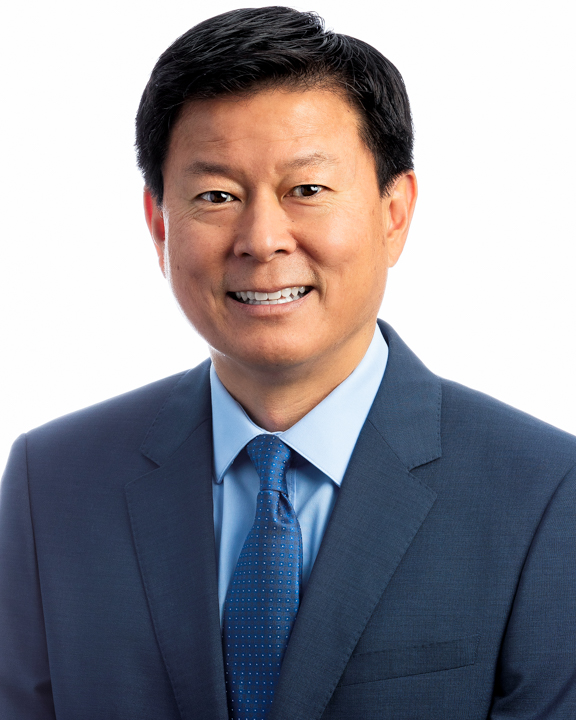
Timothy Go
About Timothy Go
Timothy Go, age 58, is Chief Executive Officer and President of HF Sinclair (DINO) and has served as a director since 2023; he joined the company in June 2020 and became CEO/President in May 2023 after serving as President & COO (Nov 2021–May 2023) and EVP, COO (Jun 2020–Nov 2021) . 2024 corporate results under his tenure included net income of ~$177 million, operating cash flow of ~$1.1 billion, and $1.1 billion returned to shareholders; the company ended 2024 with ~$800 million of cash and ~$2.3 billion of long-term debt . Pay-versus-performance disclosure shows DINO’s cumulative $100 TSR value declined from $123 (2023) to $81 (2024), while 2024 AICP Adjusted EBITDA for PVP purposes was $1,201 million (PVP uses fiscal-year measures and a 12/31/2019 $100 base) .
Past Roles
| Organization | Role | Years | Strategic Impact |
|---|---|---|---|
| HF Sinclair | CEO & President | May 2023–Present | Leads portfolio across refining, renewables, lubes, marketing; Board member enables management–board alignment |
| HF Sinclair | President & COO | Nov 2021–May 2023 | Executed operations integration and optimization across segments |
| HF Sinclair | EVP, COO | Jun 2020–Nov 2021 | Drove downstream operations performance and reliability |
| Calumet Specialty Products GP | CEO | Jan 2016–Apr 2020 (retired Jun 2020) | Led specialty hydrocarbons producer through transformation |
| Flint Hills Resources (Koch) | VP, Operations | Jul 2012–Sep 2015 (various roles 2008–2015) | Oversaw operations for refining/petrochemicals platform |
| ExxonMobil | Various downstream roles | ~18 years (prior to 2008) | Progressive leadership in downstream operations |
External Roles
| Organization | Role | Years | Notes |
|---|---|---|---|
| Celanese Corporation | Director | Current | Public company directorship; adds cross-industry perspective |
Fixed Compensation
| Metric | 2022 | 2023 | 2024 |
|---|---|---|---|
| Base Salary ($) | 800,000 | 1,030,000 | 1,108,461 |
| All Other Compensation ($) | 196,344 | 316,565 | 369,870 |
| Total Compensation ($) | 5,906,440 | 15,527,818 | 12,754,057 |
Notes:
- No employment agreement; executives participate in standard employee benefit plans; limited perquisites (e.g., $15,000 annual allowance; reserved parking; relocation benefits) .
- CEO personal aircraft use allowed with reimbursement for fuel/taxes; company covers up to $50,000 per year of certain direct costs; excess reimbursed by CEO .
Performance Compensation
Annual Incentive (AICP) – Design and 2024 Outcomes
| Element | CEO Weighting | Threshold | Target | Maximum | 2024 Actual | Payout Impact |
|---|---|---|---|---|---|---|
| Financial (AICP Adj EBITDA + Available Free Cash Flow) | 60% | See below | See below | See below | 126% (aggregate) | Above target |
| Operational (ESG, Reliability, OpEx by segment) | 40% | Site metrics-based | Site metrics-based | Multipliers up to 2.5x for ESG/2.0x Reliability | Segment achievements ranged from 25% to 250% by metric/segment | Above target (mix) |
| Strategic & Individual | 0% (CEO) | — | — | — | — | — |
2024 Financial Measure Details:
- EBITDA (AICP-defined) threshold $1,593mm; target $2,580mm; max ≥$3,568mm; actual $1,648.8mm (52.82% of target component) .
- Available Free Cash Flow threshold $1,242mm; target $1,442mm; max ≥$1,642mm; actual $1,992.8mm (200% of target component) .
| CEO Bonus Target and Payout | Value |
|---|---|
| Target Bonus (% of Salary) | 150% |
| 2024 Payout (% of Target) | 134.9% |
| 2024 AICP Paid ($) | 2,225,207 |
Additional design features:
- Bonus “hurdle” caps payout at 50% of target if positive adjusted operating income is not achieved .
- For 2025, Strategic & Individual was eliminated for non-CEO executives; all executives use 60% Financial / 40% Operational .
Long-Term Equity (LTIP)
Structure: CEO awards allocated ~65% Performance Share Units (PSUs) and ~35% Restricted Stock Units (RSUs); PSUs measured over a 3-year period on relative ROCE (50%) and relative TSR (50%) versus the Incentive Peer Group, with a 25%–200% payout curve; RSUs vest ratably over 3 years .
Recent Awards:
| Grant (Purpose) | Target $ | RSUs (#) | PSUs Target (#) | PSU Max (#) | RSU Vesting | Notes |
|---|---|---|---|---|---|---|
| Nov 12, 2024 (FY2025 LTIP) | 8,900,000 | 74,046 | 137,509 | 275,018 | 1/3 on Dec 1, 2025/2026/2027 (or next business day) | Grant-date FV: RSU $3,115,115; PSU $5,935,404 |
| Nov 2023 (FY2024 LTIP) | 7,850,000 | 50,703 | 94,160 | — | Generally 3-year ratable vesting per RSU design | PSU metrics: 50% ROCE, 50% TSR vs peers over 3 years; employment required through 12/1/2026 for payout (exceptions per CIC/termination provisions) |
PSU Payout Curve (relative performance vs peer group):
- 90th percentile+: 200%; 50th percentile: 100%; 25th percentile: 25%; <25th: 0% (interpolated between breakpoints) .
Equity Ownership & Alignment
| Item | Detail |
|---|---|
| Beneficial Ownership (common shares) | 179,423 shares; out of 188,407,394 outstanding (record date); ≈0.095% of shares outstanding (calculated) |
| Unvested RSUs (12/31/24) | 133,037 units; $4,662,947 at $35.05/share |
| Unvested PSUs (12/31/24) | 614,472 units at maximum; $21,537,244 at $35.05/share (table reports at max) |
| Hedging/Pledging | Prohibited for officers; no shares pledged disclosed for directors/NEOs |
| Ownership Guidelines (Officers) | CEO 6x base salary; hold 50% of net shares until compliant; 5-year compliance window; all NEOs compliant or within transition window as of 12/31/24 |
| Director Pay (as employee-director) | Employee-directors (incl. CEO) receive no additional board compensation |
| Deferred Compensation (NQDC) | 2024 contributions by CEO: $844,822 (exec) + $298,020 (company); 2024 earnings $221,968; YE balance $3,026,850 |
Implications:
- Large multi-year unvested equity creates retention hooks and potential supply overhang at vest/settlement dates; hedging/pledging prohibitions reduce misalignment risk .
Employment Terms
| Provision | Key Terms |
|---|---|
| Employment Agreement | None; executives do not have fixed-term employment contracts |
| Clawbacks | Dodd-Frank “no-fault” policy (effective 12/1/2023) for restatements; discretionary misconduct policy permits recoupment/forfeiture within lookbacks; applies to cash and equity incentives as defined |
| Severance Pay Plan (Non-CIC) | If terminated without Cause: CEO gets 200% base salary + 100% target bonus in cash (12 monthly installments) plus 12 months COBRA at active rates; other NEOs: 100% base + 100% target bonus |
| CIC Severance (Double Trigger) | Requires CIC plus termination without Cause/by executive for Good Reason within -6 months/+2 years; CEO multiple 3.0x (base + 3-year avg bonus); others 2.0x; 1-year medical/dental; equity vests at target unless award says otherwise; no 280G gross-ups |
| Good Reason/Cause/Definitions | Standard definitions; notice and cure periods; confidentiality, non-disparagement, non-solicit obligations; release required |
| Quantified CEO Benefits (as of 12/31/24) | CIC + qualifying termination: $24,154,409 total (cash $8,702,826; PSU $10,768,622; RSU $4,662,947; medical/dental $20,014). Termination without Cause (plan): $3,870,014. Death/Disability: $3,429,692 |
Board Governance
- Role: Director since 2023; serves on the Executive Committee .
- Leadership structure: Independent Chairperson of the Board is Franklin Myers; CEO and Chair roles are separate, mitigating dual-role concerns .
- Non-management director compensation framework and ownership/retention policies are disclosed; employees do not receive director fees .
- Anti-hedging/anti-pledging applies to directors and officers; non-management directors have 5x cash retainer ownership guidelines with 5-year compliance window .
Performance & Track Record
| Indicator | 2024 Result |
|---|---|
| Net Income | ~$177 million |
| Operating Cash Flow | ~$1.1 billion |
| Capital Structure Snapshot | ~$800 million cash; ~$2.3 billion long-term debt at YE |
| Shareholder Returns | ~$1.1 billion returned (dividends + buybacks) |
| Safety | Record TRIR 0.17 |
| PVP TSR ($100 base at 12/31/2019) | $81 (2024) vs $123 (2023); Peer Group $173 (2024) |
| PVP AICP Adjusted EBITDA | $1,201 million (2024) |
Compensation Committee and Say-on-Pay
- Committee engages independent consultants; program emphasizes performance-based pay with double-trigger CIC and significant stock ownership/retention requirements; no employment agreements; no tax gross-ups .
- Say-on-Pay support: ~96% approval at 2024 annual meeting .
Risk Indicators and Red Flags
- No hedging/pledging; clawbacks in place; no CIC tax gross-ups; double-trigger vesting reduces single-trigger windfalls .
- CIC payout magnitude is material ($24.15 million as of 12/31/24), driven largely by accelerated equity; investors should monitor potential dilution/overhang and performance alignment of PSU outcomes .
Compensation Structure Analysis
- Mix emphasizes variable, at-risk pay (CEO ~91% variable, 76% equity at target for 2024) with heavy PSU weighting (65% of LTI), tying outcomes to 3-year relative ROCE/TSR versus peers .
- AICP 2024 outcomes show strong Available Free Cash Flow performance offsetting below-target EBITDA versus plan, yielding a 134.9% CEO payout on a 150% salary target, consistent with pay-for-performance design and the bonus hurdle framework .
Equity Vesting and Insider Selling Pressure
- RSUs vest ratably over three years (e.g., 11/2024 grants vest on Dec 1 of 2025/2026/2027); PSUs settle post 3-year performance; as of 12/31/24 Go held 133,037 unvested RSUs and 614,472 PSUs at maximum, creating scheduled supply events subject to performance and service conditions .
- Company prohibits hedging/pledging; officers must retain 50% of net-after-tax shares until guideline compliance, moderating near-term sell pressure .
Investment Implications
- Alignment: High PSU weighting on 3-year relative ROCE/TSR and strong ownership requirements enhance long-term alignment; AICP includes robust financial/operational metrics and a profitability hurdle, limiting windfalls in weak years .
- Retention vs. Overhang: Significant unvested equity supports retention but implies periodic vesting supply; PSU outcomes will be sensitive to sustained ROCE/TSR relative to peers after a 2024 TSR decline (PVP TSR $81 vs $123 in 2023) .
- Downside/Change-in-Control Risk: Double-trigger CIC with a 3.0x multiple and equity acceleration produce sizable payouts ($24.15 million as of YE 2024), but absence of gross-ups and clawbacks mitigate governance risk; monitor M&A optionality and potential acceleration .
- Governance Quality: Separation of Chair/CEO, anti-hedging/pledging, strong Say-on-Pay (~96% support), and use of independent advisors indicate shareholder-friendly practices; investors should track future metric calibration and PSU peer-relative performance to gauge pay-for-performance rigor .
