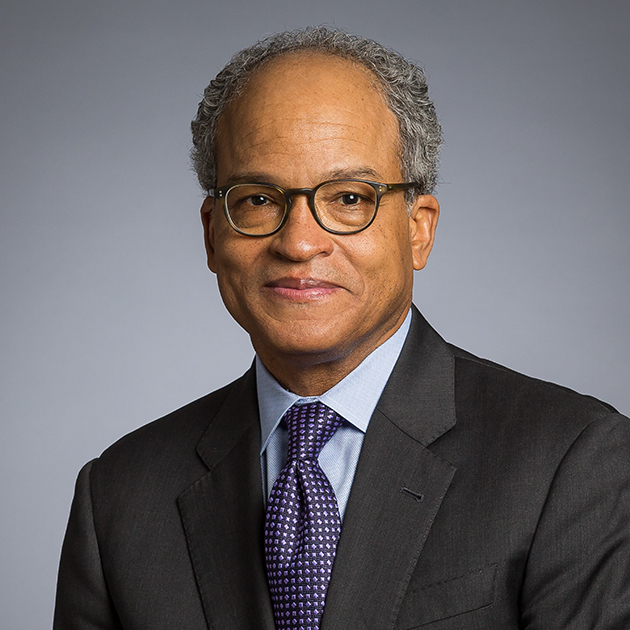
Jason Few
 FUELCELL ENERGY
About Jason Few
Jason Few is President and Chief Executive Officer of FuelCell Energy and has served on the Board since November 2018; he was appointed CEO in August 2019. He has 35+ years in energy and technology leadership, with a bachelor’s in computer systems in business from Ohio University and an MBA from Northwestern University’s Kellogg School of Management . In fiscal 2024, FuelCell Energy generated $112.132 million of revenue, recorded a net loss of $156.778 million, and reported Adjusted EBITDA of $(101.111) million; the company’s TSR (value of a $100 initial investment measured per SEC rules) was $17 versus $72 for its peer index .
Past Roles
| Organization | Role | Years | Strategic impact |
|---|---|---|---|
| BJF Partners, LLC | Founder and Senior Managing Partner | Since 2016 | Strategic consulting across technology and industrial energy sectors |
| Sustayn Analytics LLC | President | 2018–2019 | Led cloud-based waste and recycling optimization platform |
| Continuum Energy | President & CEO | 2013–2016 | Led energy products/services company; enterprise value growth focus |
| NRG Energy, Inc. | EVP & Chief Customer Officer | 2011–2012 | Customer strategy and transformation in integrated energy |
| Reliant Energy | President | 2009–2012 | Retail electricity leadership, product and market execution |
| Smart Energy (retail electricity) | Vice President | 2008–2009 | Retail power commercialization |
| Verve Industrial Protection | Senior Advisor | 2016–2019 | Industrial cybersecurity software advisory |
External Roles
| Organization | Role | Committee roles | Years |
|---|---|---|---|
| Enbridge Inc. (NYSE: ENB) | Director | Audit, Finance & Risk; Sustainability | Since May 4, 2022 |
| Marathon Oil (NYSE: MRO) | Director | — | 2019–2022 |
Fixed Compensation
Multi-year CEO compensation (Summary Compensation Table):
| Metric ($) | FY 2022 | FY 2023 | FY 2024 |
|---|---|---|---|
| Salary | 542,577 | 564,480 | 579,306 |
| Stock Awards (grant-date fair value) | 1,306,250 | 3,732,622 | 3,020,681 |
| Non-Equity Incentive Plan Compensation | 584,220 | 480,960 | 535,473 |
| All Other Compensation | 25,754 | 33,259 | 30,183 |
| Total | 2,458,801 | 4,811,321 | 4,165,643 |
Additional fixed pay parameters:
- 2024 base salary set at $582,036 effective January 1, 2024; 2025 salary freeze implemented (no increase) .
- Target annual incentive increased to 115% of base salary for 2024 to align with market practice; actual 2024 MIP paid at 80% of target .
Performance Compensation
Annual Incentive (MIP) – FY 2024
| Category | Weight | Threshold | Target | Maximum | Actual achievement | Weighted payout |
|---|---|---|---|---|---|---|
| Secure New Backlog (value) | 25% | $250M | $300M | $400M | $248M | 0% |
| Unrestricted Cash at FY-end | 25% | $250M | $300M | $400M | $257M (incl. T-bills amortized cost) | 14% |
| Adjusted EBITDA vs Budget | 25% | (20%) dev | 0% dev | 20% dev | +0.4% vs target | 25% |
| TRIR < 1.6 | 25% | 2.6 | 1.6 | 1.0 | 1.04 | 49% |
| Total operational weighted achievement | 100% | — | — | — | — | 88% |
| Strategic enablers blended weighted achievement | 25% of MIP | — | — | — | Partial (50%/50%/67%) | 56% |
| Blended MIP payout | — | — | — | Max 175% | — | 80% of target |
Notes:
- 2024 strategic enablers: expand solid oxide manufacturing and initial installs (50% payout), demonstrate food/beverage-grade CO2 recovery (50%), progress large-scale carbon capture (67%) .
- No discretion used for 2024 MIP; revenue replaced by backlog $ value to reflect Korean market re-entry and LTSA economics .
Long-Term Incentive (LTI) – FY 2024 grants
| Award type | Grant date | Shares/Units | Grant-date fair value ($) | Vesting/Performance |
|---|---|---|---|---|
| Relative TSR PSUs | 12/11/2023 | 35,454 target; earned range 0–70,908 | 1,733,701 | 3-year PSU vs Russell 2000; target at index match; 0.5x slope; cap 200%; if absolute TSR negative, cap 100% |
| Time-based RSUs | 12/11/2023 | 35,454 | 1,286,980 | Vest ratably over 3 years from grant date |
PSU performance history:
- 2022 Relative TSR PSUs certified at 52.665% of target; vested on December 10, 2024 (continued-service vesting through year 3) .
Equity Ownership & Alignment
| Item | Detail |
|---|---|
| Beneficial ownership | 36,731 shares as of Feb 12, 2025 (less than 1%) . Shares outstanding 21,143,772 . Approximate ownership ≈ 0.17% (derived from cited inputs). |
| Unvested equity | RSUs unvested: 45,457; PSUs unvested: 50,515 at Oct 31, 2024 . |
| Ownership guidelines | CEO must hold the lesser of 3x base salary or at least 80,000 shares; 5-year compliance window through Feb 2030 due to 2025 guideline change; executives must retain at least 50% of shares from awards until guideline met . |
| Countable holdings for guidelines | RSUs (vested/unvested), ESPP shares, and director deferred stock units count; PSUs do not count until earned . |
| Hedging/pledging | Company prohibits hedging and pledging by directors, officers, employees . |
| Clawbacks | Two policies (2023): (i) mandatory recovery for accounting restatements; (ii) discretionary recovery for misconduct including risk management failures causing reputational/financial harm . |
Vesting cadence and potential supply:
- RSUs granted in 2021, 2022, 2023 vest in 3 equal annual tranches from grant dates; PSUs earned based on 3-year TSR periods, then require service through year 3 to vest . This creates predictable fourth-quarter vesting events (e.g., December) that may contribute to periodic insider award settlements .
Employment Terms
| Provision | CEO Agreement Terms |
|---|---|
| Appointment & start | CEO effective Aug 26, 2019; employment agreement amended in 2020 and 2021 . |
| Target bonus | 115% of base salary for FY 2024 . |
| Non-compete / non-solicit | Effective during employment and for 2 years post-termination . |
| Severance (no CIC) | If terminated without cause or resigns for good reason: cash equal to base salary + target bonus + pro‑rata current year bonus + relocation up to $200,000; 12 months health; accelerated vesting . |
| Severance (with CIC) | If within 3 months prior or 18 months post CIC: 2x (base + target bonus) + pro‑rata current year bonus + relocation up to $200,000; 24 months health; accelerated vesting . |
| 280G cutback/best-net | Severance paid either in full or cut back to avoid excise tax so as to maximize after-tax outcome . |
Illustrative potential payments (as of Oct 31, 2024):
| Scenario | Accelerated RSUs/PSUs ($) | MIP payout ($) | Health cont. ($) | Severance cash ($) | Total ($) |
|---|---|---|---|---|---|
| Termination w/o cause or good reason | 474,851 | 1,164,072 | 31,991 | 782,036 | 2,452,950 |
| Termination following CIC | 978,915 | 1,164,072 | 63,982 | 1,364,072 | 3,571,040 |
Board Governance
- Board leadership: Independent Chair (James H. England) separate from CEO; Board affirms this structure allows CEO to focus on operations while Chair leads Board oversight .
- Independence: Seven of eight directors are independent; Jason Few ceased to be independent upon becoming CEO .
- Committees: Jason Few chairs the Executive Committee; he is not a member of the Audit, Finance & Risk or Compensation & Leadership Development or Nominating, Governance & Sustainability Committees .
- Attendance: Board held 12 meetings in FY 2024; each incumbent director attended >75% of meetings and the 2024 Annual Meeting; independent directors hold regular executive sessions without Mr. Few or management .
Director Compensation
For non-employee directors:
- Annual cash retainer $50,000; equity award (RSUs or deferred stock) $115,000 (vests ~1 year); committee member retainers $10,000 for first committee and $7,500 for each additional; Chair retainers: Board Chair $50,000; Audit Chair $20,000; Compensation Chair $15,000; Nominating Chair $15,000 .
- New director RSU grant pro-rated to $115,000; directors may defer fees/stock under Directors Deferred Compensation Plan .
Compensation Peer Group (Benchmarking)
Peer group used for FY 2024 decisions included: Altus Power, Aspen Aerogels, Ballard Power Systems, Blink Charging, Bloom Energy, Clean Energy Fuels, Energy Recovery, Energy Vault, Montauk Renewables, NuScale Power, Plug Power, Shoals Technologies, Stem, Sunnova, Vicor . The Compensation Committee reviewed full market data rather than targeting a specific percentile to avoid pay escalation not aligned to size/value .
Say‑on‑Pay & Shareholder Feedback
2024 say-on-pay support was approximately 48% (historical average 2020–2023 was 83%); in response, the Board and CLDC conducted outreach and made changes including: 2025 salary freeze, reducing 2025 LTI targets to 45% or less of prior year, minimizing use of discretion in MIP, and focusing backlog metrics on dollars rather than MW .
Compensation Committee Analysis
- Committee members (all independent): Donna Sims Wilson (Chair), James H. England, Matthew F. Hilzinger, Betsy Bingham, Tyrone Michael Jordan .
- Independent advisor: Meridian Compensation Partners; Committee affirmed advisor independence with detailed factors (revenue immaterial, policies to prevent conflicts, no relationships with executives, no stock holdings) .
Performance & Track Record (selected metrics)
| Metric | FY 2021 | FY 2022 | FY 2023 | FY 2024 |
|---|---|---|---|---|
| Company TSR – value of $100 investment | $400 | $156 | $55 | $17 |
| Peer Group TSR – value of $100 investment | $164 | $120 | $71 | $72 |
| Revenue ($000s) | 69,585 | 130,484 | 123,394 | 112,132 |
| Net Loss ($000s) | (101,025) | (147,232) | (108,056) | (156,778) |
| Adjusted EBITDA ($000s) | — | — | — | (101,111) |
Related Policies and Plan Authorizations
- Anti-hedging/pledging, insider trading policy, and clawback policies in place .
- Stock ownership guidelines updated in February 2025 to account for November 2024 1-for-30 reverse split .
- Fifth Amended and Restated 2018 Omnibus Incentive Plan seeks authorization for 750,000 additional shares, total authorized 2,194,444 post-split; pro-forma potential equity dilution 9.0% combining outstanding, available, and proposed .
Investment Implications
- Pay-for-performance alignment tightened: 2024 MIP paid at 80% amid under-target backlog and cash outcomes; LTI uses relative TSR PSUs (cap with negative absolute TSR) and time-based RSUs, reducing risk of discretionary payouts .
- Ownership alignment: Anti-hedging/pledging and stock ownership guidelines require the CEO to accumulate up to 80,000 shares or 3x salary; executives must retain 50% of shares until compliant; as of Oct 31, 2024, executives either met or have time to meet guidelines, but CEO’s reported beneficial ownership remains small versus shares outstanding (≈0.17%), implying ongoing accumulation needs and potential retention of award shares .
- Retention and change-of-control economics: Double-trigger CIC severance (2x base+bonus, pro‑rata bonus, 24 months health, accelerated vesting) supports retention through strategic transitions but increases potential transaction costs; non-compete/non‑solicit covenant is 2 years post‑termination .
- Governance and dilution watch: 2024 say‑on‑pay at 48% signals shareholder skepticism; Board responded with concrete changes. The proposed 750,000-share increase to the omnibus plan could add up to 3.5% incremental dilution, with total potential dilution calculated at ~9% including outstanding awards—monitor share issuance rates (“burn rate” averaged 1.18% over 2022–2024) .
- Execution risk: Revenue declined in 2024 with continued net losses; Adjusted EBITDA negative; TSR substantially lagged peers over multiple years—compensation reforms aim to align incentives with backlog, cash, safety, and long‑term TSR, but near‑term performance headwinds persist .
All values above are as disclosed in FuelCell Energy’s 2025 DEF 14A.