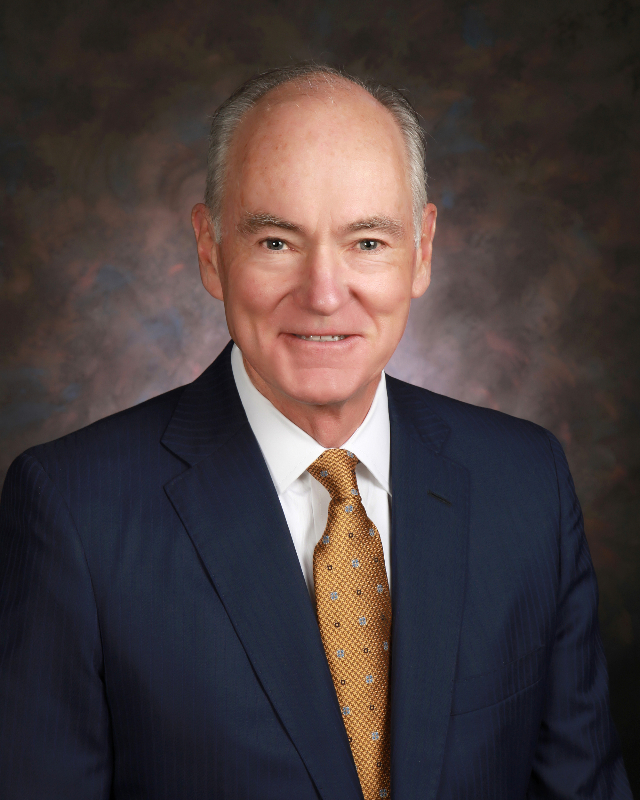
Thomas C. Shafer
About Thomas C. Shafer
Thomas C. Shafer, age 66, has served as Chief Executive Officer of First Foundation Inc. (FFWM) and First Foundation Bank and as a director of both boards since November 21, 2024; he is a career bank executive with over 40 years of experience and holds degrees from Hillsdale College and the University of Wisconsin’s Graduate School of Banking . In 2024, FFWM’s total stockholder return (TSR) was $31.05 on a $100 initial investment versus $126.88 for the KBW Nasdaq Regional Bank Index; the company recorded a net loss of $92,407 thousand and ROATCE of -0.07% . The proxy’s “Compensation Actually Paid” for the CEO in 2024 is $3,238,755, reflecting the large inducement equity grant concurrent with his appointment .
Past Roles
| Organization | Role | Years | Strategic Impact / Notes |
|---|---|---|---|
| Huntington Bancshares Incorporated | Co‑President of Commercial Banking; Senior EVP | Jun 2021 – Dec 2022 | Senior leadership at a major regional bank post-merger with TCF . |
| TCF National Bank | Chief Executive Officer | Oct 2020 – Jun 2021 | Led bank through merger; TCF had ~$49.5B total assets at 3/31/2021 . |
| TCF Financial Corporation | Vice Chairman of the Board | Oct 2020 – Jun 2021 | Board leadership during merger integration . |
| TCF Financial Corporation | Chief Operating Officer | From Aug 2019 – Oct 2020 | Oversaw operations pre‑merger . |
| TCF National Bank | President & Chief Operating Officer | From Aug 2019 – Oct 2020 | Front‑line operational leadership . |
| Chemical Bank | Chief Executive Officer | 2016 – 2019 | Led predecessor organization within TCF lineage . |
External Roles
| Organization | Role | Years |
|---|---|---|
| First Foundation Inc. & First Foundation Bank | Director | Since Nov 21, 2024 . |
| TCF Financial Corporation | Vice Chairman of the Board | Oct 2020 – Jun 2021 . |
Fixed Compensation
| Component | Terms | Notes |
|---|---|---|
| Base Salary | $1,090,000 | Subject to annual review . |
| Annual Bonus Opportunity (Max) | Up to 150% of base salary | Based on specific performance targets set by the Board . |
| Annual Incentive Structure | 50% cash; 50% performance RSUs | Stated in employment agreement . |
| 2025 Minimum Cash Bonus | Not less than $500,000 | Floor for FY2025 cash bonus . |
| Director Fees | $0 additional compensation | No fees for service as a director . |
| Year | Salary ($) | Stock Awards ($) | All Other ($) | Total ($) |
|---|---|---|---|---|
| 2024 | 132,755 | 3,880,000 | 1,000 | 4,013,755 |
Performance Compensation
| Grant Date | Award Type | Units (#) | Grant‑Date Fair Value ($) | Vesting Schedule | Market Value at 12/31/24 ($) |
|---|---|---|---|---|---|
| Nov 21, 2024 | RSUs (employment inducement) | 500,000 | 3,880,000 | 250,000 on Nov 21, 2026; 250,000 on Nov 21, 2027, subject to continued service | 3,105,000 |
| Fiscal Year | Incentive Structure | Maximum Payout | Cash Component | Equity Component | Metrics / Weighting | Payout Status |
|---|---|---|---|---|---|---|
| 2025 | 50% cash; 50% performance RSUs | 150% of base salary | ≥ $500,000 | PRSUs | Not disclosed | TBD |
No annual cash incentive award was earned by NEOs with respect to 2023 and 2024; the inducement RSU grant in 2024 constituted Shafer’s equity compensation upon appointment .
Equity Ownership & Alignment
| As of Date | Beneficial Shares | % of Class | Unvested RSUs | Market Value of Unvested RSUs ($) | CEO Ownership Guideline | Retention / Hedging / Pledging |
|---|---|---|---|---|---|---|
| Mar 31, 2025 | — | — | 500,000 (grant 11/21/24) | 3,105,000 (at $6.21 close 12/31/24) | ≥ 6x base salary within 5 years | Must retain ≥50% of net shares until guideline met ; hedging prohibited ; no pledging disclosure found . |
Employment Terms
| Term | Detail |
|---|---|
| Start Date | Appointed CEO and director effective Nov 21, 2024 . |
| Indemnification | Standard officer and director indemnification agreement entered . |
| Incentive Opportunity | Annual bonus split: 50% cash, 50% performance RSUs; max 150% of base; FY2025 cash ≥ $500,000 . |
| Severance (general) | For NEOs other than Shafer: if terminated without cause or for good reason, severance equals lesser of 12 months base salary or the remaining contract term; health benefits potentially continued per COBRA for certain NEOs . |
| Non‑Solicit / Confidentiality | NEOs subject to confidentiality and 18‑month non‑solicit; Shafer’s agreement does not specify duration . |
| Director Compensation | No additional director fees for Shafer . |
| Scenario | Base Salary ($) | Bonus ($) | Acceleration of Unvested Stock ($) | Medical Continuation ($) | Total ($) |
|---|---|---|---|---|---|
| Termination without Cause or for Good Reason after Change‑in‑Control | 1,090,000 | — | 3,105,000 | — | 4,195,000 |
| Death | 840,000 | — | — | — | 840,000 |
Board Governance
- Board leadership: Chairman is Max A. Briggs; CEO is Thomas C. Shafer; roles are separated to enhance oversight and allow the CEO to focus on operations and strategy .
- Independence: Eight of ten director nominees are independent under NYSE rules; Shafer is not listed among independent nominees (CEO-director) .
- Committee independence: All members of the Audit, Compensation, Nominating & Corporate Governance, and Risk Committees are independent; CEO is not on these committees .
- Committee activity: Audit Committee met 14 times in 2024; Compensation Committee met 6 times in 2024; Compensation Committee members are Rosenberg (Chair), Mackovak, Parker, Pagliarini .
- Director compensation: Shafer receives no fees for director service .
Compensation Committee Analysis
- Composition: Independent directors Rosenberg (Chair), Mackovak, Parker, Pagliarini; they oversee CEO and senior officer compensation, incentive plan design, and can hire independent consultants .
- Clawback: Board adopted an incentive compensation clawback policy compliant with SEC/NYSE rules; recovers erroneously awarded incentive comp over a 3‑year lookback for “Big R” and “little r” restatements; plan documents also include clawback mechanics .
- Risk controls: Compensation arrangements reviewed annually; mix of cash/equity and time‑ vs performance‑vesting considered to mitigate excessive risk; anti‑hedging policy prohibits hedging and short sales .
Performance & Track Record
| Year | TSR ($) | Peer Group TSR ($) | Net (Loss) Income ($ thousands) | ROATCE (%) |
|---|---|---|---|---|
| 2024 | 31.05 | 126.88 | (92,407) | -0.07% |
| 2023 | 48.40 | 115.78 | (199,064) | 1.9% |
| 2022 | 71.65 | 120.61 | 110,512 | 13.0% |
| 2021 | 124.30 | 133.20 | 109,511 | 16.9% |
| 2020 | 100.00 | 100.00 | 84,369 | 15.5% |
Shafer’s appointment was effective late 2024, implying limited direct attribution for 2024 operating results; his prior leadership roles at Huntington/TCF/Chemical suggest large‑scale integration and operational experience relevant to FFWM’s turnaround .
Related Policies & Transactions
- Related party transaction policy prohibits transactions materially less favorable than those with unaffiliated parties; Audit Committee oversight applies .
- Anti‑hedging policy: Directors and key executives are prohibited from hedging, short sales, and certain derivative strategies on company stock .
- Stock ownership guidelines: CEO must own shares equal to ≥6x base salary within five years; until met, must retain ≥50% of net shares acquired under equity awards; directors must own ≥5x cash retainer within five years .
Equity Plan Mechanics
- 2024 Equity Incentive Plan: Amended plan allows equity grants; inducement RSUs to Shafer granted under NYSE employment inducement exemption (Rule 303A.08) .
- Clawback provisions embedded in plan; administrator may recoup incentive compensation post‑restatement within SEC/NYSE standards .
Equity Ownership & Outstanding Awards Detail
| Name / Grant Date | Unvested RSUs (#) | Market Value ($) | Performance RSUs (Unvested) (#) | Performance RSUs Value ($) |
|---|---|---|---|---|
| Thomas C. Shafer — 11/21/2024 | 500,000 | 3,105,000 | — | — |
Beneficial ownership as of March 31, 2025 shows Shafer with no reportable shares (unvested RSUs typically excluded), while total shares outstanding were 82,386,071 .
Employment Contracts, Severance, and Change‑of‑Control Economics
- Employment agreement terms provide annual incentive opportunity split (50% cash/50% PRSUs), max 150% of base; 2025 minimum cash bonus ≥ $500,000 .
- Change‑in‑control severance: If terminated without cause or for good reason after a CIC, total benefits include $1,090,000 base salary and $3,105,000 accelerated equity for a total of $4,195,000; death benefit shown at $840,000 .
- General severance framework for other NEOs: Lesser of 12 months base or remainder of contract term; COBRA continuation in certain cases .
Investment Implications
- Alignment and retention: A large, multi‑year inducement RSU grant (500,000 units) with vesting over years 2 and 3 creates strong retention and equity alignment; CEO ownership guideline (≥6x salary) and 50% net share retention requirement increase exposure to TSR outcomes .
- Near‑term selling pressure: With no vested equity and anti‑hedging restrictions, insider selling pressure from Shafer appears limited until at least November 2026; change‑in‑control terms include full acceleration of unvested equity, which can be a deal‑related overhang .
- Pay-for-performance structure: 2025 incentive split between cash and PRSUs with a minimum cash floor of $500,000 indicates at‑risk pay but also guarantees some cash; lack of disclosed metric weighting increases uncertainty on payout sensitivity to revenue/EBITDA/TSR .
- Governance mitigants: Separation of Chair/CEO roles, independent committees, and robust clawback policy support investor confidence; CEO receives no director fees, reducing dual‑role compensation concerns .
- Execution risk: 2024 underperformance versus regional bank peers (TSR and negative net income) sets a low baseline; Shafer’s prior integration and regional bank experience is relevant, but tangible evidence of improved ROATCE/TSR will be needed through 2025–2027 to justify inducement equity value .