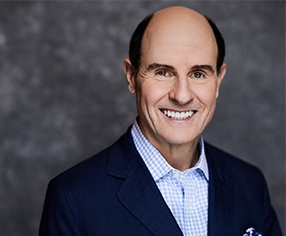
Richard Byrne
About Richard Byrne
Richard J. Byrne is Chairman of the Board and Chief Executive Officer of Franklin BSP Capital Corporation (FRBP) and has served in both roles since March 2020; he previously also served as President from March 2020 to March 2024 . He is President of Benefit Street Partners L.L.C. (BSP), and serves as Chairman/CEO of affiliated vehicles including Franklin BSP Realty Trust and Franklin BSP Private Credit Fund; he is also a director of Wynn Resorts, Limited and New York Road Runners, and founder/CEO of KASAI Elite Grappling Championships . Byrne holds an MBA from Northwestern University (Kellogg) and a BA from Binghamton University, and was a top-ranked credit analyst in Gaming, Lodging & Leisure; prior roles include CEO of Deutsche Bank Securities and senior leadership in leveraged finance and capital markets at Merrill Lynch and Deutsche Bank . FRBP’s net asset value (NAV) per share declined from $15.13 (2022) to $14.88 (2023) to $14.10 (2024), while net assets rose from $372.4 million (2023) to $1.91 billion (2024) due to the mergers with FBLC; net investment income increased to $188.4 million in 2024, reflecting portfolio scale-up .
Past Roles
| Organization | Role | Years | Strategic Impact |
|---|---|---|---|
| Deutsche Bank Securities, Inc. | Chief Executive Officer | Not disclosed | Led global capital markets; member of Global Banking and Global Markets Executive Committees |
| Deutsche Bank | Co-Head of Global Capital Markets | Not disclosed | Oversaw origination/distribution across markets |
| Merrill Lynch & Co. | Global Co-Head Leveraged Finance; Global Head Credit Research | Not disclosed | Built leveraged finance franchise; top-ranked sector analyst |
External Roles
| Organization | Role | Years | Strategic Impact |
|---|---|---|---|
| Benefit Street Partners L.L.C. | President | Not disclosed | Oversees adviser to FRBP; central to fee structure and investment strategy |
| Franklin BSP Realty Trust (NYSE: FBRT) | Chairman & CEO | Not disclosed | Real estate credit leadership across listed REIT/BDC ecosystem |
| Franklin BSP Private Credit Fund | Chairman & CEO; Director | Not disclosed | Interval fund governance; portfolio co-investment framework |
| Wynn Resorts (NASDAQ: WYNN) | Director | Not disclosed | Cross-industry board experience; governance exposure |
| New York Road Runners | Director | Not disclosed | Non-profit governance |
| KASAI Elite Grappling Championships | Founder & CEO | Not disclosed | Entrepreneurial leadership |
Fixed Compensation
- FRBP has no employees; executive officers (including Byrne) are BSP employees and receive no compensation directly from FRBP for their executive duties. Accordingly, FRBP has not adopted a compensation policy or CD&A and does not hold say‑on‑pay votes .
- As a director, Byrne is an “interested director” and receives no director compensation from FRBP .
| Component | FY 2024 | FY 2023 |
|---|---|---|
| Base Salary (FRBP) | None | None |
| Cash Director Retainer (FRBP) | None (interested director) | None (interested director) |
Independent director program (for context): $165,000 annual retainer; $2,500 per board meeting; $1,000 per committee meeting; chair fees: Audit $25,000; Nominating $15,000; Compensation $15,000; Lead Independent $30,000 .
Performance Compensation
FRBP pays BSP under the Investment Advisory Agreement: a base management fee and an incentive fee tied to Pre‑Incentive Fee Net Investment Income and cumulative realized capital gains. These are the primary performance‑linked economics that align or misalign management incentives.
| Metric | Weighting | Target | Actual (Illustrative) | Payout Mechanics | Vesting |
|---|---|---|---|---|---|
| Pre‑Incentive Fee Net Investment Income (quarterly) | Not disclosed | 1.50% preferred return on net assets per quarter (6.00% annualized) | Not disclosed | 100% catch‑up to 1.8175% quarterly, then 17.5% of NII above 1.8175% | N/A (quarterly cash) |
| Capital Gains Incentive (annual) | Not disclosed | N/A | Not disclosed | 17.5% of cumulative realized gains net of losses/unrealized depreciation; payable annually in arrears | N/A |
FRBP’s advisory fees increased sharply post-merger: Incentive fees rose from $7.7 million (waived in 2023) to $36.0 million in 2024; management fees increased from $4.2 million (2023) to $54.1 million (2024) as total assets expanded from $0.83 billion to $4.2 billion .
| FRBP Fees Paid to Adviser | FY 2022 | FY 2023 | FY 2024 |
|---|---|---|---|
| Management Fees ($mm) | $3.4 | $4.2 | $54.1 |
| Incentive Fees ($mm) | $4.3 (waived) | $7.7 (waived) | $36.0 |
Base management fee terms: 1.50% of average gross assets (quarterly in arrears), with 1.00% rate applied to gross assets purchased with borrowings above 1.0x debt‑to‑equity .
Equity Ownership & Alignment
| Holder | Shares Beneficially Owned | % of Common Outstanding | Dollar Range (Company) |
|---|---|---|---|
| Richard J. Byrne | 227,034 | ≈0.17% (227,034 / 136,195,754) | Over $100,000 |
Notes:
- Company reports Byrne’s percentage as “<1%”; total common shares outstanding at record date were 136,195,754 .
- No director equity compensation plans; directors do not receive stock or options from FRBP .
- Pledging/hedging status is not disclosed in the proxy ownership tables .
Employment Terms
| Item | Disclosure |
|---|---|
| Executive role at FRBP | CEO since inception; term “Indefinite Length – Since Inception” |
| Employment agreement with FRBP | Not applicable; executives are BSP employees and not compensated by FRBP |
| Severance/change‑of‑control (personal) | Not disclosed |
| Advisory/administration agreements | Amended & Restated Investment Advisory Agreement effective Jan 24, 2024; Administration Agreement dated Sept 23, 2020 |
| Change‑of‑control (financing doc definitions) | Defined in Jupiter Funding loan amendment referencing adviser/parent; applies at facility level rather than personal employment |
Board Governance and Service
- Byrne is an “interested director” under the Investment Company Act due to his affiliation with the Adviser; he has served since inception (Jan 29, 2020) and is Chairman of the Board .
- Combined Chairman/CEO structure is explicitly acknowledged; the Board designates a Lead Independent Director (Leslie D. Michelson) and holds executive sessions of independent directors after each regular Board meeting .
| Committee | Chair | Members |
|---|---|---|
| Audit | Lee S. Hillman | Hillman, Kramer, Michelson; all independent; 4 meetings in FY 2024 |
| Compensation | Dennis M. Schaney | Schaney, Rendell, Hillman; did not meet in FY 2024; executives not paid by FRBP |
| Nominating & Corporate Governance | Ronald J. Kramer | Kramer, Michelson, Rendell, Schaney; all independent |
Director compensation context: Independent directors are paid cash retainers/meeting fees; interested directors (Byrne) receive none .
Performance & Track Record
| Metric | FY 2022 | FY 2023 | FY 2024 |
|---|---|---|---|
| NAV per Share ($) | 15.13 | 14.88 | 14.10 |
| Net Investment Income ($000) | 31,470 | 53,575 | 188,389 |
| Net Assets to Common ($000) | 372,421 | 388,119 | 1,910,377 |
| Common Shares Outstanding | 24,609,132 | 26,080,389 | 135,487,595 |
Key developments:
- Management and incentive fees rose sharply in 2024 as portfolio assets and debt expanded post‑mergers with FBLC; total assets increased from $831.7 million (2023) to $4.2 billion (2024) .
- FRBP sought annual shareholder authorization to issue up to 25% of common stock below NAV to maintain capital access under BDC asset coverage requirements; board/independent director safeguards apply .
Compensation Structure Analysis
- Executive pay at FRBP: None; executives are paid by BSP. This eliminates FRBP‑level RSU/option vesting pressures and mitigates direct insider‑selling driven by vesting schedules .
- Adviser fee alignment: Incentive fee tied to quarterly pre‑incentive NII with a preferred return and catch‑up to a 17.5% rate, plus annual capital gains incentive; structure can encourage steady NII generation and realized gains, but may also incentivize leverage and fee‑accretive asset growth given the 1.50% gross assets management fee .
- Waiver dynamics: Incentive fees were fully waived in 2022–2023 and then paid in 2024, indicating a transition to full economic accrual post‑merger/liquidity event .
Director Compensation (Byrne)
| Item | Amount |
|---|---|
| Annual Cash Retainer | None (interested director) |
| Meeting Fees | None |
| Equity Grants | None (no director stock/option plans) |
| Committee Fees | None |
Equity Ownership & Alignment Details
- Beneficial ownership: 227,034 shares; less than 1% of common outstanding (136,195,754 shares at record date) .
- Dollar range: Over $100,000 in FRBP equity; over $100,000 aggregate across the fund complex .
- No disclosure of pledging or hedging; director ownership tables do not indicate pledged shares .
Related Party Transactions and Conflicts
- FRBP pays BSP under the Amended and Restated Investment Advisory Agreement (base management fee + incentive fees), and pays BSP for administration under the Administration Agreement; related party transactions are reviewed under board policy requiring majority independent approval for amounts over $120,000 .
- Co‑investment exemptive order permits FRBP to co‑invest with affiliated funds subject to “required majority” approval and fairness determinations .
Say‑on‑Pay and Shareholder Feedback
- FRBP does not conduct say‑on‑pay votes and did not include CD&A; executives are paid by BSP and receive no compensation directly from FRBP .
Expertise & Qualifications
- Education: MBA (Kellogg, Northwestern); BA (Binghamton) .
- Technical/industry expertise: Leveraged finance, credit research, capital markets; prior top‑ranked credit analyst .
- Board qualifications: Financial expertise across multiple investment vehicles; leadership of adviser and affiliated funds .
Investment Implications
- Alignment: Byrne’s personal FRBP equity stake is modest (~0.17% of common), but adviser economics are tightly linked to FRBP’s pre‑incentive NII and realized gains; expect emphasis on income stability and asset growth to drive fees .
- Governance checks: Combined Chair/CEO structure is offset by a majority‑independent board, an active Audit Committee, and a Lead Independent Director with executive sessions each meeting; compensation committee oversight is limited at FRBP given executives are BSP employees .
- Capital strategy: Ongoing requests for authority to issue below NAV signal priority on capital access to support leverage and portfolio expansion—this can dilute NAV per share but may improve asset coverage and earnings capacity if deployed accretively .
- Fee trajectory: Post‑merger fee ramp (management and incentive) reflects scale benefits but elevates fee drag; monitoring NII growth vs. fee accrual and dividend sustainability is critical for trading signals .