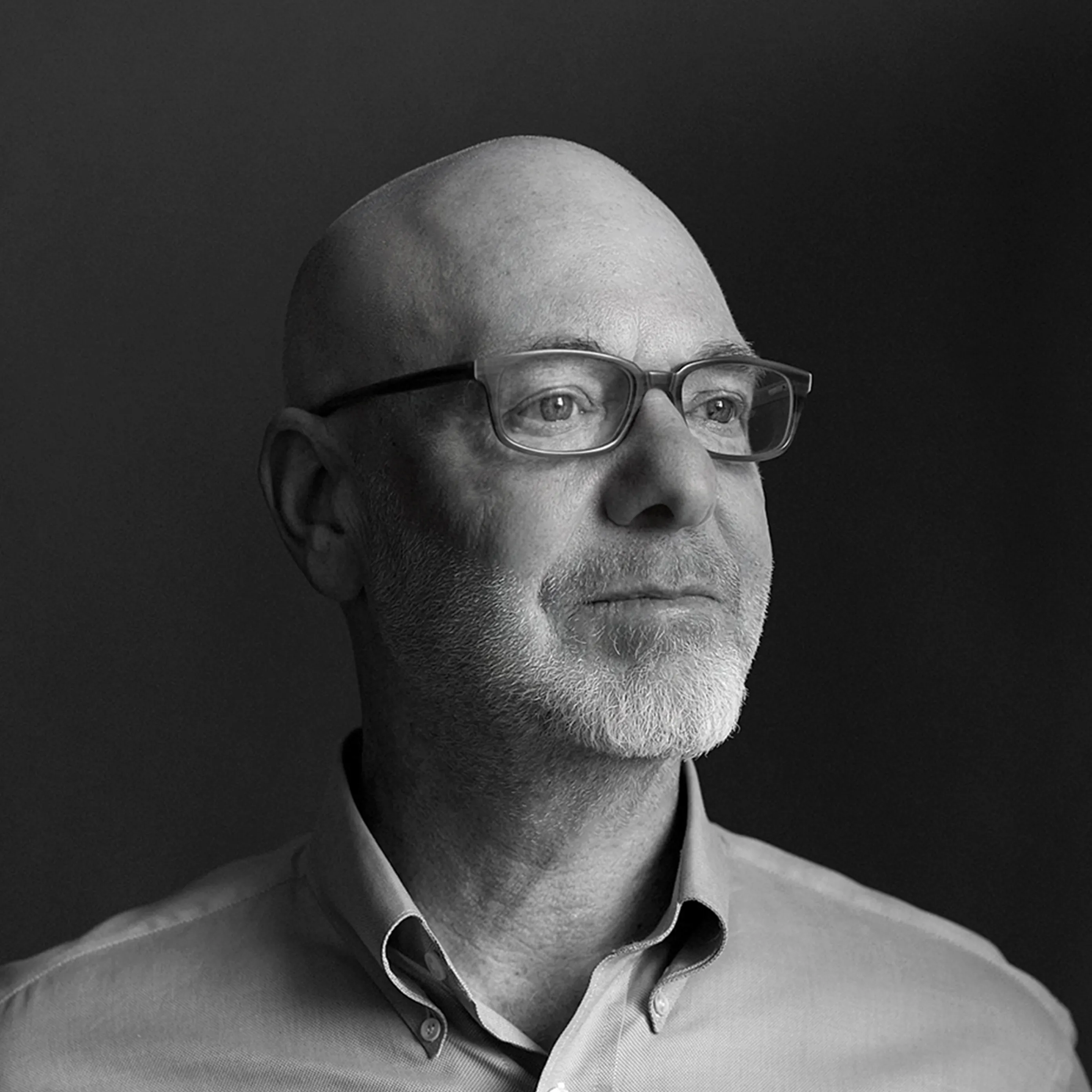
Michael C. Forman
About Michael C. Forman
Michael C. Forman is Chairman, President and Chief Executive Officer of FS Credit Opportunities Corp. and has served on the Board since January 2013; he is age 64 and is an “interested director” under the 1940 Act given his leadership of the Adviser, FS Global Advisor, LLC . He founded and leads FS Investments since its inception and previously practiced corporate and securities law at Klehr Harrison Harvey Branzburg LLP; he holds a B.A. from the University of Rhode Island and a J.D. from Rutgers University . FSCO is externally managed; executive officers do not receive direct compensation from the Company, and Forman’s economic alignment is chiefly through equity ownership and his firm’s advisory fee structure rather than Company-paid salary/bonus . The Board maintains a lead independent director (Walter W. Buckley, III) to mitigate dual-role governance concerns, and a majority of directors are independent .
Past Roles
| Organization | Role | Years | Strategic Impact |
|---|---|---|---|
| FS Investments | Chairman & CEO | Since founding (not disclosed) | Built multi-fund platform; chairs and leads affiliated advisers and funds |
| Klehr Harrison Harvey Branzburg LLP | Attorney, Corporate & Securities | Not disclosed | Legal and capital markets expertise foundational to fund/adviser leadership |
| Various founders (gaming, specialty finance, asset management) | Founder | Not disclosed | Entrepreneurial track record in financial services and specialty industries |
External Roles
| Organization | Position | Years | Strategic Impact |
|---|---|---|---|
| FS Series Trust; FS Credit Income Fund; FS Credit Real Estate Income Trust, Inc.; FS Specialty Lending Fund; FS KKR Capital Corp.; KKR FS Income Trust; KKR FS Income Trust Select | Chairman/President/CEO (various fund roles) | Past 5 years (as disclosed) | Cross-platform oversight and fund complex influence |
| Drexel University; Philadelphia Equity Alliance; Philadelphia Center City District Foundation | Board member | Not disclosed | Civic and institutional networks in Philadelphia market |
| Barnes Foundation Corporate Leadership; Children’s Hospital of Philadelphia; Cobbs Creek Foundation | Board/leadership roles | Not disclosed | Expanded civic footprint and stakeholder engagement |
Fixed Compensation
- Executive officers, including Forman, receive no direct compensation from FSCO; the Company has no employees and relies on the Adviser and affiliates for services .
- Directors who are also executives (including Forman) receive no director cash compensation from FSCO .
| Item | Amount | Notes |
|---|---|---|
| Executive compensation paid by FSCO to Forman | $0 | Executives are paid by the Adviser, not FSCO |
| Director cash fees paid to Forman | $0 | Interested director; no FSCO director cash comp |
| Standard independent director fees | See schedule | Board: $100,000; Lead Independent Director: $25,000; Board meeting: $2,500; Audit Chair: $20,000; Nominating Chair: $15,000; Committee meeting: $1,000 |
Performance Compensation
FSCO’s advisory economics (which benefit the Adviser led by Forman) are tied to investment income, creating performance-linked incentives that can shape portfolio risk and distribution capacity.
| Mechanism | Metric | Target/Hurdle | Payout Structure | Vesting/Timing |
|---|---|---|---|---|
| Management Fee | Average daily gross assets | N/A (rate-based) | 1.35% per annum, payable quarterly in arrears | Quarterly cash payments |
| Incentive Fee “catch-up” | Pre-incentive fee net investment income (NII) | 1.50% per quarter (6.00% annualized) | 100% of NII above 1.50% up to 1.667% per quarter (catch-up to 10% on all NII) | Quarterly cash payments |
| Incentive Fee above catch-up | Pre-incentive fee NII | Above 1.667% per quarter | 10% of all pre-incentive fee NII thereafter | Quarterly cash payments |
Notes:
- Pre-incentive fee NII includes PIK/original issue discount accruals; realized and unrealized gains/losses are excluded .
- In 2024, FSCO paid the Adviser $29,345k in management fees and $18,412k in incentive fees; year-end payables were $7,440k and $4,012k, respectively . In 2023, payments were $28,500k management and $16,848k incentive; year-end payables $7,434k and $3,288k .
Equity Ownership & Alignment
| Date | Common Shares Beneficially Owned | % of Common Shares Outstanding | Ownership Details |
|---|---|---|---|
| May 1, 2024 | 742,841 | <1% (198,355,867 outstanding) | 401,733 via MCFDA SCV LLC; 335,258 via FSH Seed Capital Vehicle I LLC; 5,850 in IRA; disclaims beneficial ownership beyond pecuniary interest in FS Investments |
| May 1, 2025 | 407,583 | <1% (198,355,867 outstanding) | 401,733 via MCFDA SCV LLC; 5,850 in IRA; similar disclaimer language |
Additional alignment and restrictions:
- Hedging/monetization of FSCO securities by directors/officers prohibited without prior approval of the CCO .
- No options are outstanding/exercisable within 60 days as of May 1, 2025; no executive or director ownership of Preferred Shares .
Employment Terms
- Externally managed structure: services provided by Adviser under an Amended & Restated Investment Advisory Agreement (effective Nov 14, 2022) and an Administration Agreement; FSCO reimburses allocable administrative expenses (legal, accounting, compliance) .
- Indemnification: Adviser and affiliates indemnified for losses except in cases of willful misfeasance, bad faith, negligence, or reckless disregard of duties under the advisory/administration agreements .
- Co-investment exemptive relief: New SEC order (effective Apr 29, 2025) expands flexibility for co-investments with affiliates, enabling larger and more varied transactions and potentially improved deal flow and bargaining power for FSCO .
- Affiliated CLO manager reimbursements: FS Structured Products Advisor, LLC reimburses FSCO for portions of collateral management compensation based on FSCO’s % ownership in CLO subordinated notes; reimbursement ceased for Bridge Street CLO III after FSCO sold its subordinated notes on Sep 9, 2024 .
- November 13, 2025 TRS: FSCO entered an equity total return swap with Nomura for up to $50 million notional of FS Specialty Lending Fund common shares; FSCO receives dividends and pays O/N bank funding rate + 250 bps on notional; collateral “Independent Amount” reset daily; Adviser does not receive fees on TRS income .
Board Governance
- Roles: Forman serves as Chair and CEO; Board has majority independent directors and designates Walter W. Buckley, III as Lead Independent Director to balance the dual role .
- Committees: Audit Committee (Chair: Philip E. Hughes, Jr.; Members: Robert N.C. Nix, III; Barbara J. Fouss) ; Nominating & Corporate Governance Committee (Members: Keith Bethel; Della Clark; Robert N.C. Nix, III) .
- Meetings/attendance: Board met six times in FY 2024; each director attended at least 75% of meetings of the Board/committees on which they served . In FY 2023, all directors except Forman met the 75% attendance threshold, a governance data point to monitor .
- Executive sessions and oversight: CCO provides quarterly/annual compliance reports; meets separately in executive session with independent directors at least annually .
Director Compensation
| Director | Fees Earned or Paid in Cash by FSCO (FY 2024) | Total Compensation from FSCO (FY 2024) | Notes |
|---|---|---|---|
| Michael C. Forman | — | — | Interested director; receives no FSCO director comp |
| Keith Bethel | $111,000 | $135,000 | |
| Walter W. Buckley, III | $135,000 | $111,000 | Lead Independent Director retainer |
| Della Clark | $111,000 | $111,000 | |
| Barbara J. Fouss | $114,000 | $114,000 | |
| Philip E. Hughes, Jr. | $134,000 | $134,000 | Audit Chair |
| Robert N.C. Nix, III | $130,000 | $130,000 |
Standard fee schedule shown above in Fixed Compensation .
Related Party Transactions and Adviser Fees
| Year | Management Fees (paid) | Incentive Fees (paid) | Admin Expenses (paid) | Notes |
|---|---|---|---|---|
| 2023 | $28.500 million | $16.848 million | $3.949 million | Year-end payables: $7.434m mgmt; $3.288m incentive |
| 2024 | $29.345 million | $18.412 million | $4.087 million | Year-end payables: $7.440m mgmt; $4.012m incentive |
Potential conflicts disclosed due to shared senior personnel across Adviser affiliates and fund complex; Board reviews allocations and fee reasonableness and maintains independent oversight and audit pre-approval policies .
Risk Indicators & Red Flags
- Dual role (Chair/CEO): mitigated by majority independent board and lead independent director, but remains a governance consideration for independence and oversight .
- Attendance variance: Forman did not meet 75% attendance threshold in FY 2023; improved aggregate attendance in FY 2024; track consistency going forward .
- Related-party economics: Significant advisory/incentive fees and affiliated CLO arrangements require continued scrutiny; Board processes and SEC exemptive relief conditions provide structural controls .
- Hedging restrictions: Policy restricts hedging of Company securities by insiders without approval, supporting alignment .
- Section 16 filings: Company reported one late Form 4 in FY 2024 for Nix; no other delinquencies noted for directors/officers .
Employment Terms and Compliance Provisions
- Indemnification boundaries for Adviser under A&R agreements exclude willful misfeasance, bad faith, negligence, or reckless disregard .
- Audit Committee pre-approval of audit/non-audit services; independence procedures and annual appointment recommendations documented .
Investment Implications
- Pay-for-performance linkage exists at the Adviser via NII-based incentive fees with quarterly hurdles and catch-up; this can motivate distributable income generation but may elevate risk if not balanced by independent oversight .
- Forman’s direct FSCO share ownership is modest (<1%); alignment is more through platform economics and reputation; hedging restrictions and independent board majority help mitigate misalignment risk .
- Governance: Dual role and 2023 attendance shortfall warrant monitoring; presence of lead independent director, active committees, and CCO executive sessions provide counterbalances .
- Structural catalysts: New co-investment order expands transaction capacity and potential returns; 2025 TRS may enhance income streams without Adviser fee leakage on TRS income .
Overall, compensation alignment at FSCO is indirect through advisory fee mechanics rather than Company-paid executive comp. Investors should monitor NII trajectory vs. incentive thresholds, board independence and attendance, and the impact of expanded co-investment/TRS activities on risk-adjusted returns .