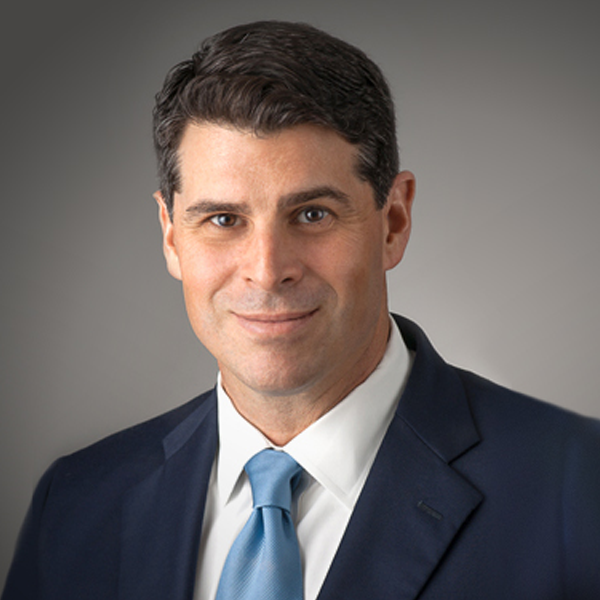
David Sobelman
About David Sobelman
David Sobelman, age 54, is Chairman of the Board, President, Chief Executive Officer, and Secretary of Generation Income Properties (GIPR). He is the company’s founder with ~19 years in single-tenant net lease real estate across roles including investor, asset manager, broker, owner, analyst, and advisor, and holds a B.S. from the University of Florida and completed Harvard Business School Executive Education in Real Estate Management . In 2025, the company disclosed it surpassed $115 million in gross asset value (GAV), triggering his salary step-up per his contract (effective February 6, 2025), a quantifiable operating milestone embedded in his pay design . Additional portfolio context: as of year-end 2024, GIPR reported 99% occupancy and $8.60 million annualized base rent across 570,086 square feet, indicating stable tenancy in a small-cap, concentrated net-lease portfolio .
Past Roles
| Organization | Role | Years | Strategic impact |
|---|---|---|---|
| 3 Properties | Founder of a net-lease brokerage focused solely on single-tenant net lease | Not disclosed | Extended sourcing and brokerage reach in net-lease markets |
| Calkain Companies (merged with Avison Young after his departure) | Progressed from analyst to Managing Partner (grew firm from 2 to 40+ employees) | Began in 2005; end not disclosed | Built one of the leading U.S. single-tenant net-lease firms, scaling origination capabilities |
| The White House; U.S. Department of Health & Human Services | Staff member; appointed role at HHS | Not disclosed | Federal-level policy/administrative experience; network advantages |
External Roles
| Organization | Role | Years | Strategic impact |
|---|---|---|---|
| Shore Capital Real Estate Funds (≈$14B AUM PE firm) | Advisory Board member | Not disclosed | Access to institutional networks and capital perspectives |
| University of Florida Foundation | Finance Committee, six-year appointed board member | Not disclosed | Governance/finance oversight experience |
| Author / Speaker | Author of “The Little Book of Triple Net Lease Investing”; quoted in major media | Not disclosed | Thought leadership in triple-net sector |
Fixed Compensation
| Component | Terms | Notes |
|---|---|---|
| Base salary | $200,000; steps to $300,000 at ≥$115m GAV (achieved effective Feb 6, 2025), $400,000 at ≥$150m GAV, $600,000 at ≥$500m GAV; may increase but not decrease | Contract amended Aug 26, 2024 |
| Nondiscretionary annual bonus | 35% of base salary, paid first trading day of December | Formulaic, not performance-based |
| Annual equity grant | On first trading day of December, fully vested shares equal to base salary divided by the higher of (i) closing price or (ii) $10.00 | Immediate vesting; share count reduced if stock < $10 due to $10 floor |
| Insurance stipend | $7,500 annually for death/disability policy and related costs | Fixed benefit |
| Personal guarantee fee | 1% of guaranteed amount for full guarantee; 0.5% for non-recourse/fraud exception; increases to 10% starting day 60 after termination without cause/for good reason unless guarantee removed | Board approval required for guarantees |
Summary compensation (official proxy table):
| Year | Salary ($) | Bonus ($) | Stock Awards ($) | All Other Comp ($) | Total ($) |
|---|---|---|---|---|---|
| 2024 | 200,000 | 70,000 | 35,800 | 412,056 (incl. $25,000 insurance; $387,056 guarantee fees) | 717,856 |
| 2023 | 200,000 | 96,250 | 110,000 | 313,909 (incl. $23,593 insurance; $290,316 guarantee fees) | 720,159 |
Performance Compensation
| Instrument/Metric | Target/Opportunity | Actual (most recent disclosed) | Payout mechanics | Vesting |
|---|---|---|---|---|
| Discretionary annual performance bonus | Target 200% of salary; up to 300% max; based on “materially meeting the Board‑approved budget” for prior FY | 2024: $70,000; 2023: $96,250 | Board approval required; metric framework is budget attainment (no disclosed weighting) | Cash (none) |
| Annual stock grant (fully vested) | Shares = base salary ÷ max(closing price, $10) | Reported grant fair value: $35,800 (2024); $110,000 (2023) | Granted first trading day of December; fully vested on grant | Immediate vesting |
Additional equity context:
- As of 12/31/2024, named executive officers held a total of 90,617 unvested stock awards; no options outstanding (vested or unvested) among executives .
Equity Ownership & Alignment
| As-of date | Beneficial ownership (shares) | % of outstanding | Notes (structure/derivatives) |
|---|---|---|---|
| Oct 22, 2025 | 196,584 | 3.6% | Proxy footnotes note restricted shares and warrants held; see ownership table details |
| Oct 11, 2024 | 156,384 | 2.9% | Footnote indicates mix of restricted stock and common; includes 2,586 shares issuable upon redemption of OP units |
- Anti-hedging policy prohibits hedging, short sales, and transactions in publicly traded options by directors and officers; no disclosure of any share pledging policy/pledged shares for the CEO was found .
- Stock ownership guidelines (for executives or directors) are not disclosed in the proxy; no compliance status disclosed .
Employment Terms
| Term | Provision | Notes |
|---|---|---|
| Employment term | At-will; terminable by either party with 60 days’ notice (or upon death/disability) | Second Amended and Restated Employment Agreement dated Aug 26, 2024 |
| Non-compete / Non-solicit | 1 year post-termination (and confidentiality) | |
| Severance (no CIC) | If terminated without cause or resigns for good reason: 2x (base salary deemed as adjusted for pipeline acquisitions) + average bonus of prior 3 years; 18 months healthcare premiums; unvested equity vests immediately; paid in 18 monthly installments | |
| Severance (within 12 months post-CIC) | 3x multiple of (base salary, adjusted as above) + average bonus of prior 3 years; same vesting and healthcare terms | |
| Annual grant timing | First trading day of December (cash bonus and equity grant cadence) |
Board Governance, Roles, and Independence
- Role: Combined Chairman of the Board and President/CEO; Board cites efficiency and his founder/ownership status as rationale. Lead Independent Director (Benjamin Adams) serves as liaison and presides over executive sessions .
- Committee service: Audit (Eisenberg-Chair; Cheng; Quilty; with Russell expected if elected), Compensation (Adams‑Chair; Cheng; Quilty; with Russell expected if elected), Nominating/Governance (Quilty‑Chair; Cheng; Eisenberg). CEO not a member of these committees; all committee members independent under Nasdaq/SEC rules .
- Director compensation: Independent directors receive equity grants (no cash retainers); the CEO receives no additional compensation for Board service .
- Attendance: In 2024, no director attended <75% of meetings; Mr. Sobelman was the only director physically attending the 2024 annual meeting (others listened by phone) .
Related Party Transactions and Economics
- CEO loans to the company: On May 29, 2025, GIPR borrowed $610,000 from David Sobelman (via his revocable trust) at 5.75% interest, due August 31, 2025, to fund closing costs for asset sales (Huntsville, AL; Tampa, FL) .
- Personal guarantee fees payable to CEO: $387,056 (2024) and $290,316 (2023), disclosed in All Other Compensation; amounts unpaid year-end: $194,344 (2024) and $177,347 (2023) .
- Other related-party financings: Multiple secured promissory notes with Brown Family Enterprises, LLC (related party) including a $1.0 million note in 2025 (initial 16% for 90 days then 9%, maturity extended to Dec 15, 2025 with $20,000 extension fee); and prior expansion to $5.5 million (maturity to Oct 14, 2026) on an earlier 9% note .
Performance & Track Record
- Strategic transactions: Executed a 13-property portfolio acquisition from Modiv (Aug 2023) that substantially increased scale; GIPR disclosed intention to use stock redemptions to manage Modiv’s ownership level and distribution of shares .
- Operating scale milestone: Company achieved ≥$115 million GAV threshold (effective Feb 6, 2025), which triggered CEO salary step-up per contract .
- Capital allocation changes: Company suspended regular common dividends to stockholders as of July 3, 2024, citing policy to pay from operating cash flows; emphasizes small-cap financing constraints and need to strengthen liquidity .
- Going concern language: 2024 10-K included an explanatory paragraph highlighting substantial doubt about the Company’s ability to continue as a going concern absent successful execution of liquidity plans, underscoring execution risk during CEO’s tenure .
Compensation Structure Analysis (alignment signals)
- Cash vs equity mix: 2024 and 2023 total pay is heavily cash-driven when including guarantee fees; annual equity awards are fully vested at grant (December), reducing retention leverage versus time-vested RSUs/PSUs .
- Metric rigor: Discretionary bonus hinges on meeting the Board‑approved budget (“materially meeting” threshold), but weighting/thresholds/maxima are undisclosed—limiting outside assessment of pay-for-performance rigor .
- Event timing: Both the nondiscretionary bonus and fully vested equity grant occur on the first trading day of December, a predictable calendar event that can concentrate insider liquidity timing .
- Contract levers: Salary step-ups tied to tangible scale thresholds (GAV), a balancing signal linking fixed pay to growth milestones; GAV ≥$115m achieved Feb 6, 2025 .
Risk Indicators & Red Flags
- Combined CEO/Chair power with small-cap constraints; mitigant: Lead Independent Director structure .
- Personal guarantees and guarantee fees paid to CEO create related-party cash outflows and potential conflicts during capital stress; material guarantee fees disclosed for 2023–2024 .
- CEO as creditor: 2025 loan from CEO to the company (5.75%); signals short-term liquidity pressure, heightening governance sensitivity on related-party oversight .
- Dividend suspension (July 2024) and going-concern disclosure (2024 10-K) point to elevated balance sheet/financing risk during CEO tenure .
- Concentrated board compensation entirely in equity for independents (no cash) may influence risk preferences; CEO receives no director comp (neutral) .
Equity Ownership & Insider Selling Pressure (Vesting Schedules)
- Executives held 90,617 unvested stock awards in aggregate at 12/31/2024; no options outstanding among executives—equity is primarily restricted stock/RSUs .
- CEO’s annual equity grant is fully vested on grant (first trading day of December), increasing near-term selling flexibility; however, the company’s insider trading policy prohibits hedging/short sales/options transactions .
- No disclosure found of share pledging by the CEO; no executive ownership guidelines disclosed .
Compensation Committee & Governance
- Compensation Committee: Benjamin Adams (Chair), Gena Cheng, Patrick Quilty; if elected at 2025 meeting, Richard Russell expected to join; all deemed independent under Nasdaq rules .
- Remit includes executive pay strategy, employment/severance arrangements, and equity plans; CEO may attend meetings but not executive sessions .
Employment Contracts: Change-of-Control and Severance Economics
| Scenario | Cash multiple | Definition highlights | Equity vesting | Healthcare |
|---|---|---|---|---|
| Termination without cause / resignation for good reason (no CIC) | 2x (base salary deemed adjusted for acquisition pipeline) + average bonus (prior 3 years) | “Good reason” includes duty/compensation/material benefit changes or breach/relocation | Immediate vesting of any unvested equity | 18 months premiums; 18 monthly installments |
| Termination within 12 months post‑CIC | 3x (base + average bonus) | As above, CIC defined in agreement | Immediate vesting | 18 months premiums; 18 monthly installments |
Director Service and Compensation (as Director)
- Board service: CEO serves as Chairman; independent directors receive equity only; 2024 program included 12,255 RSUs (June 15, 2024, 1-year vest) and on March 31, 2025, 31,250 RSUs to each independent director (1-year vest). CEO receives no Board compensation .
- No meeting fees/retainers in cash; director equity values for 2024 disclosed at $50,000 each for independents (at $4.08 per-share valuation for accounting) .
Investment Implications
- Alignment: The salary step-up linked to GAV provides a tangible growth tether, but the discretionary bonus framework lacks disclosed quantitative targets/weights, and the fully vested equity design reduces multi-year retention linkage—tempering pay-for-performance confidence .
- Liquidity/related-party optics: Material guarantee fees and CEO-provided bridge financing during heightened liquidity stress (dividend suspension; going‑concern language) elevate governance scrutiny; investors should monitor related-party approvals, cash priorities, and refinancing progress .
- Trading signals: The first‑trading‑day‑of‑December cadence for both the nondiscretionary cash bonus and fully vested stock grant is a recurring event that may concentrate potential insider selling windows (subject to policy/blackouts) .
- Governance structure: Combined CEO/Chair with an established Lead Independent Director and fully independent key committees is a standard mitigant, but small-cap resource constraints and personal guarantee structures keep governance risk elevated .
Notes and sources: Executive biography, board leadership, committees, director compensation, anti-hedging policy, related-party items, and ownership from GIPR 2025 DEF 14A ; prior year proxy detail from 2024 DEF 14A ; strategic transaction and equity issuance framework from 2023 special proxy ; portfolio/occupancy and dividend suspension/going‑concern from 2024 Form 10‑K .