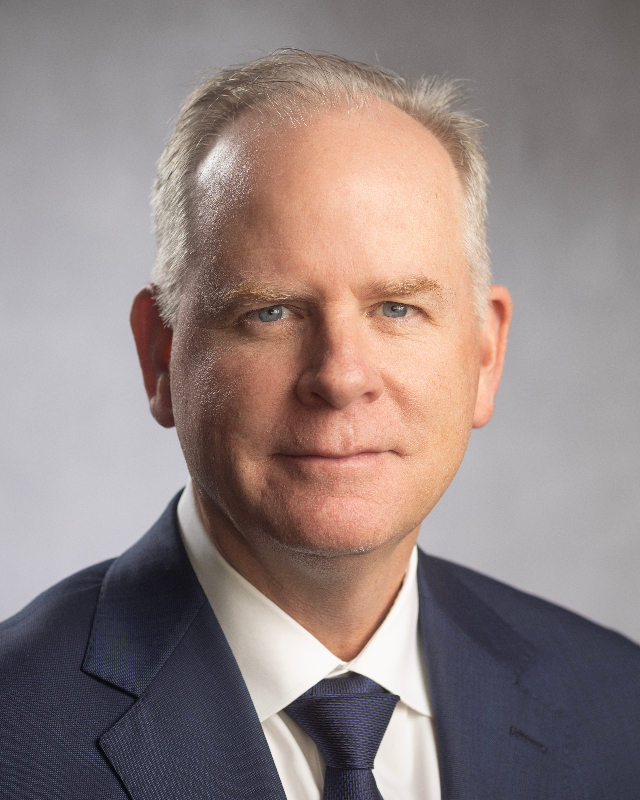
David Maher
 Acushnet Holdings
About David Maher
President & CEO of Acushnet Holdings Corp. (GOLF) since January 1, 2018; joined Acushnet in May 1991. Age 57 in 2025; Board director since 2018. Prior roles include COO, SVP Titleist Worldwide Sales & Global Operations, VP Titleist U.S. Sales, and earlier field sales leadership, reflecting deep operating and commercial experience in golf equipment and apparel . Company pay-versus-performance data shows 2024 Adjusted EBITDA of $404.4M, net income of $214.3M, and 5-year TSR turning an initial $100 into $236.09, with CAP aligned to TSR; peer TSR value was $115.95 .
Past Roles
| Organization | Role | Years | Strategic Impact |
|---|---|---|---|
| Acushnet (Titleist) | Sales Representative; Northwest Regional Director | 1990s (several years) | Field sales leadership and regional P&L execution, foundation in market-facing operations |
| Acushnet (Titleist/FootJoy/Operations) | Professional Development Program (golf ball ops; FootJoy factory; SoCal club ops) | Early career | Cross-functional manufacturing and ops training across balls, gloves, clubs |
| Acushnet (HQ – Fairhaven, MA) | VP Titleist U.S. Sales; SVP Titleist Worldwide Sales & Global Operations; COO | 2001–2017 | Global sales and operations leadership culminating in COO role before CEO transition |
| Acushnet Holdings Corp. | President & CEO | 2018–present | Corporate leadership through growth cycles; incentive plan metrics tied to EBITDA, operating income, and ROIC |
External Roles
No external public company directorships or outside roles disclosed for David Maher in the proxy materials .
Fixed Compensation
| Metric | 2023 | 2024 |
|---|---|---|
| Base Salary ($) | 1,082,000 | 1,125,000 |
| Target Bonus (% of Salary) | 120% | 130% |
| Annual Bonus Target ($) | 1,298,400 | 1,462,500 |
| Performance Metric | Adjusted EBITDA | Adjusted EBITDA + 2025 adds strategic objectives (CEO/CFO 10%) |
| Achievement (% of Target) | 133.8% | 107.4% |
| Actual Bonus Paid ($) | 1,737,259 | 1,570,725 |
Notes: For 2025, annual cash incentive framework adjusted (CEO/CFO: 90% EBITDA, 10% strategic objectives) .
Performance Compensation
Long-Term Incentive Grants (RSUs/PSUs)
| Award Type | Grant Date | Shares (#) | Grant-Date Fair Value ($) |
|---|---|---|---|
| RSU | 2/10/2023 | 41,170 | 2,000,039 |
| PSU (target) | 2/10/2023 | 61,754 | 3,000,009 |
| RSU | 2/15/2024 | 34,447 | 2,300,026 |
| PSU (target) | 2/15/2024 | 51,670 | 3,450,006 |
Vesting mechanics: RSUs vest ratably over three years; PSUs cliff-vest after three years, 50% based on 3-year cumulative adjusted operating income and 50% on 3-year average ROIC; PSUs accrue at target with potential 50–200% payout range .
PSU Performance Cycles
| PSU Cycle | Metric | Threshold | Target | Max | Achievement | Payout (%) |
|---|---|---|---|---|---|---|
| 2021–2023 | Adjusted Operating Income ($) | 498.4M | 547.7M | 597.0M | 826.4M | 200 |
| 2021–2023 | ROIC (%) | 7.8 | 9.3 | 10.8 | 14.0 | 200 |
| 2022–2024 | Adjusted Operating Income ($) | 713.8M | 860.0M | 1,006.2M | 871.1M | 107.6 |
| 2022–2024 | ROIC (%) | 11.25 | 13.50 | 15.75 | 14.66 | 151.6 |
| 2022–2024 | Combined | — | — | — | — | 129.6 |
Earned PSUs: 2022–2024 cycle earned 129.6% of target; for Maher, earned PSUs ≈ 72,994 shares including DERs on deferred shares .
Equity Ownership & Alignment
- Beneficial ownership: 823,495 shares, ≈1.4% of outstanding, as of record date; outstanding shares 60,013,024 .
- Outstanding equity awards (12/31/2024):
- Unvested RSUs: 34,447 (2024 grant, $2,448,493 market value); 27,827 (2023, $1,977,943); 12,516 (2022, $889,637) .
- PSUs outstanding at max: 103,340 (2024 cycle, $7,345,407); 125,226 (2023 cycle, $8,901,064); 71,247 (2022 cycle, $5,064,237) .
- Values use $71.08 closing price (12/31/2024) .
- Deferred share balances: Employee Deferral Plan aggregated value $37,977,371 (2024), with $558,876 earnings; also legacy EDP balance $84,376 . Prior year deferred $30,854,018 with $2,248,728 earnings .
- Options: None outstanding; company indicates 0 stock options (share reserve table) .
- Ownership guidelines: CEO must hold 6× base salary; all NEOs met or are in compliance; 50% net shares retention until guideline met .
- Hedging/pledging: Prohibitions on hedging/short-selling; pledging requires preclearance; insider trading policy enforced .
Vesting Timeline and Potential Selling Pressure
- RSUs granted in 2024 vest one-third on each of Feb 1, 2025, 2026, 2027; PSUs from 2024 grant vest on Feb 1, 2027 subject to performance . Upcoming multi-year vesting cadence and sizable PSU payouts can create periodic liquidity events; however, company deferral plan and retention requirements moderate near-term selling pressure .
Employment Terms
- CEO Agreement (2018): Without change-in-control, severance equals 1.5× base salary + target annual bonus + pro-rated current-year target bonus + prior year unpaid bonus, paid in lump sum; with change-in-control and qualifying termination within 12 months, severance equals 2× base + 2× target bonus + pro-rated target bonus with full vesting of outstanding equity . Company-wide equity plan provides double-trigger vesting if separation within 18 months of change-in-control, with PSUs vesting at greater of actual or target .
- Clawback: NYSE Rule 10D-1 compliant; recovery of erroneously paid incentive comp over prior 3 years .
- Executive Severance Plan (for other NEOs): 12–18 months base salary, bonus treatment varies by hire/promote date; enhanced 24 months base + 1 year bonus in change-in-control within 18 months .
- Non-solicit: Post-separation anti-solicitation for longer of 12 months or severance period .
12/31/2024 Hypothetical CEO Termination Benefits
| Scenario | Bonus (2024) ($) | Equity Acceleration ($) | Cash Severance ($) | Life Insurance ($) | Accrued Vacation ($) | Total ($) |
|---|---|---|---|---|---|---|
| Retirement/Voluntary Termination | 1,570,725 | 3,190,937 | — | — | 129,808 | 4,891,470 |
| Involuntary (without cause) / Good Reason | 1,570,725 | — | 1,687,500 | — | 129,808 | 3,388,033 |
| Termination for Cause | — | — | — | — | 129,808 | 129,808 |
| Death or Disability | 1,570,725 | 29,214,847 | — | 2,126,000 | 129,808 | 33,041,380 |
| Change in Control (no termination) | — | 14,857,672 | — | — | — | 14,857,672 |
| CIC + Involuntary / Good Reason | 1,570,725 | 29,214,847 | 5,175,000 | — | 129,808 | 36,090,380 |
Board Governance
- Board Director since 2018; not designated as independent (management director); all other directors determined independent .
- Committee roles: Maher is not a member of Audit, Compensation, or Nominating & Corporate Governance committees; those committees are fully independent despite controlled company exemptions .
- Board attendance: Board met 5x in 2024; all directors attended ≥75% of meetings; annual meeting attendance expected .
- Controlled company: Magnus holds ≈50.8% voting power; board maintains majority independence and independent committees notwithstanding exemptions .
- Director compensation: Maher receives no additional compensation for board service (CEO pay covers service) .
Director Compensation Program (for context)
| Component | Chair ($) | Member ($) |
|---|---|---|
| Cash Retainer | 175,000 | 90,000 |
| Equity Retainer (immediately vesting common stock) | 170,000 | 140,000 |
| Audit Committee | 30,000 | 12,500 |
| Compensation Committee | 22,500 | 10,000 |
| Nominating & Corporate Governance | 20,000 | 10,000 |
Say-on-Pay & Peer Group
- Say-on-Pay support: Over 99% approval at 2024 Annual Meeting, signaling strong shareholder endorsement of pay program .
- Compensation peer group (2024 decisions): Columbia Sportswear, Crocs, Deckers, G-III, Helen of Troy, Kontoor Brands, Steve Madden, Topgolf Callaway Brands, Vista Outdoor, Wolverine World Wide, Under Armour, YETI; periodic review with Pearl Meyer .
Benefits, Perquisites, Pension/SERP
- 2024 All Other Compensation for Maher: $55,602 including unused vacation ($20,808), 401(k) match ($11,423), golf club dues reimbursement ($19,500), company equipment/gear .
- Pension/SERP present values (12/31/2024): Pension Plan $589,638; SERP $6,721,626; fully vested; early retirement eligible .
Compensation Structure Analysis
- High at-risk mix: Majority of total compensation in annual and long-term incentives tied to EBITDA, operating income, ROIC; PSU mix at 60% of LTI value increases performance sensitivity .
- Upward shifts: 2024 increased CEO salary (~4%) and LTI target value (+15% vs 2023), and target annual bonus percent (+10ppt to 130%) to align market positioning and performance .
- Design discipline: Caps, multi-year vesting, ownership guidelines, clawback, hedging/pledging prohibitions, and independent compensation committee oversight mitigate risk .
Risk Indicators & Red Flags
- Controlled company governance: Majority owner Magnus at ~50.8% voting power may influence governance; board maintains independence beyond requirements .
- Pledging/hedging: Policy prohibits hedging and requires preclearance for pledging; no pledging by Maher disclosed .
- Equity plan governance: No option repricing without shareholder approval; dividends prohibited on unearned performance awards; overhang and burn rates below peer medians even after proposed A&R Equity Plan .
Equity Ownership & Alignment Summary
| Item | Detail |
|---|---|
| Shares Owned | 823,495 (≈1.4% of outstanding) |
| Unvested RSUs (12/31/2024) | 34,447 (2024), 27,827 (2023), 12,516 (2022) |
| PSUs Outstanding (max, 12/31/2024) | 103,340 (2024 cycle), 125,226 (2023), 71,247 (2022) |
| Deferred Shares (value) | $37,977,371 at 2024 YE; earnings $558,876 |
| Ownership Guideline | 6× salary; in compliance |
| Hedging/Pledging | Prohibited; preclearance for pledging |
Employment Terms
| Provision | Without CIC | With CIC + Qualifying Termination |
|---|---|---|
| Cash Severance | 1.5× base + target bonus + prior-year unpaid + pro-rated current-year target (lump sum) | 2× base + 2× target bonus + prior-year unpaid + pro-rated current-year target; full equity vesting |
| Equity Vesting | Normal vesting; retirement provisions apply for PSUs (prorated based on service) | Double-trigger vesting within 18 months per Equity Plan; PSUs at greater of actual or target |
| Clawback | NYSE Rule 10D-1 compliant 3-year look-back | Same |
| Non-solicit | Longer of 12 months or severance period | Same |
Investment Implications
- Strong pay-for-performance alignment: High share of at-risk comp and PSU metrics (operating income, ROIC) created above-target payouts in recent cycles (200% for 2021–2023; 129.6% for 2022–2024), reflecting execution on profitability and capital efficiency; continued emphasis supports durable ROIC discipline .
- Retention vs liquidity: Multi-year RSU/PSU vesting and sizable deferred share elections indicate long-term alignment and reduce near-term selling pressure; ownership guidelines and clawback policy further align incentives .
- Governance: Controlled company status introduces potential governance risk; however, independent committees, majority independent board, and robust equity plan safeguards mitigate concerns; Maher’s dual role is CEO + director, not combined CEO/Chair, reducing concentration risk .
- Event risk: CIC provisions provide meaningful cash and full equity vesting; investors should monitor M&A or control events for potential dilution or payout acceleration dynamics .