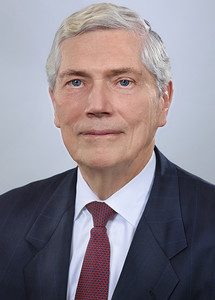
David Gladstone
About David Gladstone
David Gladstone, age 82, is the founder, Chairman, and Chief Executive Officer of Gladstone Commercial Corporation (GOOD), roles he has held since inception in 2003. He also serves as Chairman and CEO of affiliated Gladstone entities (Gladstone Capital, Gladstone Investment, Gladstone Land), is the indirect controlling stockholder of GOOD’s external Adviser and Administrator, and sits on the board of managers of affiliated broker-dealer Gladstone Securities. He holds an MBA from Harvard Business School, an MA from American University, and a BA from the University of Virginia . GOOD uses an external management structure; company-level incentives are tied to Adviser fees based primarily on Core FFO performance (see Performance Compensation) .
Past Roles
| Organization | Role | Years | Strategic impact |
|---|---|---|---|
| American Capital Strategies (ACAS) | Chairman/Vice Chairman | 1997–2001 | Public LBO/mezz fund leadership; governance and financing oversight |
| Allied Capital Corporation (and affiliates) | Chairman/CEO; senior roles | 1974–1997 | Led Allied mezzanine funds; managed growth of Allied Capital Commercial REIT |
| Allied Capital Commercial Corporation (public REIT) | Chairman or President | 1991–1997 | Grew assets from IPO launch to $385 million before merger into Allied Capital in 1997 |
| Business Mortgage Investors (private mortgage REIT) | Director/President/CEO | 1992–1997 | Managed real estate lending to SMEs |
| Capital Automotive REIT | Director | Prior role (dates not specified) | Sector expertise in net lease to auto dealerships |
| Riggs National Corporation / Riggs Bank | Director | 1993–1997 (corp); 1991–1993 (bank) | Financial institution governance |
External Roles
| Organization | Role | Years |
|---|---|---|
| Gladstone Capital, Gladstone Investment, Gladstone Land, Adviser, Administrator | Chairman and/or Chief Executive Officer (as applicable) | Current |
| Gladstone Securities, LLC (affiliated broker-dealer) | Board of Managers | Current |
| George Washington University | Trustee emeritus (former trustee) | Prior role |
| The Capital Investors, LLC (angel group) | Founder and managing member (member emeritus) | Prior role |
Fixed Compensation
- GOOD is externally managed and “does not pay any salaries or bonuses,” has no equity incentive plan, and provides no stock-based awards to employees of the Adviser or Administrator. As a result, GOOD does not provide a Say‑on‑Pay vote or summary compensation table for executives .
- Directors who are also officers (e.g., David Gladstone) receive no Board fees from GOOD; only independent directors receive cash retainers and meeting/chair fees (see Director Compensation) .
Performance Compensation
- Adviser incentive framework (drives CEO’s economic exposure via external manager he controls):
- Base management fee: 0.425% per year of prior-quarter “Gross Tangible Real Estate,” paid quarterly in arrears .
- Quarterly Core FFO incentive: 15% of pre-incentive Core FFO above a 2.0% quarterly (8% annualized) hurdle on adjusted total stockholders’ equity, with a cap limiting the quarterly incentive to no more than 15% above the average incentive fee for the prior four quarters (excluding zero-fee quarters) .
- Capital gains incentive: 15% of aggregate realized capital gains net of losses and selling costs; no capital gains fee recognized in 2024 .
- Fee waivers: Adviser contractually waived all quarterly incentive fees in 2023 ($4.6 million) and voluntarily waived ~$2.3 million for 2024, mitigating cash outflows to the external manager during the period .
| Incentive component | Metric | Target/Hurdle | Payout Mechanics | 2023/2024 Notes |
|---|---|---|---|---|
| Operating incentive | Core FFO vs adjusted equity | 2.0% quarterly (8% annualized) of adjusted equity | 15% of pre-incentive Core FFO above hurdle; quarterly cap as described | 2023: $4.6m waived; 2024: ~$2.3m waived |
| Capital gains incentive | Net realized capital gains | Positive annual net gains | 15% of net realized capital gains | 2024: $0 capital gains fee recognized |
Equity Ownership & Alignment
| Item | Detail |
|---|---|
| Beneficial ownership (as of 2/26/2025) | 496,564 shares; 1.12% of shares outstanding (44,192,741 shares outstanding) |
| Ownership breakdown | Includes 17,000 shares held by The Gladstone Companies, Ltd., 13,000 by Gladstone International Corporation, Ltd., and 102,000 by the Gladstone American Trust |
| Pledging | No pledged shares disclosed for David Gladstone; footnote indicates 1,761 pledged shares for director Michela English (not for Gladstone) |
| Hedging/derivatives policy | Insider Trading Policy prohibits short sales, options, warrants, convertible securities, appreciation rights, or other derivatives on Fund securities; all transactions require pre‑clearance |
| Director compensation equity | No director equity compensation program; independent directors are cash‑comp only; officer‑directors receive no Board fees |
Employment Terms
- Executive employment structure: GOOD has no employees; executives (including the CEO) are employed by the external Adviser or Administrator and “serve at the pleasure of the Board.” GOOD has no executive employment agreements, equity plans, pensions, perquisites, or company-paid bonuses/salaries for executives .
- Change-of-control economics (Advisory Agreement): If GOOD terminates the Advisory Agreement without cause (120 days’ notice; two‑thirds independent director vote), the Adviser is entitled to a termination fee equal to 2x the sum of the average annual base management fee and incentive fee earned over the prior 24 months. No fee if terminated “for cause” (defined events include breach, bankruptcy, dissolution, fraud) .
- Administration Agreement: GOOD pays its allocable portion of Administrator overhead and personnel costs (CFO, Treasurer, CCO, General Counsel, Secretary and staffs) .
| Agreement term | Provision | Citation |
|---|---|---|
| Termination fee (Adviser) | 2x average annual base + incentive fees over prior 24 months if terminated without cause | |
| For-cause termination | No termination fee if cause (breach, bankruptcy/insolvency, dissolution, fraud/misappropriation) | |
| Admin cost allocation | GOOD pays allocable overhead/personnel costs for certain executives via Administrator |
Board Governance
- Role/independence: David Gladstone has served as combined Chairman and CEO since inception; the Board maintains a Lead Independent Director (Walter H. Wilkinson) to balance oversight. The Board states that combining roles with a Lead Director is in shareholders’ best interests .
- Board activity: The Board met four times in the last fiscal year; all members attended ≥75% of Board/committee meetings; independent directors held four executive sessions .
- Committees and CEO roles:
- Executive Committee: Gladstone (Chairman) and Parker .
- Offering Committee: Gladstone (Chairman) and Parker; independent directors serve as alternates .
- Valuation Committee: Independent directors (Wilkinson Chair) .
- Audit and Compensation Committees: Comprised entirely of independent directors; David Gladstone not a member .
Director Compensation (structure; officer-directors receive none)
| Component | Amount/Policy |
|---|---|
| Annual cash retainer (independent directors) | $25,000 |
| Meeting fees | $1,000 per Board meeting; $1,000 per committee meeting if on a non‑Board day |
| Chair fees | Audit Chair: $7,500; Valuation Chair: $3,000; Compensation Chair: $3,000; Ethics Chair: $1,000 |
| Officer-director pay | No compensation paid to directors who are also officers (includes David Gladstone) |
Performance & Track Record
- Company-level external management decisions and fee actions: GOOD incurred ~$8.3 million in Adviser fees and ~$2.6 million in Administrator fees in 2024; Adviser waived ~$2.3 million in 2024 incentive fees and contractually waived $4.6 million in 2023, supporting distribution capacity and fee alignment in a higher-rate environment .
- Prior operating achievements: As leader at Allied Capital Commercial, Gladstone managed growth from IPO launch to $385 million in assets before its 1997 merger into Allied Capital Corporation .
Related Party Transactions and Conflicts
- Adviser/Administrator control: David Gladstone is the indirect controlling stockholder of the Adviser and Administrator; he also serves as an executive of these entities. GOOD asserts agreements are no less favorable than arm’s-length but notes material interests exist .
- Broker-dealer services: Gladstone Securities (100% indirectly owned/controlled by Gladstone) provides mortgage financing services (fees generally 0.15%–1.0% of mortgage; $0.1m paid in 2024, ~0.28% of mortgages) and acts as exclusive dealer‑manager for Series F Preferred (6% selling commissions; 3% dealer‑manager fee; $0.1m fees in 2024; $0.5m in 2023) .
- Conflict policy: Transactions with Adviser/affiliates require approval by a majority of independent directors not otherwise interested; the company outlines prohibitions and processes to mitigate conflicts .
Compensation Committee Analysis
- Composition and independence: Compensation Committee comprised solely of independent directors (2024 members: Outland, Adelgren; Wilkinson; Gorka added 1/8/2025; Parker and English as alternates). It annually reviews Advisory and Administration Agreements, evaluates Adviser performance/reasonableness of fees, reviews incentive fees and recommends renewal .
- Say-on-pay: Not applicable due to external management; no executive pay table provided .
Equity Ownership & Insider Activity Signals
| Data point | Observation |
|---|---|
| CEO ownership | 496,564 shares (1.12%) as of 2/26/2025, including holdings via affiliated entities and trust |
| Pledging | No pledging disclosed for CEO; one director (English) disclosed pledged shares (1,761) |
| Hedging/derivatives | Prohibited; pre-clearance required |
| Form 4 activity | Not disclosed in proxy; officer trades subject to Insider Trading Policy pre‑clearance |
Employment & Contracts — Key Takeaways for Retention/Transition
- No company employment agreements, severance, or equity that would vest/accelerate upon termination; retention risk is primarily channeled through the external Adviser’s economics (base and incentive fee streams) controlled by Gladstone .
- Advisory Agreement termination fee (2x average annual base + incentive) creates a meaningful break fee in a change-of-control/termination scenario, potentially reducing transaction optionality or increasing cost of external manager change .
Investment Implications
- Alignment: CEO’s 1.12% direct/indirect GOOD ownership plus visible Adviser fee waivers in 2023–2024 signal some alignment; however, the external management model pays the Adviser based on asset base and Core FFO hurdles, which can diverge from long‑term TSR if not carefully overseen .
- Governance checks: Combined CEO/Chairman role is offset by a Lead Independent Director and fully independent Audit/Compensation Committees that review Advisory/Admin Agreements annually, including incentive fees and renewals, providing a structural counterbalance to potential conflicts .
- Conflict risk: Multiple related‑party arrangements (Adviser, Administrator, Gladstone Securities mortgage fees and dealer‑manager fees) require continuous scrutiny; independent director approvals and published conflict policies are mitigating but not eliminative .
- Deal/COC optionality: The Advisory Agreement’s termination fee can act as an economic “poison pill” for internalization or strategic transactions, affecting buyer calculus and timelines; investors should monitor Compensation Committee renewals and any negotiated waivers or amendments, as seen with 2023–2024 waiver actions .
- Pay-for-performance lens: With no company-paid executive salary/bonus/equity, assessment hinges on whether Adviser incentives (Core FFO hurdle, caps) and fee waivers correlate with sustainable AFFO/distribution health and prudent balance sheet management; 2024 no capital gains fee and partial fee waiver support near-term alignment, but longer-term outcomes depend on how growth and recycling impact Core FFO versus the hurdle .