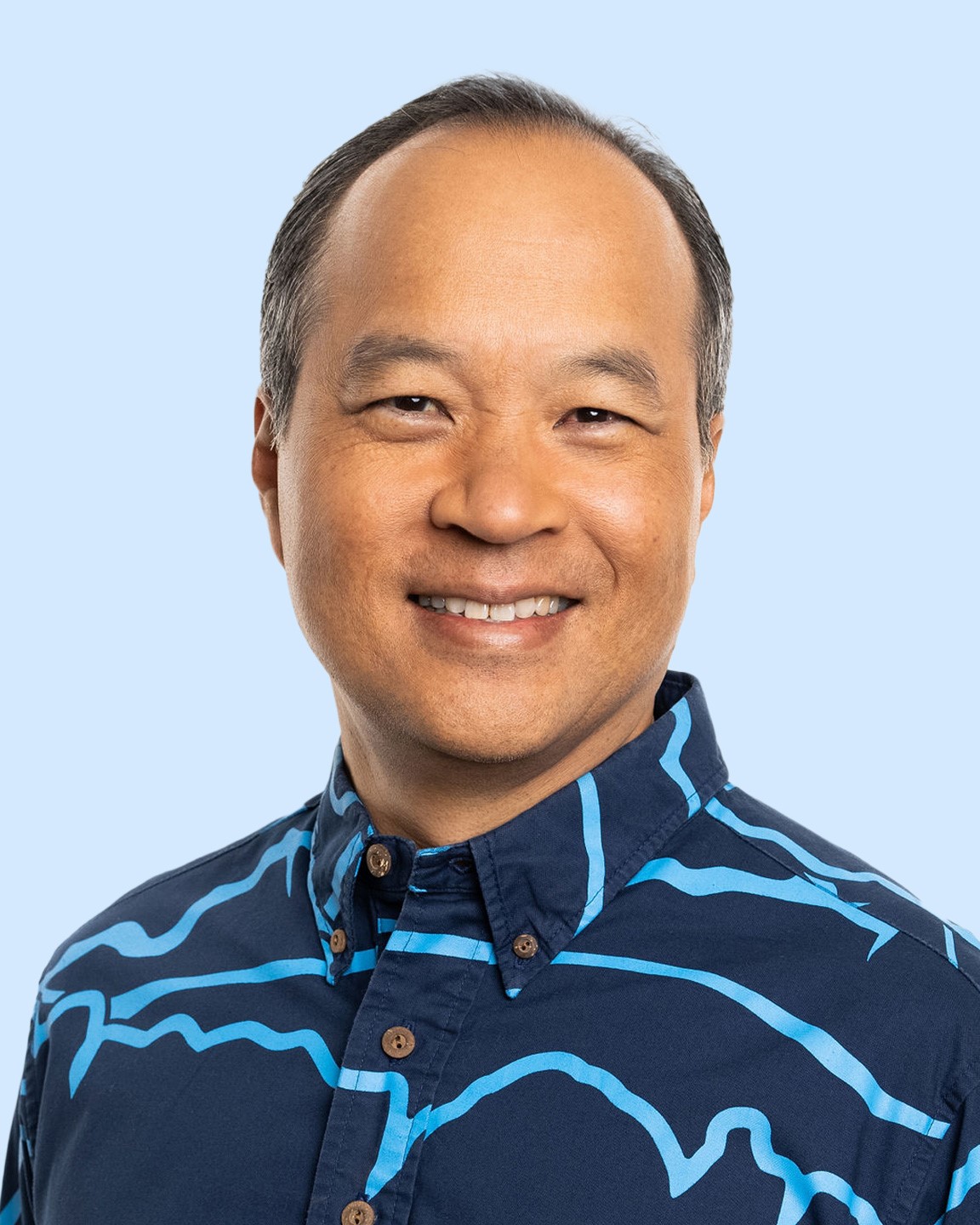
Scott W. H. Seu
 HAWAIIAN ELECTRIC INDUSTRIES
About Scott W. H. Seu
Scott W. H. Seu is President & CEO of Hawaiian Electric Industries (HEI) and has served as a director since 2022; he is age 59 and holds BS and MS degrees in Engineering from Stanford University . HEI’s 2024 reported net loss was $(1,426) million (wildfire accruals, impairments, ASB sale), with HEI total shareholder return (TSR) of −31.4% in 2024, and −74.7% over 3 years; adjusted net income used for incentive purposes was $180.4 million . Under Seu’s leadership, the utility advanced wildfire mitigation and resilience (≈$120 million invested; PSPS program; infrastructure upgrades) and increased renewables to 36% in 2024 while reducing average residential bills by 7%; HEI also executed a global wildfire settlement, raised $558 million in equity, established a $250 million ATM program, and sold American Savings Bank to shore up liquidity .
Past Roles
| Organization | Role | Years | Strategic Impact |
|---|---|---|---|
| Hawaiian Electric Company | President & CEO | Feb 2020–Dec 2021 | Led utility serving ~95% of Hawai‘i, accelerated transition to renewables; developed climate action plan with net-zero by 2045 . |
| Hawaiian Electric Company | SVP, Public Affairs | Jan 2017–Feb 2020 | Regulatory and community leadership; advanced resilience initiatives . |
| Hawaiian Electric Company | VP, System Operation | May 2014–Dec 2016 | Grid operations leadership during renewable integration . |
| Hawaiian Electric Company | VP, Energy Resources & Operations | Jan 2013–Apr 2014 | Managed energy resources and operations . |
| Hawaiian Electric Company | VP, Energy Resources | Aug 2010–Dec 2012 | Drove resource planning and procurement . |
| Engineering roles (US/China) | Mechanical/Environmental Engineer | Prior to HECO | International engineering experience; cross-border operational exposure . |
External Roles
| Organization | Role | Years |
|---|---|---|
| Queen’s Health Systems | Trustee | Since 2023 . |
| Edison Electric Institute | Director | Since 2022 . |
| Electric Power Research Institute | Director | Since 2020 . |
| Partners in Development Foundation | Director | Since 2022 . |
| Teach for America Hawai‘i | Regional Advisory Board | Since 2017 . |
| Hale Kipa | Chair (since 2017), Director | Director since 2008 . |
| American Savings Bank | Director (2022–2024), Chair | Chair 2022–2023 . |
Fixed Compensation
| Metric | 2022 | 2023 | 2024 |
|---|---|---|---|
| Base Salary ($) | $875,000 | $958,333 | $995,750 |
| Bonus ($) (includes RCA payments) | $0 | $0 | $265,533 |
Notes:
- 2024 program temporarily shifted part of long-term time-based awards from stock to restricted cash awards (RCAs) to manage dilution and address retention; time-based LTI value set at 160% of base salary for the CEO .
Performance Compensation
| Metric | 2022 | 2023 | 2024 |
|---|---|---|---|
| Stock Awards ($) (grant-date fair value) | $1,830,874 | $2,253,154 | $1,695,190 |
| Annual Incentive Payout ($) | $869,129 | $0 | $1,698,938 (repaid net of taxes on Mar 27, 2025) |
| Realized Compensation ($) | $2,299,193 | $1,526,129 | $3,158,332 |
2024 Annual Incentive Design and Outcomes (EICP – CEO)
| Metric | Weight | Target | Actual/Result | Payout Scaled | Notes |
|---|---|---|---|---|---|
| HEI Consolidated Adjusted Net Income | 30% | $166.7M | $180.4M | 171% of target | Non-GAAP adjustments reconciled in Exhibit A . |
| Utility Operations (composite) | 25% | See Exhibit B | See Exhibit B | Not numerically disclosed | Composite of safety, reliability, resilience subgoals . |
| ASB ROA | 15% | 0.74% | 0.82% | Not specified | Applies to 2024 pre-sale; ASB sold 12/31/24 . |
| HEI Strategic/Value Creation | 30% | Board-scaled | 2024 milestones | 175% of target | Settlement, $558M equity raise, $250M ATM, ASB sale, going concern resolved . |
Vesting: Annual incentives pay after year-end; Seu and the utility CEO voluntarily repaid their 2024 EICP awards (net of taxes) on Mar 27, 2025; boards may decide later whether to pay amounts in respect of 2024 awards .
2024–2026 Long-Term Incentive Plan (LTIP) – Metrics and Weighting
| Metric | Weight |
|---|---|
| Utility Long-Term Issuer Credit Rating improvement (≥2 agencies) | 40% |
| Utility Public Safety: System Hardening to New Standards | 40% |
| HEI Relative TSR vs HEI compensation peers | 20% |
Payout curve: Threshold 0.5× target; maximum 2.0× target; awards earned in equity and/or cash per plan design .
2022–2024 LTIP Results (for CEO)
| Metric | Weight | Target | Actual | Payout |
|---|---|---|---|---|
| HEI 3-yr Avg Annual EPS Growth | 30% | 6.0% | −10.0% | 0% |
| HEI 3-yr Avg ROACE | 30% | 9.5% | 8.6% | Below target |
| Utility CO2e Reduction vs 2005 | 20% | 32% | 27% | Below target |
| HEI Relative TSR vs EEI Index | 20% | 50th pctile | 0th pctile | 0% |
Outcome: No payout under 2022–2024 LTIP for HEI NEOs; adjustments for unusual events applied per plan, but results remained below threshold .
Equity Ownership & Alignment
| Ownership Element | Detail |
|---|---|
| Beneficial Ownership (Feb 17, 2025) | 42,888 shares sole; 458 other; 10,768 RSUs; total 54,114; <1% of outstanding . |
| Outstanding RSUs (12/31/24) | 14,331 unvested; market value $139,441 (@$9.73) . |
| Unearned LTIP Shares (target, 12/31/24) | 157,414; payout value $1,531,638 (@$9.73) . |
| 2024 Vested RSUs | 15,123 shares; $198,111 value realized (incl. dividend equivalents) . |
| Vesting Schedule | Remaining 2022 RSUs vested Feb 11, 2025; 2023 RSUs: one installment vested Feb 10, 2025; remainder vests Feb 10, 2026 . |
| Ownership Guidelines | CEO must own 5× base salary; retain 50% of net shares from RSU/LTIP until compliant; compliance date not yet reached . |
| Hedging/Pledging | Prohibited for directors/officers and family members; trading preclearance and blackout periods apply . |
Implication: Material unvested RSUs and LTIP share opportunities extend through 2026–2027; blackout rules and pledging prohibitions mitigate immediate selling pressure .
Employment Terms
| Provision | CEO Terms |
|---|---|
| Employment Contract | None; “at-will” with programmatic incentives . |
| Change-in-Control (CIC) | Double-trigger; lump sum 3× (base + annual incentive, greater of current target or largest actual in prior 3 years); 280G cap; no tax gross-ups . |
| CIC Benefits | Continued health/welfare during severance period; retirement/savings plan credit; pro-rata or full vesting for certain cash incentives; RSUs vest if not assumed or upon qualifying termination; outplacement capped at 15% of base; 409A delay mechanics . |
| Indicative CIC Payment (12/31/24) | $3,894,680 (severance component shown in proxy table) . |
| Severance (non-CIC) | For-cause: forfeiture of unvested awards; without cause: forfeiture of unvested RSUs/RCAs (CIC terms differ) . |
| Clawback | SEC-compliant clawback policy adopted Oct 2023 for erroneously awarded incentive pay upon restatement . |
| Perquisites | Minimal; club memberships commonly provided; detailed perq table shows none for CEO in 2024 . |
Performance & Track Record
- Wildfire mitigation and resilience: ~$120M invested; PSPS program; pole testing/replacement; line upgrades; vegetation management; weather stations and AI cameras deployed .
- Renewable energy: RPS reached 36% in 2024 (33% in 2023); progress toward 40% by 2030; average residential bill down 7% in 2024 .
- Financial stabilization actions: Global tort litigation settlement agreements; $558M equity offering; $250M ATM program; ASB sale; resolved substantial doubt on going concern .
- TSR and earnings: 2024 TSR −31.4%; 3-year TSR −74.7%; 2024 GAAP net loss $(1,426M); prior years GAAP net income $199M (2023), $241M (2022) .
Board Governance (Director Service, Committees, Independence)
| Item | Detail |
|---|---|
| Board Service | HEI director since 2022; Executive Committee member . |
| Independence | Employee director; not independent under NYSE standards . |
| Chair Structure | Independent, non-executive Chair (Adm. Fargo); independent committees; executive sessions led by Chair . |
| Attendance | All directors attended ≥75% of meetings in 2024; annual meeting attendance encouraged and achieved . |
| Director Pay | Employee director receives no additional director compensation . |
Dual-role implications: Separation of CEO and independent Chair mitigates concentration of power; committee independence and executive sessions provide governance counterbalance to CEO-director status .
Director Compensation (for context)
- Non-employee directors receive cash retainers and, in 2024, a $120,000 cash award in lieu of stock to manage dilution; maximum annual director compensation is capped at $600,000 .
- Director stock ownership requirement amended effective Jan 1, 2025 to 5× Board retainer; no current director has reached the compliance date .
Compensation Governance, Peer Benchmarking, and Say-on-Pay
- Independent consultant (FW Cook) advises the Compensation & Human Capital Management Committee; annual risk assessments indicate programs do not encourage material adverse risk taking .
- 2024 compensation benchmarking uses utility peers (ALLETE, Alliant, AVANGRID, Avista, Black Hills, Evergy, IDACORP, MDU Resources, NiSource, Northwestern, OGE, Pinnacle West, Portland General, TXNM) with revenue 0.4×–2.5× HEI; Relative TSR peers updated to compensation peers .
- 2024 say-on-pay approval ~91% of votes cast; 2024 program increased focus on safety/resilience and credit ratings in response to Maui wildfires .
Equity Awards & Vesting Detail
| Award Type | Grant/Status | Quantity/Value |
|---|---|---|
| RSUs Outstanding (12/31/24) | 2022: 4,238; 2023: 10,093; total 14,331; market value $139,441 (@$9.73) . | |
| LTIP Target Shares (unearned) | 2023–25: 35,703; 2024–26: 121,711; total 157,414; payout value $1,531,638 (@$9.73) . | |
| 2024 Vesting | RSUs vested: 15,123; value realized $198,111 . | |
| Upcoming Vesting Milestones | 2022 RSUs: Feb 11, 2025; 2023 RSUs: Feb 10, 2025 and Feb 10, 2026 . |
Investment Implications
- Pay-for-performance alignment is mixed: 2024 annual incentive paid on adjusted net income and strategic milestones but was voluntarily repaid by the CEO in March 2025; long-term performance outcomes (EPS growth, ROACE, TSR) under 2022–2024 LTIP resulted in zero payout, indicating rigorous hurdles amid crisis effects .
- Retention risk and dilution management drove a temporary shift to cash-based time awards in 2024 and higher LTI target percentages (CEO time-based and performance LTI each at 160% of salary), which reduces dilution but raises cash spend; monitor 2025–2026 pay mix normalization and performance calibration .
- Change-in-control economics (3× base+bonus; $3.9M indicative severance) and broad CIC benefit protections are shareholder-standard (double-trigger, 280G cap, no gross-ups); not an outsized parachute but meaningful in event scenarios .
- Ownership alignment is supported by stringent 5× salary guideline, retention requirements, and strict insider trading/hedging/pledging prohibitions; beneficial ownership is <1%, with substantial unvested RSUs and LTIP targets through 2027 that tie outcomes to credit quality, wildfire safety, and TSR .
- Governance safeguards (independent Chair, independent committees, executive sessions) mitigate dual-role risks of CEO-director status; say-on-pay support (~91%) and adoption of an SEC-compliant clawback strengthen accountability signals .