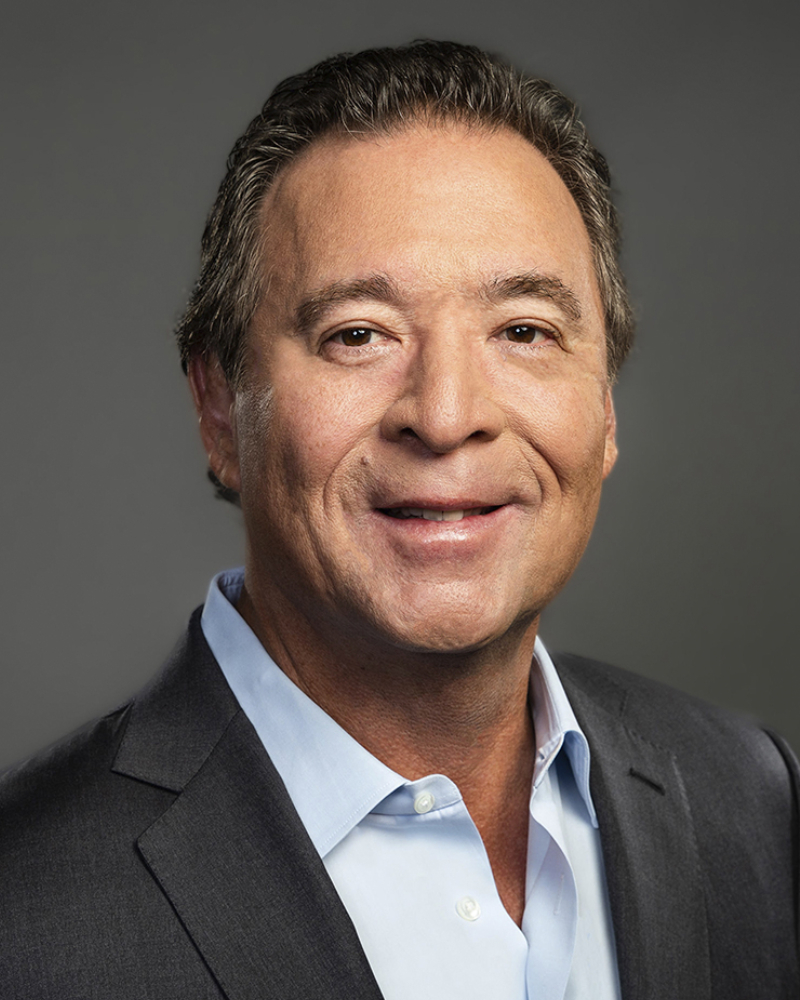
Mark Wang
 Hilton Grand Vacations
About Mark Wang
Mark D. Wang, 67, is CEO of Hilton Grand Vacations (HGV) and a director since May 2016; he has served as CEO since HGV’s 2017 spin-off and previously held the President title through April 2024 . In 2024, HGV delivered $4,981 million in total revenues and $1,112 million in Economic Adjusted EBITDA, the two primary performance anchors used in pay design . Pay-versus-performance disclosures show Company TSR index values (per $100 invested) of $91.16 (2020), $166.22 (2021), $73.96 (2022), $104.26 (2023), and $96.94 (2024) alongside Economic Adjusted EBITDA of $106M, $640M, $1,049M, $1,026M, and $1,112M, respectively .
| Performance Lens | 2020 | 2021 | 2022 | 2023 | 2024 |
|---|---|---|---|---|---|
| Company TSR ($ per $100) | $91.16 | $166.22 | $73.96 | $104.26 | $96.94 |
| Peer Group TSR ($ per $100) | $101.75 | $111.49 | $79.94 | $136.09 | $116.79 |
| Net Income ($M) | (201) | 176 | 352 | 313 | 60 |
| Economic Adjusted EBITDA ($M) | 106 | 640 | 1,049 | 1,026 | 1,112 |
Past Roles
| Organization | Role | Years | Strategic Impact |
|---|---|---|---|
| HGV (post spin-off) | Chief Executive Officer | 2017–present | Led scale and integration initiatives; transformed to a more capital‑efficient model . |
| HGV (pre spin-off under Hilton Worldwide) | EVP & President, Hilton Grand Vacations | 2008–2016 | Oversaw all global timeshare operations; introduced new sales & marketing techniques . |
| Hilton (Hotels Division) | President, Global Sales (dual role) | 2013–2014 | Enterprise-level commercial leadership; enhanced cross-selling and channel execution . |
| Hilton | Managing Director, Hawaii & Asia Pacific | 1999 onward (earlier career) | Grew APAC platform; led inaugural Asia-Pacific Islander TMRG . |
| Independent timeshare companies | Co-founder; President/COO (3 firms) | Pre-1999 | Brought U.S. vacation ownership product to Japan in 1987; industry innovation . |
External Roles
| Organization | Role | Years | Strategic Impact |
|---|---|---|---|
| American Resort Development Association (ARDA) | Director; Executive Committee; Chair of Board | Director & Exec Committee since 2008; Chair 2017–2019 | Industry leadership and advocacy for vacation ownership sector . |
| ARDA-Hawaii (State Legislative Committee) | Vice Chairperson | 6 years | State-level policy engagement for resort development . |
Fixed Compensation
| Component | 2023 | 2024 | Notes |
|---|---|---|---|
| Base Salary ($) | $1,100,000 | $1,200,000 (effective Jan 1, 2024) | CEO base aligned upward with peer benchmarks . |
| Target STI (% of salary) | 175% | 175% | Applies to annual cash incentive . |
| Target STI ($) | $1,925,000 | $2,100,000 | Derived from base x 175% . |
| Target LTI (% of salary) | 500% | 500% | Mix of RSUs, options, and PRSUs . |
| Target LTI ($) | $5,500,000 | $6,000,000 | 2024 LTI target value . |
| Target Total Direct ($) | $8,525,000 | $9,300,000 | Salary + target STI + target LTI . |
| Salary Earned (SCT) ($) | — | $1,198,077 | Summary Compensation Table (SCT) 2024 . |
Performance Compensation
Short-term Incentive Plan (STI) design and results (2024):
- Metrics/weights: 70% Economic Adjusted EBITDA; 30% Total Economic Revenue .
- Payouts: EBITDA component paid at 62% and Total Economic Revenue at 69%, driving a blended 64% of target for CEO .
| Metric | Weight | Threshold | Target | Maximum | Actual | Payout Factor |
|---|---|---|---|---|---|---|
| Economic Adjusted EBITDA ($M) | 70% | 1,066.8 | 1,255.0–1,275.0 | 1,402.5 | 1,112.2 | 62% |
| Total Economic Revenue ($M) | 30% | 4,373.7 | 4,859.6 | 5,345.6 | 4,560.8 | 69% |
| Total | 100% | — | — | — | — | 64% |
CEO STI outcome (2024):
- Target STI $2,100,000; payout at 64% = $1,346,100 .
- Separately, first tranche of Bluegreen performance cash (run‑rate cost savings) vested and paid $1,500,000 on Sept 30, 2024; included in SCT non‑equity compensation .
| STI Element (2024) | Target ($) | Payout Factor | Paid ($) |
|---|---|---|---|
| Economic Adjusted EBITDA | $1,470,000 | 62% | $911,400 |
| Total Economic Revenue | $630,000 | 69% | $434,700 |
| Total Annual Cash Incentive | $2,100,000 | 64% | $1,346,100 |
| Bluegreen Performance Cash (Tranche 1) | — | Achieved | $1,500,000 |
Long-term Incentive (LTI) design (2024 grants to CEO):
- Mix/weightings: 40% time‑vest RSUs (3‑yr ratable), 25% stock options (3‑yr ratable, 10‑yr life), 35% PRSUs (cliff after 3 years) .
- PRSU metrics: 50% Economic Adjusted EBITDA, 50% Contract Sales; 0–200% payout curve; specific targets not disclosed (competitive sensitivity) .
| 2024 CEO LTI | Weight | Vesting | Units Granted |
|---|---|---|---|
| RSUs | 40% | 3 equal annual tranches | 54,151 |
| Stock Options | 25% | 3 equal annual tranches; 10‑yr term | 66,489 |
| PRSUs | 35% | Cliff at end of 3‑yr period (2024–2026) | 47,382 |
Special Transaction Incentive (Bluegreen acquisition, approved 2024):
- CEO award value $3,750,000: 60% PRSUs (50,767 target units) with performance on run‑rate cost savings and Adjusted EBITDA through 12/31/2025; 40% performance cash: 50% paid upon 9‑month run‑rate savings milestone achieved on 9/30/2024 ($1,500,000) and 50% contingent on 18‑month milestone through 6/30/2025 .
| Bluegreen Transaction Incentive (CEO) | Value/Units | Performance | Vesting/Status |
|---|---|---|---|
| Bluegreen Performance RSUs | 50,767 target units | Run-rate cost savings (50%) and Adjusted EBITDA (50%) | Cliff at 2 years (1/17/2024–12/31/2025) |
| Bluegreen Performance Cash | $1,500,000 Tranche 1; $1,500,000 Tranche 2 | Run-rate cost savings | Tranche 1 vested/paid 9/30/2024 ($1.5M); Tranche 2 through 6/30/2025 |
Equity Ownership & Alignment
- Beneficial ownership: 1,367,006 HGV shares (≈1.4% of outstanding) as of the 3/14/2025 record date .
- Stock ownership guidelines: CEO = 5x base salary; all NEOs, including CEO, were in compliance as of 12/31/2024 .
- 2024 vesting/exercises: 249,095 shares vested for Mr. Wang (value realized $11,178,401); 46,388 option shares exercised (value realized $900,892) .
Select year-end 2024 outstanding awards snapshot (CEO):
- Unvested RSUs: 29,847 (2023 grant); 54,151 (2024 grant) .
- Unearned PRSUs: 39,173 (2023 PRSUs); 47,382 (2024 PRSUs) .
- Bluegreen Performance RSUs: 50,767 target units .
- Options (examples): 2016: 73,286 exercisable @ $18.69, exp 2/18/2026; 2017: 190,813 exercisable @ $28.30, exp 3/9/2027; 2022: 39,332 exercisable & 19,667 unexercisable @ $44.09, exp 3/7/2032; 2023: 18,495 exercisable & 36,993 unexercisable @ $49.14, exp 3/7/2033; 2024: 66,489 unexercisable @ $44.32, exp 3/5/2034 .
Employment Terms
- No employment agreement; severance agreement in place (consistent with all NEOs) .
- Severance multiple: CEO = 2.5x base salary + target bonus; other NEOs = 2.0x .
- Triggers: “Qualifying termination” (without cause or for good reason), including within 24 months after a CIC; double‑trigger for CIC; no cash severance for CIC without termination .
- Restrictive covenants: 24‑month non‑compete and related covenants; confidentiality and non‑disparagement apply indefinitely .
- CEO‑specific “good reason” protections include not being most senior executive and/or failure to nominate/removal from the Board .
- 280G cutback provision (no excise tax gross‑up) .
- Clawback policy compliant with NYSE/Rule 10D‑1 (recovers erroneously awarded incentive comp upon restatement) .
Potential Payments (as of 12/31/2024, illustrative):
| Scenario (CEO) | Cash Severance ($) | Equity Awards ($) | Health/Welfare ($) | Life Insurance ($) | Bluegreen Perf. Cash ($) | Total ($) |
|---|---|---|---|---|---|---|
| Qualifying Termination (No CIC) | 8,250,000 | 8,273,386 | 19,311 | 4,026 | 503,839 | 17,050,563 |
| Qualifying Termination Following CIC | 8,250,000 | 9,985,902 | 19,311 | 4,026 | 750,000 | 19,009,239 |
| CIC Without Qualifying Termination | 0 | 9,985,902 | 0 | 0 | 750,000 | 10,735,902 |
| Death or Disability | 2,100,000 | 7,292,599 | 0 | 0 | 503,839 | 9,896,438 |
| Retirement | 0 | 9,985,902 | 0 | 0 | 750,000 | 10,735,902 |
Notes: Equity treatment depends on award terms and whether awards are assumed in a CIC; HGV’s “best practices” avoid automatic single‑trigger equity acceleration if awards are assumed .
Board Governance (Director Service, Committees, Independence)
- Board service: Director since May 2016 .
- Independence: Not independent due to CEO status; independent chair (Leonard A. Potter) and majority‑independent board/committees provide counterbalance .
- Committees: CEO and Apollo designees do not serve on any board committees; Audit, Compensation, and Nominating/Governance consist solely of independent directors .
- Meeting attendance (2024): All directors attended ≥75% of board and committee meetings; board held 6 meetings; Audit (6), Compensation (5), Nominating/Gov (4) .
- Executive sessions of non‑employee/independent directors held regularly; chaired by independent Chair .
- Director pay: Employee directors (Mr. Wang) receive no additional board compensation .
Director Compensation (as applicable to Mr. Wang)
- As an employee director, Mr. Wang receives no separate director compensation . Non‑employee director program details (cash and RSU retainers) are disclosed but do not apply to Mr. Wang .
Compensation Structure Analysis (Alignment and Risk Controls)
- Strong at‑risk mix: For CEO, majority of target pay delivered in equity; PRSUs tied to multi‑year Economic Adjusted EBITDA and Contract Sales; options add upside only if stock appreciates .
- STI 2024 paid below target (64%) on below‑target EAE and TER outcomes, demonstrating pay‑for‑performance .
- Governance controls: Clawback policy in line with NYSE/Rule 10D‑1 ; stock ownership guideline (5x salary) met ; no excise tax gross‑ups and no single‑trigger equity acceleration if awards are assumed .
- Independent oversight: Compensation Committee is fully independent and advised by independent consultant Pearl Meyer; peer group includes travel/leisure and lodging comps (Boyd, Caesars, Darden, Host, Hyatt, Marriott Vacations, Norwegian, Penn, Royal Caribbean, Travel + Leisure) .
Say‑on‑Pay & Shareholder Feedback
- Say‑on‑pay approval at the 2024 annual meeting: ~98% support, indicating strong investor endorsement of the program design .
Investment Implications
- Alignment and retention: High equity weighting (RSUs, PRSUs, options) and a 5x salary ownership guideline (met) align CEO incentives with long‑term shareholder value; multi‑year performance conditions support durable execution .
- Integration milestones: The Bluegreen transaction incentives are explicitly tied to cost‑synergy realization and EBITDA outcomes, with first cash tranche achieved by Sept 30, 2024—an encouraging signal on integration progress .
- Downside governance protections: No gross‑ups, double‑trigger CIC treatment, robust clawback, and independent Chair reduce governance and payout risk for investors .
- Payout sensitivity to operating metrics: 2024 STI below target (64%) due to underperformance vs goals on EAE and Total Economic Revenue, reinforcing performance sensitivity; 2024 revenues and EAE set the base for forward incentive periods .
- Board structure and independence: CEO is not independent, but separation of Chair/CEO and fully independent committees mitigate dual‑role concerns and support objective oversight .