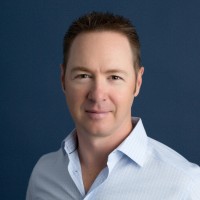
Brandon Robinson
About Brandon Robinson
Brandon Robinson, age 46, is HOVR’s Chief Executive Officer and a Class III director, serving since the January 12, 2024 SPAC business combination that created New Horizon Aircraft Ltd. (HOVR) . He founded Legacy Horizon (Horizon Aircraft) in 2013 and led it through the SPAC process; previously, he was a CF‑18 fighter pilot in the Canadian Armed Forces and later managed large military capital projects . Robinson holds a B. Mechanical Engineering (Royal Military College), an MBA (Royal Roads), is co‑author on aerospace patents, and holds an Airline Transport Pilot License; he also serves on the Ontario Aerospace Council board . The board is majority independent; the CEO is not independent, there is currently no board chair, and independent directors meet in executive sessions at least annually .
Past Roles
| Organization | Role | Years | Strategic Impact |
|---|---|---|---|
| Legacy Horizon (Horizon Aircraft/“Legacy Horizon”) | Founder & CEO | 2013–2024 | Led development and certification strategy, culminating in the 2024 business combination to form HOVR . |
| Canadian Armed Forces | CF‑18 front-line fighter pilot; later large-scale capital projects | — | Operational aviation leadership and program management experience foundational to eVTOL/AAM strategy . |
External Roles
| Organization | Role | Years | Strategic Impact |
|---|---|---|---|
| Ontario Aerospace Council | Director | — | Industry network and policy visibility supporting certification and supply chain engagement . |
Board Service & Governance
- Director class/term: Class III; term expires at the 2026 annual meeting .
- Committee roles: No CEO committee service; Audit, Compensation, and Nominating/Governance committees are fully independent; current members and chairs are disclosed, with an expected rotation post‑meeting (independence maintained) .
- Independence/dual-role: CEO is not independent; board has no chair; independent directors hold executive sessions and one independent director presides per session .
- Attendance: The board held four meetings in FY2025; all incumbents attended ≥75% of board and assigned committee meetings .
- Family relationships: COO Jason O’Neill is the CEO’s brother‑in‑law .
Fixed Compensation
| Metric (Currency as shown) | FY2024 | FY2025 |
|---|---|---|
| Salary ($CAD) | 270,985 | 369,036 |
| Bonus ($) | — | 52,785 (paid in Class A shares under STIP) |
| Stock Awards ($) | — | 102,199 (PSUs and ESPP company contribution) |
| Option Awards ($CAD) | — | 212,000 |
| Total ($CAD) | 270,985 | 736,020 |
- Employment Agreement base salary: USD $300,000 for CEO (at‑will) .
- Benefits/perquisites: Broad-based retirement/health programs; no unique perquisites disclosed for FY2025 .
Performance Compensation
- Annual bonus framework: Company indicates performance-based cash/stock opportunities; 2025 bonus paid in shares via STIP but specific financial/operational metrics, weightings, and target-to-actual outcomes were not itemized in the proxy .
- Equity plan: Options and PSUs/RSUs granted under the 2023 Equity Incentive Plan; options vest in three equal annual installments over three years; PSUs/RSUs have vesting conditions set at grant by the board .
Option awards (CEO):
- 95,476 options exercisable and 47,737 unexercisable at $0.55 (USD) expiring August 2, 2030; table footnote references original grant at CAD $0.76 (FX conversion shown) .
- 400,000 options unexercisable at $0.61 (USD) expiring February 2, 2035; options vest in three equal annual installments per plan practice .
Stock awards (CEO):
- 100,000 unvested stock units shown in the outstanding awards table; market value disclosure also shown, though the share count/valuation presentation appears partially inconsistent within the table for one line item .
Policies affecting performance pay:
- Change-of-control: Option exercise can be accelerated in a takeover bid or change of control per plan; PSU/RSU vesting conditions are board‑defined at grant and may be accelerated at discretion .
- Equity grant practices: Grants consider performance targets and internal milestones; guardrails to avoid MNPI timing issues; legal oversight .
Equity Ownership & Alignment
| Item | Detail |
|---|---|
| Beneficial ownership | 2,383,840 shares (5.5% of outstanding), including specified option holdings; some options described on a fully vested basis for the ownership table . |
| Options (exercisable/unexercisable) | 95,476/47,737 at $0.55 exp. 8/2/2030; 400,000 unexercisable at $0.61 exp. 2/2/2035 . |
| Unvested stock units | 100,000 unvested stock units (as shown in outstanding awards table) . |
| Pledging/hedging | Prohibited; no pledging of company securities; no options/derivatives trading by insiders . |
| 10b5‑1 plans | Permitted for executives/directors subject to policy requirements . |
| Ownership guidelines | Not disclosed in the proxy . |
Vesting/selling pressure signals:
- Options generally vest in three equal tranches over three years; significant unvested options (400,000) and unvested stock units (100,000) imply periodic vesting events that may create sellable supply, subject to trading windows and 10b5‑1 plans .
- SPAC lock‑up restrictions expired July 12, 2024, which removed legacy lock-up constraints on certain holders and could increase secondary supply; a limited waiver was granted at closing for ~1.69 million shares of a non‑affiliate .
Employment Terms
| Term | Summary |
|---|---|
| Employment status | At-will; CEO may resign with 30 days’ notice; cause/no-cause standards tied to Ontario ESA . |
| Severance (no-cause) | Minimum aggregate of statutory ESA entitlements plus additional base salary to bring the total severance period to 12 months, increasing by 1 month per completed year of service from effective date, capped at 24 months; prorated bonus over the severance period based on the average incentive of the prior two years . |
| Change of control | Double trigger: if within 2 years post‑CoC the company gives “Good Reason” (material diminutions, pay/benefit cuts, etc.), the CEO is entitled to the same without‑cause severance economics . |
| Base salary | USD $300,000 (CEO) per Employment Agreement . |
| Non‑compete / Non‑solicit | Two‑year non‑competition and non‑solicitation agreements executed at closing on Jan 12, 2024 (apply for 2 years post‑closing) . |
| Clawback / tax gross‑ups | Not disclosed . |
| 10b5‑1 trading | Allowed under insider trading policy . |
| ESPP | Executives can contribute up to 10% of base salary via payroll; company matches 50%; matching shares may carry a 12‑month holding period; purchases executed in the open market . |
Related Party & Governance Notes
- Related party: Services engagement with Cert Centre Canada (3C), led by director John Maris; HOVR engaged ~$60 to date; audit committee oversight applies .
- Section 16(a): The company reports several late filings by certain insiders/holders in FY2025; no specific note of a late filing for Brandon Robinson .
- Independent committees: Audit, Compensation, and Nominating/Governance fully independent; committee charters posted; expected committee member transitions post‑meeting preserve independence .
- Dilution governance: 2023 Equity Incentive Plan evergreen allows up to 5% annual share pool increases through Jan 1, 2034, subject to board determination, which can be a source of ongoing dilution .
Director Compensation (as it relates to CEO/Director dual role)
- Non‑employee director compensation is a mix of cash and stock; employee directors do not receive additional pay for board service—so Robinson receives no incremental director fees beyond his executive compensation .
Compensation Structure Observations
- Mix shift and equity emphasis: 2025 showed a step‑up in salary and the addition of stock and option awards as a public company, aligning incentives to long‑term value creation .
- Lack of disclosed bonus metrics: The proxy does not specify quantitative targets/weightings for the CEO’s annual incentive or PSU metrics, limiting pay‑for‑performance transparency .
- Option design: 10‑year options with three‑year ratable vesting and potential acceleration on change-of-control enhance retention but can concentrate value on future volatility/price appreciation .
Risk Indicators & Red Flags
- Dual roles and independence: CEO is also a director; no separate board chair; however, independent committees and executive sessions mitigate to a degree .
- Family tie: COO is CEO’s brother‑in‑law—monitor for related‑party perceptions (COO is not up for re‑election as a director and continues as an executive) .
- Share supply dynamics: Lock‑up expiration and ongoing equity plan “evergreen” increases can add to float over time .
- Pledging/hedging risk: Explicitly prohibited, which is positive for alignment .
Multi‑Year Compensation Detail (CEO)
| Component | FY2024 | FY2025 |
|---|---|---|
| Salary ($CAD) | 270,985 | 369,036 |
| Bonus ($) | — | 52,785 (share‑settled STIP) |
| Stock Awards ($) | — | 102,199 |
| Option Awards ($CAD) | — | 212,000 |
| Total ($CAD) | 270,985 | 736,020 |
Outstanding Awards (CEO)
| Instrument | Exercisable | Unexercisable | Strike (USD) | Expiration | Unvested Stock Units |
|---|---|---|---|---|---|
| Options (legacy) | 95,476 | 47,737 | 0.55 | Aug 2, 2030 | — |
| Options (public‑company grant) | — | 400,000 | 0.61 | Feb 2, 2035 | 100,000 |
Note: Options generally vest in three equal annual installments per plan; change‑of‑control may accelerate exercise; board holds discretion on RSU/PSU vesting .
Security Ownership (CEO)
| Holder | Shares Beneficially Owned | % of Class |
|---|---|---|
| Brandon Robinson | 2,383,840 | 5.5% |
Footnotes: Beneficial ownership includes options and certain indirect holdings; see proxy footnotes regarding Robinson Family Ventures Inc. and option details .
Investment Implications
- Alignment: Robinson’s 5.5% stake, option overhang, and RSU/PSU participation create meaningful equity alignment; pledging is prohibited, and 10b5‑1 plans are allowed for orderly diversification .
- Retention vs supply: Three‑year vesting and double‑trigger CoC severance support retention through key certification milestones; however, vesting schedules and post‑SPAC lock‑up expiry increase potential secondary supply, warranting monitoring of Form 4s and any 10b5‑1 adoptions .
- Governance: Independent committees and executive sessions mitigate dual‑role risks, but absence of an independent chair and the COO family relationship are watch‑items for governance‑sensitive investors .
- Dilution risk: The equity plan evergreen (≤5% annual) can be dilutive as the company scales headcount and incentives around certification and commercialization; investors should track share issuance under the plan .
Overall, Robinson’s compensation is now structured with heavier equity leverage post‑listing, but limited disclosure on bonus/PSU metrics reduces pay‑for‑performance transparency; alignment is bolstered by a sizable personal stake and anti‑pledging policy, while vesting cadence and plan evergreen provisions are the key float/dilution variables to monitor .