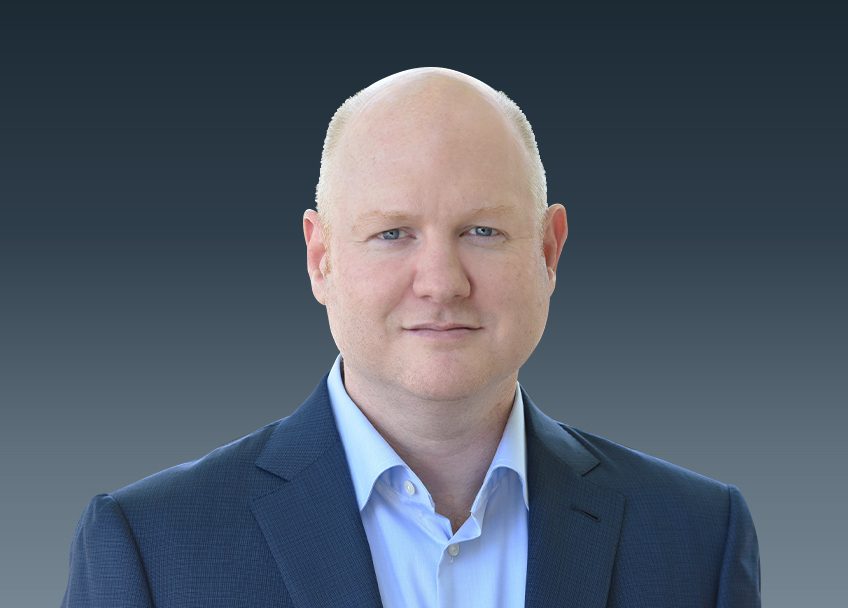
John Hall
About John Hall
John Hall, 53, is Chairman of the Board and Chief Executive Officer of Intapp; he has served as a director and CEO since 2007, and previously was an early executive at VA Linux Systems, helping lead it from startup to IPO . Under his leadership, Intapp FY2025 revenue grew 17% year over year to $504.1 million, SaaS revenue grew 28% to $331.9 million, and Cloud ARR reached $383.1 million (+29% YoY), with non-GAAP operating income nearly doubling to $75.6 million . The company reported FY2025 gross margin of 74%, operating cash flow of $123.5 million, and RPO of $719.7 million, highlighting improved scale and profitability . Say‑on‑pay support in 2024 was approximately 86.5%, indicating broad shareholder approval of the compensation framework .
Past Roles
| Organization | Role | Years | Strategic impact |
|---|---|---|---|
| Intapp | Director and Chief Executive Officer | 2007–present | Led growth in vertical SaaS, scaling ARR and profitability; dual role as CEO and Chair |
| VA Linux Systems | Early executive | Not disclosed | Helped lead company from startup to IPO |
External Roles
| Organization | Role | Years | Strategic impact |
|---|---|---|---|
| Not disclosed in reviewed filings | — | — | No additional current public company directorships disclosed in 2025 10‑K and 2025 Proxy |
Fixed Compensation
| Metric | FY 2023 | FY 2024 | FY 2025 |
|---|---|---|---|
| Base salary ($) | 474,500 | 486,363 | 500,990 |
| Target bonus (% base) | — | — | 100% |
| Actual annual bonus ($) | 404,270 | 403,681 | 533,554 |
| All other compensation ($) | 9,830 | 418,480 | 10,482 (401(k) contribution) |
Notes:
- FY2025 bonus program: 50% based on Company net new ACV targets and 50% based on individualized objectives; threshold/target/maximum opportunity amounts provided below .
- FY2025 base salary confirmed at $500,990 .
Performance Compensation
Annual Cash Incentive (FY2025)
| Component | Weighting | Threshold | Target | Maximum | Actual payout |
|---|---|---|---|---|---|
| Company net new ACV | 50% | Included in $187,871 threshold total | Included in $500,990 target total | Included in $626,238 max total | Part of $533,554 bonus paid |
| Individual objectives | 50% | 0% threshold for the individual component | 100% | 100% (Committee may pay over 100% for superior performance) | Part of $533,554 bonus paid |
Grant‑year thresholds/targets/max for CEO:
- Threshold $187,871; Target $500,990; Maximum $626,238 .
Long‑Term Equity Incentives (granted FY2025)
| Award type | Grant date | Metric(s) / vesting | Target amount | Maximum amount | Grant date fair value ($) |
|---|---|---|---|---|---|
| PSUs | 7/1/2024 | Vests quarterly based on ARR and “Operating Margin” targets; three-year performance window (to 6/30/2027) | 177,100 sh | 250,900 sh | 9,157,850 |
| RSUs | 8/19/2024 | Service‑based; vest quarterly, subject to continued employment | 103,300 sh | — | 4,426,405 |
| Additional grant (equity value) | 9/30/2024 | Value only disclosed (no share count) | — | — | 288,600 |
Outstanding unearned/unvested equity at FY2025 year‑end (as of 6/30/2025):
- Unvested PSUs/RSUs shown at target: 443,716 shares with market/payout value $22,904,620 .
Option Awards (legacy)
| Tranche | Exercisable | Unexercisable | Exercise price ($) | Expiration |
|---|---|---|---|---|
| Option grant | 722,550 (fully vested) | — | 7.45 | 07/26/2027 |
| Option grant | 188,290 (fully vested) | — | 12.00 | 07/29/2030 |
Option/stock activity in FY2025:
- Options exercised: 1,026,199 shares; value realized $53,673,339 .
- Stock awards vested: 417,828 shares; value realized $24,753,123 .
Equity Ownership & Alignment
| Item | Detail |
|---|---|
| Beneficial ownership (9/23/2025) | 6,303,086 shares (7.64% of outstanding) |
| Composition | 5,598,775 shares held of record; 689,760 shares subject to equity awards vested/exercisable within 60 days; 14,551 service‑based vesting within 60 days |
| Executive stock ownership guidelines | CEO: 5x base salary; other execs: 1x salary; 5‑year compliance window; unvested RSUs count |
| Hedging/pledging | Prohibited: hedging, pledging, margin accounts, short‑term speculative trading for directors/executives |
| Insider trading policy | Adopted; governs transactions by directors/officers; filed as 10‑K Exhibit 19.1 |
Potential selling pressure indicators (facts):
- Significant FY2025 option exercises with high value realized; may indicate liquidity events (actual open‑market sales are not separately disclosed here) .
- Multiple Form 144 filings by the company/insiders exist in 2025, but specific filer details for Mr. Hall were not enumerated in the excerpts reviewed [ListDocuments shows 144s; filer not attributed in excerpts: 1,13–15,20–23,25,45–48,57,60,71–75,77–81,86,94–100].
Employment Terms
| Scenario | Cash severance | Target bonus | Benefits continuation | Equity acceleration |
|---|---|---|---|---|
| Involuntary termination without Cause / resignation for Good Reason (non‑CIC) | 18 months base salary for CEO (12 months for other NEOs) | — | COBRA reimbursement up to 12 months | Time‑based awards scheduled to vest in 12 months accelerate; performance awards: 25% of remaining milestones (or full if <25% remain) |
| CIC + qualifying termination (3 months pre to 12 months post CIC) | 1.5x base salary for CEO; 1x for others | Target bonus for year of termination | COBRA reimbursement up to 12 months | Full acceleration of all Post‑IPO equity awards |
Estimated payments (assuming 6/30/2025 trigger):
- Non‑CIC termination: Cash $751,485; benefits $10,832; equity acceleration value $7,535,849 .
- CIC qualifying termination: Cash $751,485; target bonus $500,990; benefits $10,832; equity acceleration value $22,904,620 .
Other terms:
- Employment agreement effective June 18, 2021 (Hall) in connection with IPO; at‑will employment .
- No single‑trigger equity acceleration for executives upon a change‑in‑control (policy feature) .
Board Governance (including dual‑role implications)
- Board structure: Classified board (three classes); Hall is Class III director with term expiring 2026; the Board had 8 directors and met 5 times in FY2025 with ≥75% attendance by each director .
- Dual role: Chairman and CEO roles are combined; guidelines allow flexibility; the company believes combining roles fosters accountability and alignment; Hall is not an “independent” director; independent directors include Allen, Fichtner, Harris, Moran, Neble, and Wieck .
- Committees: All‑independent membership; Audit (Allen, Harris, Neble [chair], Wieck); Compensation (Fichtner, Harris [chair], Moran); Nominating & Governance (Allen, Fichtner, Wieck [chair]) .
- Stockholders’ agreement: Anderson retains board nomination right while >10% owner; current designee is Martin Fichtner .
- Director stock ownership guidelines: Non‑employee directors must hold ≥5x annual cash retainer; 5‑year compliance window; unvested RSUs count .
Compensation Program Architecture, Peer Group, and Say‑on‑Pay
- Pay elements and governance: Mix of base salary, annual cash bonus, PSUs (ARR and profitability/operating margin over 3 fiscal years), and RSUs; compensation recoupment (clawback) policy; no repricing; no tax gross‑ups for severance .
- Peer group (FY2025): Alkami Technology; Alteryx; AppFolio; Asana; AvePoint; Blackbaud; BlackLine; Clearwater Analytics; Guidewire; Jamf; Manhattan Associates; Model N; nCino; Procore; Progress Software; Q2; Sprout Social; Tenable; Workiva; Yext .
- Compensation consultant: Alpine Rewards, independent; advises on design and benchmarking .
- Say‑on‑pay: 2024 approval approximately 86.5% .
Company Performance Context (FY2025 and Q1 FY2026 reference points)
| Metric | FY2024 | FY2025 |
|---|---|---|
| Total revenue ($m) | 430.5 | 504.1 |
| SaaS revenue ($m) | 259.3 | 331.9 |
| Non‑GAAP operating income ($m) | 38.7 | 75.6 |
| Cloud ARR ($m, as of period end) | 297.0 (derived from +29% YoY to $383.1m) | 383.1 |
Additional recent quarter (Q1 FY2026):
- SaaS revenue $97.5m (+27% YoY); Cloud ARR $401.4m (+30% YoY) .
Risk Indicators and Red/Green Flags (facts)
- Dual role CEO + Chair (potential independence concern; mitigated by independent committees and majority independent board) .
- Large option exercises and significant value realized in FY2025 may create sell‑pressure optics (actual sales not itemized here) .
- Hedging/pledging prohibited by policy (alignment positive) .
- CIC benefits include full acceleration of equity (pay‑for‑performance vs. retention trade‑off) .
- Strong say‑on‑pay support (~86.5%) signals shareholder acceptance .
Investment Implications
- Alignment: High insider ownership (7.64%) and strict no‑hedging/pledging policy align Hall with shareholders; ownership guidelines formalize alignment .
- Execution incentives: Annual bonus tied 50% to net new ACV and PSUs tied to ARR and operating margin focus incentives squarely on durable ARR growth and profitability expansion—a constructive setup given FY2025 revenue/ARR growth and rising non‑GAAP profitability .
- Overhang/flow: FY2025 option exercises with substantial value realized and recurring 144 activity may contribute to periodic selling pressure; monitor Form 4s and trading plans for cadence and windows [ListDocuments entries for 144 filings].
- Downside protections: Non‑CIC severance accelerates limited equity (12 months time‑based, 25% of remaining performance milestones), balancing retention without excessive guarantees; CIC acceleration is full, which is market standard but increases change‑in‑control optionality costs .
- Governance: Combined Chair/CEO warrants ongoing scrutiny; however, committee independence, strong say‑on‑pay, and an experienced, independent board temper concerns .
Key monitoring items: insider trading filings (Form 4s/144s), PSU performance attainment vs. ARR/operating margin targets, net new ACV vs. annual bonus grid, and any changes to severance/CIC terms or stock ownership compliance disclosures **[1565687_0001140361-25-037489_ny20051971x1_def14a.htm:37]** **[1565687_0001140361-25-037489_ny20051971x1_def14a.htm:39]** **[1565687_0001140361-25-037489_ny20051971x1_def14a.htm:33]** **[1565687_0001140361-25-037489_ny20051971x1_def14a.htm:41]**.