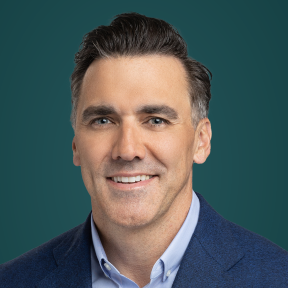
Dallas B. Tanner
About Dallas B. Tanner
Dallas B. Tanner, age 44, is the co‑founder and Chief Executive Officer of Invitation Homes (CEO and director since January 2019; previously EVP & Chief Investment Officer from April 2012 to January 2019, and interim President August 2018–January 2019). He has over 20 years of real estate platform-building experience and sits on the board of Roots Management, with additional advisory roles at the Harvard Joint Center for Housing Studies and other organizations . Under his leadership, INVH reported 2024 growth of 7.7% in total revenues, +6.4% Core FFO/share, and +6.7% AFFO/share; resident metrics remained sector-leading (avg. ~37 months tenure; >97% occupancy; ~80% renewal rate) . CEO pay mix is highly performance-based: ~91% of 2024 target compensation was at-risk (25% time-vested RSUs; 75% performance RSUs keyed to relative TSR and Same Store NOI growth) .
Past Roles
| Organization | Role | Years | Strategic impact |
|---|---|---|---|
| Invitation Homes | CEO and Director | Jan 2019–present | Co‑founder leading scale, capital allocation, operating platform; management voice on Board |
| Invitation Homes | President (dual role) | Jan 2019–Feb 2023 | Oversaw day‑to‑day operations during critical scale-up |
| Invitation Homes | Interim President | Aug 2018–Jan 2019 | Transition leadership prior to CEO appointment |
| Invitation Homes | EVP & Chief Investment Officer | Apr 2012–Jan 2019 | Built acquisition/investment platform; industry formation role |
| Predecessor entities | Director | Pre‑IPO service (pre‑Feb 2017) | Governance continuity across IPO/merger formation |
| Treehouse Group | Founder | 2005– | Sourced capital for SFR, multifamily, MHC, land, bridge lending, PM platforms |
External Roles
| Organization | Role | Years | Strategic relevance |
|---|---|---|---|
| Roots Management | Director | Current | Manufactured housing exposure; operating insights across 40,000+ homes in 22 states |
| HOPE Global | Board of Advisors | Current | Stakeholder/ESG perspective |
| Harvard Joint Center for Housing Studies | Policy Advisory Board | Current | Policy insights for housing markets |
| Arizona State University | Real Estate Advisory Board | Current | Talent pipeline/market intel |
| Real Estate Roundtable | Member | Current | Industry advocacy/policy |
| Aspen Institute | Henry Crown Fellow | Current | Leadership network |
Fixed Compensation
- CEO base salary: $1,000,000 for 2024; unchanged vs. 2023 .
- Target annual cash incentive: $2,000,000 (200% of salary) for 2024; overall payout achieved at 96.5% of target ($1,930,000) .
- Director fees: As CEO, he receives no additional compensation for Board service .
Multi‑year reported compensation (Summary Compensation Table):
| Metric | 2022 | 2023 | 2024 |
|---|---|---|---|
| Salary ($) | 950,000 | 990,385 | 1,000,000 |
| Stock Awards ($) | 12,023,478 | 7,500,031 | 8,025,030 |
| Non‑Equity Incentive Plan Compensation ($) | 1,180,876 | 1,891,521 | 1,930,000 |
| Options Awards ($) | — | — | — |
| All Other Compensation ($) | 12,200 | 11,385 | 10,231 |
| Total ($) | 14,166,554 | 10,393,322 | 10,965,261 |
Notes
- Company states it does not utilize stock options as a practice in executive compensation .
Performance Compensation
Annual Cash Incentive (2024 design and payout)
| Metric | Weight | Target | Actual | Payout | Vesting/Timing |
|---|---|---|---|---|---|
| AFFO per Share | 30% | — | — | — | Cash, annual |
| Same Store Core Revenue Growth (YoY) | 20% | — | — | — | Cash, annual |
| Adjusted EBITDA Margin | 20% | — | — | — | Cash, annual |
| Strategic Priorities | 20% | — | — | — | Cash, annual |
| Individual Performance | 10% | — | — | — | Cash, annual |
| Overall CEO payout | — | $2,000,000 | — | 96.5% of target = $1,930,000 | Paid annually |
(Company disclosed weights and overall payout; sub‑metric targets/actuals not disclosed in the cited sections.)
Long‑Term Incentive Program (LTIP)
Design highlights (2024 LTIP):
- Mix: 25% time‑vesting RSUs; 75% performance RSUs .
- Performance metrics and hurdles (3‑year period ending 12/31/2026):
- Relative TSR vs. MSCI US REIT Index (RMS): Threshold −600 bps (50% payout), Target +50 bps (100%), Max +600 bps (200%); capped at target if absolute TSR is negative .
- Same Store NOI Growth CAGR: Threshold 2.5% (50%), Target 4.0% (100%), Max 5.5% (200%) .
- Earning/vesting: Earned on Committee certification after the period; vest on certification date; time‑based RSUs vest ratably over 3 years (each March 1) .
2024 CEO LTIP grant details:
| Award | Grant date | Shares/Units | Grant‑date FV ($) | Vesting schedule |
|---|---|---|---|---|
| Time‑vesting RSUs | 3/1/2024 | 58,085 | 2,006,255 | 1/3 annually on each of first three anniversaries of 3/1/2024 |
| Performance RSUs (target) | 3/1/2024 | 163,767 (Th: 81,883; Max: 327,534) | 6,018,775 | Earned over 1/1/2024–12/31/2026; vest at certification |
Stock vested in 2024 (liquidity calendar signal):
| Metric | 2024 |
|---|---|
| Shares acquired on vesting (#) | 341,030 |
| Value realized on vesting ($) | 11,464,567 |
2022 Outperformance Program (one‑time; not recurring):
- Performance: Cumulative TSR and relative TSR vs. FTSE Nareit Residential Index over 4/1/2022–3/31/2025; max requires 42% cumulative TSR and significant relative outperformance; capped (no >100% upside) .
- Vesting: Earned awards vest 50% upon certification within 60 days of 3/31/2025 and 50% on 3/31/2026; interim “lock‑in” guaranteed minimum applied based on 6/30/2024 performance (company committed to exclude such features going forward) .
- CEO pool: Max $15.6M; 50% payout illustration $7.8M; annualized figures provided for context .
Equity Ownership & Alignment
| Item | Detail |
|---|---|
| Beneficial ownership | 799,013 shares beneficially owned as of 3/20/2025 Record Date; <1% of outstanding (612,883,131 shares) |
| Ownership guidelines | CEO required to hold ≥6x base salary in equity; executives must retain ≥50% of net shares until compliant |
| Compliance | Company disclosed all directors/NEOs were in compliance as of the record date in prior proxy (context) |
| Hedging/pledging | Hedging prohibited; no margin/pledging allowed for officers; directors require pre‑approval; currently, no outstanding director pledges disclosed |
| RSU dividends | Time‑vesting and earned performance RSUs receive cash dividends/dividend equivalents; unearned performance RSUs accrue and pay only if earned |
Vested vs. unvested breakdown, option holdings, and any Form 4 transaction details were not provided in the cited sections; see “Insider activity” note below.
Employment Terms
- Employment agreements: None (employment is at‑will) .
- Executive Severance Plan (June 2017; all NEOs, including CEO):
- Qualifying termination (without cause/constructive termination): cash severance = (base salary + target bonus) × 2.0 (CEO); COBRA premiums for 12 months; pro‑rata annual bonus based on actual performance .
- Change‑in‑control (double‑trigger within 24 months): lump sum = (base salary + target bonus) × 3.0 (CEO); COBRA premiums for 18 months; pro‑rata annual bonus based on actual performance .
- Restrictive covenants: 12‑month non‑compete and non‑solicit; ongoing confidentiality/non‑disparagement .
- Illustrative CEO payout values if triggered on 12/31/2024: $6.0M severance (qualifying termination) and $9.0M (CIC double‑trigger); plus equity and other components per table .
Potential Benefits Upon Termination or Change in Control (CEO; as of 12/31/2024):
| Component | Qualifying Termination ($) | Change in Control ($) | Qual. Term. within 24 months of CIC ($) | Death/Disability ($) |
|---|---|---|---|---|
| Severance | 6,000,000 | — | 9,000,000 | — |
| Pro‑rata bonus | 1,930,000 | — | 1,930,000 | 1,930,000 |
| Time‑vesting RSUs | 1,784,885 | 3,681,058 | 3,681,058 | 3,681,058 |
| Performance RSUs | 9,197,449 | 7,415,346 | 13,368,895 | 9,197,449 |
| Benefits/Other | 83,062 (COBRA + other) | — | 95,747 | — |
| Total | 18,995,396 | 11,096,404 | 28,075,700 | 14,808,507 |
- Clawback: Dodd‑Frank Section 954‑compliant mandatory recovery policy adopted; executives acknowledge awards may be subject to clawback for restatements; complements prior RSU clawback language .
- Tax gross‑ups: Company states no excise tax gross‑ups .
Board Governance (Director service, committees, dual‑role considerations)
- Board service: Director since 2019; currently serves on the Investment and Finance Committee .
- Dual‑role implications: The Chair is independent (Michael Fascitelli). CEO and Chair roles are separated to enhance oversight; 90% of director nominees independent; independent directors chair all committees .
- Attendance: In 2024, each director attended at least 75% of Board/committee meetings; Board held six meetings in 2024 .
- Board compensation: CEO receives no additional pay for Board service .
Say‑on‑Pay & Shareholder Feedback
| Year | Say‑on‑Pay support | Company response |
|---|---|---|
| 2023 | 67.56% For | Enhanced outreach to top 20 investors; clarified one‑time 2022 Outperformance Program; committed to exclude “lock‑in” features from future plans |
| 2024 | 92.7% For | Maintained pay‑for‑performance; no new outperformance awards; continued investor engagement |
Risk Indicators & Red Flags (observed)
- Anti‑hedging and anti‑pledging: Robust prohibitions in place; no outstanding director pledges disclosed .
- Options repricing/modification: No CEO option usage; company does not use options in practice .
- Outperformance “lock‑in”: One‑time 2022 feature drew investor scrutiny; company committed not to use such features going forward .
- Governance strength: High independence, separated Chair/CEO, strong ownership guidelines, Dodd‑Frank clawback .
Insider activity and selling pressure (what’s disclosed)
- 2024 vesting created potential liquidity events (341,030 shares vested; $11.46M value), typically accompanied by tax withholding/net share settlements around vest dates .
- Time‑based RSUs vest 1/3 annually around March 1; performance RSUs vest post‑certification; the 2022 Outperformance Program (if earned) vests 50% within ~60 days after March 31, 2025, and 50% on March 31, 2026—key windows for potential trading activity .
- Specific Form 4 transactions and 10b5‑1 plan usage were not detailed in the cited proxy sections.
Expertise & Qualifications (highlights)
- Founding operator with deep SFR acquisition/operations expertise; external policy/industry roles (Harvard JCHS, Real Estate Roundtable); Aspen Henry Crown Fellow .
Performance Context (2024 highlights tied to incentives)
| Metric | 2024 outcome |
|---|---|
| Total revenues growth | +7.7% YoY |
| Core FFO/share growth | +6.4% YoY |
| AFFO/share growth | +6.7% YoY |
| Same Store occupancy | >97% |
| Renewal rate | ~80% |
Investment Implications
- Pay‑for‑performance alignment: 91% at‑risk CEO pay with rigorous, multi‑year relative TSR and NOI growth hurdles; 2024 cash bonus paid below target at 96.5%—a constructive signal on scorecard rigor .
- Retention and transition risk: Strong double‑trigger CIC protections (3.0× cash) and 12‑month non‑compete/non‑solicit reduce near‑term retention risk but increase potential costs under strategic scenarios; ongoing multi‑year vesting supports continuity .
- Trading overhang: Scheduled March 1 annual RSU vests and potential 2022 Outperformance vesting in 2025/2026 create identifiable windows for insider net settlements/sales; monitor Form 4s into those dates for flow signals .
- Governance quality: Separated Chair/CEO structure, high independence, anti‑hedging/pledging, Dodd‑Frank clawback, and improved say‑on‑pay (92.7% in 2024) mitigate governance risk; company responded to 2023 investor feedback (lock‑in removal) .
Document sources: 2025 and 2024 DEF 14A Proxy Statements and cited sections throughout this report.
