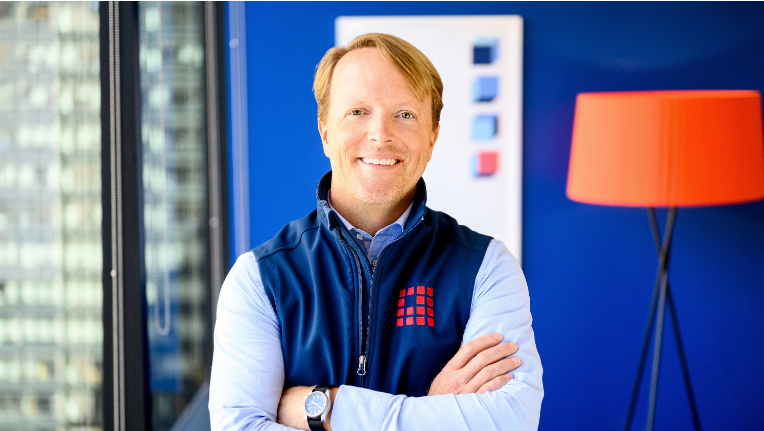
Scott Sanborn
 LendingClub
About Scott Sanborn
Scott Sanborn (age 55) is LendingClub’s Chief Executive Officer and a member of the Board, roles he has held since June 2016. He holds a B.A. from Tufts University and previously served as President (2016–2017), Chief Operating and Marketing Officer (2013–2016) and Chief Marketing Officer (2010–2013) at LendingClub, and as Chief Marketing and Revenue Officer at eHealthInsurance (2008–2010) . Under his leadership in 2024, LendingClub exited its OCC operating agreement, grew its balance sheet by 20% and deposits by 24%, and increased GAAP net income by 32% . The stock appreciated ~85% in 2024, and management cited improving non‑interest income on higher loan sale prices .
Board service/independence: Sanborn is an employee director (Class III, term expiring 2026). The Board has an Independent Chairman (John C. “Hans” Morris), mitigating CEO/Chair dual‑role concerns; all nine non‑employee directors are NYSE‑independent, and committee chairs/members are independent . All Board members, including Sanborn, also serve on the LendingClub Bank board . Sanborn received no additional pay for board service .
Past Roles
| Organization | Role | Years | Strategic impact |
|---|---|---|---|
| LendingClub | Chief Executive Officer; Director | 2016–present | Led bank‑charter strategy; exited OCC operating agreement; drove deposit (+24%) and balance sheet (+20%) growth in 2024 . |
| LendingClub | President | 2016–2017 | Executive leadership during transition to bank holding company model . |
| LendingClub | Chief Operating & Marketing Officer | 2013–2016 | Scaled operations and marketing through early public company phase . |
| LendingClub | Chief Marketing Officer | 2010–2013 | Built brand and customer acquisition engine . |
| eHealthInsurance | Chief Marketing & Revenue Officer | 2008–2010 | Led revenue and marketing at e‑commerce insurer . |
External Roles
| Organization | Role | Years | Strategic impact |
|---|---|---|---|
| LendingClub Bank (subsidiary) | Director | Concurrent with LC board service | Bank board oversight of safety/soundness; all LC directors serve concurrently on the bank board . |
Fixed Compensation
- Base salary (2024): $500,000 .
- Perquisites/benefits (2024): 401(k) match ($5,000) and parking benefits (amount not separately disclosed) included in “All Other Compensation” .
- No director fees for employee directors (Sanborn received none in 2024) .
Performance Compensation
Annual Bonus (2024 design and outcome)
- Metrics and funding rules: Company-wide plan split H1/H2. Primary metric PPNR (funding up to 125% per half); secondary H2 Total Net Revenue adds 10% “all-or-nothing”; automatic reduction if any quarter in the half has negative GAAP net income .
- Result: 135% corporate funding (max), with no discretionary individual adjustment applied to NEO payouts .
| Metric/Period | Target(s) | Actual | Funding |
|---|---|---|---|
| H1 2024 PPNR | $75.75m target; 50–125% curve | $103.5m | 62.5% |
| H2 2024 PPNR | $100.0m target; 50–125% curve | $139.8m | 62.5% |
| H2 2024 Total Net Revenue | $400.0m (all-or-nothing) | $419.0m | +10.0% |
| Full‑year payout | — | — | 135% |
| 2024 Bonus Details | Value |
|---|---|
| Target bonus opportunity (% of salary) | 150% |
| Eligible salary used | $500,000 |
| Target bonus ($) | $750,000 |
| Achievement | 135% |
| Payout ($) | $1,012,500 |
Long‑Term Incentives (granted March 21, 2024)
- New design: 25% of intended LTI value as 3‑year cash award; 75% as equity (RSUs and PBRSUs). For CEO, equity mix 45% RSUs / 55% PBRSUs; move helps reduce dilution while maintaining target pay and retention .
- PBRSUs: 50% 3‑year cumulative Adjusted Net Income; 50% 3‑year relative TSR vs a defined “TSR basket” (target at 55th percentile). Max funding capped at 125%; absolute TSR modifier limits TSR portion to 100% if absolute TSR negative and relative TSR below 75th percentile .
- Realized alignment: 2021 and 2022 PBRSUs (100% relative TSR) paid 0%, leading to full forfeiture for those cycles (CEO forfeited $6.29m target value) .
| 2024 LTI Component | Quantity/Value | Vesting/Terms |
|---|---|---|
| RSUs (refresh) | 157,809 shares | 1/12 quarterly from 5/25/2024 over 3 years . |
| PBRSUs (target) | 179,980 target units | Earned on 3‑year performance; 50% Adj. Net Income, 50% relative TSR; cap 125%; TSR target 55th pct. . |
| Cash Award | $937,500 | Vests 1/12 quarterly over 3 years from 5/25/2024 . |
| Supplemental RSUs (one‑time) | 498,754 shares (intended value $4.0m) | Cliff vests 2/25/2026; forfeited if resignation/for‑cause before vest . |
Summary Compensation (calendar years)
| Year | Salary ($) | “Bonus” ($) cash‑settled LTI portion | Stock Awards ($) | Non‑Equity Incentive ($) | All Other ($) | Total ($) |
|---|---|---|---|---|---|---|
| 2024 | 500,000 | 234,375 | 7,160,499 | 1,012,500 | 7,340 | 8,914,714 |
| 2023 | 500,000 | — | 3,430,801 | 622,500 | 7,520 | 4,560,821 |
| 2022 | 500,000 | 1,000 | 3,472,723 | 937,501 | 7,826 | 4,919,050 |
Other design notes:
- Shift away from options (discontinued as a primary vehicle; any future option repricing requires shareholder approval) .
- Holding period policy: executives must hold shares acquired via equity awards granted on/after Jan 1, 2024 for one calendar year post‑vesting (tax withholdings excluded) .
- Say‑on‑pay support ~99% in 2024; FW Cook engaged as independent consultant (no conflicts) .
Equity Ownership & Alignment
Beneficial Ownership (as of April 7, 2025)
| Holder | Shares | % Out. | Notes |
|---|---|---|---|
| Scott Sanborn | 1,590,907 | 1.39% | Includes 1,308,282 shares held, 246,487 options exercisable <60 days, 36,138 RSUs vesting <60 days . |
Policies and alignment:
- CEO stock ownership guideline: 6× base salary; all executives are in compliance or on track within five years .
- Hedging and pledging prohibited; no margin accounts; insider trading policy in place .
- 2024 vested/cash‑settled: 79,788 shares vested; 77,706 RSUs were cash‑settled for $925,035 (withholding/settlement) .
Outstanding Awards and Vesting (as of 12/31/2024)
| Instrument | Quantity | Key terms |
|---|---|---|
| Stock options (exercisable) | 234,588 @ $42.05 exp. 2/26/2026; 11,899 @ $47.80 exp. 3/3/2026 (both fully vested) | Legacy options; no repricing without shareholder approval . |
| Time‑based RSUs (unvested) | 8,253 (2022 grant); 74,722 (2023); 118,357 (2024); 498,754 (2024 supplemental, cliff 2/25/2026) | Standard grants vest 1/12 quarterly over 3 years; supplemental vests fully 2/25/2026 . |
| PBRSUs (unearned, at max) | 338,338 (2023 TSR tranche at max); 111,899 (2024 TSR); 113,076 (2024 Adj. Net Income) | Earn based on 3‑yr performance; 2021 and 2022 PBRSUs paid 0% . |
Employment Terms
Program summary (CEO vs other NEOs)
| Benefit | No CIC (CEO) | No CIC (other NEOs) | With CIC (CEO) | With CIC (other NEOs) |
|---|---|---|---|---|
| Cash severance | 1× salary | 0.5× salary | 1.5× salary | 1× salary |
| Bonus | Pro‑rated annual bonus | Pro‑rated annual bonus | 1.5× greater of target or most recent actual | 1× greater of target or most recent actual |
| Health benefits | 12 months | 6 months | 18 months | 12 months |
| Equity | N/A | N/A | Full acceleration of unvested equity and 2024 Cash Award | Full acceleration of unvested equity and 2024 Cash Award |
- Definitions and covenants: “Cause,” “Good Reason,” and “Change in Control” defined; post‑termination non‑solicit of employees/contractors for 6 months; payments conditioned on release/return of property .
- Estimated payout as of 12/31/2024:
- No CIC: ~$1,544,805 (cash severance $500,000; bonus $1,125,000; benefits $32,305) .
- With CIC: ~$23,081,012 (cash severance $750,000; bonus $1,125,000; benefits $48,458; equity/award acceleration ~$21,157,554) .
Board Governance
- Role: CEO and Class III Director since 2016; current term expiring 2026 .
- Chair/independence: Separate Independent Chair (Hans Morris). All audit/compensation/nom/gov committees are fully independent; Sanborn is not listed as a committee member (standard for management directors) .
- Meeting attendance: Board met 8 times in 2024; each director attended ≥75% of applicable meetings .
- Director compensation: Employee directors receive no additional pay; Sanborn received $0 for board service in 2024 .
Additional Governance, Policies, and Shareholder Feedback
- Clawback policies: NYSE‑compliant restatement clawback plus supplemental misconduct/reputational‑harm recoupment (covers PBRSUs, cash bonuses, time‑based RSUs and Cash Awards) .
- Ownership/holding policies: CEO 6× salary guideline; one‑year post‑vest holding for awards granted on/after 1/1/2024 .
- Hedging/pledging prohibited; insider‑trading policy in force .
- Related party transactions: Only de minimis legacy Retail Notes program withdrawal ($1,034.99) in 2024; ordinary‑course terms .
- Shareholder support: Say‑on‑pay ~99% approval in 2024; ongoing dilution‑reduction initiatives include cash‑for‑equity mix, terminating plan evergreen, and ceasing option use .
Compensation Peer Group (for benchmarking)
Peer set includes bank/fintech comparables such as Affirm, SoFi, Upstart, The Bancorp, Live Oak, Axos, Enova, LendingTree, Green Dot, MoneyLion, Open Lending, Bread Financial, NerdWallet, Pathward, etc.; reviewed by the Compensation Committee with FW Cook in 2024 to reflect size/market/labor conditions .
Investment Implications
- Pay‑for‑performance alignment improving: Back‑to‑back zero PBRSU payouts for 2021/2022 and high 2024 bonus funding (driven by strong PPNR and revenue) indicate a system that both penalizes underperformance and rewards execution .
- Retention vs dilution trade‑offs: 2024 one‑time CEO supplemental RSU (cliff vest 2/25/2026) plus shift to 25% cash LTI reduces dilution while adding retention hooks; watch for potential supply around the 2026 vest date .
- Alignment and risk controls: 6× salary ownership requirement, one‑year holding period, and hedging/pledging prohibitions support alignment and reduce downside agency risks .
- Change‑of‑control economics: CEO’s CIC package is sizable (~$23.1m at 12/31/24), primarily equity acceleration—creating both retention in normal course and potential event‑driven considerations for deal‑probability trading setups .
- Governance strength: Independent Chair and independent committees mitigate dual‑role concerns; high say‑on‑pay support and active investor engagement reduce governance overhangs .
