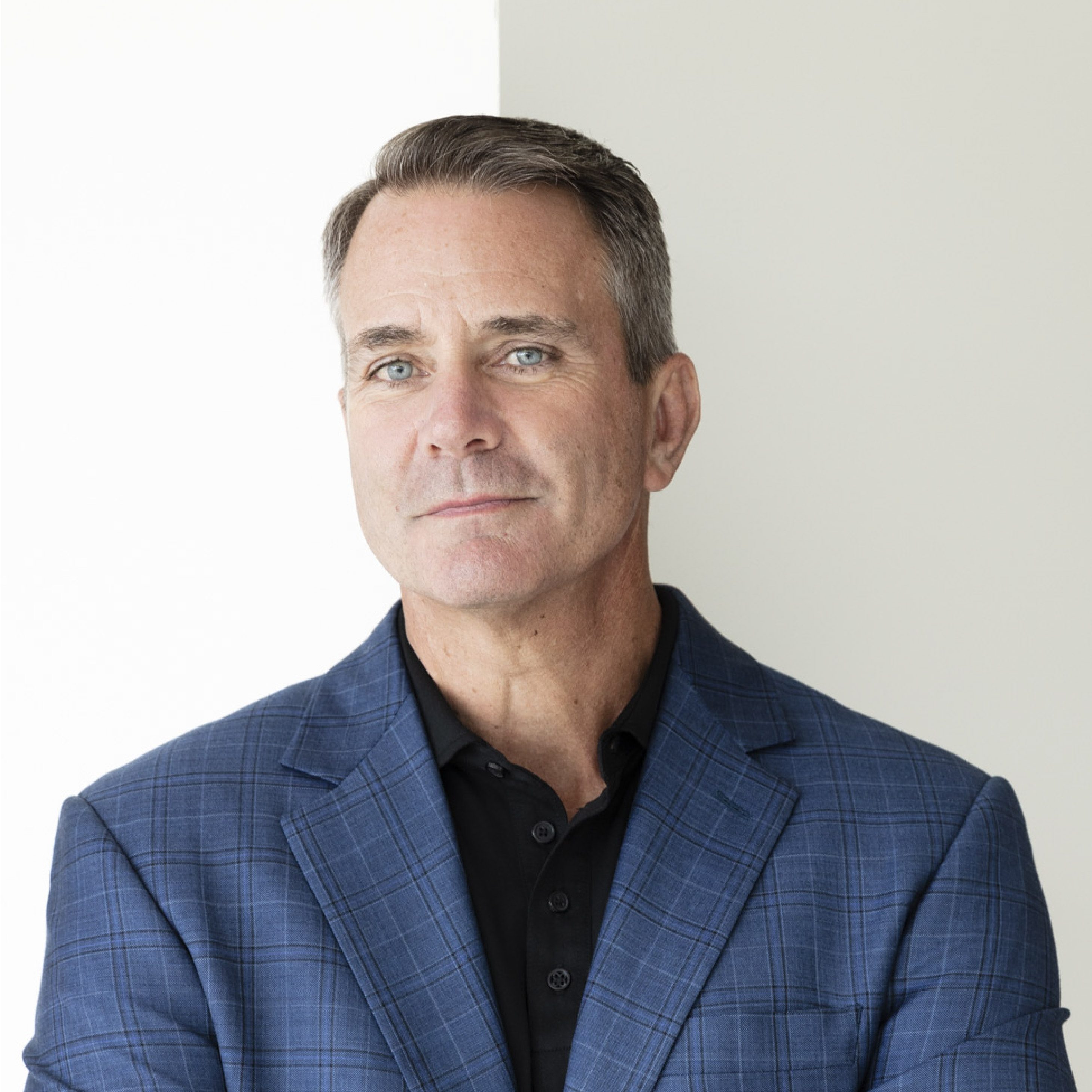
Raymond E. Scott
 LEAR
LEARAbout Raymond E. Scott
Raymond E. “Ray” Scott is President, CEO and Director of Lear Corporation, serving as CEO since February 28, 2018, and on the Board since 2018 . He holds a B.S. in Economics from the University of Michigan and an MBA from Michigan State University; he also completed executive programs at Stanford and Wharton . Age: 59 (Director Nominees table) . Under his tenure, Lear reported 2024 revenue of $23.3B, improved E‑Systems margins for the second consecutive year (+50 bps YoY), and increased adjusted EPS for the fourth straight year . Pay-for-performance outcomes show 2024 AIP paid at 89% of target on Adjusted Operating Income and Free Cash Flow, while 2022‑2024 performance shares paid 112% (strong Adjusted Pretax Income vs target but below-median Relative TSR) . Five-year pay-versus-performance disclosure indicates cumulative TSR of $75 on a $100 base from 12/31/2019–12/31/2024 versus peer $72, with 2024 Net Income $507M and Adjusted Operating Income $1,091M .
Past Roles
| Organization | Role | Years | Strategic impact |
|---|---|---|---|
| Lear Corporation | President, Chief Executive Officer and Director | 2018–present | Strategic direction, operational leadership; elevated focus on innovation and automation; executed capital returns (buybacks/dividends) . |
| Lear Corporation | Executive VP; President, Seating | 2011–2018 | Grew/diversified sales, accelerated innovation, improved competitiveness in Seating . |
| Lear Corporation | SVP; President, Global Electrical Power Management Systems (now E‑Systems) | 2009–2011 | Led electrical/electronics growth platform later branded E‑Systems . |
| Lear Corporation | Various leadership roles (GM divisions, Europe/NA seating) | 1988–2009 | Program management, sales, operations roles across North America and Europe (incl. GM-Europe, Lear‑Saab Ops) . |
External Roles
| Organization | Role | Years | Notes |
|---|---|---|---|
| Penske Automotive Group | Director | n/a | Current public company directorship . |
| Detroit Economic Club | Board member | n/a | Civic leadership . |
| Detroit Children’s Fund | Board member | n/a | Non‑profit governance . |
| United Road | Board member | n/a | Private company board . |
| Pope Francis Center | Board member | n/a | Non‑profit governance . |
| Kettering University | Board of Trustees | n/a | Higher education trustee . |
| Business Leaders for Michigan | Member | n/a | Business leadership network . |
Fixed Compensation
| Metric | 2022 | 2023 | 2024 |
|---|---|---|---|
| Base Salary ($) | 1,272,500 | 1,300,000 | 1,323,333 |
| Base Salary Rate (policy table) | — | 1,300,000 | 1,370,000 (+5.4%) |
| Target Bonus (% of base) | — | — | 160% |
| Target Bonus ($) | — | — | 2,192,000 |
| Actual Annual Incentive ($) | 2,418,000 | 3,536,000 | 1,950,880 |
| All Other Compensation ($) | 567,097 | 664,508 | 859,053 (incl. retirement plan contributions, aircraft up to $50k/yr, executive security) |
Notes: 2024 AIP payout = 89% of target (see Performance Compensation) . Employee directors receive no additional pay for Board service .
Performance Compensation
Annual Incentive Plan (AIP) – 2024 design and results
| Metric | Weight | Threshold | Target | Maximum | Actual | Payout factor |
|---|---|---|---|---|---|---|
| Adjusted Operating Income | 50% | $911M | $1,215M | $1,458M | $1,101M | 82% |
| Free Cash Flow | 50% | $473M | $630M | $788M | $561M | 78% |
| Strategic Scorecard modifier | +/-10% | — | — | — | +9% | +9% |
| Final AIP payout | — | — | — | — | — | 89% |
- Scott’s 2024 AIP payout: $1,950,880 = 89% of $2,192,000 target .
- 2024 targets were set higher vs 2023 (+26% AOI target; +39% FCF target) .
Long‑Term Incentive (LTI) structure
| Element | CEO Weighting | Vesting/Performance | Metrics |
|---|---|---|---|
| Performance Shares (PSUs) | ~75% of LTI | 3‑year performance; 0–200% payout; negative TSR cap at 100% | 50% Adjusted Pretax Income; 25% Adjusted ROIC Improvement; 25% Relative TSR |
| RSUs | ~25% of LTI | 3‑year cliff vesting (exceptions for retirement/disability/CIC per plan) | Stock price alignment |
| Career Shares (time‑vested RSUs) | Separate annual grants | Distribution deferred: later of age 62 or 3 years post‑retirement; forfeiture risk pre‑retirement | Long‑term alignment/retention |
2022–2024 Performance Share results (paid Feb 13, 2025):
- Adjusted Annual Pretax Income: $2,799M vs $2,610M target → 141% factor (66.7% weight) .
- Relative TSR: 26.7th percentile → 53% factor (33.3% weight) .
- Final PSU payout: 112% of target; Scott earned 38,729 shares (target 34,580) .
2024–2026 PSU targets (set pre‑period):
- Adjusted Pretax Income target +31.8% vs 2023–2025 PSU target; +32% vs 2022–2024 realized .
- Adjusted ROIC Improvement required: +160 bps for target vs 2023 baseline (threshold +60 bps; max +260 bps) .
- Relative TSR peer list defined; negative absolute TSR caps payout at 100% .
Equity Ownership & Alignment
| Ownership/awards | Details |
|---|---|
| Beneficial ownership | 250,077 common shares (<1% of outstanding) as of Mar 18, 2025 . |
| RSUs held | 42,312 RSUs (as of record date; subject to plan rules) . |
| Options (exercisable) | Right to acquire 102,961 shares via currently exercisable options . |
| Unvested RSUs (by grant) | 2022 RSUs: 14,820 (vest 1/4/2025); 2023 RSUs: 22,701 (vest 1/4/2026); 2024 RSUs: 20,153 (vest 1/4/2027) . |
| Career Shares (unvested) | 2022: 5,117 (vest 11/14/2025); 2023: 6,639 (vest 11/13/2026); 2024: 9,085 (vest 11/20/2027) . |
| Unearned PSUs outstanding | 202,865 target PSUs unearned as of 12/31/2024 . |
| Ownership guidelines | Robust management ownership guidelines; Scott meets guideline (as of 12/31/2024) . |
| Hedging/pledging | Prohibited for officers and directors . |
| Upcoming vesting (potential supply) | Near‑term vesting dates noted above; retirement eligibility accelerates vesting of certain RSUs/Career Shares within 24 months of retirement (if not terminated for cause) . |
Insider selling pressure context: multiple RSU/Career Share vesting dates through 2027 could create periodic supply; Scott’s retirement‑eligibility provides potential acceleration mechanics that could concentrate distributions around a retirement event (subject to policy constraints) .
Employment Terms
| Term | Key provisions |
|---|---|
| Severance (no CIC) | Lump sum equal to 2x (base salary + target bonus) upon termination by Company without cause or resignation for good reason; continuation of certain benefits; equity vesting per plan and employment agreement (includes more favorable time‑based vesting on good reason/without cause) . |
| Change‑in‑Control (CIC) | Double‑trigger equity vesting if terminated without cause/for good reason within 24 months post‑CIC; PSUs vest at target; RSUs/options pro‑rated if granted <12 months pre‑termination (time‑based awards otherwise accelerate per agreement); no single‑trigger cash; 280G cutback (no excise tax gross‑ups) . |
| Non‑compete / non‑solicit | Non‑compete and non‑solicit during employment and 1 year post‑employment; extended to 2 years for disability, without‑cause or good‑reason terminations . |
| Clawbacks | Dodd‑Frank recoupment for restatements plus Improper Conduct recoupment covering cash/LTI, severance, and termination benefits (3‑year lookback) . |
| Potential payouts (illustrative, 12/31/2024) | Without cause/for good reason with CIC: $28.31M total (cash $7.124M; benefits PV $0.089M; equity $21.10M). Without cause/for good reason (no CIC): $21.00M total (cash $7.124M; benefits PV $0.089M; equity $13.79M) . |
Board Governance
- Board service and independence: Director since 2018; not independent (CEO). Board committees are entirely independent; Scott serves on none .
- Leadership structure: Separate Non‑Executive Chairman (Greg C. Smith) and CEO roles; independent director chairing executive sessions .
- Meetings/attendance: 9 Board meetings in 2024; all directors attended ≥75% of Board/committee meetings .
- Director pay: Employee directors receive no director compensation .
- Governance practices: Prohibit hedging/pledging; majority voting for directors; robust ownership guidelines; regular executive sessions; committee oversight of risk/sustainability/human capital .
Director Compensation (as Director)
- Scott receives no additional compensation for Board service because he is an employee .
Compensation & Incentive Program Diagnostics
- Mix and at‑risk pay: 2024 CEO target pay ~91% at risk; 77% in long‑term equity; heavy PSU weighting vs peers (alignment with shareholder outcomes) .
- Metric rigor/changes: 2024 AIP targets raised materially vs 2023 (AOI +26%, FCF +39%); 2024–2026 PSU goals materially higher vs prior cycles (+31.8% Adj Pretax Income target vs 2023–2025) .
- No shareholder‑unfriendly features: No single‑trigger CIC; no excise tax gross‑ups; no evergreen; no repricing/backdating/spring‑loading; robust clawbacks .
- Say‑on‑Pay outcomes: 2024 support 90.2%; five‑year average 91.8% (ex‑abstentions/broker non‑votes) .
- Peer benchmarking: Target pay set around median (±15%) of comparator group; 2024 comparator group expanded to 20 companies (adds: Corning, Dana, Honeywell, Stanley Black & Decker) .
Compensation Peer Groups (Benchmarking vs Performance)
- 2024 Comparator Group (pay benchmarking): ADNT, APTV, BWA, GLW, CMI, DAN, DE, ETN, EMR, GT, HON, ITW, LHX, MGA, PCAR, PH, SWK, TEL, TXT, WHR .
- 2024–2026 Relative TSR Peer Group (performance): ADNT, ALSN, AXL, APTV, ALV, BWA, CON, CMI, DAN, ETN, FRVIA, GNTX, THRM, GT, LCII, MGA, MOD, PCAR, PHIN, SMP, TEL, TXT, VC, Valeo .
Related Party Transactions / Red Flags
- Related party employment: Two of Scott’s sons are Lear employees; 2024 total comp ~$127k and ~$143k; both reviewed/approved by Governance & Sustainability Committee under policy .
- Hedging/pledging: Prohibited for officers/directors .
- Repricing/modification of equity: Not permitted .
- Clawbacks: Restatement and Improper Conduct policies in place .
- Compliance: All Section 16 reports timely in 2024 except one late Form 4 for a director (not Scott) due to administrative error .
Retirement, Deferred Comp, and Perquisites
- Pension/SERP present values (12/31/2024): Pension Plan $482,992; Pension Equalization $568,169; SRRP (Pension Makeup) $368,419 .
- Nonqualified deferred compensation balances include SRRP and vested Career Shares (e.g., CEO SRRP balance $11.14M; Vested Career Shares balance $5.51M) .
- Perquisites: Limited personal aircraft use (cap $50,000/year), executive physical, and security enhancements in 2024 following third‑party risk review (reported under “All Other Compensation”) .
Performance Highlights (context under Scott’s leadership)
- 2024 revenue $23.3B; E‑Systems margins improved for second consecutive year (+50 bps YoY) .
- Increased adjusted EPS for the fourth consecutive year; share repurchases $400M and dividends $174M in 2024 .
- AIP historical payouts show variability aligned with performance (2020–2024: 60%, 100%, 124%, 170%, 89%); PSUs 2018–2024 cycles: 22%, 74%, 111%, 118%, 112% .
Investment Implications
- Alignment: High at‑risk, performance‑based mix (heavy PSUs) and rigorous targets (notably higher AOI/FCF in 2024; higher 2024–2026 PSU goals) are constructive for pay‑performance alignment; robust clawbacks and prohibition on hedging/pledging reduce agency risk .
- Retention vs. overhang: Significant unvested RSUs, Career Shares and PSUs with scheduled vestings (2025–2027) support retention but can create periodic supply; Scott’s retirement‑eligibility allows acceleration of certain RSUs/Career Shares within 24 months of retirement, a consideration for event‑driven positioning .
- Change-in-control protection: Double‑trigger equity and 2x cash multiple (no tax gross‑ups) balance retention and shareholder protections in strategic scenarios .
- Performance risk: Relative TSR underperformed (26.7th percentile for 2022–2024 PSU TSR component), and five‑year pay-vs-performance TSR is below par ($75 on $100), underscoring continued value‑creation pressure despite solid operating execution and margin progress in E‑Systems .
- Governance quality: Separate Chair/CEO, independent committees, strong director independence and robust shareholder support on Say‑on‑Pay (~90%) reduce governance discount risk .