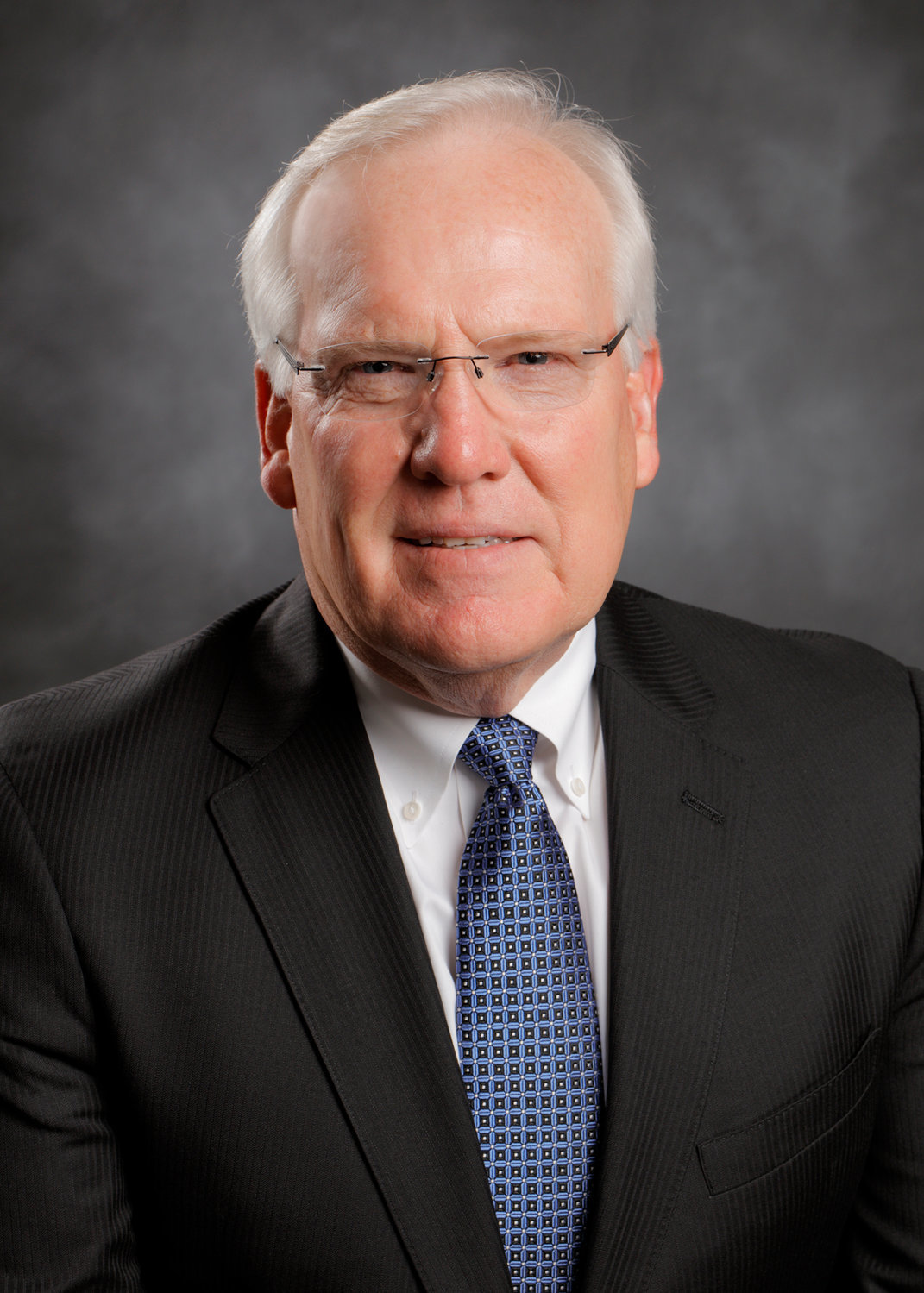
Karl Glassman
 LEGGETT & PLATT
About Karl Glassman
Karl G. Glassman is President and Chief Executive Officer (since May 20, 2024) and Board Chairman (since 2020) of Leggett & Platt (LEG). He previously served as CEO (2016–2021), Executive Chairman (2022–May 2023), COO (2006–2015), President (2013–2019), and has held roles at LEG since 1982; he holds a degree in business management and finance from California State University–Long Beach . On pay-performance linkage, LEG’s cumulative TSR for 2022–2024 was -69.2% (2nd percentile), resulting in 0% PSU payout for that cycle; 2024 Adjusted EBITDA was $402.2M vs $441.0M target (0% payout on EBITDA metric) while Cash Flow was $428.6M vs $350.0M target (189.6% payout), translating to a 66.4% weighted annual incentive payout for executives who were corporate participants .
Past Roles
| Organization | Role | Years | Strategic Impact |
|---|---|---|---|
| Leggett & Platt | President & CEO | 2024–present; 2016–2021 | Returned as CEO in 2024 amid restructuring; prior tenure included leading the company through cycles and portfolio management . |
| Leggett & Platt | Board Chairman | 2020–present | Combined CEO/Chairman from May 2024; leadership continuity; Board provides a Lead Independent Director . |
| Leggett & Platt | Executive Chairman | 2022–May 2023 | Oversight during leadership transition; retired May 2023 . |
| Leggett & Platt | President; COO | President 2013–2019; COO 2006–2015 | Drove operations and segment leadership before CEO role . |
| Leggett & Platt | EVP; Segment President | EVP 2002–2013; President, Residential Furnishings 1999–2006 | Led major business units and executive functions . |
| Leggett & Platt | Various roles | 1982–1999 | Progressive leadership roles building institutional knowledge . |
External Roles
| Organization | Role | Years | Strategic Impact |
|---|---|---|---|
| National Association of Manufacturers | Director | Through end of 2022 | Industry advocacy and policy engagement . |
Fixed Compensation
| Component | 2024 Terms | Actual 2024 (if applicable) |
|---|---|---|
| Base Salary | $1,275,000 starting May 20, 2024 | $784,615 salary paid in 2024 (partial year) |
| Target Annual Incentive (% of salary) | 135% (prorated from appointment date) | Weighted payout 66.4%; KOIP cash paid $705,731 (prorated) |
Annual incentive performance detail (corporate participants, including Glassman):
- EBITDA: Target $441.0M vs Actual $402.2M → 0% payout (65% weight) .
- Cash Flow: Target $350.0M vs Actual $428.6M → 189.6% payout (35% weight) .
- Weighted result: 66.4% .
Performance Compensation
| Instrument | 2024 Grant | Terms | Metrics/Targets | Payout Mechanics |
|---|---|---|---|---|
| Performance Stock Units (PSUs) | 332,431 target PSUs on 5/20/2024; Grant date fair value $5,086,194 | 3-year performance period (2024–2026); 50% cash-settled / 50% stock-settled; retirement-eligible prorata vesting provision for Glassman | 50% Total Adjusted EBITDA; 50% ROIC; TSR multiplier 0.75–1.25 vs S&P 500/MidCap 400 Industrials/Materials/Consumer Discretionary; EBITDA target $1,485M (70% at $1,320M; 200% at $1,650M); ROIC target 9.3% (50% at 7.9%; 200% at 10.7%) | Payout 0–200%; TSR can’t lift payout >100% if absolute TSR negative; capped at 200% |
| Restricted Stock Units (RSUs) | 221,621 RSUs on 5/20/2024; Grant date fair value $2,737,748 | Time-based vesting in 1/3 increments on first, second, third anniversaries of grant; retirement-eligible RSUs continue vesting on schedule | N/A (time-based) | Shares issued upon vesting; subject to withholding |
| Director Equity (pre-CEO in 2024) | 15,281 restricted shares on 2/26/2024; $310,000 grant value | Vests day before 2025 Annual Meeting (May 6, 2025) | N/A | N/A |
Annual Incentive (KOIP) scoreboard – 2024:
| Metric | Weight | Threshold → Target → Max | 2024 Actual | Payout |
|---|---|---|---|---|
| Adjusted EBITDA | 65% | $413.0M → $441.0M → $551.25M | $402.2M | 0.0% |
| Cash Flow | 35% | $325.0M → $350.0M → $437.5M | $428.6M | 189.6% |
| Weighted Payout | — | — | — | 66.4% |
Historical PSU payout context (alignment/risk):
- 2022–2024 PSUs paid 0% (Relative TSR -69.2% at 2nd percentile; EBIT CAGR -22.3%) .
- 2023–2025 PSUs disclosed at threshold for 2022–2024 cohort and target for 2023–2025 cohort as of 12/31/2024, indicating under/at-target trajectory (not a guarantee) .
Equity Ownership & Alignment
| Item | Detail |
|---|---|
| Beneficial Ownership (03/05/2025) | 1,648,672 total (609,531 common; 862,724 stock units; 176,417 options exercisable within 60 days); 1.21% of class |
| Shares Outstanding (reference) | 134,952,808 (03/07/2025) |
| Unvested RSUs (12/31/2024) | 246,839 units |
| Unvested PSUs (12/31/2024) | 332,431 units for 2024–2026 (at target disclosure) |
| Options Outstanding (Glassman) | 176,417 options; strikes include $41.02 (exp. 1/3/2026), $48.88 (exp. 12/29/2026), $36.33 (exp. 12/16/2028); all exercisable |
| Ownership Guidelines | CEO 5x base salary; all current NEOs compliant as of 03/05/2025 |
| Hedging/Pledging | Prohibited for directors and Section 16 officers |
| Dividends on Unvested Awards | Credited but paid only upon vesting; no dividends on options/SARs |
Insider selling pressure view:
- Time-based RSUs vest in thirds on approximately 5/20/2025, 5/20/2026, 5/20/2027, potentially creating scheduled share delivery events (subject to tax withholding and ownership guideline retention) .
- PSU outcomes are performance-contingent; prior cycle (2022–2024) paid 0%, reducing near-term forced selling from that tranche .
Employment Terms
| Topic | Key Terms |
|---|---|
| Employment status | At-will; no employment agreement; executives generally employed at-will . |
| Change-in-Control (CIC) Severance | Double-trigger; Protected Period 24 months post-CIC; if terminated without cause or for good reason: 200% of base salary + 200% of target bonus (bi-weekly over 24 months), pro-rata KOIP bonus, continuation of benefits for 24 months or cash equivalent, and a lump-sum additional retirement benefit equivalent to 24 months of service; 280G “modified cutback” (no tax gross-up) . |
| CIC Equity | Double-trigger vesting: time-based awards vest; performance awards vest at 200% if awards must be terminated, or on qualifying termination post-CIC; plan prohibits single-trigger vesting unless termination by acquirer . |
| Non-compete / Non-solicit | Severance agreement includes a two-year non-compete; violation ceases benefits . The 2024 Interim PSU agreement includes restrictive covenants through one year after payout (non-compete/non-solicit) with clawback of “Award Gain” upon breach . |
| Clawbacks | NYSE-compliant policy for restatements; Plan-level clawback for misconduct, policy/law violations, and reputational harm (3-year lookback); PSU-specific repayment for misconduct leading to restatement . |
| Hedging/Pledging | Prohibited for directors and Section 16 officers . |
| Perquisites | Limited; perqs <1% of NEO comp; aircraft personal use via time-sharing agreement with full reimbursement of incremental cost; no tax gross-ups for aircraft; Glassman’s arrangement dated 5/20/2024 . |
| Retirement/Deferred Comp | ESU Program (company matches and discount features) and Deferred Compensation Program (stock units at 20% discount; options eliminated as an alternative in 2025); legacy defined benefit plan frozen since 2006; Glassman received plan payments in 2024 following 2023 retirement as an executive officer . |
Estimated potential CIC termination benefits (as of 12/31/2024):
| Component | Amount |
|---|---|
| Severance Payments (salary + target bonus multiple) | $5,992,500 |
| PSU Vesting (incremental at 200% for unvested portions) | $4,276,392 |
| RSU Vesting (incremental) | $2,369,654 |
| Retirement Benefit Increment | $208,075 |
| Health/Life Insurance Continuation | $38,371 |
| Total | $12,884,992 |
Board Governance
- Status: Non-independent (serving as CEO); all other directors were independent during their 2024 service except the CEO at the time .
- Role: Board Chairman since 2020; Lead Independent Director (Robert E. Brunner) provides counterbalance—sets agendas with Chairman, presides over executive sessions, serves as liaison to shareholders .
- Committees: As CEO, Glassman serves on no committees .
- Attendance: The Board met seven times in 2024; all directors attended ≥75% of Board/committee meetings; executive sessions of independent directors were held each quarterly meeting .
- Director compensation: While CEO, Glassman receives no additional Board pay; prior to CEO appointment in 2024, he received $50,000 cash and $310,000 in equity for Board service (including Chairman retainer) .
Director compensation framework (for non-management directors):
- Cash retainer $100k; Committee chair/members retainers; Equity retainer $160k; Chairman additional $150k; Lead Director additional $30k .
Director Compensation (pre-CEO 2024 snapshot)
| Item | Amount |
|---|---|
| Fees Earned (partial year as non-management director) | $50,000 |
| Equity Awards (restricted stock incl. Chairman retainer) | $310,000 |
Performance & Track Record (selected indicators)
- 2024 Operating metrics used for incentives: Adjusted EBITDA $402.2M (below threshold), company Cash Flow $428.6M (above target) .
- Pay-versus-performance context: Cumulative TSR for 2020–2024 equated to $24 on a $100 initial investment (peers $154); Adjusted EBITDA was $402.2M in 2024, down from $506.2M in 2023 .
- Multi-year equity outcomes: 2022–2024 PSUs paid 0% (Relative TSR and EBIT CAGR both below thresholds), evidencing downside alignment .
- Portfolio actions: LEG signed (Apr 2, 2025) and closed (Aug 29, 2025) the sale of its Aerospace Products business, consistent with portfolio focus and deleveraging priorities during Glassman’s tenure return [22] [8].
Compensation Committee, Peer Group, and Say-on-Pay
- HRC Committee: Independent; advised by Meridian Compensation Partners (independence affirmed) .
- Peer Group (2024/2025 benchmarking): 16 manufacturing peers including A. O. Smith, Mohawk, Masco, Pentair, Snap-on, Timken; methodology keeps LEG near median revenue .
- Say-on-Pay Support: 94% in 2024; 95% in 2023; shareholders have supported NEO compensation with >90% approval historically .
Compensation Structure Analysis (Signals)
- Mix and risk: For 2024, 88% of Glassman’s target pay was variable, 72% equity-based, with PSU emphasis (60% of LTI), reflecting performance alignment but with meaningful time-based RSUs (40% of LTI) that lower risk of zero pay in downturns .
- Metric rigor: 2024 KOIP targets aligned to mid-point of guidance amid soft end-market demand and restructuring (EBITDA target below 2023 actuals; cash flow target below 2023 actuals), with Committee asserting targets were rigorous given context .
- No repricing/gross-ups: Plan prohibits option/SAR repricing and cash buyouts; no tax gross-ups; clawbacks strengthened in 2023 to comply with NYSE .
- Hedging/pledging bans and stock ownership requirements support alignment and reduce governance risk .
Equity Ownership & Alignment (detail table)
| Category | Count/Value |
|---|---|
| Common shares owned (03/05/2025) | 609,531 |
| Stock units (ESU/Deferred/RSUs) (03/05/2025) | 862,724 |
| Options exercisable within 60 days (03/05/2025) | 176,417 |
| Percent of Class | 1.21% |
| Unvested RSUs (12/31/2024) | 246,839 |
| Unvested PSUs (12/31/2024; at target disclosure) | 332,431 |
| Option strikes/expiries | 80,449 @ $41.02 (1/3/2026); 40,917 @ $48.88 (12/29/2026); 55,051 @ $36.33 (12/16/2028) |
Employment Terms (legal/protection detail)
- CIC triggers and benefits per Severance Benefit Agreement dated May 20, 2024 (double-trigger; 24-month Protected Period; 200% salary + 200% target bonus; benefits continuation; additional retirement credit; modified 280G cutback; non-compete) .
- Flexible Stock Plan: 10-year term; no evergreen; 1-year minimum vesting (95% of shares); double-trigger CIC; dividend equivalents only paid upon vesting; independent administration; no repricing or cash buyout of underwater options/SARs .
Investment Implications
- Alignment and downside sensitivity: Zero payout on 2022–2024 PSUs amid negative TSR/EBIT trends illustrates real downside alignment; 2024 KOIP produced a below-target but non-zero payout due to strong cash flow versus depressed EBITDA, emphasizing liquidity discipline in a downcycle . This supports investor confidence in pay-for-performance, though continued reliance on RSUs (40% of LTI) tempers full cyclicality.
- Governance risk mitigants vs. dual-role risk: While CEO/Chairman combination raises independence questions, the presence of a seasoned Lead Independent Director, routine executive sessions, and strong majority-independent Board composition mitigate governance concerns .
- Equity overhang and issuance capacity: Overhang was 2.9% as of March 7, 2025; shareholder approval sought to increase available shares by 5.0M (total ~6.5M available), potentially supporting retention and performance pay but requiring careful monitoring for dilution .
- Vesting-driven flows: RSU vesting in 2025–2027 creates mechanical share delivery events; however, strict ownership guidelines and hedging/pledging prohibitions reduce disposal flexibility, moderating near-term selling pressure from the CEO .
- Incentive design outlook: 2024–2026 PSU targets (EBITDA/ROIC with TSR modifier and negative-TSR cap) set a measurable path to upside; execution on restructuring and portfolio actions (e.g., aerospace divestiture) should support ROIC gains and de-risk EBITDA targets over the period [22] [8]. If macro and end-market recovery lag, PSU realizations could again skew below target.
Overall: Compensation constructs show credible pay-for-performance with clawbacks, ownership discipline, and no repricing/gross-ups. The combined CEO/Chair role merits continued oversight, but committee structures and say-on-pay results (94%–95%) suggest investor acceptance of Glassman’s leadership and incentive architecture during a multi-year turnaround .