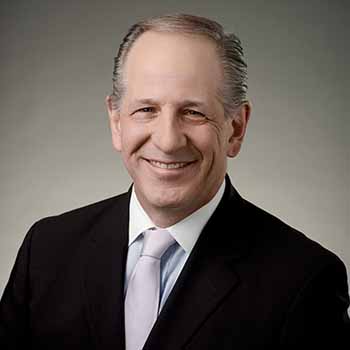
Gregory S. Marcus
About Gregory S. Marcus
Gregory S. Marcus (age 60) is Chairman (since 2023), President (since 2008) and Chief Executive Officer (since 2009) of The Marcus Corporation. He joined MCS in 1992, became an executive officer in 2005, and has served as a director since 2005. He holds a B.A. in Accounting from Indiana University and a J.D. from Boston University School of Law .
Pay-versus-performance disclosures show 2024 value of a $100 investment in MCS at $69.80 vs $132.20 for the composite peer group; Adjusted EBITDA was $102.4 million in 2024 . Multi-year revenue and EBITDA trends are provided below (context for pay alignment). He is both Chairman and CEO, with a Lead Independent Director structure in place .
Past Roles
| Organization | Role | Years | Strategic Impact |
|---|---|---|---|
| The Marcus Corporation | Director of Property Mgmt/Corporate Development | 1992–1999 | Real estate and development pipeline initiation |
| The Marcus Corporation | SVP – Corporate Development | 1999–2008 | Growth, capital allocation, M&A support |
| The Marcus Corporation | Director | 2005–present | Board stewardship, family control continuity |
| The Marcus Corporation | President | 2008–present | Segment leadership, organizational execution |
| The Marcus Corporation | CEO | 2009–present | Strategy, capital allocation, post-COVID recovery |
| The Marcus Corporation | Chairman | 2023–present | Combined Chair/CEO oversight with Lead Independent Director |
External Roles
| Organization | Role | Years | Notes |
|---|---|---|---|
| Marquee Capital | Partner & Board Member | N/A–present | Hospitality/real estate investing platform |
| Greater Milwaukee Committee; Medical College of Wisconsin; MMAC; Milwaukee Jewish Community Foundation; United Performing Arts Fund; Wisconsin Center District | Director/Trustee/Community leader | N/A–present | Extensive civic leadership in Milwaukee |
Fixed Compensation
| Year | Base Salary ($) | Notes |
|---|---|---|
| 2022 | 942,360 | |
| 2023 | 950,000 | |
| 2024 | 950,000 | No increase in 2024; base was ~13% of total comp |
| 2025 | +2.6% salary increase (effective Mar 1, 2025) |
Performance Compensation
Annual Cash Incentive (2024)
| Executive | Metric | Weight | Target | Actual | Payout vs Financial Component | Actual Bonus ($) |
|---|---|---|---|---|---|---|
| G.S. Marcus | Consolidated Adjusted EBITDA | ~80% | $89.6m | $102.4m | 110.0% | 690,000 |
| G.S. Marcus | Individual goals | ~20% | N/A | Achieved | Discretionary achieved | Included in above |
Notes: Targeted bonus opportunity for 2024 was $639,830 for Mr. Marcus; 2025 structure remains ~80% financial (Adj. EBITDA) / ~20% individual .
Long-Term Incentive Awards (mix, metrics, and vesting)
-
LTI mix shifted starting FY2024 to: PSUs (~20%), performance cash (~40%), restricted stock (~40%). Approximately 60% of LTI is performance-based. Restricted stock vests 50% after year 2 and 100% after year 3 starting 2024 grants (prior grants: 50% at year 2 and 100% at year 4). Stock options discontinued for NEOs from 2024 onward .
-
PSU and Performance Cash metrics and payout grids (3-year performance period for 2024 grants):
• Relative ROIC (75% weight) and Adjusted EBITDA growth (25% weight) vs Russell 2000; 25th percentile=25% of target; 50th=100%; 75th=150% .
| Grant Year | Component | Target Value ($) | Target Shares | Notes |
|---|---|---|---|---|
| 2024 | PSUs | 669,284 | 45,100 | 3-year perf: FY2024–FY2026; ROIC & EBITDA growth vs Russell 2000 |
| 2024 | Restricted Stock | 1,338,568 | 90,200 | 50% vests 2/22/2026; 100% vests 2/22/2027 |
| 2024 | Performance Cash | 1,330,000 | N/A | 3-year perf period; same metrics as PSUs |
| 2024 | Special Retention RS | 2,853,732 | 192,300 | Vests fully on 2/22/2028, or upon retirement after 3rd anniversary |
| 2025 | PSUs | 682,469 | 31,220 | Contingent on approval of 2025 Omnibus Plan; same metrics |
| 2025 | Restricted Stock | 1,364,938 | 62,440 | New annual cycle (grant date 2/12/2025) |
| 2025 | Performance Cash | 1,365,000 | N/A | 3-year perf period |
Equity Ownership & Alignment
| Item | Detail |
|---|---|
| Beneficial ownership – Common | 1,293,576 shares (5.2% of common) |
| Beneficial ownership – Class B | 337,251 shares (4.8% of Class B) |
| Aggregate voting power | 4.9% (from common holdings line) |
| Options – exercisable/within 60 days | 796,250 shares within 60 days (included in beneficial ownership) |
| Stock ownership guidelines | No executive ownership guidelines; company cites significant Marcus family stake (~26.3%) |
| Hedging/pledging | Prohibited for directors and executive officers |
Upcoming vesting calendar (key tranches – potential supply overhang)
| Grant/Type | Vesting Date(s) | Shares |
|---|---|---|
| Time-vested RS (legacy) | 2/25/2025 | 14,600 |
| Time-vested RS (legacy) | 3/1/2025 and 3/1/2027 | 21,100 each date |
| Time-vested RS (legacy) | 2/23/2026 | 17,150 |
| 2024 Annual RS | 2/22/2026 and 2/22/2027 | 45,100 each date |
| 2024 Special RS | 2/22/2028 (or retirement after 3rd anniversary) | 192,300 |
Option profile (near-term expiries – watch for exercise-related flows)
| Options | Strike ($) | Expiry | Status |
|---|---|---|---|
| 44,100 | 20.26 | 7/28/2025 | Exercisable |
| 28,500 | 18.68 | 3/1/2026 | Exercisable |
| 40,000 | 31.20 | 2/28/2027 | Exercisable |
| 75,000 | 27.00 | 2/27/2028 | Exercisable |
| (Additional option tranches continue through 2033 per Outstanding Awards table) |
Employment Terms
| Provision | Summary |
|---|---|
| Employment/Severance/CoC agreements | No individual employment, severance, or change-in-control agreements for executives |
| Equity acceleration | Generally accelerated upon normal retirement or death; Committee has discretion to accelerate upon a potential future change-in-control |
| Pension (Supplemental Plan) | Present value of accumulated benefits (12/26/2024): $7,053,000; credited service maxed at 30 years; estimated annual benefit at normal retirement: $729,000 |
| Deferred compensation | Aggregate balance at 12/26/2024: $604,365; 2024 earnings credit of $48,033 |
Board Governance
- Combined Chair/CEO role since 2023; Board determined combination is appropriate given experience; Lead Independent Director (Philip L. Milstein) appointed with enumerated responsibilities (executive sessions, agendas, liaison) .
- Independence: Six directors determined independent under NYSE/SEC rules (Selig, Hoeksema, Milstein, Stark, Ramirez, Gehl) .
- Committees: Audit (Stark—Chair; Gehl; Hoeksema); Compensation (Selig—Chair; Milstein; Stark); Corporate Governance & Nominating (Milstein—Chair; Hoeksema; Gehl); Finance (Gregory S. Marcus; Milstein; Stark; Selig); Finance Committee did not meet in fiscal 2024 .
- Meetings/attendance: Board met 4 times in 2024; all directors except Gehl attended at least 75% of meetings of the board and committees on which they served .
- Director compensation: Executive directors receive no additional director pay (non-employee director plan detailed separately) .
- Say-on-Pay: 2024 shareholder support exceeded 99% of votes cast (97%+ of all shares entitled to vote) .
Compensation Structure Analysis
- Cash vs Equity mix: Equity is dominant and increasingly performance-based (60% of LTI), enhancing alignment; options eliminated from 2024 program, replaced by PSUs (lower risk than options) .
- Metrics: Annual bonus keyed primarily to consolidated Adjusted EBITDA; LTI metrics are relative ROIC (75%) and Adjusted EBITDA growth (25%) vs Russell 2000 over multiyear periods .
- Retention awards: A sizeable special 192,300-share RS grant in 2024 vests in 2028 (or retirement after year 3) – a meaningful retention “golden handcuff” and potential future selling pressure at vest .
- Risk review: Committee conducted 2025 risk assessment and concluded the programs do not encourage excessive risk-taking .
- Consultant: Willis Towers Watson (WTW) provides market data; Committee confirmed no conflicts; a separate division provided limited actuarial/consulting services (~$57,500 in 2024) .
- Ownership policy and hedging: No executive ownership guidelines (family ownership cited for alignment); hedging and pledging are prohibited .
Equity Ownership & Related Parties
- Marcus family control: As of the record date, the Marcus family beneficially owned approximately 26.3% of outstanding shares, comprising the largest shareholder group; Class B shares carry 10 votes each .
- Gregory S. Marcus beneficial ownership and option holdings are detailed above .
- Related-party transactions: The company maintains relationships with Marcus Investments (owned by the three sons of Chairman Emeritus Stephen H. Marcus, including Gregory). Through Sept 30, 2025, MCS paid approximately $347,340 to Marcus Investments and related entities and received ~$15,406 for administrative services provided .
Performance & Track Record
Selected Operating/Market Performance
| Metric | 2020 | 2021 | 2022 | 2023 | 2024 |
|---|---|---|---|---|---|
| Adjusted EBITDA ($m, non-GAAP) | (71.6) | 35.1 | 85.1 | 108.7 | 102.4 |
| TSR – Value of $100 Investment (MCS) | 41.61 | 55.41 | 44.25 | 46.34 | 69.80 |
| TSR – Composite Peer Group | 67.02 | 72.00 | 45.73 | 70.60 | 132.20 |
| Revenues ($) | FY 2020 | FY 2021 | FY 2022 | FY 2023 | FY 2024 |
|---|---|---|---|---|---|
| Revenues | 181,744,000* | 374,142,000* | 561,200,000* | 606,735,000* | 597,856,000* |
| EBITDA ($) | (81,055,000)* | 33,929,000* | 74,535,000* | 100,541,000* | 89,237,000* |
*Values retrieved from S&P Global.
- Capital returns: In Q3 FY2025, MCS repurchased $9 million (0.6 million shares) and the Board authorized up to 4.0 million additional shares for repurchase .
- Qualitative: Management commentary cites film slate variability impacting theatres and strength in Hotels & Resorts; 2026 film slate expected to be franchise-heavy with more family films .
Compensation Committee & Peer Benchmarking
- Committee: Selig (Chair), Milstein, Stark; all independent .
- Peer benchmarking: Committee uses WTW composite market data (general industry sized by revenue), not a disclosed named peer group for target positioning; LTI relative metrics benchmark to Russell 2000 .
- Say-on-Pay outcome: >99% support in 2024 validates investor acceptance of structure and outcomes .
Board Service History, Committee Roles, Dual-Role Implications
- Board service: Director since 2005; Chairman since 2023. Serves on the Finance Committee (which did not meet in fiscal 2024) .
- Dual-role implications: Combined Chair/CEO can concentrate power; mitigated by a Lead Independent Director with defined authority (executive sessions, agenda input, liaison) .
- Independence: Gregory S. Marcus is a non-independent executive director; six directors are independent .
Say-on-Pay & Shareholder Feedback
- 2024 advisory approval: Over 99% of votes cast (and over 97% of all shares entitled to vote) supported NEO compensation; the committee maintained program features for 2024 in response .
Risk Indicators & Red Flags
- Dual-class and family control (elevated governance risk for some investors) offset by established Lead Independent Director role .
- Large 2024 special retention RS grant (192,300 shares) may create future selling pressure at vest in 2028 (or earlier at retirement after year 3) .
- Hedging and pledging of company stock prohibited, reducing alignment risk .
- No individual severance/CoC agreements (limits golden parachute optics); equity may be accelerated at retirement/death; CoC acceleration at committee discretion .
- Related-party activity with Marcus Investments (modest dollar amounts) requires ongoing monitoring .
Expertise & Qualifications
- Education: B.A. (Indiana University); J.D. (Boston University School of Law) .
- Industry experience: 30+ years at MCS across development, operations, and corporate leadership .
- Community leadership: Multiple civic board roles; visible industry presence .
Investment Implications
- Alignment: Program concentrates on Adjusted EBITDA (annual) and relative ROIC/EBITDA growth (multi-year), with 60% performance-based LTI, signaling emphasis on profitable growth and capital efficiency .
- Supply/demand signals: Significant RS vesting in 2026–2028 (especially the 192,300-share special grant) could create episodic selling pressure; options with near-term expiries may also influence flows depending on price levels .
- Governance: Combined Chair/CEO under a Lead Independent Director; no executive ownership guidelines but strong family ownership and anti-hedging/pledging policies; investors may weigh family control against outsider governance preferences .
- Pay-for-performance: 2024 bonus paid on EBITDA beat (110% on financial component); multi-year PSUs tied to relative ROIC/EBITDA growth should further align outcomes with value creation; say-on-pay support is very strong .
- Performance context: Adjusted EBITDA improved materially post-pandemic, but 5-year TSR has lagged the composite peer group; capital return (buybacks) and film slate recovery are near-term levers .
Appendix: Sources
- 2025 DEF 14A (filed 3/26/2025): governance, compensation, ownership, and plan details .
- 8-Ks (Q3 2025): buybacks authorization and related-party disclosures .
- Company investor pages and local business media for biography/roles .
- Financials (Revenues, EBITDA 2020–2024) from S&P Global. Values marked with an asterisk are retrieved from S&P Global.