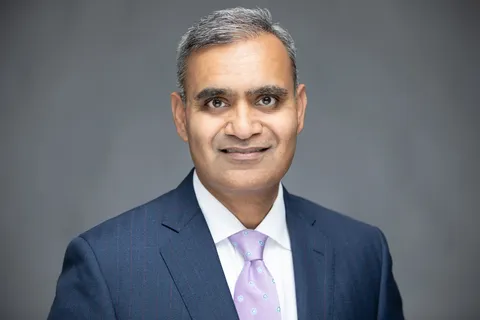
Jag Reddy
About Jag Reddy
Jagadeesh (Jag) A. Reddy, 53, is President & Chief Executive Officer of Mayville Engineering Company (MEC) and has served as a director since July 2022. He holds an MBA in Finance and Strategy (Kellogg) and an MS in Engineering Management (Northwestern), an MS in Industrial Engineering (University of Tennessee), and a BS in Mechanical Engineering (Sri Venkateswara University). MEC’s 2024 results included net sales of $581.6M (-1.2% YoY), net income of $26.0M, Adjusted EBITDA of $65.3M, and Free Cash Flow of $53.9M; MEC’s cumulative TSR index (base 100 at 12/31/2021) was 105.43 at 12/31/2024 . The Board has separated the CEO and Chair roles; MEC’s non‑executive Chair is independent, which mitigates dual‑role governance concerns for Reddy as CEO‑Director .
Past Roles
| Organization | Role | Years | Strategic impact |
|---|---|---|---|
| W.R. Grace & Co. | Senior leadership; Head of Strategy & Growth; Managing Director of Advanced Refining Technologies JV (with Chevron) | 2018–2022 | Led strategy and growth and JV leadership in hydroprocessing technologies |
| Pentair plc | VP & GM, Water Technologies SBU; VP, Corporate Strategy | 2014–2017; 2012–2014 | P&L leadership and corporate strategy roles in industrial water tech |
| ITT Corp./Xylem Inc. | Leadership roles of increasing responsibility | — | Industrial operations and water technology leadership experience |
| Danaher Corporation; United Technologies | Product management and M&A roles | — | Portfolio management and M&A execution exposure |
| Denso Corporation | Manufacturing operations (career start) | — | Operations foundation in manufacturing |
External Roles
- No additional public company directorships disclosed for Reddy. Employee directors receive no director compensation at MEC .
Fixed Compensation
| Item | 2023 | 2024 |
|---|---|---|
| CEO Base Salary ($) | 695,250 | 715,000 (2.84% increase) |
| Target Annual Bonus (% of salary) | — | 100% (=$715,000 target) |
| Actual Annual Cash Bonus ($) | 567,880 (paid for 2023 performance) | 966,968 (135.2% of target, paid in 2025) |
Notes:
- Annual incentive metrics in 2024 were 50% Adjusted EBITDA and 50% Free Cash Flow, with overall payout at 135.2% of target .
Performance Compensation
Annual Incentive Plan (2024)
| Metric | Weight | Threshold | Target | Maximum | Actual | Payout vs Target |
|---|---|---|---|---|---|---|
| Adjusted EBITDA ($M) | 50% | 57.0 | 76.0 | 91.2 | 65.3 | 71.8% |
| Free Cash Flow ($M) | 50% | 33.8 | 45.0 | 54.0 | 53.9 | 198.6% |
| Total | 100% | — | — | — | — | 135.2% of target |
Definition highlights (per Compensation Committee): Adjusted EBITDA excludes stock‑based comp, certain legal/restructuring, and items unusual/infrequent; FCF adjusts operating cash flow for capex and certain items (incl. gain on lawsuit settlement) .
Long‑Term Incentives
| Grant Year | Structure | CEO Target LTI (% of base) | Total Grant Value ($) | RSUs ($ / # shares) | PSUs ($ / # target shares) | Performance metrics and vesting |
|---|---|---|---|---|---|---|
| 2024 | 70% RSUs / 30% PSUs | 280% | 2,000,000 | 1,400,000 / 108,950 | 600,000 / 46,693 | PSUs earned over 2024–2026 on ROIC (3‑yr avg) and 2026 Adjusted EBITDA; payout 50–200% of target; RSUs vest ratably over 3 years |
| 2025 design | 50% RSUs / 50% PSUs | — | — | — | — | Increased performance weighting to 50% PSUs / 50% RSUs for 2025 awards; PSUs measured on 3‑yr ROIC and terminal Adjusted EBITDA ; Q3’25 10‑Q confirms PSU goals for 2024/2025 cohorts |
Outstanding awards and vesting schedule (as of 12/31/2024):
- Stock options: 44,451 exercisable and 44,450 unexercisable at $16.22 strike; expire 2/28/2033; remaining 50% scheduled to vest 2/28/2025 .
- RSUs: 166,433 unvested, with 25,432 vesting 2/28/2025; 32,051 vesting 7/19/2025; and 36,317 vesting on each of 3/15/2025, 3/15/2026, and 3/15/2027 .
- PSUs: 46,693 target unearned; cliff vest 3/15/2027 based on 2024–2026 performance (shown at target for disclosure purposes) .
Equity Ownership & Alignment
| Ownership element | Detail |
|---|---|
| Total beneficial ownership | 242,002 shares (1.2% of outstanding; 20,419,823 shares outstanding as of 2/21/2025) |
| Shares countable within 60 days | 150,650 shares via exercisable/options or RSUs deliverable within 60 days (CEO) |
| Options outstanding | 44,451 exercisable / 44,450 unexercisable at $16.22; expire 2/28/2033 |
| Unvested RSUs | 166,433 (market value disclosure based on $15.72 year‑end price in table footnote) |
| PSUs at target | 46,693 (cliff vest 3/15/2027 subject to performance) |
| Hedging and pledging | Prohibited for directors and officers; no margin or pledging permitted |
| Ownership guidelines | CEO 5x salary; counts direct/beneficial, plan shares, and RSUs (not options/PSUs); CEO in compliance as of 12/31/2024 |
| Trading policy | Insider Trading Policy governs timing; no derivatives or hedging |
Implications:
- Multiple vesting events in 2025 (2/28, 3/15, 7/19) can create seasonal selling pressure for tax withholdings and/or 10b5‑1 activity around those dates .
Employment Terms
| Provision | Economics/terms |
|---|---|
| Severance (pre‑CIC) | Lump‑sum 1x base salary + 1x target annual bonus upon involuntary termination without cause or resignation for good reason; release required |
| Change in Control (CIC) | Double‑trigger: upon qualifying termination within 2 years post‑CIC, lump‑sum 2x salary + 2x target bonus; 24 months of life/medical/dental; post‑CIC equity/cash incentive awards vest in full upon termination |
| 180‑day “in anticipation of CIC” | If terminated without cause within 180 days prior to CIC in connection with CIC, CIC severance applies |
| Restrictive covenants | Non‑compete, non‑solicit, and employee non‑interference during employment and 12 months post‑employment; confidentiality obligations |
| Excise tax | No tax gross‑ups; best‑net cutback applies |
| Clawback | Company maintains Dodd‑Frank compliant clawback policy for incentive compensation |
Board Governance
- Role and status: Reddy is CEO and a director; all non‑employee directors are independent under NYSE rules; the Board has an independent, non‑executive Chair (Timothy L. Christen) and separates CEO/Chair roles, enhancing oversight .
- Committees: Audit (Fisher; Christen; McCormick); Compensation (Kent Chair; Carlson; Fisher; McCormick); Nominating & Governance (Rothman Chair; Carlson; Christen; Kent). Management directors (like the CEO) do not serve on these committees .
- Meetings and attendance: The Board held four meetings in 2024; each director attended at least 75% of Board and committee meetings; independent directors meet in executive session at each regular meeting .
- Director pay: Employee directors receive no Board fees; non‑employee director cash retainer $40,000 plus committee chair retainers and annual RSU grants (employee directors, including Reddy, receive none) .
- Independence and policies: Comprehensive Corporate Governance Guidelines and Code of Conduct; prohibition on hedging/pledging; related‑party transaction oversight; no related‑party transactions in 2024 .
Director Service and Committee Roles (Reddy)
| Aspect | Detail |
|---|---|
| Board service | Director since July 2022; nominee for term expiring at 2028 annual meeting |
| Committee roles | None disclosed (CEO typically not on Audit/Comp/Nominating) |
| Independence | Not independent (executive); mitigated by independent Chair and fully independent key committees |
Compensation Peer Group and Practices
- Peer group used to benchmark 2024 pay included industrials such as AZZ, Blue Bird, Douglas Dynamics, LSI Industries, Powell Industries, The Shyft Group, etc.; Pearl Meyer served as independent compensation consultant; peer data informs but does not dictate pay .
- Practices: No tax gross‑ups; no SERP; clawback policy; double‑trigger equity vesting on CIC; hedging/pledging prohibited .
Performance & Track Record
- 2024 performance: Net sales $581.6M (-1.2% YoY), net income $26.0M; Adjusted EBITDA $65.3M; Free Cash Flow $53.9M .
- Execution in 2025: Integration progress on Accu‑Fab acquisition; increased 2026 revenue synergy expectations to $20–$30M; strategic rebalance toward Data Center & Critical Power; reaffirmed 2025 guidance; focus on deleveraging .
- Risk note: As of Q3 2025, disclosure controls deemed not effective due to a material weakness in ICFR, though financials believed fairly presented—an execution and governance watch‑item .
Say‑on‑Pay & Shareholder Feedback
- 2025 will be MEC’s first advisory say‑on‑pay vote (and frequency vote); Board recommends annual SOP; future pay decisions intend to consider SOP outcomes .
Equity and Awards Detail (as of 12/31/2024)
| Category | Detail |
|---|---|
| Options | 44,451 exercisable; 44,450 unexercisable; strike $16.22; expire 2/28/2033; remaining 50% vest 2/28/2025 |
| RSU vesting dates | 2/28/2025: 25,432; 7/19/2025: 32,051; 3/15 in 2025, 2026, 2027: 36,317 each |
| PSU vesting | 3/15/2027 (based on 2024–2026 performance: ROIC avg and terminal Adjusted EBITDA) |
| 2024 CEO LTI | $2.0M grant: RSUs $1.4M (108,950 sh.), PSUs $0.6M (46,693 target sh.) |
Investment Implications
- Pay-for-performance alignment improving: 2025 LTI mix shifts to 50% PSUs (up from 30% in 2024), increasing performance at‑risk equity exposure; AIP is formulaic on EBITDA/FCF and paid out at 135.2% for 2024 on strong FCF against target .
- Near‑term selling pressure: Multiple 2025 vesting events (2/28, 3/15, 7/19) create predictable windows for tax‑related selling and possible 10b5‑1 activity; option tranche (50%) vested 2/28/2025 and RSU tranches vest through 2027 .
- Retention and CIC economics: Pre‑CIC severance (1x salary+bonus) and double‑trigger CIC (2x with 24 months benefits) are standard and generally shareholder‑friendly (no gross‑ups; best‑net cutback), balancing retention with cost discipline .
- Governance strengths vs. watch‑items: Independent Chair and fully independent key committees reduce dual‑role risk; anti‑hedging/pledging and ownership guidelines bolster alignment. However, the disclosed ICFR material weakness (Q3’25) is a governance risk to monitor until remediated .
- Strategy execution: Management is reallocating capacity toward higher‑growth data center/critical power end‑markets and raised synergy targets post‑Accu‑Fab—potentially supportive of medium‑term revenue/EBITDA if delivered, but legacy end‑market softness may cap margins near term .
Overall: Incentive design ties to ROIC, EBITDA, and FCF, with increased PSU weight enhancing pay‑performance linkage. Ownership, anti‑hedging/pledging, and no gross‑ups support alignment. Monitor execution on data‑center adjacency, synergy capture, deleveraging, and remediation of ICFR weakness for confirmation of improving risk‑reward .