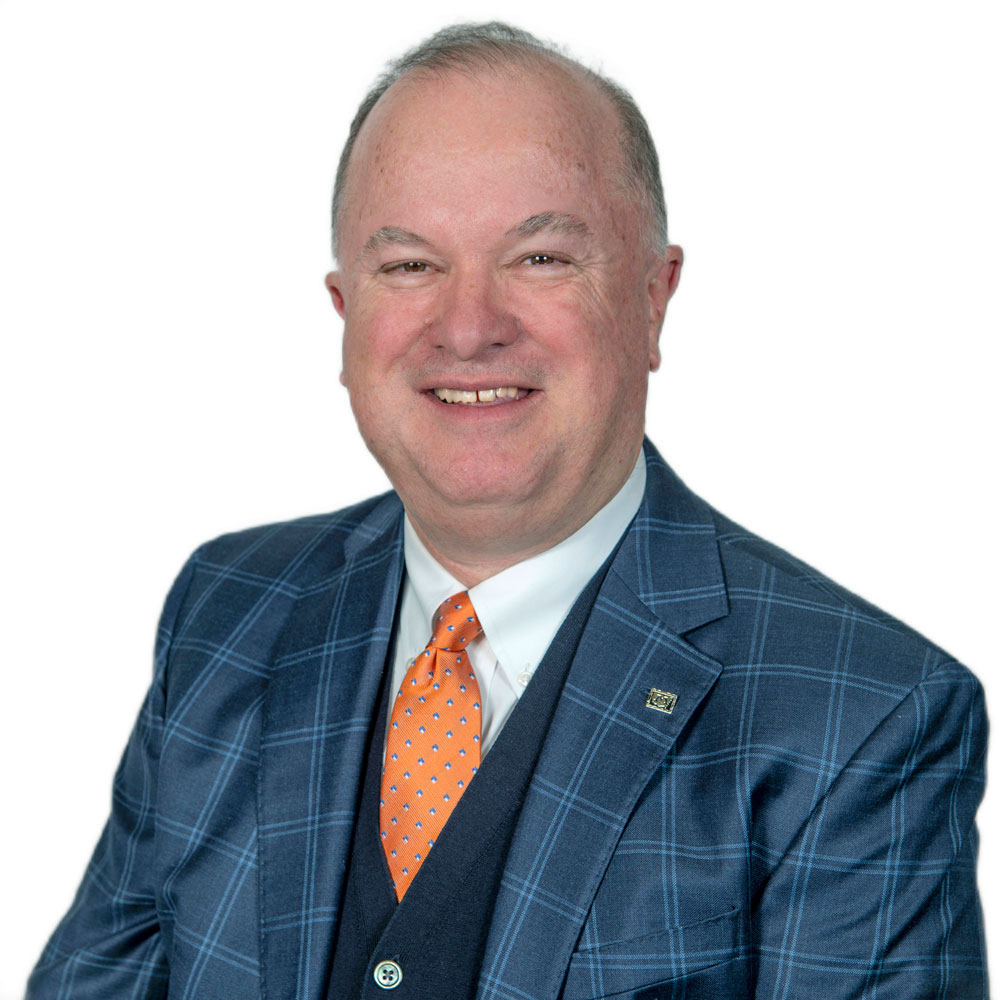
Thomas S. Gayner
 MARKEL GROUP
About Thomas S. Gayner
Thomas S. Gayner is Chief Executive Officer of Markel Group Inc. (appointed sole CEO January 1, 2023; previously Co‑CEO since 2016) and a director; age 63, with prior roles as President and Chief Investment Officer (2010–2015), CPA at PwC, and Vice President at Davenport & Company of Virginia . He joined Markel in 1990 and has served on external boards including The Coca‑Cola Company and Graham Holdings Company, with prior directorships at Cable One (2015–2023) and Colfax (2008–2022) . Performance metrics used to assess and pay Markel’s executives include five‑year average operating income of $2,212.7 million (2020–2024) and five‑year total shareholder return CAGR of 9% (2019–2024) .
Past Roles
| Organization | Role | Years | Strategic Impact |
|---|---|---|---|
| Markel Group Inc. | Chief Executive Officer | 2023–present | Leads capital allocation and long-term strategy; sole principal executive officer from Jan 2023 . |
| Markel Group Inc. | Co‑Chief Executive Officer | 2016–2022 | Co-led Markel’s “three engine” evolution (insurance, investments, Markel Ventures) . |
| Markel Group Inc. | President & Chief Investment Officer | 2010–2015 | Oversaw investment portfolio and corporate strategy . |
| PwC (PricewaterhouseCoopers LLP) | Certified Public Accountant | pre‑1990 | Accounting foundation; financial controls exposure . |
| Davenport & Company of Virginia | Vice President | pre‑1990 | Capital markets and investment advisory experience . |
External Roles
| Organization | Role | Years | Strategic Impact |
|---|---|---|---|
| The Coca‑Cola Company | Director | Not disclosed | Large-cap consumer board perspective; governance . |
| Graham Holdings Company | Director | Not disclosed | Diversified holding governance insights . |
| Virginia Retirement System | Investment Advisory Committee Member | Not disclosed | Institutional investment advisory perspective . |
| Cable One, Inc. | Director | 2015–2023 | Telecom/cable oversight; capital allocation . |
| Colfax Corporation | Director | 2008–2022 | Industrial operations governance . |
Fixed Compensation
Multi-year compensation (as reported in MKL’s proxy):
| Metric (USD) | 2022 | 2023 | 2024 |
|---|---|---|---|
| Base Salary | $1,050,000 | $1,050,000 | $1,093,269 |
| Bonus | — | — | — |
| Stock Awards | $2,100,000 | $5,387,107 | $6,277,084 |
| Non‑Equity Incentive (Cash) | $787,500 | $1,575,000 | $2,310,000 |
| All Other Compensation | $53,934 | $56,184 | $57,534 |
| Total Compensation | $3,991,434 | $8,068,291 | $9,737,887 |
Notes:
- Base salary increased to $1,100,000 effective February 19, 2024, aligning with the 2024 salary outcome shown .
- All Other Compensation includes 401(k) contributions ($31,050), life insurance premiums, and matching gifts ($15,000) in 2024 .
Performance Compensation
Performance design and 2024 outcomes:
| Metric | Weighting | Target (100% level) | Actual (2020–2024) | Payout Modifier | Vesting |
|---|---|---|---|---|---|
| 5‑yr Average Operating Income | 50% | $1,700 million | $2,212.7 million | 120% of target potential | RSUs: 3‑yr cliff; Cash paid in March 2025 |
| 5‑yr TSR (CAGR) | 50% | 10% | 9% | 90% of target potential | RSUs: 3‑yr cliff; Cash paid in March 2025 |
| Total Award Modifier | — | — | — | (120%+90%)/2 = 105% | RSUs subject to service/perf terms |
2024 incentive structure and payout sizing (as % of base salary):
| Component | Target Potential | Allocation | Actual Payout (% of base) |
|---|---|---|---|
| Cash Award (Non‑Equity) | 200% | n/a | 210% = 105% × 200% |
| Equity – Performance RSUs | 550% | 75% of equity | 433% = 105% × 550% × 75% |
| Equity – Service RSUs | 550% | 25% of equity | 138% = 550% × 25% (no modifier) |
Design features:
- Equity split: 75% Performance‑Based RSUs; 25% Service‑Based RSUs .
- Vesting: 3‑year cliff for both; Service‑Based RSUs have an additional 5‑year holding period post-vesting .
- No stock options are granted under the 2024 plan .
- Committee discretion applies at very low/high performance ranges per grid .
Equity Ownership & Alignment
| Item | Detail |
|---|---|
| Direct ownership (common) | 20,807 shares |
| Other ownership | 5,240 shares (spousal/trust/401(k) per footnote c) |
| Total beneficial ownership | 26,047 shares |
| Shares outstanding (record date) | 12,711,262 |
| Ownership % of outstanding | ~0.205% (26,047 ÷ 12,711,262) |
| RSUs vested, receipt deferred | 21,761 RSUs |
| Deferred RSU balance (agg. value) | $37,566,217 (incl. deferred shares; see footnotes) |
| RSUs unvested (12/31/24) | 6,377 RSUs; market value $11,008,169 @ $1,726.23/share |
| Scheduled RSU vesting | Dec 2025: 1,558; May 2026: 1,068; Dec 2026: 2,710; Feb 2027: 1,041 |
| Pledged shares (margin account) | 13,422 shares |
| Hedging & pledging policy | Hedging prohibited; pledging capped at 0.75% of outstanding for executive/employee directors; comp shares may not be pledged; non-employee directors prohibited from pledging . |
| Ownership guideline (CEO) | Minimum 5× base salary; executives meet/exceed . |
Insider selling pressure indicators:
- Upcoming RSU vest dates concentrate in December 2025 and December 2026, creating potential supply; however, Gayner has historically deferred settlement of vested RSUs, reducing immediate market impact .
- Pledged shares (13,422) introduce margin-call risk in severe drawdowns; the pledge remains well below the policy cap of ~95,334 shares (0.75% × 12,711,262) .
Employment Terms
| Term | Provision |
|---|---|
| Agreement term | Initial term through Dec 31, 2026; auto-renews annually unless 90 days’ notice . |
| Non‑compete / non‑solicit | 12 months post‑termination; confidentiality obligations apply . |
| Severance (no CIC; termination without cause) | 24 months base salary continuation plus target annual cash bonus paid in two lump sums (first and second anniversaries) . |
| Severance (double‑trigger CIC) | Same as above (24 months salary + two target bonuses) and immediate vesting of all granted equity; performance awards vest at 100% target . |
| Estimated cash/benefits (as of 12/31/24) | $6,600,000 payments; $33,471 benefits for “termination without cause” or “good reason after CIC” . |
| Equity on termination | Unvested RSUs vest; performance awards vest at target; values per schedule/grid as of 12/31/24 . |
| Clawback | NYSE‑compliant Compensation Recovery Policy effective Oct 2, 2023; restatement‑triggered recovery of erroneously awarded incentive comp . |
| Tax gross‑ups | None for parachute payments or otherwise (Section 280G) . |
Board Governance
- Board leadership: Chairman Steven A. Markel (since May 2020); CEO Gayner is not Chair; Lead Independent Director Michael O’Reilly (since May 2021) . This separation mitigates CEO/Chair dual‑role concerns.
- Committee independence: Audit, Compensation, and Nominating/Governance Committees composed entirely of independent directors; Gayner is not listed as a member of these committees .
- Meetings in 2024: Board 5; Audit 6; Compensation 4; Nominating/Governance 4; all current directors attended ≥75% of applicable meetings .
- Executive sessions: Non‑employee independent directors meet in executive session at each regular Board meeting .
- Stock ownership guidelines apply to directors (5× cash retainer); current non‑employee directors meet the requirement or are on schedule within five years .
Compensation Committee Analysis
- Committee authority: Full authority over executive compensation and incentive plan administration .
- Consultant usage: Senior management engaged Compensation Advisory Partners LLC (CAP) for market research; CAP reported to management (not retained by Committee/Board); fees paid in 2024 totaled $85,435 .
- Peer group: Balanced mix of P&C, reinsurance, and multi‑industry capital allocators used for market reference (e.g., Aon, Chubb, Marsh & McLennan, Danaher, Loews, W. R. Berkley, etc.); Committee does not target specific percentiles or pay mix .
Say‑on‑Pay & Shareholder Feedback
- 2024 Say‑on‑Pay approval: >87% of votes cast supported MKL’s executive compensation program .
- Say‑on‑Frequency: Shareholders strongly favor annual Say‑on‑Pay votes; next frequency vote expected in 2029 .
Risk Indicators & Red Flags
- Pledging: Gayner has 13,422 shares pledged (margin account), within policy limits but introduces leverage risk in downturns .
- Hedging: Prohibited for executives/directors (alignment positive) .
- Clawback: Adopted and effective (alignment positive) .
- Tax gross‑ups: None (shareholder‑friendly) .
- Committee and board independence: Affirmed; separate Chair and Lead Independent Director (governance positive) .
Investment Implications
- Alignment: High equity mix (RSUs), multi‑year performance metrics (5‑yr operating income and TSR), 3‑yr cliff vesting plus 5‑yr holding period on service RSUs, and 5× salary ownership guideline drive long‑term orientation and retention .
- Retention risk: Low near‑term given auto‑renewing contract, double‑trigger CIC protections, and substantial deferred RSU holdings; estimated cash severance of $6.6 million and full equity vesting at target under certain scenarios further reduce exit risk .
- Trading signals: Watch concentrated RSU vestings in Dec 2025 and Dec 2026; Gayner’s historical deferral of RSU share settlement can mute immediate supply, but pledged shares introduce tail risk if markets dislocate .
- Governance: Separation of Chair/CEO, independent committees, and robust clawback mitigate dual‑role concerns and support disciplined pay‑for‑performance .