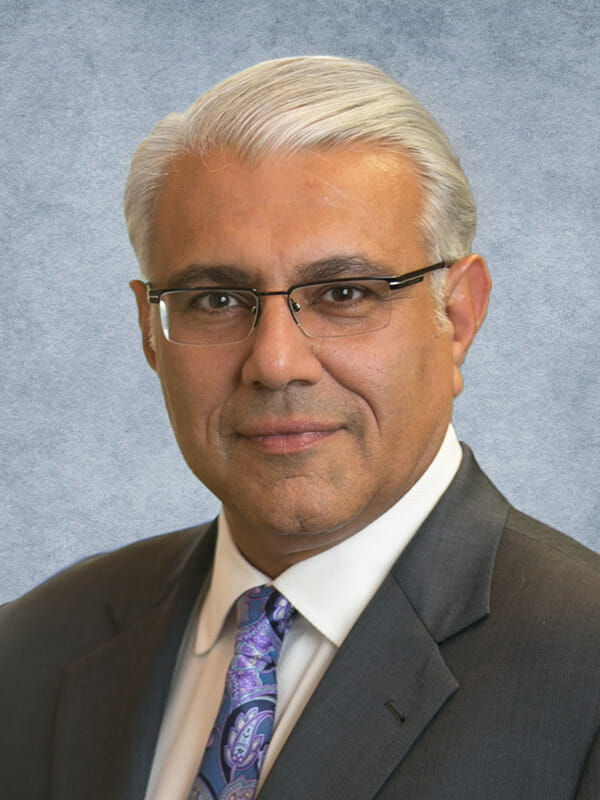
Hessam Nadji
 Marcus & Millichap
About Hessam Nadji
Hessam Nadji is President and Chief Executive Officer of Marcus & Millichap, Inc. (MMI) and a non‑independent director (Class I; director since 2016). He is 59 and holds a B.S. in information management and computer science from City University in Seattle . In 2024, MMI delivered revenue of $696 million (+8% YoY) with a net loss of $12 million amid industry headwinds; management highlighted improved TSR in the back half of the year and strong balance sheet flexibility (no debt; $394 million cash and marketable securities) . Governance design includes a separate Chair (George M. Marcus) and CEO, with a Lead Independent Director, six of eight directors independent, and regular executive sessions, mitigating dual‑role risks .
Past Roles
| Organization | Role | Years | Strategic Impact |
|---|---|---|---|
| Marcus & Millichap, Inc. | President & CEO | 2016–present | Led platform through severe CRE downturn; advanced talent, tech, and financing initiatives; maintained debt‑free balance sheet |
| Marcus & Millichap, Inc. | Senior EVP & Chief Strategy Officer | Not disclosed | Drove enterprise strategy and execution prior to CEO appointment |
| Marcus & Millichap, Inc. | Chief Marketing Officer; Head of Specialty Brokerage Divisions | Not disclosed | Built brand and specialty verticals to expand deal flow and client coverage |
| Marcus & Millichap, Inc. | VP of Research | Joined 1996 | Established research as client acquisition/retention lever and market thought leadership |
External Roles
| Organization | Role | Years | Notes |
|---|---|---|---|
| — | — | — | No current public-company directorships disclosed for Nadji in the proxy biographies (past five years) . |
Board Governance and Service
- Board status: Non‑independent director; Class I; director since 2016; Executive Committee member (not chair) .
- Structure: Separate Chair (George M. Marcus), CEO (Nadji), and Lead Independent Director (Don C. Watters). Six of eight directors independent; all standing committees chaired by independents; regular independent‑only sessions .
- Committees: Executive Committee (members: George M. Marcus (Chair), Lauralee E. Martin, Hessam Nadji) .
- Attendance: Board held five meetings in 2024; no director attended <75%; average committee attendance 100% .
- Dual-role implications: CEO also serves as a director but not as Chair; presence of Lead Independent Director and independent committee leadership mitigates concentration of power and independence concerns .
Fixed Compensation
| Metric | 2022 | 2023 | 2024 |
|---|---|---|---|
| Base Salary ($) | 675,000 | 700,000 | 700,000 |
| Target Annual Incentive ($) | — | — | 2,295,000 (reduced from original $2,700,000) |
| Actual Bonus Paid ($) | 2,339,750 | 811,850 | 1,240,448 |
| Other Compensation ($) | 22,000 | 8,500 | 35,500 (incl. $31,500 auto; $4,000 401(k) match) |
Notes:
- 2024 target bonus opportunities were reduced by 15% across NEOs due to challenging conditions .
- CEO pay ratio: 51:1 for 2024 (CEO total $4,568,174 vs. median employee $90,000) .
Performance Compensation (Annual Incentive)
| Component | Weighting | Performance Metric(s) | Target | Actual | Payout |
|---|---|---|---|---|---|
| Financial | 50% (CEO) | Pre‑tax net income | $30 million (50% above operating plan) | ($13) million pre‑tax net loss | 0% for financial component |
| Strategic/Individual | 50% (CEO) | Strategic goals (retention, recruiting, market share, initiatives) | Qualitative | Qualitative; Committee determined goals met/largely achieved | Contributed to overall CEO payout of 54% of target |
| Total | 100% | — | — | — | 54% of target ($1,240,448) |
Say-on-Pay and program response:
- Say-on-pay support fell to ~71% in 2024 (from ~93% in 2023); investors wanted performance‑based equity and concern over 2023 off‑cycle grant. Company added PSUs (50% of LTI) for 2025 with 3‑year revenue and Adjusted EBITDA goals (0–200% payout) .
Long-Term Incentives (Equity) – Grants and Structure
| Grant | Grant Date | Shares | Vesting | Grant Date Fair Value ($) |
|---|---|---|---|---|
| Annual RSU | 5/2/2024 | 72,000 | 5 equal annual tranches; first vest 3/10/2025, then annually | 2,344,320 |
| Retention RSU (one‑time) | 8/11/2023 | 150,000 | 5 equal annual tranches; first vest 9/10/2024, then annually | Included in 2023 “Stock Awards” ($8,646,760 total) |
2025 LTI design change: 50% PSUs and 50% time‑based RSUs. PSUs: one‑third revenue, two‑thirds Adjusted EBITDA over FY2025–FY2027; payout 0–200%; cliff‑vest at 3 years subject to certification. Time‑based RSUs vest in four equal annual installments .
Vesting Schedule and Unvested Holdings (as of 12/31/2024)
| Original Grant | Remaining Unvested Shares | Vest Cadence | Next Vest Date | Final Vest Date | Unvested Market Value ($) |
|---|---|---|---|---|---|
| 2/11/2020 RSU | 18,400 | 5 annual | 3/10/2025 | 3/10/2025 | 703,984 |
| 2/11/2021 RSU | 36,800 | 5 annual | 3/10/2025 | 3/10/2026 | 1,407,968 |
| 2/10/2022 RSU | 55,200 | 5 annual | 3/10/2025 | 3/10/2027 | 2,111,952 |
| 2/9/2023 RSU | 73,600 | 5 annual | 3/10/2025 | 3/10/2028 | 2,815,936 |
| 8/11/2023 RSU (Retention) | 120,000 | 5 annual | 9/10/2025 | 9/10/2028 | 4,591,200 |
| 2/8/2024 RSU (effective 5/2/2024) | 72,000 | 5 annual | 3/10/2025 | 3/10/2029 | 2,754,720 |
| Total | 376,000 | — | — | — | 14,385,760 |
Note: Market values above use $38.26/share at 12/31/2024 . No stock options outstanding for NEOs .
Equity Ownership & Alignment
| Item | Detail |
|---|---|
| Beneficial Ownership | 263,828 shares; less than 1% of outstanding (39,198,040 shares outstanding 3/12/2025) |
| Ownership Guidelines | CEO: 6x base salary; all NEOs satisfied guidelines as of YE 2024 |
| Hedging/Pledging | Hedging and pledging prohibited for officers/directors; trading blackouts and 10b5‑1 allowed under policy |
| Vested vs. Unvested | Unvested RSUs with YE 2024 market value of $14,385,760 (see table above) |
| Options | None outstanding |
| Deferred Comp (SARs) | Cash‑settled SARs fully vested/frozen at IPO; accrues interest (2024 rate 5.95%); YE 2024 balance $4,654,780; payout generally over 10 years upon qualifying event; full payout upon change in control |
| Potential Selling Pressure | 5‑year RSU schedules create annual vest events (Mar 10 and Sep 10); offset by ownership guidelines retention requirements |
Related note: 3.5 million shares beneficially owned by Phoenix (controlled by Chair George M. Marcus) are pledged as collateral for a credit facility (Chair, not CEO) .
Employment Terms
| Term | Key Provision |
|---|---|
| Employment Agreement | Effective March 31, 2016; at‑will; base salary $700,000; eligible for annual non‑equity incentive; no severance in employment agreement |
| Restrictive Covenants | Non‑competition, non‑solicitation, confidentiality, arbitration provisions included |
| Change‑in‑Control (CIC) Policy | Double‑trigger: if terminated without cause or resigns for good reason within 12 months post‑CIC, receives 12 months’ base salary + target annual incentive (lesser of current/prior year), COBRA up to 12 months, outplacement up to $25k, and RSU acceleration; no excise tax gross‑ups |
| Clawback | Dodd‑Frank‑compliant recovery policy for erroneously awarded incentive compensation following restatements; additional recovery for improper conduct |
| Insider Trading | Prohibits hedging/pledging; blackout windows; 10b5‑1 permitted |
Estimated CIC Economics (as of 12/31/2024; double‑trigger)
| Component | Amount ($) |
|---|---|
| Cash Severance (12 months base + target bonus) | 2,995,000 |
| COBRA Reimbursement | 29,948 |
| Outplacement | 25,000 |
| RSU Acceleration (unvested) | 14,385,760 |
| SARs Payout | 3,491,085 (change in control termination scenario) |
Multi‑Year Compensation (Summary)
| Year | Salary ($) | Stock Awards ($) | Non‑Equity Incentive ($) | SARs Interest ($) | Other ($) | Total ($) |
|---|---|---|---|---|---|---|
| 2024 | 700,000 | 2,344,320 | 1,240,448 | 261,406 | 35,500 | 4,581,674 |
| 2023 | 700,000 | 8,646,760 | 811,850 | 240,454 | 8,500 | 10,407,564 |
| 2022 | 675,000 | 4,350,680 | 2,339,750 | 145,470 | 22,000 | 7,532,900 |
Performance & Track Record Highlights
- 2024 execution: 7,836 closings; ~$49.6B transaction volume; financing platform expanded (1,240 transactions with 367 lenders); revenue +8% YoY to $696M amid industry volume declines; net loss of ~$12M; cash and securities $394M; no debt .
- Strategic initiatives: Elevated investor outreach and research brand; targeted investments in talent, technology, auction and loan sale capabilities; investments in tech‑heavy crowdfunding and AI‑based financial modeling start‑ups .
- Capital allocation: >$170M returned since 2022 via dividends and buybacks; 2024 dividends $20M and repurchases ~$0.6M .
- Shareholder feedback: Say‑on‑pay at ~71% in 2024 prompted LTI redesign to add PSUs effective 2025 .
Compensation Committee & Benchmarking
- Committee: Independent members; 5 meetings in 2024; 100% average attendance .
- Advisor: FW Cook (independent; no conflicts) .
- Peer group for pay benchmarking (13 business services firms; limited direct CRE services comps): B. Riley Financial, Brown & Brown, Crawford & Company, Douglas Elliman*, Houlihan Lokey, Moelis, Newmark Group*, Oppenheimer, Piper Sandler, PJT Partners, Ryan Specialty Group, SelectQuote, Walker & Dunlop .
Risk Indicators & Red Flags
- One‑time off‑cycle CEO equity grant (150,000 RSUs, Aug 2023) raised investor concern; addressed via engagement and future LTI changes .
- No tax gross‑ups; robust clawback; anti‑hedging/pledging policies for executives and directors .
- Related‑party context: Ongoing immaterial services between MMI and Marcus & Millichap Company; Phoenix (Chair‑controlled) has 3.5M pledged shares; executive pledging is prohibited .
Investment Implications
- Alignment: High at‑risk pay (>2/3 of TDC at risk) and ownership guidelines (CEO 6x salary; met) support alignment; 2025 PSU introduction adds multi‑year operating rigor (Revenue and Adjusted EBITDA) vs. prior RSU‑heavy mix, reducing windfall risk and improving pay‑for‑performance optics after a 71% say‑on‑pay outcome in 2024 .
- Retention and selling pressure: Substantial unvested RSU overhang ($14.39M YE24) with annual vesting (Mar/Sep) could create periodic liquidity events, but retention/ownership rules temper net selling; CEO realized $4.28M upon 2024 vesting, typical tax‑withholding observed .
- Downside/CIC protection: Double‑trigger CIC with 1x salary + target bonus plus full RSU acceleration and SAR mechanics meaningfully increases change‑of‑control economics (headline cash ~$3.05M; total equity acceleration material), potentially incentivizing strategic optionality in prolonged downturns .
- Execution risk: 2024 financial metric zeroed (pre‑tax NI miss), highlighting cyclical exposure; strategic investments in financing, tech, and specialty sales and debt‑free balance sheet provide operating leverage into recovery, but TSR/pay sensitivity and off‑cycle grant scrutiny warrant continued monitoring of PSU goal rigor and future say‑on‑pay outcomes .