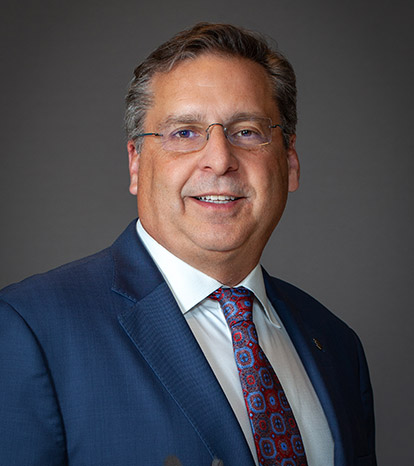
Jeff Dick
About Jeff Dick
Jeff W. Dick, 64, is the co‑founder of MainStreet Bank (2003) and has served as Chief Executive Officer since inception; he became Chairman of the Board in 2009 and reassumed the Company President role in March 2022 after a prior President’s retirement . He began his career at the OCC (Field Examiner in 1983; Field Manager in Washington, D.C. in 1993), advised the Bank of England/FSA (1996–1999), and was EVP and a director at Millennium Bank, N.A. (1999–2003); he holds a B.S.B.A. in accounting and management (University of North Dakota) and an Executive MBA with distinction (Imperial College London) . Pay-versus-performance shows TSR fell from $111.85 (2022) to $77.34 (2024) as net income declined from $24.5m (2022) to a loss of $12.1m (2024), and CEO total pay decreased 53% year over year in 2024, aligning directionally with results .
Past Roles
| Organization | Role | Years | Strategic Impact |
|---|---|---|---|
| Office of the Comptroller of the Currency (OCC) | Field Examiner (1983), Field Manager (Washington, D.C., 1993) | 1983–1996 (key roles dated) | Federal supervision expertise; risk-based exam leadership |
| Bank of England / Financial Services Authority | Advisor | 1996–1999 | Helped modernize risk-based banking supervision approach |
| Millennium Bank, N.A. | Executive Vice President; Director | 1999–2003 | Community bank operating and board experience |
| MainStreet Bank / MainStreet Bancshares | Co‑founder; CEO; Chairman (since 2009); President (reassumed 2022) | 2003–present | Founding leader; strategy, growth, governance oversight |
External Roles
| Organization | Role | Years | Strategic Impact |
|---|---|---|---|
| ICBA Services; ICBA Bancard | Director (prior service) | Not disclosed | Industry payments/services governance; community bank advocacy |
| Virginia Association of Community Banks | Past Chairman and Director | Not disclosed | State association leadership; policy/industry representation |
| Federal Reserve Bank of Richmond | Payments Advisory Council (member) | Not disclosed | Payments strategy insight and risk perspective |
| The Clearing House | Real‑Time Payments Advisory Committee (member) | Not disclosed | RTP ecosystem development input |
| Independent Community Bankers of America | Federal Delegates Board (member) | Not disclosed | National community banking policy engagement |
Fixed Compensation
| Metric ($) | 2023 | 2024 |
|---|---|---|
| Base Salary | $665,712 | $710,000 |
| All Other Compensation | $29,439 | $31,955 |
| CEO Pay Ratio (context) | — | 6.5:1 (CEO $741,955 vs median $113,900) |
Notes:
- 2024 CEO total compensation: $741,955; down 53% vs 2023; compensation “actually paid” also declined .
Performance Compensation
| Component | Metric/Design | Target | Actual/Payout | Vesting/Timing | Notes |
|---|---|---|---|---|---|
| Annual Incentive (Cash) | Discretionary; executives may elect bonus mix; cash capped at ≤50% of award | Not disclosed | 2023: $443,750 cash paid; 2024: $0 cash bonus | Annual | Bonus structure administered under 2019 Plan/Executive Incentive Plan |
| RSU Annual Grant | Discretionary RSUs; grant value set at award | Not disclosed | 2023: $443,750 (20,385 RSUs) | 1/3 after one year, then 1/3 annually for 2 years; immediate vest on change in control | No RSUs granted to CEO in 2024 |
| Options | Not used | — | $0 (no grants/outstanding) | — | Plan permits options, but none currently used |
| Pay vs Performance Linkage | SEC PVP table shows CAP vs TSR & Net Income | — | 2022–2024 TSR: $111.85 → $77.34; NI: $24.5m → $(12.1)m | — | CEO SCT total fell 53% in 2024 vs 2023 |
Outstanding unvested equity at 12/31/2024:
- Unvested RSUs: 17,818 (FMV $322,506 at $18.10/share) .
Equity Ownership & Alignment
| Item | Detail |
|---|---|
| Beneficial Ownership (4/4/2025 record date) | 249,605 shares; 3.24% of outstanding (out of 7,703,197 shares) |
| Unvested RSUs (voteable) | 17,818 included as unvested restricted shares that may be voted |
| Options | None outstanding (company-wide there are no options outstanding) |
| Pledging | Prohibited for directors and Section 16 officers; no margin accounts/collateral permitted |
| Hedging/Speculative Transactions | Prohibited (no shorts, options, equity monetization/derivatives) |
| Ownership Guidelines | Director guideline: $100,000 within 3 years; applies to directors; executive officer guideline not disclosed |
Supply/overhang context:
- As of 12/31/2024, CEO held 17,818 unvested RSUs with straight-line vesting remaining; RSUs accelerate on a change in control .
- Equity plan capacity: 251,042 unvested restricted shares outstanding; 446,121 shares available for future awards under the 2019 Plan (as of 4/4/2025) .
Employment Terms
| Term | Detail |
|---|---|
| Agreement Term | Two‑year term; auto‑renews for successive two‑year terms unless terminated/not extended |
| Position | Chief Executive Officer of the Company |
| Current Base Salary in Agreement | $710,000 (subject to annual review) |
| Bonus Eligibility | Discretionary annual cash bonus or performance-based incentive under Executive Incentive Plan |
| Benefits | Participation in executive benefit plans; group term life equal to 2x base salary for CEO/CFO via VBA program |
| Clawback | Subject to Company Clawback Policy under SEC Rule 10D‑1/Nasdaq |
| Non‑Compete/Non‑Solicit | 12 months post‑employment; 35‑mile radius non‑compete; customer and employee non‑solicit |
| Company Guaranty | Company guarantees Bank obligations/payments to CEO |
| 409A | Agreements constructed to comply with Section 409A; payouts on separation from service |
Severance and Change‑of‑Control Economics (CEO)
- Termination without cause or for good reason (whether or not related to a change in control): Lump sum equals the greater of (i) one year current base salary + average bonus (prior 3 years), (ii) salary for remainder of term + average bonus (prior 3 years), or (iii) 299% of “annualized includible compensation for the base period” (IRC 280G base amount); all unvested equity awards immediately vest; all other benefits cease .
- Upon change in control: RSUs vest immediately per award terms (single‑trigger equity vesting on CoC) .
Board Service & Governance
- Service history and roles: Director since inception; Chairman since 2009; Chair of the Bank’s Executive Committee (Bank-level), and Chairman of the Company Board .
- Dual‑role implications: Company combines Chairman & CEO roles but designates a Vice Chair/Lead Independent Director (Terry Saeger) who sets agendas with the Chair, leads independent director sessions, and provides independent oversight .
- Committee structure: Compensation (Chair Saeger), Nominating (Chair Rust), Audit & Risk (Chair DeLeon); committees comprised of independent directors (CEO is not independent and not on these committees) .
- Independence and oversight: All directors except Messrs. Dick, Chmelik and Manouchehri are independent; independent directors met in four executive sessions in 2024 .
- Attendance: Board met 12 times in 2024; no director attended fewer than 75% of required meetings; all directors attended the 2024 annual meeting .
Additional Performance & Capital Allocation Context
| Year | TSR (Value of $100) | Net Income ($000) | Notes |
|---|---|---|---|
| 2022 | $111.85 | $24,518 | — |
| 2023 | $103.70 | $24,429 | — |
| 2024 | $77.34 | $(12,136) | CEO total pay down 53% YoY in 2024 |
- Share repurchases: 166,000 shares repurchased in 2024 under a $7.5m program announced in 2022; $3.538m capacity remained at 12/31/2024 .
Compensation Structure Analysis
- Mix and risk: 2023 CEO pay included a balanced cash/RSU award ($443,750 cash + $443,750 RSUs), with cash limited to ≤50% of the discretionary award under the plan; no equity grants were made to the CEO in 2024 amid earnings pressure, reducing forward equity overhang and aligning optics with results .
- Equity design: RSUs vest over three years and accelerate upon change in control; no stock options are outstanding, and the plan prohibits option repricing without shareholder approval .
- Governance safeguards: Robust clawback adopted under Rule 10D‑1; strict prohibitions on pledging, hedging, short sales, and monetization transactions enhance alignment and reduce forced‑sale risk .
- Committee oversight: Independent Compensation Committee sets philosophy, evaluates CEO performance, and may retain independent consultants; committee met during 2024 .
Risk Indicators & Red Flags
- 2024 Loss/TSR compression: Material earnings deterioration (NI $(12.1)m) and TSR decline could increase strategic/execution risk; management compensation declined accordingly (CEO SCT total down 53% YoY) .
- Single‑trigger equity vesting on CoC: RSUs vest immediately on change in control, which some investors view as less shareholder‑friendly than double‑trigger .
- Pledging/hedging: Explicitly prohibited for insiders, mitigating alignment risks tied to collateralized or hedged positions .
- Options repricing: Explicitly prohibited without shareholder approval, reducing potential governance concerns .
Investment Implications
- Alignment/skin-in-the-game: Dick beneficially owns ~3.24% of shares outstanding, with additional unvested RSUs and no options—meaningful direct exposure to equity outcomes alongside prohibitions on pledging/hedging that support alignment and reduce forced selling .
- Retention risk: A rolling two‑year agreement, 12‑month non‑compete/non‑solicit, and severance up to the 280G 299% base amount reduce near‑term departure risk and can stabilize leadership through earnings volatility; single‑trigger equity acceleration remains a governance watch‑item in sale scenarios .
- Pay‑for‑performance: No CEO equity grant in 2024 and a 53% YoY compensation decline provide evidence of restraint consistent with adverse results, potentially lowering say‑on‑pay controversy risk despite the single‑trigger equity feature .
- Trading flow considerations: 17,818 unvested RSUs vest ratably over the remaining schedule and accelerate on CoC; repurchase capacity and policy constraints (no pledging/hedging) may offset supply dynamics from vesting and support orderly trading windows .
- Governance mitigants to dual role: Combining CEO/Chair is balanced by an empowered Lead Independent Director and fully independent key committees, which investors often accept for smaller banks when oversight practices are strong .
Sources: 2025 DEF 14A (filed 4/17/2025) and 2024 Form 10‑K (filed 3/14/2025) as cited above.