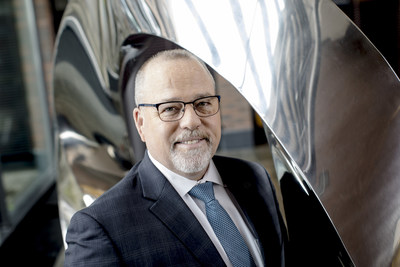
Michael S. Williams
About Michael S. Williams
Michael S. Williams, age 64, is President and Chief Executive Officer of Metallus Inc. and has served as a director since 2021; his director term expires in 2027 and he holds no board committee memberships . Under his tenure, 2024 performance included net income of $1M, adjusted EBITDA of $78M, operating cash flow of $40M, cash of $241M, total liquidity of $459M, and ~$55M of shareholder returns that reduced diluted shares outstanding by ~7.1% . Shareholders strongly supported pay practices (99% say‑on‑pay approval in 2024), and the company continues to tie long‑term incentives to relative TSR across 1-, 2-, and 3-year measurement periods, plus absolute stock price appreciation for transformation grants .
Past Roles
| Organization | Role | Years | Strategic impact |
|---|---|---|---|
| Metallus Inc. | President & CEO | Jan 1, 2021–present | Led transformation, capital returns, and liquidity; long-term incentives tied to TSR |
| Bayou Steel Group | CEO | May 2019–Sep 2019 | Led U.S. structural steel producer through short CEO tenure |
| Outokumpu Americas | President | 2015–2019 | Ran Americas unit of global stainless steel leader |
| U.S. Steel Corporation | SVP roles incl. N. American Flat Rolled; SVP Strategic Planning & BD | 2006–2015 | Senior leadership in integrated steel operations and strategy |
| Special Metals Corporation | VP Commercial Products | Earlier in career | Commercial leadership in high‑nickel alloys |
| Ormet Corporation | Chairman & CEO | Earlier in career | Led aluminum products manufacturer |
External Roles
| Organization | Role | Years | Notes |
|---|---|---|---|
| Public company boards | None | — | No other public board service |
Fixed Compensation
Multi‑year compensation (Summary Compensation Table):
| Metric | FY 2022 | FY 2023 | FY 2024 |
|---|---|---|---|
| Salary ($) | $800,000 | $827,708 | $866,667 |
| Stock awards ($) | $3,161,442 | $5,275,245 | $3,091,067 |
| Option awards ($) | $0 | $0 | $0 |
| Non‑equity incentive ($) | $600,800 | $827,708 | $257,400 |
| Change in pension/def. comp ($) | $0 | $0 | $0 |
| All other comp ($) | $41,948 | $43,195 | $45,225 |
| Total ($) | $4,604,190 | $6,973,856 | $4,260,359 |
Current/target pay rates:
| Item | 2024 | 2025 |
|---|---|---|
| Base salary rate ($) | $875,000 (effective Mar 16, 2024) | $910,000 (approved Feb 2025) |
| Target annual incentive (% of base) | 100% | 110% |
| Target LTI value ($) | $3.25M | $3.35M |
| LTI mix (CEO) | ~60% PSUs / 40% RSUs | ~60% PSUs / 40% RSUs |
Performance Compensation
Annual Performance Award (APA) design:
| Metric | Weighting | Target | Actual (CEO) | Payout mechanics |
|---|---|---|---|---|
| Adjusted EBITDA | 50% | Targeted vs plan | Part of $257,400 total FY24 APA cash payout | Factorable 0–200% by metric; Committee discretion |
| Adjusted operating cash flow | 30% | Targeted vs plan | See above | Drives working capital discipline and cash generation |
| Safety | 20% (for NEOs) | Targeted vs plan | See above | Reinforces safety culture accountability |
2024 LTI grants:
| Component | Target grant opportunity ($) | Units granted | Grant date fair value ($) | Vesting / performance |
|---|---|---|---|---|
| RSUs | Included in $3.25M target LTI | 63,400 (CEO) | $1,309,844 (CEO) | RSUs three‑year cliff; 2024 RSUs vest Mar 1, 2027 |
| Performance Shares (PSUs) | Included in $3.25M target LTI | 95,100 target (CEO) | $1,781,223 (CEO) | Relative TSR over 1, 2, 3 years within a 3‑year cycle |
Transformation Incentive Grant (Dec 15, 2023):
| Component | Units (CEO) | Notes |
|---|---|---|
| PSUs | 40,000 | Seven average price goals; none attained as of Dec 31, 2024 |
Pay‑for‑performance alignment:
- Variable pay comprises 82% of CEO’s target TDC; metrics include Adjusted EBITDA, Adjusted OCF, safety, relative TSR, and absolute stock price appreciation .
Equity Ownership & Alignment
Beneficial ownership (as of Feb 28, 2025):
| Holder | Shares beneficially owned | % of class | Pledged? |
|---|---|---|---|
| Michael S. Williams | 539,621 | 1.3% (42,107,991 shares o/s) | None pledged |
Outstanding equity awards (CEO) at Dec 31, 2024:
| Grant date | Award type | Unvested units | Market value ($) |
|---|---|---|---|
| Mar 1, 2022 | RSUs | 73,900 | $1,044,207 |
| Mar 1, 2023 | RSUs | 65,300 | $922,689 |
| Mar 1, 2023 | PSUs (target) | 98,000 | $1,384,740 |
| Dec 15, 2023 | PSUs (Transformation) | 40,000 | $565,200 |
| Mar 1, 2024 | RSUs | 63,400 | $895,842 |
| Mar 1, 2024 | PSUs (target) | 47,550 | $671,882 |
Ownership policies and instruments:
- Anti‑hedging and anti‑pledging: Short sales, options, collars, margin accounts, and pledging are prohibited; trades require pre‑clearance and are limited to window periods or approved Rule 10b5‑1 plans .
- Director ownership guidelines: Minimum 5x annual cash retainer; employee‑directors receive no director pay for board service .
- Options: No options granted since 2020; CEO shows 0 outstanding options in the beneficial ownership detail .
Vesting schedule signals:
- RSUs are three‑year cliff; 2024 RSUs vest Mar 1, 2027, with prior grants generally vesting three years from grant date (e.g., Mar 1, 2025 and Mar 1, 2026 for 2022/2023 grants) .
Employment Terms
Termination and change‑of‑control economics (as of Dec 31, 2024):
| Scenario | Cash severance ($) | Equity acceleration ($) | Other benefits ($) | Total ($) |
|---|---|---|---|---|
| Voluntary resignation | $0 | $0 | $0 | $0 |
| Termination with cause | $0 | $0 | $0 | $0 |
| Retirement | — | — | — | $0 |
| Death & disability | $0 | $3,310,659 | $0 | $3,310,659 |
| Termination without cause | $2,882,400 | $5,168,203 | $45,500 | $8,096,103 |
| Change in control | $4,632,400 | $5,591,241 | $62,500 | $10,286,141 |
Policies and protections:
- Double‑trigger vesting upon change in control; clawback policy in place; no excise tax gross‑ups; awards capped; no paying current dividends on RSUs .
Board Service, Committees, and Governance Implications
- Board service: Director since 2021; term expires 2027; committees: None; independence: as CEO, not independent; no other public boards .
- Governance structure: Chairman and CEO roles are separated; Ronald A. Rice is non‑executive chairman, presiding over board and executive sessions of independent directors; independent chairs lead Audit, Compensation, and Nominating committees .
- Director compensation: Employee‑directors receive no pay for board service; outside directors receive retainers and equity; committee chair fees apply .
- Anti‑hedging/anti‑pledging and insider trading policy require pre‑clearance and windowed trading or approved 10b5‑1 plans, mitigating misalignment and opportunistic trading risks .
Compensation Structure Analysis
- Market benchmarking and adjustments: CEO’s target total direct compensation increased in 2024 and 2025 after the Compensation Committee found it below market median vs peer data from Meridian; LTI mix remains PSU‑heavy (60/40) .
- Variable emphasis: CEO’s target pay is ~82% variable, aligned to EBITDA, cash flow, safety, relative TSR and stock price appreciation, reinforcing pay‑for‑performance .
- Equity award design: No options since 2020; use of PSUs and RSUs with three‑year cycles/cliff vesting and relative/absolute stock metrics; Transformation PSUs had no price goals attained by year‑end 2024 .
- Shareholder alignment: 99% say‑on‑pay approval and continued emphasis on profitability, cash generation, and safety for annual incentives in 2025 .
Performance & Track Record
| Metric/Item | 2024 result |
|---|---|
| Net income | $1M |
| Adjusted EBITDA | $78M |
| Operating cash flow | $40M |
| Cash | $241M |
| Total liquidity | $459M |
| Shareholder returns | ~$55M, reduced diluted shares outstanding by ~7.1% |
| Sales | $1.1B (company; included for context) |
Say‑on‑Pay & Shareholder Feedback
| Year | Approval |
|---|---|
| 2024 | ~99% support |
Committee decisions for 2025 maintained the APA focus on profitability, cash flow, and safety, and continued LTI PSU metric of relative TSR across 1‑, 2‑, and 3‑year periods, with CEO target bonus increased to 110% and LTI target to $3.35M .
Equity Ownership & Trading Signals
- Beneficial ownership: 539,621 shares (1.3% of outstanding), no pledging; prohibitions on hedging/pledging and trading pre‑clearance reduce misalignment and opportunistic selling risk .
- Near‑term vesting: RSUs are three‑year cliff; CEO’s 2022 RSUs were scheduled to vest around Mar 1, 2025; 2023 RSUs around Mar 1, 2026; 2024 RSUs vest Mar 1, 2027—potential tax‑related sales at vest are plausible but require Form 4 monitoring .
Employment & Contracts (Retention Risk)
- Severance economics: Without‑cause severance totals $8.1M; change‑in‑control totals $10.3M; double‑trigger vesting applies; clawback policy in place .
- Governance safeguards: Separate chair, independent committees, anti‑hedging/anti‑pledging, and trading windows/10b5‑1 plans bolster alignment and oversight .
Investment Implications
- Alignment and incentives: Heavy variable pay (82% target) and PSU‑dominant LTI design tied to relative TSR and cash/EBITDA metrics align CEO incentives with shareholder value creation, with strong shareholder endorsement (99% say‑on‑pay) .
- Retention and overhang: Three‑year cliff RSUs and multi‑year PSUs create retention hooks and measurable vesting events; 2022/2023/2024 RSU ladders imply periodic vest‑related supply that should be monitored via Form 4s and window periods .
- Change‑of‑control costs: CIO severance totals ($10.3M) and equity acceleration could be material in a transaction; structure is double‑trigger, reducing single‑trigger windfall risk .
- Governance: Separation of chair/CEO and independent committee leadership mitigates dual‑role concerns; strict anti‑hedging/anti‑pledging policy and pre‑clearance add discipline to insider trading conduct .
- Execution track record: 2024 results showed positive adjusted EBITDA and cash generation with capital returns and reduced dilution, consistent with transformation narrative under Williams .