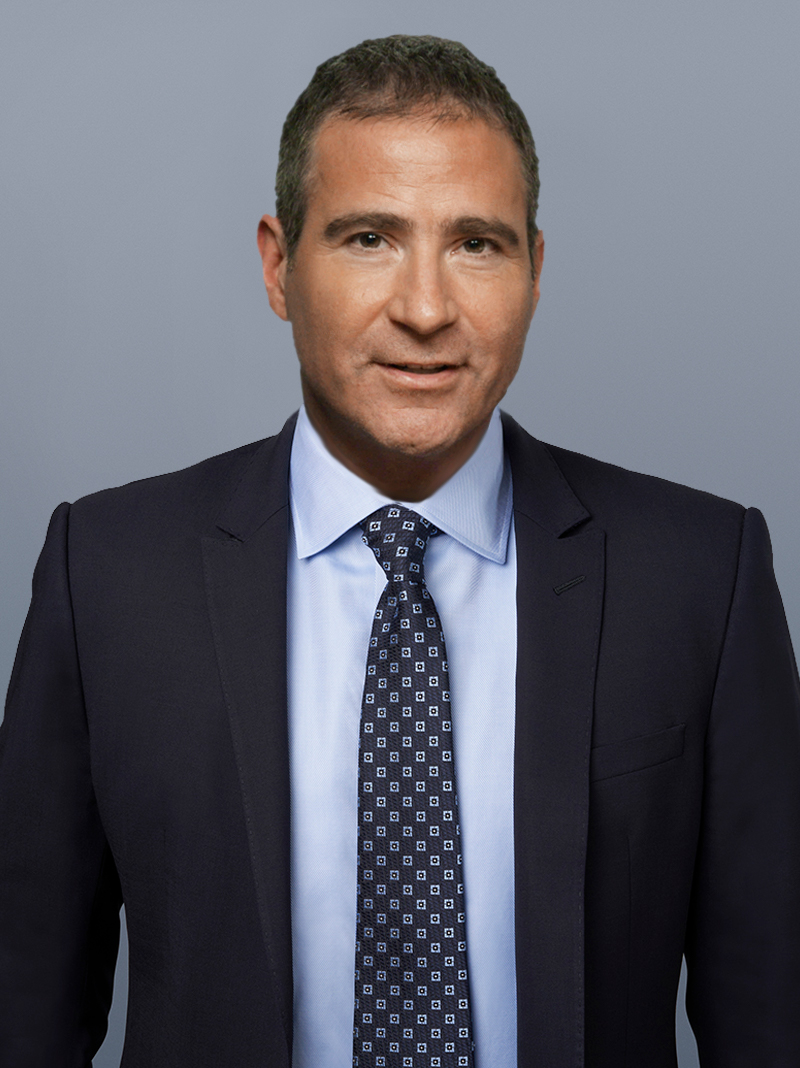
David Finkelstein
About David Finkelstein
David L. Finkelstein, age 52, is Annaly’s Chief Executive Officer and Co‑Chief Investment Officer and has served as a Director since 2020; he was appointed CEO in March 2020 and became Co‑CIO in January 2025 . He holds a B.A. in Business Administration from the University of Washington, an M.B.A. from the University of Chicago Booth School of Business, and is a CFA charterholder . Under his leadership, Annaly delivered 2024 Tangible Economic Return of 11.9% and ranked top‑quartile versus peers on Relative Tangible Economic Return; GAAP net income for 2024 was ~$1.01B, and the company highlighted 24% MSR growth, 17% Residential Credit growth, and economic leverage of 5.5x at year‑end 2024 . The Board maintains a separate Independent Chair and has determined all Continuing Directors other than Mr. Finkelstein are independent, with frequent executive sessions (11 in 2024) .
Past Roles
| Organization | Role | Years | Strategic impact |
|---|---|---|---|
| Annaly Capital Management, Inc. | Chief Executive Officer; Co‑Chief Investment Officer | CEO (Mar 2020–present); Co‑CIO (Jan 2025–present) | Led diversification across Agency, Residential Credit and MSR; drove top‑quartile 2024 relative tangible economic return and operational scaling . |
| Annaly Capital Management, Inc. | Chief Investment Officer (CIO) | Nov 2016–Dec 2021; Nov 2022–Jan 2025 | Oversaw investment strategy across cycles . |
| Annaly Capital Management, Inc. | President | Mar 2020–Dec 2022 | Executive leadership post‑internalization . |
| Annaly Capital Management, Inc. | CIO, Agency & RMBS; Head of Agency Trading | Feb 2015–Mar 2020; Aug 2013–Feb 2015 | Built and led Agency/ RMBS capabilities . |
| Federal Reserve Bank of New York | Officer, Markets Group (MBS program strategist) | 2009–2013 | Primary strategist/policy advisor for MBS purchase program . |
| Salomon Smith Barney / Citigroup / Barclays | Agency MBS trading roles | Prior to 2009 | Fixed income markets expertise . |
External Roles
| Organization | Role | Years | Notes |
|---|---|---|---|
| Treasury Markets Practice Group (FRBNY‑sponsored) | Vice Chair | Current | Industry standards and market conduct forum . |
| Federal Reserve Bank of Dallas | Financial Sector Advisory Council member | Current | External advisory role . |
Fixed Compensation
| Metric | 2022 | 2023 | 2024 |
|---|---|---|---|
| Base Salary ($) | 1,000,000 | 1,000,000 | 1,000,000 |
| Target Cash Incentive ($) | — | 7,000,000 | 7,000,000 |
| Target RSUs ($) | — | 4,000,000 | 4,000,000 |
| Target PSUs ($) | — | 4,000,000 | 4,000,000 |
Notes:
- In 2025, Annaly maintained 2024 target pay levels (no increase) and increased equity weighting and PSU mix prospectively (equity 55% of CEO total; PSUs 60% of equity) .
Performance Compensation
2024 incentive outcomes (cash and equity tied to 2024 performance; equity granted Feb 1, 2025)
| Component | 2022 | 2023 | 2024 |
|---|---|---|---|
| Variable Cash Award ($) | 5,984,000 | 7,328,100 | 8,483,650 |
| Equity Award Value for Year’s Performance ($) | 6,984,000 | 8,328,100 | 9,483,650 (RSU $4,741,825; PSU $4,741,825) |
| Total Direct Compensation ($) | 13,968,000 | 16,656,200 | 18,967,300 |
- 2024 pay mix: company indicates 95% of CEO total direct compensation was variable/performance‑based .
2024 Corporate Scorecard (determined 75% of incentive; individual 25%)
| Metric | Weight | Threshold | Target | Maximum | Actual | Multiplier |
|---|---|---|---|---|---|---|
| Relative Tangible Economic Return | 50% | 5%ile | 55%ile | 100%ile | 89%ile | 129% |
| Operating Efficiency (OpEx/Equity) | 30% | 1.60% | 1.45% | 1.30% | 1.47% | 92% |
| Market Risk (Available Financing/Equity) | 10% | 40% | 45% | 50% | 56% | 150% |
| Operational Risk (KRIs met) | 10% | 10/12 | 12/12 | N/A | 12/12 | 100% |
| Weighted Corporate Multiplier | 117% |
- Individual multiplier (CEO): 120% based on execution (e.g., 11.9% economic return; leverage 5.5x; $6.9bn available financing; 24% MSR growth; 21 securitizations/$11.0bn; $1.6bn ATM issuance) .
- Absolute Tangible Economic Return modifier added +2% (12% absolute) → final multiplier 119.75%; total 2024 incentive value $17,967,300 split 47% cash/53% equity, equity 50/50 RSU/PSU .
2024 equity grants (granted Feb 1, 2025; for 2024 performance)
| Grant | Target $ | Units | Vest/Performance |
|---|---|---|---|
| RSUs | 4,741,825 | 232,328 | Time‑based; vests in 3 equal annual installments starting Feb 1, 2026 . |
| PSUs (target) | 4,741,825 | 232,328 | 3‑yr performance period 1/1/2025–12/31/2027; 50% Relative Tangible Economic Return (with TSR governor capping at 100% if 3‑yr TSR negative), 50% Average EAD ROE; 0–150% payout across thresholds/targets . |
PSU outcomes (prior cycles)
- PSUs granted in 2022 (performance 1/1/2022–12/31/2024) paid at 125% (58th percentile Relative TER capped at 100% due to –10.79% TSR; Average EAD ROE 14.44% → 150%); CEO awarded 220,222 PSUs including dividend equivalents (target 116,048) .
2025 design changes (forward incentives)
- Scorecard applies only to cash incentives; long‑term equity generally granted at target; equity weighting increased (CEO 55% of total); PSU share increased to 60% of equity; scorecard rebalanced to 60% absolute/40% relative; Absolute TER incorporated as a metric (not a modifier). Threshold payouts widened to 50–150% .
Equity Ownership & Alignment
| Item | Detail |
|---|---|
| Beneficial ownership | 353,223 shares; <1% of outstanding . |
| Unvested RSUs at 12/31/2024 | 56,914 (2/1/2022); 123,045 (2/1/2023); 235,120 (2/1/2024) . |
| Unvested PSUs at 12/31/2024 | 276,843 (2/1/2023); 352,682 (2/1/2024); company notes PSUs shown assume 150% payout based on performance through 12/31/2024 . |
| Ownership guidelines | CEO must hold stock equal to 6x base salary; retention: must hold net shares for later of 1 year post‑vest or meeting guideline; unvested PSUs do not count . |
| Hedging/pledging | Prohibited for directors, executives and employees; no margin accounts or pledges . |
Employment Terms
| Topic | Terms |
|---|---|
| Severance (without cause) | CEO: 1.5x base salary + 1.5x target cash bonus; other NEOs: 1.25x salary + 1.25x target cash bonus; potential prorated bonus if terminated after March 31; subject to release and clawback recovery for “Detrimental Conduct” within 3 years . |
| CIC cash severance | No enhanced cash severance solely due to a change in control; no tax gross‑ups on CIC excise taxes . |
| Equity upon terminations/CIC | Death: RSUs vest; PSUs vest at target, prorated. Disability: RSUs vest; PSUs continue on actual performance, prorated. Qualifying termination: RSUs continue vesting; PSUs continue vesting based on actual performance (not prorated). CIC + involuntary termination or good reason: RSUs and PSUs vest in full; PSUs based on greater of target or actual at last quarter‑end; if awards not assumed, full vest at close . |
| Quantified CEO payouts (as of 12/31/2024) | Without cause (no CIC): $39,599,894 total; Without cause within 2 years of CIC: $39,599,894; Death: $15,276,145; Disability: $19,116,244 (includes accelerated/continued equity based on $18.30 stock price assumptions and PSU maximums for 2023/2024 grants per footnotes) . |
| Clawbacks | Dual policies: no‑fault restatement recovery (3 fiscal years) and misconduct‑based recovery (detrimental conduct) apply to cash and all equity . |
Board Governance (Director Service and Dual‑Role Implications)
- Board service and committees: Director since 2020; no committee service; serves as CEO and Co‑CIO (executive director, non‑independent) .
- Board leadership and independence: roles of CEO and Chair are separated; Independent Chair (transitioning to Thomas Hamilton in 2025); 8 of 9 Director nominees are independent; regular executive sessions (11 in 2024) .
- Attendance: Board held 11 meetings in 2024; all Directors met ≥75% attendance on Board/committees served .
- Implications: CEO also serving as Co‑CIO centralizes investment accountability but governance mitigants include separate Independent Chair, fully independent key committees (Audit, MDC, NCG), and executive sessions without management .
Compensation & Incentives Details (Design/metrics, peers, say‑on‑pay)
- Metrics/rigor: diversified metrics (Relative and Absolute Tangible Economic Return, Operating Efficiency, risk metrics); relative metrics require above‑median (≥55th percentile) for target; Maximum PSU payout 150%; TSR governor caps Relative TER PSU component at 100% if 3‑yr TSR negative .
- Peer groups: Compensation Peer Group spans mREITs and larger financials (e.g., AGNC, MFA, CIM, NYMT, AMG, AMP, BEN, CG, JEF, LAZ, VOYA, PFSI, RWT); Performance Peer Group focuses on mREITs including AGNC, ARR, DX, EFC, IVR, MFA, NYMT, ORC, RITM, RWT, TWO .
- Say‑on‑pay results: 2024 support ~63% (below prior five‑year ~88%), prompting program changes for 2024/2025 following engagement covering ~60% of institutional shares; Board recommends FOR say‑on‑pay in 2025 .
Performance & Track Record (select highlights, 2024)
- 2024 highlights: 11.9% economic return; top‑quartile relative performance; economic leverage 5.5x; $6.9bn total assets available for financing; Residential Credit lock volume $17.6bn and $11.7bn fundings; 21 whole‑loan securitizations totaling $11.0bn; MSR portfolio grew 24% to become third‑largest bulk MSR purchaser in 2024; $1.6bn common equity raised via ATM .
- Pay‑versus‑performance: company discloses CAP and five‑year TSR, GAAP net income, and Tangible Economic Return; 2024 GAAP net income ~$1.01B; five‑year disclosures show alignment features (e.g., TSR governor) .
Equity Grant and Vesting Schedules (2024 performance awards granted 2/1/2025)
| Award | Grant date | Amount ($) | Units | Vesting/performance |
|---|---|---|---|---|
| RSU | Feb 1, 2025 | 4,741,825 | 232,328 | 3 equal annual tranches starting Feb 1, 2026 . |
| PSU (target) | Feb 1, 2025 | 4,741,825 | 232,328 | 3‑yr period (2025–2027); 50% Relative TER (TSR governor); 50% Avg EAD ROE; 0–150% payout . |
Related Party Transactions, Hedging/Pledging, and Policies
- Related party transactions: Company states none since the beginning of 2024 requiring disclosure or approval under its related person transaction policy .
- Insider trading, hedging and pledging: policy prohibits trading on MNPI, hedging and pledging/margin accounts by directors, executives, and employees .
Compensation Committee Process and Advisors
- MDC Committee is fully independent; retains F.W. Cook as independent advisor; reviews peer data and stockholder feedback; conducts annual compensation risk assessment .
Say‑on‑Pay & Shareholder Feedback (actions taken)
| Topic | Feedback | Action |
|---|---|---|
| Scorecard complexity/rigor | Simplify, increase objectivity and absolute weighting | Streamlined scoring; removed scaling; rebalanced to 60% absolute for 2025; moved Operational Risk to individual assessment for 2025 . |
| Cash vs equity linkage | Apply scorecard only to cash incentives | From 2025, scorecard applies to cash; equity generally at target; reduces max outcomes and increases predictability . |
| Equity weighting and PSU mix | Increase equity/PSU proportions | CEO equity to 55% of total; PSUs to 60% of equity for all NEOs (from 50%) . |
| Threshold/maximum ranges | Increase downside/upside spread; lower threshold payout | 2024 payouts widened to 50–150% with greater chance of zero; removed scaling factor . |
Investment Implications
- Pay‑for‑performance alignment strengthened: higher equity/PSU weighting, quantitative cash scorecard, and TSR governor on PSUs should reduce asymmetric upside and better align with long‑term shareholder value creation .
- Retention and selling pressure: multi‑year RSU/PSU structures with robust ownership/holding rules and prohibitions on hedging/pledging mitigate forced‑sale risk; sizable unvested equity (time‑ and performance‑based) supports retention, though Form 4 activity should be monitored for 10b5‑1 driven sales around February vesting cycles .
- Change‑in‑control risk: double‑trigger equity acceleration and no CIC cash enhancements/gross‑ups reflect shareholder‑friendly design; quantified CEO severance scenarios indicate equity is the primary driver of potential payouts, underscoring sensitivity to share price and performance outcomes .
- Governance mitigants to dual executive roles: Separation of CEO and Independent Chair and fully independent key committees temper risks of CEO also serving as Co‑CIO; high executive‑session cadence supports oversight .
- Shareholder sentiment: 2024’s 63% say‑on‑pay signals elevated scrutiny; program modifications and 2025 disclosures should be tracked for improving support ahead of future votes .
All data are sourced from Annaly Capital Management’s 2025 and 2024 DEF 14A filings and related sections as cited above.