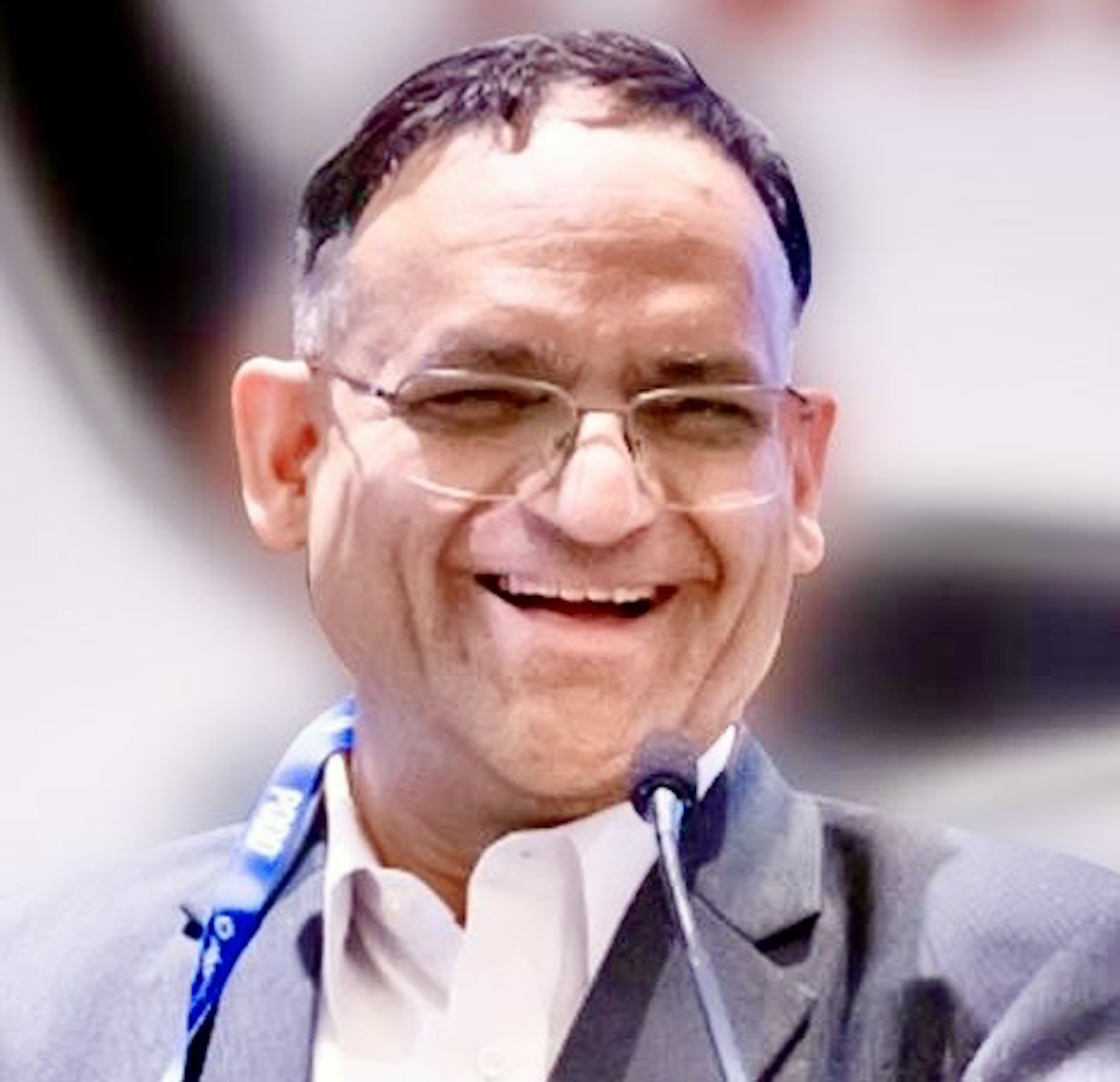
Anil Diwan
 NANOVIRICIDES
About Anil Diwan
Anil Diwan, PhD (age 66), is President and Chairman of NanoViricides, Inc. (NNVC) and has served on the board since June 2005; he has been Executive Chairman since February 2019. He holds a Ph.D. in Biochemical Engineering from Rice University (1986) and a B.S. in Chemical Engineering from IIT Bombay (1980) . Under his tenure, NNVC remains a pre-revenue clinical-stage biotech; FY2025 results showed no revenue and a net loss of $9.47M versus a $8.29M net loss in FY2024, with operating expenses rising to $9.59M (R&D $5.55M; G&A $4.04M), underscoring continued cash burn and going-concern risk .
Past Roles
| Organization | Role | Years | Strategic Impact |
|---|---|---|---|
| NanoViricides, Inc. | President; Chairman (Executive Chairman since Feb 2019) | 2005–present | Founder-leader shepherding platform and first asset NV-387 through Phase Ia/Ib; sets clinical and financing strategy . |
External Roles
| Organization | Role | Years | Strategic Impact |
|---|---|---|---|
| TheraCour Pharma, Inc. | CEO, Director | 2004–present | Controls licensor of NNVC’s core nanomedicine IP; ~90% owner; directs development and manufacturing per exclusive license to NNVC . |
| AllExcel, Inc. | CEO, Director | 1995–present | Early-stage nanomaterials R&D; part of founder’s technology ecosystem . |
Board Governance
- Board service: President and Chairman since 2005; Executive Chairman since 2019 .
- Independence and committees: Board has 4 directors, 3 independent; all committees (Audit; Compensation; Nominating & Corporate Governance) are majority/supermajority independent; Diwan is not on any committee .
- Committee roles: Audit (Chair: Brian Zucker); Compensation (Chairs: Todd Rokita); Nominating (Chair: Mak Jawadekar). Meeting cadence in FY2025: Board 4x; Audit 4x; Compensation 1x; Nominating 1x .
- Dual-role implications: Diwan is both President and Chairman; however, CEO pay is set by an all-independent Compensation Committee, with the CEO absent from deliberations, partially mitigating governance concerns .
Fixed Compensation
| Year | Base Salary ($) | Bonus ($) | All Other ($) | Total ($) |
|---|---|---|---|---|
| FY2025 | 400,000 | — | — | 449,384 (incl. stock awards below) |
| FY2024 | 400,000 | — | — | 432,498 (incl. stock awards below) |
- Employment extension (Sept 23, 2025): Term through June 30, 2026; base salary $400,000; Company-maintained $2M term life policy ($1M assigned to company); standard executive benefits .
Performance Compensation
| Component | Metric/Type | Weighting | Target | Actual/Payout | Vesting |
|---|---|---|---|---|---|
| Annual Cash Bonus | Company/individual performance | n/a disclosed | n/a | $0 FY2024–FY2025 | n/a |
| Stock Awards (FY2025) | Service-based equity | n/a disclosed | n/a | Grant-date FV $49,384 | See below |
| Stock Awards (FY2024) | Service-based equity | n/a disclosed | n/a | Grant-date FV $32,498 | See below |
Stock award detail and vesting:
- FY2026 grant: 10,204 shares of Series A Preferred to Diwan, vesting 2,551 each on Sep 30, 2025; Dec 31, 2025; Mar 31, 2026; Jun 30, 2026; non-cash comp expense recognized $10,013 in Q1 FY2026; balance $30,039 to be recognized over remaining service .
- The Series A has no public market and converts into common only upon change of control, implying limited near-term monetization/selling pressure from these awards .
Outstanding equity at FY2025 year-end:
- No outstanding options or unvested stock for Diwan as of June 30, 2025 (Outstanding Equity Awards table shows “—”) .
- 2018 Executive Equity Incentive Plan authorizes 250,000 common and 100,000 Series A preferred awards; to date, the proxy states no issuances under the plan .
Equity Ownership & Alignment
| Holder | Common Owned | % of Class | Series A Preferred Owned | % of Class | % Voting Power | Notes |
|---|---|---|---|---|---|---|
| TheraCour Pharma, Inc. | 470,961 | 2.8% | 681,859 | 75.3% | 26.7% | Diwan CEO; ~90% owner; holds voting/dispositive power . |
| Anil Diwan | 0 | <1% | 126,887 | 14.0% | 4.6% | Excludes TheraCour holdings; spouse and trust holdings disclaimed . |
| Directors & Officers (5) | 600,421 | 3.6% | 827,434 | 91.4% | 32.5% | Aggregated. |
Additional alignment considerations:
- Series A votes at 9 votes per share and converts into 3.5 common shares upon change of control, conferring significant voting influence to TheraCour and Diwan’s direct Series A holdings .
- No options outstanding for Diwan; no disclosure of pledged shares in the beneficial ownership table/footnotes; exec-directors receive no additional board pay .
Employment Terms
| Term | Detail |
|---|---|
| Role and Term | President/Executive Chairman; employment extended Sept 23, 2025 through June 30, 2026 . |
| Base Salary | $400,000 . |
| Benefits | Standard benefits; $2M term life insurance with $1M assigned to the company . |
| Equity Incentive | 10,204 Series A Preferred shares granted for FY2026; quarterly vesting through June 30, 2026 . |
| Severance | If terminated other than for cause: 6 months’ salary; continued eligibility for benefits and vesting of previously awarded options during the 6-month period; paid lump sum or installments ≤6 months . |
| Change of Control | Not specified for enhanced severance; Series A converts only upon change of control (security-level term) . |
| Clawbacks/Restrictive Covenants | Agreement includes customary reimbursement, non-disclosure, confidentiality; indemnification to maximum extent under Delaware law; no explicit clawback/non-compete details disclosed . |
Related Party Transactions (Governance Red Flags)
- TheraCour License: Perpetual exclusive field licenses; TheraCour retains exclusive right to manufacture; NNVC pays (i) development fees at cost plus up to 30% on specified direct costs, (ii) monthly G&A minimums, and (iii) 15% royalties on net sales; TheraCour may seek refundable advance payments and can terminate upon material breach (subject to cure) .
- Fees paid: TheraCour development and other costs were ~$2.49M (FY2025) and ~$2.55M (FY2024) .
- Line of Credit from Diwan: Standby facility initially $2.0M at 12% interest, collateralized by company real property and assets; increased to $3.0M and extended to March 31, 2027; no borrowings as of Sept 30, 2025 .
- Auditor Critical Audit Matter: Related party accounting deemed a CAM due to materiality and judgment; auditors tested agreements, invoices, approvals, and confirmations around related party balances and expenses .
Director Compensation (for context)
- Non-exec directors receive $25,000 cash annually (staggered: $5k in Q1–Q3 and $10k in Q4) plus $15,000 in stock; exec-directors (including Diwan) receive no additional board compensation .
Company Performance Snapshot (context for pay-for-performance)
| Metric (FY end June) | FY2024 | FY2025 |
|---|---|---|
| Revenues ($) | 0 | 0 |
| R&D Expense ($) | 5,437,297 | 5,549,101 |
| G&A Expense ($) | 3,078,814 | 4,042,544 |
| Total Operating Expenses ($) | 8,516,111 | 9,591,645 |
| Net Loss ($) | (8,294,146) | (9,466,966) |
- Clinical progress: Successfully completed Phase Ia/Ib human safety/tolerability for NV-387; advancing into multiple indications with Phase II plans (e.g., mpox, respiratory viral infections) .
Compensation Structure Analysis
- Mix and trend: Diwan’s salary held flat at $400k in FY2024–FY2025; no annual bonuses; stock award grant-date fair value increased from $32,498 (FY2024) to $49,384 (FY2025), modestly shifting pay mix toward equity but overall compensation remains largely fixed cash plus modest equity .
- Equity risk calibration: No options outstanding as of FY2025 year-end; FY2026 equity is service-vested Series A Preferred with change-of-control conversion feature and no current market—minimizing short-term selling incentives but tying upside to strategic outcomes (CoC) .
- Pay governance: CEO pay determined by an all-independent Compensation Committee; CEO excluded from deliberations .
Vesting Schedules and Insider Selling Pressure
| Award | Instrument | Grant | Vesting | Liquidity Considerations |
|---|---|---|---|---|
| FY2026 CEO Award | Series A Preferred (10,204 sh) | 7/1/2025 | 2,551 quarterly on 9/30/25; 12/31/25; 3/31/26; 6/30/26 | No public market; conversion only upon change of control; low near-term sell pressure . |
| Outstanding Awards at 6/30/2025 | — | — | None (no options/unvested stock) | No embedded forced selling overhang as of FY2025 YE . |
Note: The proxy’s equity plan indicates no issuances “to date” under the 2018 plan; the company nonetheless has granted Series A awards, suggesting use outside the plan’s stated pool .
Risk Indicators and Red Flags
- Going concern: Cash $1.56M at 6/30/2025; ATM raised ~$1.25M in Q1 FY2026; management states substantial doubt about going concern without additional capital .
- Related party dependence: Manufacturing and development controlled by TheraCour; material development fees; Diwan’s 90% ownership of TheraCour; auditor CAM on related party accounting .
- Concentrated voting power: Series A super-voting (9 votes/share) and TheraCour holdings confer significant influence; Diwan has voting/dispositive control over TheraCour’s shares .
- Leadership entrenchment optics: Dual role (President + Chairman) and spouse as CFO; mitigated partly by independent committees and process .
Equity Ownership Guidelines, Pledging, Hedging
- The 2025 DEF 14A does not disclose stock ownership guidelines for executives/directors, nor any pledging/hedging arrangements for Dr. Diwan; the beneficial ownership table/footnotes do not reference pledges .
Say-on-Pay and Shareholder Feedback
- 2025 meeting agenda includes advisory vote on executive compensation; results not provided in the DEF 14A (filed pre-meeting) .
Investment Implications
- Alignment: Diwan’s direct equity value is primarily in Series A Preferred that converts on change of control, aligning incentives to strategic value-creation or sale rather than near-term stock sales; lack of outstanding options/unvested common further lowers short-term sell pressure .
- Governance/related-party risk: Control and economics tied to TheraCour (where Diwan is 90% owner) present conflict potential around fees, manufacturing control, and IP; auditor CAM emphasizes oversight complexity—this is a material diligence point for investors .
- Performance/pay balance: With no revenue and sustained losses, fixed cash salary ($400k) and modest equity grants create an arguably conservative cost profile, but the absence of explicit, disclosed performance metrics/targets for bonuses/long-term incentives reduces transparency on pay-for-performance rigor .
- Liquidity/financing: Going-concern disclosure and reliance on ATM/related-party credit underscore financing risk; line of credit from Diwan (unused, 12% rate, collateralized) provides optionality but also concentrates influence .
- Net view: Founder-inventor leadership and clinical progress are positives; however, concentrated voting power and extensive related-party structure elevate governance and execution risk. Position sizing should reflect binary clinical/regulatory catalysts and financing runway constraints .