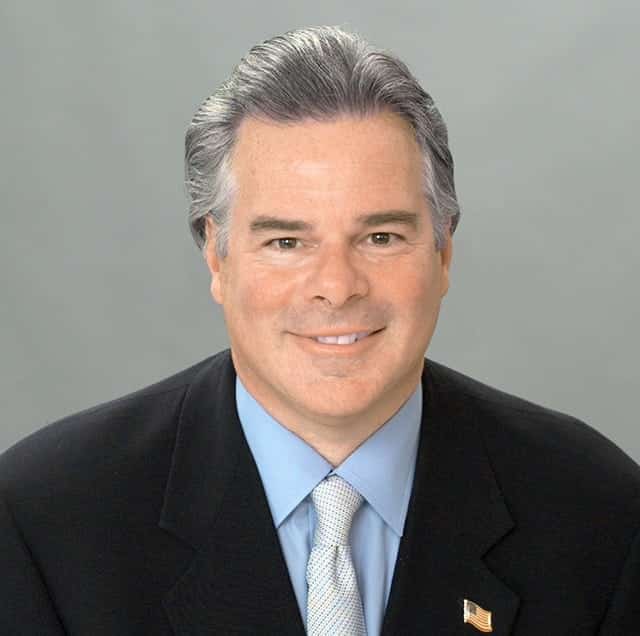
Richard Soloway
About Richard Soloway
Richard L. Soloway is Chairman, Chief Executive Officer, and Secretary of NAPCO Security Technologies, Inc. (NSSC). He is 79 years old, has served as a director since 1972, Chairman since October 1981, CEO since 1998, and Secretary since 1975 . Company performance under his tenure in recent years shows strong operational metrics and shareholder outcomes on the SEC “Pay vs Performance” table: FY2025 TSR value of $259.49 (vs Nasdaq Composite peer group $202.51), Net Revenues of $181.6M, Adjusted EBITDA of $52.1M, and Net Income of $43.4M; FY2024 TSR $449.40, revenues $188.8M, Adj. EBITDA $58.4M, Net Income $49.8M; FY2023 TSR $298.22, revenues $170.0M, Adj. EBITDA $34.3M, Net Income $27.1M .
| Metric (FY) | 2023 | 2024 | 2025 |
|---|---|---|---|
| Company TSR ($100 basis as of 6/30/2020) | $298.22 | $449.40 | $259.49 |
| Peer TSR (Nasdaq Composite) | $137.07 | $176.29 | $202.51 |
| Net Revenues ($000s) | $169,997 | $188,820 | $181,621 |
| Adjusted EBITDA ($000s) | $34,295 | $58,394 | $52,126 |
| Net Income ($000s) | $27,127 | $49,818 | $43,406 |
Past Roles
| Organization | Role | Years | Strategic Impact |
|---|---|---|---|
| NAPCO Security Technologies | Director | 1972–present | Longest-serving board member; deep institutional knowledge |
| NAPCO Security Technologies | Chairman | 1981–present | Board leadership; sets strategic agenda |
| NAPCO Security Technologies | CEO | 1998–present | Overall strategy and execution |
| NAPCO Security Technologies | Secretary | 1975–present | Corporate governance/records |
External Roles
| Organization | Role | Years | Notes |
|---|---|---|---|
| — | — | — | During the past five years, no other public company directorships were disclosed for NSSC directors (includes Soloway) |
Fixed Compensation
Summary Compensation Table (select years)
| Component ($) | FY2023 | FY2024 | FY2025 |
|---|---|---|---|
| Base Salary | 904,778 | 923,543 | 960,920 |
| Annual Bonus (cash) | 226,395 | 834,237 | 726,621 |
| Option Awards (grant-date fair value) | 133,600 | — | — |
| All Other Compensation | 74,435 | 64,465 | 47,362 |
| Total | 1,339,208 | 1,822,245 | 1,734,903 |
Notes:
- FY2025 “All Other” for Soloway includes health/life insurance $35,902, auto expenses $6,885, and 401(k) match $4,575 .
- No stock options were granted to any executive officer in FY2025 .
Performance Compensation
Annual Cash Incentive Plan Design
| Element | Metric | Weighting | Target | Actual | Payout | Vesting |
|---|---|---|---|---|---|---|
| Annual Bonus | Discretionary, based on CEO/Committee judgment (no preset formula disclosed) | Not disclosed | Not disclosed | Individual bonuses as shown in SCT | Paid in cash | N/A |
Long-Term Incentives (Stock Options) – Outstanding/vesting detail for Soloway
| Tranche | Exercisable | Unexercisable | Exercise Price | Expiration | Noted Vesting Milestones |
|---|---|---|---|---|---|
| Options | 80,000 | 20,000 | $22.50 | 10/18/2031 | 20,000 vest on 10/19/2025 |
| Options | 6,000 | 4,000 | $26.94 | 8/24/2032 | 2,000 vested 8/25/2025; remaining vest 8/25/2026 |
General plan features: Options typically vest 20% at grant and 20% on each of the next four anniversaries; FY2024 grants followed this schedule; FY2025 had no executive option grants .
Equity Ownership & Alignment
| Item | Detail |
|---|---|
| Total Beneficial Ownership | 1,514,010 shares (as of Oct 17, 2025) |
| Ownership % of Common Stock | 4.23% (based on 35,658,900 shares outstanding plus 60-day dilutive rights) |
| Shares Right-to-Acquire within 60 Days | 108,000 shares |
| Section 16 Filings | No CEO delinquent filings reported for FY2025 (one late Form 4 by another officer noted) |
Insider selling/vesting pressure watch:
- 20,000 options vesting on 10/19/2025 and 2,000 options vesting on 8/25/2026 could create incremental sellable supply upon vesting .
- On a hypothetical change-in-control as of 6/30/2025, 24,000 unvested options would accelerate, with estimated value $154,900 at $29.69 per share reference price .
Employment Terms
| Term | Key Provisions |
|---|---|
| Agreement & Term | Employment agreement dated June 26, 2003; initial 5-year term, continues year-to-year unless terminated with ≥6 months’ notice |
| Base Pay & Incentive | Provides for minimum annual salary adjusted for inflation and discretionary annual incentive |
| Non-Compete | During employment and 1 year post-termination for any reason |
| Severance (No Cause/Good Reason) | Lump sum = 3x (annual salary + prior year bonus) |
| Change-in-Control (CIC) | Right to terminate and receive 299% of the average total compensation over prior 5 calendar years (subject to limits); unvested options accelerate upon CIC |
| Illustrative Payouts (as of 6/30/2025) | Death: $1,699,867; Disability: $576,552; No Cause/Good Reason: $5,062,623; CIC: $5,082,602; Accelerated options: 24,000 with value $154,900 at $29.69 |
| Clawback | Incentive Compensation Clawback Policy compliant with Exchange Act 10D/Nasdaq; applies to Section 16 officers for 3 completed fiscal years prior to a required restatement; no misconduct needed for recovery |
Board Governance
- Structure and independence: Board has seven directors; four are independent (Rick Lazio, David Paterson, Robert A. Ungar, Andrew J. Wilder). All three standing committees (Audit, Compensation, Nominating) consist entirely of independent directors .
- Leadership: Roles of CEO and Chairman are combined (Soloway) and the Board has not appointed a Lead Independent Director .
- Committee roles:
- Compensation Committee: Rick Lazio (Chair), David A. Paterson, Andrew J. Wilder; CEO attends by invitation but is excluded from executive sessions; no compensation consultant engaged; three meetings in FY2025 .
- Audit Committee: Andrew J. Wilder (Chair; audit committee financial expert), Rick Lazio, Robert A. Ungar; five meetings in FY2025 .
- Nominating Committee: Robert A. Ungar (Chair), David Paterson, Andrew J. Wilder; one meeting in FY2025 .
- Board activity: Board held six meetings in FY2025; all directors attended ≥75% of Board/committee meetings .
- Election cycle: Soloway nominated to serve until the Annual Meeting following FY2028; Director since 1972 .
- Family relationship: Donna A. Soloway (director) is the spouse of Richard L. Soloway .
Compensation Structure Analysis
- Mix and benchmarking: Program components include base salary, annual discretionary bonuses, time-vested stock options, benefits, and perquisites; the Committee did not conduct formal competitive pay benchmarking in FY2025 and engaged no compensation consultant .
- Pay-for-performance: Annual bonuses are discretionary rather than formulaic against disclosed metrics, which can weaken explicit pay-performance alignment; however, SEC “compensation actually paid” analysis and TSR/net income trends provide context for realized outcomes .
- Option practices: No options granted to executives in FY2025 (reduces near-term dilution); outstanding CEO options vest on scheduled dates, creating identifiable windows for potential selling pressure .
- Governance flags: Combined CEO/Chair roles without a Lead Independent Director and a spouse on the board elevate independence concerns despite committee independence .
Investment Implications
- Alignment and skin-in-the-game: Soloway’s 4.23% beneficial stake (1.51M shares) plus 108,000 near-term exercisable rights indicate substantial equity alignment, which is generally shareholder-friendly .
- Potential overhang: Known option vesting dates (20,000 on 10/19/2025; 2,000 on 8/25/2026) and CIC acceleration mechanics define windows for possible insider supply, though FY2025 had no new grants .
- Retention and CIC economics: Robust severance (3x salary+bonus) and a 299% CIC benefit create strong retention but also meaningful change-in-control costs to consider in M&A scenarios .
- Governance risk/mitigation: Independence risk stems from combined CEO/Chair and spouse on the board, partly offset by fully independent key committees, executive sessions without the CEO, and an Exchange Act 10D-compliant clawback policy .
- Performance backdrop: Multi-year TSR and profitability metrics have been strong in recent years, supporting the case for realized pay outcomes; investors should monitor any shift toward more formulaic performance metrics in cash incentives to reinforce pay-for-performance rigor .