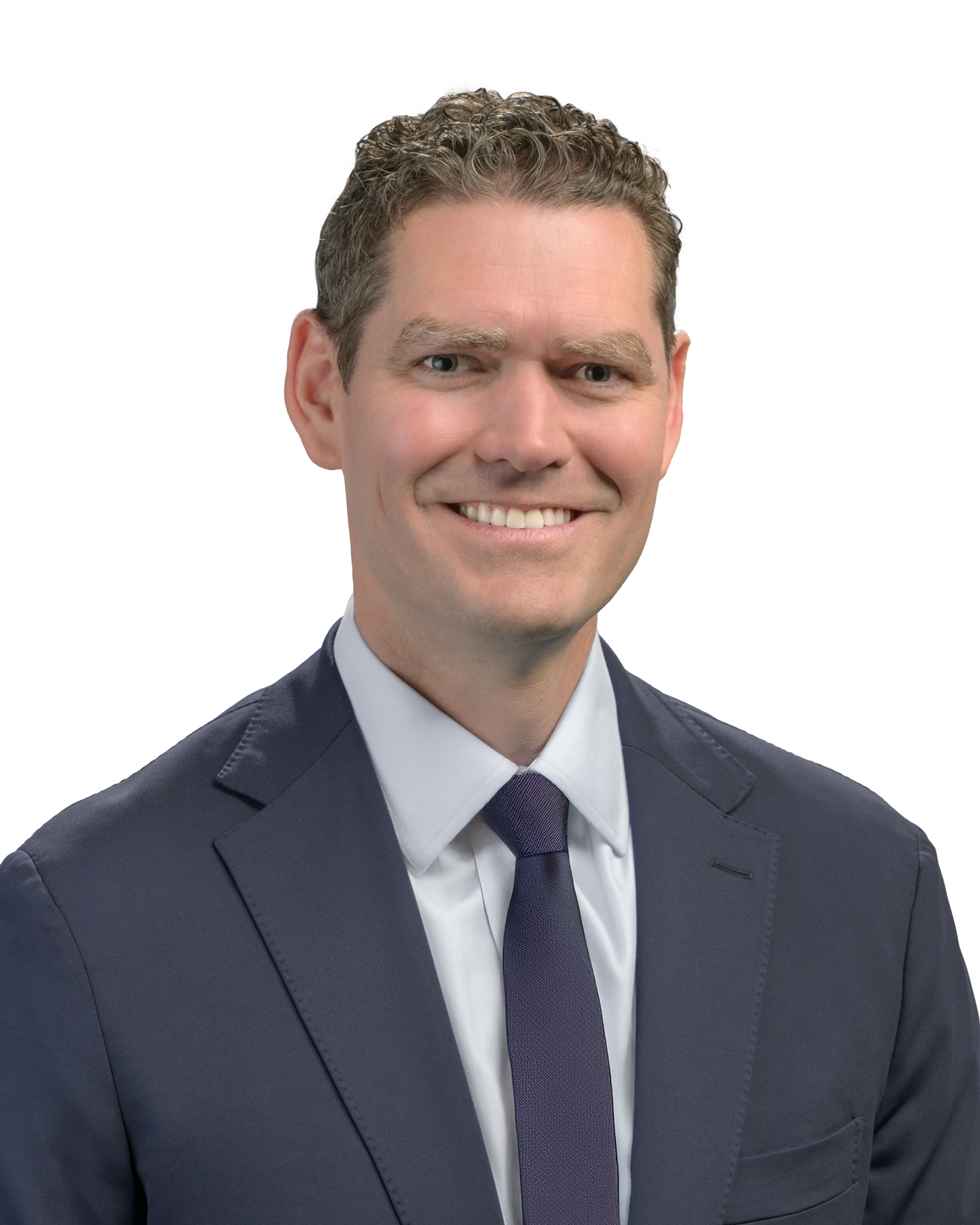
Justin Palfreyman
 Northwest Natural Holding
About Justin Palfreyman
Justin B. Palfreyman, age 46, is President and Chief Executive Officer of NW Holdings and Chief Executive Officer of NW Natural, effective April 1, 2025; he joined the Board as a Class I director (no board committees) in 2025. He holds a BBA (Pacific Lutheran University), an MBA (University of Chicago Booth), and an MPP (University of Chicago Harris) . Under his senior leadership roles, NW Holdings reported 2024 adjusted EPS of $2.33 and advanced key initiatives including ~10,000 net utility connections, ~$394.4M of system investments, rate case progress, and RNG execution; the Organization & Executive Compensation Committee (OECC) recognized below-target 3‑year TSR in LTI decisions, aligning payouts accordingly . In Q1 2025, management reported adjusted EPS of $2.28 vs. $1.69 in the prior-year quarter, citing rate case benefits and growth across businesses .
Past Roles
| Organization | Role | Years | Strategic impact |
|---|---|---|---|
| NW Holdings/NW Natural | President (NW Holdings & NW Natural) | May 2023 – Mar 2025 | Successor development; advanced strategy, regulatory and growth initiatives across gas, water, and renewables . |
| NW Holdings/NW Natural | CEO (NW Holdings); CEO (NW Natural) | Apr 2025 – Present | Overall leadership; principal intermediary with independent directors; execution across utilities and renewables . |
| NW Natural | SVP, Strategy & Business Development | Feb 2023 – May 2023 | Corporate strategy and BD leadership . |
| NW Natural | VP, Strategy & Business Development | 2016 – 2023 | Strategy, M&A and growth initiatives . |
| Lazard Frères & Co. | Director, Power, Energy & Infrastructure | 2009 – 2016 | Strategic/financial advisor on energy M&A and financing . |
| Goldman Sachs | Associate, Infrastructure Investment Banking | Pre‑2009 | Investment banking coverage on infrastructure . |
| Apex Learning; Accenture | Finance/Strategy/BD roles | Prior | Early career roles in finance and strategy . |
External Roles
| Organization | Role | Years | Notes |
|---|---|---|---|
| CASA for Children (Multnomah, Washington, Columbia, Tillamook Counties) | Board member (past President) | Current | Non-profit board service . |
Board Governance
- Board service: Class I director since 2025 (term to 2027); no committee assignments .
- 2025 election result (Annual Meeting May 22, 2025): For 30,144,347; Withheld 478,947; Broker non-votes 4,559,602 .
- Governance structure: Independent Chair; Chair and CEO roles separated; audit, governance, and OECC committees comprised entirely of independent directors; regular executive sessions of non-management directors .
- Dual-role implications: As CEO and director, he is not independent; however, the independent Chair structure and independent committees mitigate independence concerns .
Fixed Compensation
Multi-year compensation (Summary Compensation Table):
| Year | Salary ($) | Bonus ($) | Stock Awards ($) | Non-Equity Incentive Plan ($) | Change in Pension Value & NQDC Earnings ($) | All Other ($) | Total ($) |
|---|---|---|---|---|---|---|---|
| 2022 | 359,500 | 86,227 | 350,327 | 130,773 | 448 | 45,777 | 973,052 |
| 2023 | 476,958 | 183,371 | 386,701 | 265,629 | 402 | 53,999 | 1,367,060 |
| 2024 | 619,792 | 222,079 | 763,989 | 349,921 | 120 | 74,636 | 2,030,537 |
Notes: Company indicates no employment contracts; compensation design emphasizes pay-at-risk .
Performance Compensation
Executive Annual Incentive Plan (EAIP) design and 2024 results:
| Component | Weighting | 2024 Target | 2024 Actual/Outcome | Payout mechanics |
|---|---|---|---|---|
| Company Performance Factor: Net Income | 71.43% of the 70% Company factor | Adjusted NI target: $88,736,712 | Adjusted NI: $90,631,155 → 122.87% factor | Interpolated to 0–175% scale . |
| Company Performance Factor: Operations | 28.57% of the 70% Company factor | Multi-metric ops goals | 92.73% factor (aggregate) | 0–175% capped . |
| Priority/Individual (incl. ROIC) | 30% | NEO-specific goals | NEO average 154.14% | CEO/Board evaluation framework . |
| Justin Palfreyman – EAIP Award | Target 70% of base ($437,500) | — | 131% of target; $572,000 paid in 2025 | Max award 175% of target . |
Long-Term Incentives (LTI) – structure and 2024 grants:
| Element | 2024 Target Mix | Metric(s) | Key Vesting/Threshold | Justin 2024 Grant Detail |
|---|---|---|---|---|
| Performance Shares (PSUs) | ~65% of LTI | 3-year cumulative EPS; ±25% TSR modifier; ROIC threshold | Earned over 2024–2026; PSU vesting based on metrics | Target 12,760 sh; Threshold 3,828; Max 25,520; Grant-date FV $496,874 . |
| RSUs (with performance threshold) | ~35% of LTI | ROE > 5-yr avg cost of long-term debt threshold | 25% annually on Mar 1 over 4 years if threshold met | 6,872 RSUs; Grant-date FV $267,115; Grant date 2/21/2024 . |
| Prior cycle PSU payout | — | — | 2022–2024 PSU cycle paid at 71.60% of target (earned but unpaid at FY-end; plus dividend equivalents) | — |
Governance overlays: OECC applied discretion to align pay with below-target 3‑year TSR by reducing certain long-term incentive payments by 25% (i.e., executives received 75% of awards otherwise earned) .
Equity Ownership & Alignment
Beneficial ownership (as of 12/31/2024):
| Holder | Beneficial Shares | Notes |
|---|---|---|
| Justin B. Palfreyman | 16,095 (<1% of outstanding) | Includes 12,543 directly and 3,552 RSUs vesting within 60 days; excludes 7,209 unvested RSUs . |
Outstanding equity awards at 12/31/2024 (selected lines for Palfreyman):
| Type | Count (#) | Market/Value ($) | Notes |
|---|---|---|---|
| RSUs not vested (series 1) | 487 | 19,266 | — |
| RSUs not vested (series 2) | 639 | 25,279 | — |
| RSUs not vested (series 3) | 708 | 28,008 | — |
| RSUs not vested (series 4) | 1,718 | 67,964 | — |
| PSUs unearned (series A) | 36,030 | 1,425,347 | Equity incentive plan awards. |
| PSUs unearned (series B) | 639 | 25,279 | Equity incentive plan awards. |
| PSUs unearned (series C) | 1,416 | 56,017 | Equity incentive plan awards. |
| PSUs unearned (series D) | 5,154 | 203,892 | Equity incentive plan awards. |
Ownership policies and alignment:
- Executive stock ownership guidelines: CEO 5x salary; President 4x; SVP/NEO 2x–3x; attainment expected within five years; Board found NEOs have achieved or are making appropriate progress (Feb 2025 review) .
- Hedging and pledging: Prohibits short sales, derivatives, zero-cost collars; restricts pledging/margin arrangements for directors and executive officers .
- Equity grant practices: No stock options granted; no intention to grant options; no dividends on unearned awards .
Deferred compensation (2024):
- Company contributions to DCP for Palfreyman: $34,888; aggregate earnings $4,196; year-end balance $113,394 .
Vesting cadence and potential selling pressure indicators:
- RSUs generally vest 25% each March 1 for four years, only if the ROE threshold is met; unvested tranches forfeited if threshold not met for that year .
- PSU cycles are three years (e.g., 2023–2025, 2024–2026), with vesting based on EPS, ROIC threshold, and relative TSR modifier; 2022–2024 payout at 71.60% of target .
Employment Terms
| Term | Detail |
|---|---|
| Employment agreement | Company indicates “No employment contracts” for executives . |
| Change-in-control (CIC) | Double-trigger; no excise-tax gross-ups . |
| Severance multiple (CIC) | 2x final annual salary + target annual incentive for Palfreyman (2.5x for former CEO) . |
| Insurance continuation (CIC) | Two years of life and health benefits (present value used in estimates) . |
| Equity acceleration (CIC) | Unvested RSUs vest; PSUs accelerate per terms; amounts valued at $39.56 and include dividend equivalents . |
| Estimated CIC payout (12/31/2024 scenario) | Cash $2,125,000; Insurance $55,023; RSU acceleration $453,385; PSU acceleration $758,056; Total $3,391,464 . |
| Other terminations | On death/disability (or qualifying retirement + one-year hold), RSUs payable if threshold met; estimated value for Palfreyman: $484,277 (as of 12/31/2024) . |
| Clawback | Compensation Recovery Policy applies to annual and long-term incentive awards upon material restatement . |
Director and Shareholder Votes (context)
| Proposal (2025 Annual Meeting) | For | Against | Abstain | Broker Non-Votes |
|---|---|---|---|---|
| Election – Justin B. Palfreyman (Class I, term to 2027) | 30,144,347 | 478,947 | — | 4,559,602 |
| Reapprove/Amend Long Term Incentive Plan | 28,478,915 | 2,004,285 | 140,094 | 4,559,602 |
| Say-on-Pay (advisory) | 29,310,087 | 1,146,255 | 166,952 | 4,559,602 |
Compensation Structure Analysis
- Pay mix emphasizes at‑risk incentives: LTI up to ~54% of CEO total direct compensation; other NEOs average ~42% LTI; RSUs and PSUs comprise 100% of LTI equity with performance conditions .
- Annual plan (EAIP) ties 70% to Company factors (Net Income 71.43% weight; Operations 28.57%) and 30% to individual/ROIC; 2024 NI over target and operations below target yielded a 126.40% average NEO payout driver .
- Long-term alignment levers: 3‑year EPS target with ROIC threshold and TSR modifier; 2022–2024 PSU payout at 71.60% of target; OECC applied discretionary 25% reduction to certain LTI given below-target 3‑year TSR to reinforce pay-for-performance .
- No options, no gross-ups, double-trigger CIC; hedging/pledging restricted—factors generally supportive of shareholder-aligned design .
Investment Implications
- Alignment: Strong pay-at-risk orientation (annual and long-term) tied to earnings, ROIC, and relative TSR, plus RSU performance thresholds (ROE > cost of LTD) reduce misalignment risk; 2022–2024 PSU payout at 71.60% and OECC’s discretionary downward LTI adjustment for below-target TSR signal discipline .
- Vesting/selling cadence: RSUs vest March 1 annually when threshold is met; combined with multiple unvested RSU series and PSU cycles, expect periodic vesting-driven liquidity windows each spring, potentially creating episodic selling pressure depending on 10b5‑1 plans and window availability .
- Retention/CIC economics: Double‑trigger CIC with ~2x cash multiple and full RSU acceleration (and PSU treatment) creates meaningful retention during strategic events without single-trigger optics; no gross-ups mitigate shareholder concerns .
- Ownership: Beneficial holdings are <1% but governance requires 4x salary ownership level for President/CEO track; Board deems NEOs compliant or on track; hedging prohibited and pledging restricted .
- Governance checks: Independent Chair, independent key committees, clean practices (no options/repricing, clawback) and solid say-on-pay support provide oversight while the CEO’s simultaneous board seat is balanced by structure and practice .