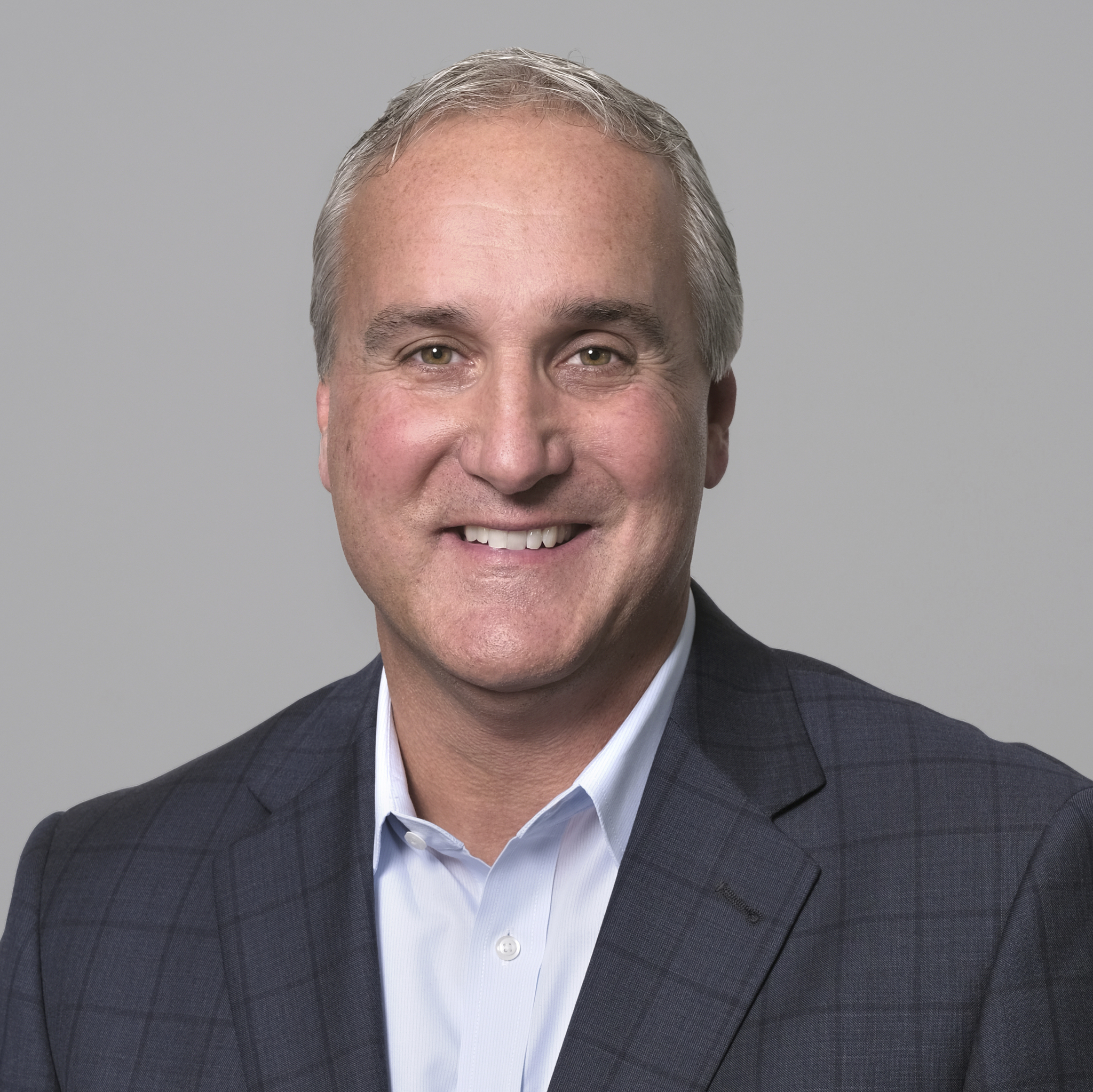
Brian Chambers
 Owens Corning
About Brian Chambers
Brian D. Chambers, 58, is Board Chair, President, and CEO of Owens Corning (OC). He became CEO in 2019 and was elected Chair in 2020 after more than two decades of leadership roles across the company’s Roofing and Composites businesses, with earlier commercial/operational roles at Saint Gobain, Honeywell, and BOC Gases . Under his leadership, OC delivered 2024 net sales of $11.0 billion and record adjusted EBIT while sustaining 20%+ adjusted EBITDA margins for 18 consecutive quarters; in 2025, OC reported adjusted EBITDA margins from continuing operations of 26% in Q2 and 24% in Q3 despite softening markets . Long-term incentives tied to TSR, return on capital, and free cash flow conversion paid strongly for the 2022–2024 cycle (TSR at the 93rd percentile and ROC at 200% payout), evidencing alignment of pay with multi‑year value creation .
Past Roles
| Organization | Role | Years | Strategic Impact |
|---|---|---|---|
| Owens Corning | Board Chair, President & CEO | 2020–present (Chair), 2019–present (CEO) | Enterprise strategy and portfolio transformation (Masonite acquisition), sustained high margins, capital allocation . |
| Owens Corning | President & COO | 2018–2019 | Enterprise execution and operational alignment pre-CEO transition . |
| Owens Corning | President, Roofing | 2014–2018 | Grew branded products and market positions in Roofing . |
| Owens Corning | VP & GM, Roofing | 2013–2014 | Business leadership and margin improvement in Roofing . |
| Owens Corning | VP & GM, Composites | 2011–2013 | Global operations leadership and portfolio optimization in Composites . |
| Saint Gobain; Honeywell; BOC Gases | Commercial & operational roles | Pre-2011 | Broadened manufacturing, commercial, and operations expertise . |
External Roles
| Organization | Role | Years | Notes |
|---|---|---|---|
| Lincoln Electric Holdings (LECO) | Director; Audit & Finance Committee member | Feb 2022–present | Public industrial board experience broadens finance/strategy perspective . |
| Business Roundtable; National Association of Manufacturers | Member; Director | Ongoing | Policy, manufacturing advocacy; governance/strategy exposure . |
| Ohio Business Roundtable | Executive Committee | Ongoing | Regional economic/industry leadership . |
| Joint Center for Housing Studies (Harvard) | Policy Advisory Board (Exec Committee) | Ongoing | Sector insights relevant to housing end markets . |
Fixed Compensation
| Element (2024) | Value |
|---|---|
| Base Salary | $1,250,000 |
| Target Annual Incentive (CIP) | 150% of base salary |
| Actual Annual Incentive Paid | $2,920,313 (reflects corporate and individual components) |
Performance Compensation
2024 Annual Incentive (CIP) – Structure and Outcomes
- Weighting: 75% corporate (EBIT metrics) + 25% individual performance .
- Corporate components and 2024 results:
| CIP Metric | Threshold (0%) | Gate 1 (50%) | Target (100%) | Max (200%) | 2024 Actual | Funding | Weight |
|---|---|---|---|---|---|---|---|
| Consolidated Adjusted EBIT (ex-Doors) | $1,283mm | $1,454mm | $1,710mm | $2,138mm | $1,949mm | 156% | 40% |
| Roofing EBIT | $848mm | $961mm | $1,130mm | $1,300mm | $1,298mm | 199% | 20% |
| Insulation EBIT | $454mm | $514mm | $605mm | $756mm | $682mm | 151% | 20% |
| Composites EBIT | $165mm | $187mm | $220mm | $286mm | $215mm | 93% | 20% |
| Total Corporate Funding | 151% |
- CEO’s 2024 individual-performance component paid $796,875 within a maximum opportunity of $937,500, reflecting the Board’s assessment against goals in safety/sustainability, financial performance (record adjusted EBIT), balance sheet/capital allocation, strategy and M&A, talent, and board leadership .
Note: Beginning 2025, the annual incentive metric changes from adjusted EBIT to adjusted EBITDA to better reflect operating performance post portfolio changes .
Long-Term Incentives (LTI) – Design and Awards
- Mix and vesting: 40% RSUs (three-year graded, one-third per year); 60% PSUs across three metrics (TSR, adjusted ROC, adjusted FCFC), each on a three-year performance cycle; payouts 0%–200% .
- CEO LTI grant value: $7,500,000 in 2024; 2025 grants sized at $3,600,000 RSUs and $5,400,000 PSUs (total $9,000,000) reflecting 2024 performance .
Performance metric details:
- TSR PSUs: Threshold 25th percentile (0%), Target 50th (100%), Max 75th (200%); payout capped at 100% if absolute TSR is negative .
- ROC PSUs (2024–2026): Threshold 8.5%, Target 17%, Max 20% adjusted ROC; straight-line interpolation .
- FCFC PSUs (2024–2026): Threshold 75%, Target 96%–100%, Max 110% adjusted FCFC; straight-line interpolation .
Realized LTI (2012–2024 cycle payout example):
- 2022–2024 TSR at the 93rd percentile (200% payout); ROC at 200%; FCFC at 118% (three-year performance: 107.9%, 94.0%, 93.9%) .
Equity Ownership & Alignment
| Item | Amount / Detail |
|---|---|
| Common Stock Beneficially Owned (2/18/2025) | 260,571 shares |
| Unvested RSUs | 50,018 units (no voting power) |
| Total (shares + RSUs) | 310,589 |
| Company Shares Outstanding (2/18/2025) | 85,537,231 |
| Ownership as % of Outstanding | ≈0.31% (260,571/85,537,231; derived from ) |
| Stock Ownership Guidelines | CEO 6x base salary; NEOs in excess of guidelines as of the proxy date |
| Hedging/Pledging | Company maintains anti-hedging and anti-pledging policies |
| Insider Trading Controls | Window-period trading and pre-clearance for executives/directors |
Notes: The proxy’s beneficial ownership table does not indicate any pledged shares for Mr. Chambers and excludes outstanding PSUs, which have performance risk and no voting power .
Employment Terms
- Severance Agreements: Provide up to two years of pay and benefits for qualifying terminations; payments made in cash over 24 months; health coverage provided in kind .
- Change in Control: Double-trigger only (payment upon qualifying termination in connection with a change in control) .
- Deferred Compensation: Nonqualified plan allows deferral of base salary/CIP; 401(k) restoration match; accounts are unfunded and track designated investment benchmarks or company stock .
- Clawback/Policy Framework: Clawback policy; robust insider trading restrictions; ethics codes for senior officers and directors .
Board Governance
- Role and Service: Director since 2019; Chair since 2020; serves as Chair of the Executive Committee; not independent by virtue of CEO role .
- Dual-Role Implications: Board explicitly supports combined Chair/CEO structure based on sustained performance and information flow, balanced by a robust Lead Independent Director model and fully independent committees; independent directors hold executive sessions at every regular board and committee meeting .
- Lead Independent Director: Suzanne P. Nimocks (through the 2025 Annual Meeting); Edward F. Lonergan to serve a two-year term as Lead Independent Director thereafter .
- Committee Independence & Attendance: Audit, Compensation, Finance, and Governance committees are 100% independent; in 2024 the Board met eight times and all directors attended ≥75% of their meetings; non-management directors met in executive session five times .
Performance & Track Record
| Indicator | Evidence |
|---|---|
| 2024 Enterprise Performance | Net sales $11.0B; record adjusted EBIT; 18th consecutive quarter of >20% adjusted EBITDA margin . |
| Shareholder Returns & Capital Allocation | Returned $638M to shareholders in 2024; increased dividend for 11th consecutive year . |
| 2025 Execution | Q2’25 adjusted EBITDA margin 26%; Q3’25 adjusted EBITDA margin 24% from continuing operations; managed through market softness; recorded non-cash Doors impairment amid weak near-term demand . |
| Portfolio & Synergies | Doors (Masonite) integration on track; targeting >$125M enterprise cost synergies by mid-2026 and an additional $75M structural cost savings; progressing divestiture of glass reinforcements . |
| Governance & Say-on-Pay | 2024 say-on-pay support >87%; ongoing investor outreach emphasized alignment and transparency . |
Compensation Structure Analysis
- Pay-for-performance skew: Approximately 88% of CEO target compensation is “at risk,” with a heavy LTI tilt (71% of total) and multi-year metrics (TSR, ROC, FCFC) that directly link to value creation; annual metrics are moving to adjusted EBITDA in 2025 to better reflect operating performance .
- RSU vesting shift: 2024 awards shifted to a three-year graded vest (from four-year), modestly increasing near-term equity liquidity for executives, which can elevate calendar-based selling windows as new cycles vest annually .
- Strong long-cycle results: Maximum PSU payouts for ROC and TSR in the 2022–2024 cycle reflect outperformance on capital returns and shareholder returns; FCFC paid above target (118%), reinforcing cash-conversion discipline .
- Consultant and benchmarking: Meridian Compensation Partners engaged as independent advisor; peer group targeted at market median with periodic updates following portfolio changes (added BLDR, CARR, JCI, UFPI in 2025; removed AOS, GEF, LPX) .
Risk Indicators & Red Flags
- Governance structure: Combined Chair/CEO mitigated by strong LID authority, fully independent committees, and frequent executive sessions .
- Anti-hedging/pledging/clawback: Policies in place, reducing alignment risk; insider trading policy enforces windows and preclearance .
- Related party transactions: None reported for FY2024 .
- Compensation risk: Committee’s annual assessment concluded no material risk from compensation programs .
- Say-on-Pay: Strong support (>87%) reduces compensation controversy risk .
- Execution risk: Doors impairment in Q3’25 highlights near-term demand softness and integration/market risks; synergy capture plans and structural savings targets are defined and monitored .
Equity Ownership & Beneficial Holdings (Detail)
| Holder | Common Stock | Deferred Stock Units | Deferred Shares/Units | Unvested RSUs | Total |
|---|---|---|---|---|---|
| Brian D. Chambers | 260,571 | — | — | 50,018 | 310,589 |
| Shares Outstanding (2/18/2025) | 85,537,231 |
Note: Outstanding PSUs are excluded from totals and have no voting power; RSUs have no voting power until vested .
Employment Terms – Additional Details
- Severance payouts are cash-paid on payroll over 24 months; healthcare provided in kind; change-in-control requires a qualifying termination (double-trigger); no broad-based tax gross-ups in severance terms disclosed .
- Perquisites: Limited financial planning reimbursement (up to $10,000, no tax gross-up), annual executive physicals, limited spouse/guest travel treatment; CEO may use corporate aircraft for LECO board meetings (treated as a perquisite under SEC rules), which the committee deems business-beneficial; no tax gross-ups for CEO spouse/guest travel .
Investment Implications
- Alignment and incentives: High at-risk mix, multi-year PSU metrics, and sustained above-target PSU outcomes suggest strong pay-performance alignment and management focus on TSR, capital efficiency, and cash conversion—positive for long-term holders .
- Near-term flow dynamics: The move to three-year RSU vesting starting in 2024 can create periodic equity liquidity events around vest dates; combined with ongoing PSU settlements, monitor Form 4s for any systematic selling that could signal personal liquidity vs. confidence (policy and window controls in place) .
- Execution watch items: Doors (Masonite) impairment underscores cyclical risk and integration performance as key drivers; synergy delivery ($125M+ by mid-2026) and structural savings ($75M) are measurable milestones to track alongside housing end-market trends and destocking dynamics .
- Governance balance: While CEO/Chair duality can concentrate power, OC’s LID authority, independent committees, and strong investor support (>87% say‑on‑pay) mitigate governance risk for most institutional frameworks .
References: