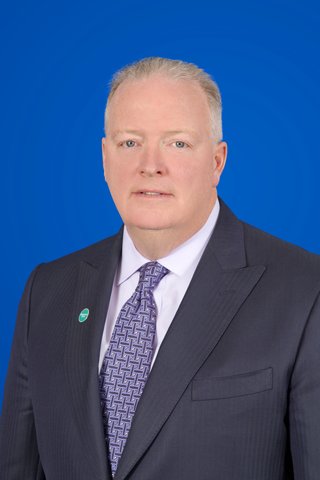
Thomas R. Quinn, Jr.
About Thomas R. Quinn, Jr.
President & CEO of Orrstown Financial Services since 2009; age 66, with prior senior executive roles at Fifth Third Bancorp and Citigroup . Under his tenure, Orrstown completed a merger of equals with Codorus Valley Bancorp (July 1, 2024), achieved targeted 18% cost saves by year-end, increased the quarterly dividend by a cumulative $0.06 to $0.26, completed core conversion in Nov-2024, and delivered three-year TSR at the 100th percentile vs both legacy and new compensation peer groups . He plans to retire May 25, 2026; the board designated Adam Metz as successor COO and intended CEO .
Past Roles
| Organization | Role | Years | Strategic Impact |
|---|---|---|---|
| Fifth Third Bancorp | Senior executive | — | Large-bank operating experience; perspective valued by the board |
| Citigroup | Senior executive | — | Global financial services expertise; informs strategy execution |
Fixed Compensation
| Component ($) | 2022 | 2023 | 2024 |
|---|---|---|---|
| Base Salary | 694,681 | 709,154 | 732,674 |
| Cash Bonus (discretionary/integration) | — | — | 270,000 |
| Stock & RSU Awards (grant-date fair value) | 365,121 | 454,992 | 1,299,226 |
| Non-Equity Incentive (STIP cash) | 455,000 | 428,400 | 556,920 |
| Change in Pension/Deferred Comp Value | 992,095 | 1,022,734 | 1,801,847 |
| All Other Compensation | 19,801 | 22,737 | 46,967 |
| Total | 2,526,698 | 2,638,017 | 4,707,634 |
Performance Compensation
Incentive design (2024): Two objective metrics (Net Income and ROAE), each at 50% weighting across STIP and LTIP; awards earned on threshold/target/max; cash STIP subject to a credit-quality modifier; LTIP split 50% time-vested RS and 50% performance-vested RSUs measured on three-year ROAA with a TSR modifier ±20% .
| Metric | Weighting | 2023 Target | 2023 Actual | 2023 Payout | 2024 Target | 2024 Actual | 2024 Payout |
|---|---|---|---|---|---|---|---|
| Net Income ($000) | 50% | 36,500 | 36,643 (Adj.) | At Target; +20% discretionary increase | 34,000 | 52,000 (Adj.) | Max |
| ROAE (%) | 50% | 15.00 | 15.06 (Adj.) | At Target; +20% discretionary increase | 12.19 | 13.25 (Adj.) | Max |
STIP cash payouts:
| STIP % of Base | Threshold | Target | Maximum | Actual 2023 ($) | Actual 2024 ($) |
|---|---|---|---|---|---|
| CEO (Tier 1) | 25% | 50% | 75% | 428,400 | 556,920 |
LTIP equity awarded (value and shares):
| LTIP Grants | 2024 Awards for 2023 Performance | 2025 Awards for 2024 Performance |
|---|---|---|
| Time-Vested RS (value, #) | $321,293; 11,620 shares; vest 33% on 2/16/2025–2027 | $300,000; 8,918 shares; vest 33% on 2/16/2026–2028 |
| Performance RSUs (value, #) | $321,293; 11,620 units; 3-yr perf. (2024–2026) with ROAA + TSR ±20% | $300,000; 8,917 units; 3-yr perf. (2025–2027) with ROAA + TSR ±20% (subject to 2025 Plan approval) |
| Integration Perf RS | $656,640; target 18%–20% cost saves; vests 7/28/2025 if achieved | — |
Vesting schedules:
- Time-vested RS: 33% annually over three years from grant date .
- Performance RSUs: 100% cliff after three years; earned via ROAA with TSR modifier; forfeiture if ROAA below threshold .
Equity Ownership & Alignment
| Ownership Snapshot | 3/1/2024 | 3/3/2025 |
|---|---|---|
| Common Shares Beneficially Owned | 96,646 | 132,085 |
| % of Shares Outstanding | ~0.90% (96,646 / 10,701,342) | ~0.68% (132,085 / 19,505,444) |
Outstanding unvested/unearned awards (12/31/2024):
| Awards (12/31/2024) | Unvested Shares/Units (#) | Market Value ($) | Unearned Perf Shares/Units (#) | Market/Payout Value ($) |
|---|---|---|---|---|
| Thomas R. Quinn, Jr. | 52,399 | 1,918,327 (at $36.61) | 28,399 | 1,039,687 (at $36.61) |
Policies and alignment signals:
- Anti-hedging and anti-pledging: Directors and officers are prohibited from hedging or pledging Orrstown securities .
- NEO stock ownership guidelines: None for NEOs (unless also directors); director eligibility requires ≥5,000 shares—Quinn exceeds (132,085) .
- Options: No outstanding or exercisable options for NEOs as of 12/31/2024 .
Employment Terms
Employment agreement:
- Term: Five-year agreement for CEO; auto-extends annually; board extended Quinn’s term to May 25, 2026 .
- Non-compete / Non-solicit: During employment and the greater of six months post-termination or the severance period (not to exceed 24 months) .
- Good Reason definition includes material adverse change in duties/compensation or relocation ≥75 miles .
Severance (non-CIC scenarios; if terminated on 12/31/2024):
| Scenario | Cash Severance ($) | Health & Welfare ($) | Total ($) |
|---|---|---|---|
| Involuntary without Cause | 1,517,657 | 10,285 | 1,527,942 |
| Voluntary for Good Reason | 1,517,657 | 10,285 | 1,527,942 |
| Retirement | 371,280 | 2,160 | 373,440 |
| Disability | 371,280 (+ ongoing 60% salary to age 65, net of disability) | 10,285 | 381,565 |
| Death | 371,280 | 8,125 | 379,405 |
Change-in-control (CIC):
- Cash: 2.99× (base salary + highest annual cash bonus/other incentive in past 3 years); single-trigger permitted for Quinn, double-trigger for CFO; benefits for two years; immediate equity vesting if plan is silent .
- Non-compete post-CIC termination: Greater of six months post-termination or one year after CIC .
- Excise tax treatment: Quinn receives an excise tax gross-up (formula-based) across CIC, Salary Continuation, and Deferred Compensation agreements; other NEOs have a best-net cutback to avoid excess parachute payment .
CIC benefit values (as of 12/31/2024):
| Component | Amount ($) |
|---|---|
| Cash Benefit | 4,256,770 |
| Equity Acceleration (perf awards at target) | 1,918,327 |
| Health & Welfare | 65,359 |
| Total | 6,240,456 |
Deferred compensation (CEO):
- Bank contributes $100,000 monthly; accumulation rate mirrors Return on Average Tangible Equity (0–15%), distribution at 4%; projected normal retirement benefit ≈$400,000 annually, with minimum CIC/death benefit floor $2,260,638 and excise tax gross-up .
Clawbacks:
- Company adopted Compensation Recovery Policy (Rule 10D-1) and plan-level clawbacks; all unvested LTIP awards automatically clawed back if the Bank becomes less than “well-capitalized” .
Board Governance
- Role: CEO and director since 2009; Pennsylvania Banking Code requires the bank president to be a director .
- Independence: Not independent under Nasdaq rules; board has an independent Chairman; independent directors meet in executive session at least twice annually .
- Board service: Class B director; term subject to regular elections; all directors attended ≥75% of meetings in 2024 .
- Committee roles: Compensation, Audit, ERM, ALCO are composed of independent directors; Quinn is not listed as a member of these committees .
- Director compensation: As an officer, Quinn receives no director fees; director compensation is paid to non-employee directors (cash + restricted stock) .
Dual-role implications:
- CEO-director non-independence is mitigated by independent chair leadership, regular executive sessions, and independent committee oversight .
Performance & Track Record
- Strategic execution: Closed MOE with CVLY; core conversion completed Nov-2024; footprint expansion PA/MD/Baltimore; scale/liquidity enhanced .
- Financial outcomes: Adjusted net income disclosed as $56.1M (ex-merger/non-recurring) vs $36.6M in 2023; NIM 3.92% (2024) vs 3.80% (2023); loans +70% YoY; deposits +77% YoY; credit metrics improved .
- Incentive alignment: For 2024, adjusted Net Income $52.0M and adjusted ROAE 13.25% drove max payouts under STIP/LTIP initial awards, with credit quality modifier satisfied .
- Succession: Board announced intended CEO transition to Adam Metz at Quinn’s retirement date (5/25/2026) .
- Legacy issue: 2016 SEC settlement; company penalty $1M and Quinn personal penalty $100,000 with cease-and-desist; no admission of findings .
Say-on-Pay & Shareholder Feedback
- Say-on-Pay approvals: 81% in 2023; 80.5% in 2024 .
- Engagement: Company offered meetings to holders of ~45% (2023) and ~43% (2024–2025 period); shareholder feedback supported design emphasizing objective performance metrics and alignment .
Compensation Peer Group (Benchmarking)
- 2023 peer group: 22 commercial banks (assets ~$2.2–$6.0B; MD/NJ/NY/PA/VA, excluding NYC/LI) .
- 2025 peer group: 20 banks (assets ~$3.0–$11.0B; DC/DE/MD/NJ/NY/OH/PA/VA/WV; ≥10 branches; insider ownership <30%); Orrstown’s three-year TSR at the 100th percentile vs both peer sets .
Risk Indicators & Red Flags
- Excise tax gross-up: Quinn’s agreements include an excise tax gross-up; shareholder-unfriendly vs cutback provisions common among peers .
- No formal NEO ownership guidelines (except directors): reduces enforced “skin-in-the-game” expectations; mitigated by anti-hedging/anti-pledging policy .
- One-time adjustments to earnings: Exclusion of merger-related costs and acquired loan provisioning increased adjusted performance used for awards; transparent in CD&A .
- Prior SEC action: 2016 settlement and penalty for company and Quinn .
Investment Implications
- Pay-for-performance alignment is strong: objective Net Income/ROAE drive near-term awards; ROAA and TSR govern three-year vesting; credit-quality modifier adds risk discipline .
- Retention risk moderate: clear succession (Metz named), significant unvested equity and deferred comp balances, and non-compete provisions support continuity through 2026 .
- Governance mitigants offset dual-role concerns: independent chair, committee independence, and shareholder engagement; however, excise tax gross-up and absence of NEO ownership guidelines are notable governance trade-offs .
- Equity supply: New 2025 Stock Incentive Plan authorizes 440,000 shares with best-practice provisions (no evergreen, min vesting, no repricing) — modest potential dilution and robust controls .