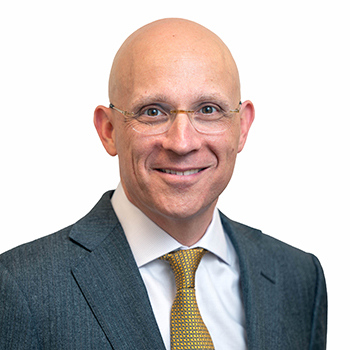
Jonathan H. Cohen
About Jonathan H. Cohen
Chief Executive Officer and Director of Oxford Square Capital Corp. since 2003; age 60 as of the 2025 proxy. Prior roles include leading technology equity research groups at Wit Capital, Merrill Lynch, UBS, and Smith Barney. Education: B.A. in Economics (Connecticut College) and M.B.A. (Columbia University). Cohen also serves as CEO/Director of Oxford Lane Capital Corp. (since 2010), CEO/Director of Oxford Park Income Fund, Inc. (since 2023), and CEO of Oxford Gate Management, LLC (since 2018) .
OXSQ does not pay executive officers directly; CEO economics flow through the advisory/administration structure with Oxford Square Management and Oxford Funds, including a base advisory fee and incentive fees, modified by a 2016 fee waiver that adds total-return constraints and lowers the base fee rate for calculation purposes .
Past Roles
| Organization | Role | Years | Strategic Impact |
|---|---|---|---|
| Wit Capital / Merrill Lynch / UBS / Smith Barney | Managed technology equity research groups | Not disclosed | Built and led technology research teams; deep markets and credit experience |
External Roles
| Organization | Role | Years | Strategic Impact |
|---|---|---|---|
| Oxford Lane Capital Corp. (NasdaqGS: OXLC) | CEO and Director | Since 2010 | Leadership of CLO-focused closed-end fund; cross-platform market insights |
| Oxford Lane Management, LLC | CEO | Since 2010 | Adviser leadership for OXLC |
| Oxford Park Income Fund, Inc. | CEO and Director | Since 2023 | CEO of non-traded registered closed-end fund |
| Oxford Park Management, LLC | CEO | Since 2023 | Adviser leadership for Oxford Park |
| Oxford Gate Management, LLC and related Oxford Gate funds | CEO | Since 2018 | CEO of private funds adviser; CLO equity/junior debt expertise |
| Oxford Bridge II, LLC | CEO | Since 2018 | Private fund leadership |
| Connecticut College | Board of Trustees member | Not disclosed | Governance experience and network |
Fixed Compensation
OXSQ does not directly compensate executive officers; compensation flows via Oxford Square Management (adviser) and Oxford Funds (administrator).
| Component | 2023 | 2024 | Notes |
|---|---|---|---|
| Base Salary (OXSQ) | Not paid by OXSQ | Not paid by OXSQ | CEO compensation realized via adviser profits; no direct OXSQ pay |
| Cash Bonus (OXSQ) | Not paid by OXSQ | Not paid by OXSQ | No direct cash bonus from OXSQ |
| Director Fees (Cohen) | $0 | $0 | Interested directors receive no director fees |
| Admin-comp reimbursements (CFO/Admin) | ~$825,000 | ~$747,000 | Reimbursed to Oxford Funds; not CEO pay |
Performance Compensation
CEO economics at OXSQ are tied to advisory fee structures, not to company-paid executive plans. Key elements:
| Metric | Weighting | Target/Hurdle | Actual/Payout | Vesting |
|---|---|---|---|---|
| Base Advisory Fee (pre-waiver) | N/A | 2.00% of gross assets | Payable quarterly in arrears | None (fees are period-based) |
| Base Advisory Fee (2016 Waiver calc) | N/A | 1.50% of gross assets; no fee on uninvested new proceeds | Lower of original vs waiver series applied each quarter | None |
| Net Investment Income Incentive Fee (pre-waiver) | 100% of NII over hurdle | Quarterly hurdle based on 5-year UST + 5% capped at 10%; approx. 8.84% annual for 2024 | 20% of Pre-Incentive Fee NII above quarterly hurdle | None |
| Net Investment Income Incentive Fee (2016 Waiver calc) | 100% catch-up to 2.1875% quarterly, then 20% thereafter | Fixed 7.00% annual hurdle (1.75% quarterly) + Total Return Requirement over rolling 12 quarters | Only payable if TRR test met; then catch-up then 20% above 2.1875% | None |
| Capital Gains Incentive Fee | 20% | 20% of annual net realized capital gains (net of realized losses and unrealized depreciation) | Accrued under GAAP hypothetical liquidation; paid per agreement outcomes | None |
Key alignment considerations:
- The 2016 fee waiver introduces a fixed 7.00% hurdle and a 12-quarter total-return requirement that can block NII-driven incentive fees when total return is insufficient .
- Risk that PIK interest/dividends inflate gross assets/NII and therefore fees even without cash receipts, potentially misaligning timing; adviser not required to reimburse fees on accrued income not collected .
Equity Ownership & Alignment
| Year (Record Date) | Shares Beneficially Owned | % of Class | Dollar Range | Notes |
|---|---|---|---|---|
| 2024 (June 28, 2024) | 2,273,816 | 3.6% | Over $100,000 | Includes 1,327 shares via Oxford Funds; 62,705,628 shares outstanding |
| 2025 (June 25, 2025) | 2,274,030 | 3.0% | Over $100,000 | Includes 1,541 shares via Oxford Funds; 76,027,372 shares outstanding |
- Hedging policy prohibits hedging/monetization except covered calls with pre-clearance; no pledging disclosures identified .
- Cohen, as an “interested director,” receives no director equity grants from OXSQ; ownership reflects personal/affiliated holdings .
Employment Terms
| Item | Detail |
|---|---|
| Employment start date | CEO and Director since 2003 |
| Employment contract with OXSQ | None; neither Cohen nor Rosenthal is subject to an employment contract |
| Adviser Agreement | Annual Board re-approval; re-approved April 22, 2025 and April 25, 2024 |
| Termination rights | Investment Advisory Agreement may be terminated by either party on 60 days’ written notice |
| Non-compete / Non-solicit | Not disclosed |
| Change-of-control economics | Advisory fees structure governs; no company-paid executive parachutes disclosed |
| Clawbacks | Not disclosed |
Board Governance
| Attribute | Detail |
|---|---|
| Board service | Director since 2003; classified, staggered board |
| Independence status | Interested Director (CEO; managing member of Oxford Funds; affiliation to adviser) |
| Chairman | Steven P. Novak, independent, serves as Chairman |
| Committees | Audit, Valuation, Nominating & Corporate Governance, and Compensation committees are composed solely of independent directors; Cohen not a member |
| Committee chairs | Audit: Barry A. Osherow; Nominating/Valuation: George Stelljes III; Compensation: Steven P. Novak |
| Attendance | Each incumbent director attended at least 75% of Board/committee meetings in 2024 |
| Executive sessions | Independent directors meet regularly; CCO meets in executive session at least quarterly |
| Insider trading/hedging | Hedging prohibited except covered calls with pre-clearance |
Director Compensation
| Year | Fees Earned or Paid in Cash | All Other Compensation | Total |
|---|---|---|---|
| 2023 | $0 | — | $0 |
| 2024 | $0 | — | $0 |
Compensation Structure Analysis
- Year-over-year shift in cash vs. equity: Not applicable; OXSQ does not directly compensate executives; compensation is via adviser fee economics .
- Incentive mechanics: Base fee and NII/cap gains incentive fees; 2016 waiver lowers base fee calculation and adds total-return constraint, improving pay-for-performance alignment versus income-only incentives .
- Potential misalignment risks: Income-based incentives and PIK can increase fees despite NAV declines; fees are charged on gross assets (including leverage), creating sensitivity to asset growth and PIK accruals .
- No repricing/modification of equity awards: OXSQ reported no option grants in 2024; no executive equity plan .
Related Party Transactions
- Adviser and administrator are affiliates (Oxford Square Management; Oxford Funds). Charles M. Royce (director) holds a minority, non-controlling interest in the adviser .
- Annual re-approval of Investment Advisory Agreement; Board deemed fees reasonable versus peers .
- SEC co-investment order (June 14, 2017) permits negotiated co-investments with affiliates subject to “required majority” independent director approvals; new exemptive application pending to supersede the prior order .
- Allocation policy governs investment opportunities across OXSQ affiliates with pro-rata reductions when insufficient capacity .
Risk Indicators & Red Flags
- Reliance risk: Key person dependence on Cohen and Rosenthal; adviser can resign on 60 days’ notice .
- Fee risks: Base fee payable regardless of NAV declines; NII incentive fee could be payable during net capital loss quarters if TRR met .
- PIK/Accrual risk: Fees based on accrued income not collected; potential liquidation to pay fees .
- Section 16(a) compliance: One transaction reported late in 2023 for Cohen (and others) due to inadvertent oversight, later corrected via Form 4 .
Equity Ownership & Skin-in-the-Game Commentary
- Cohen’s absolute shareholding remained essentially stable year-over-year (2,273,816 vs. 2,274,030), while percentage ownership declined from 3.6% to 3.0% due to higher shares outstanding (ATM issuance, rights offering), which can dilute relative alignment but does not indicate forced selling pressure .
- No disclosure of pledging; hedging limited, reducing alignment risks from monetization strategies .
Investment Implications
- Alignment: Externally managed BDC with fee structures that now include a 12-quarter total-return test and a lower base-fee calculation, improving pay-for-performance versus income-only frameworks; however, fees on gross assets and PIK accruals can create incentives to favor asset/NII growth over NAV stability .
- Retention/continuity: No employment contract for CEO; advisory agreement can be terminated on 60 days’ notice, and Board re-approves annually, implying both continuity risk and governance oversight .
- Governance: Independent chair and fully independent key committees mitigate dual-role concerns (CEO + director). All committee chairs are independent, and executive sessions occur regularly, supporting oversight of conflicts across affiliated platforms .
- Ownership: Cohen’s material personal stake and long tenure support alignment; percentage dilution reflects capital raises, not insider selling; no pledging disclosed; hedging restricted .
- Trading signals: Externally managed BDCs warrant close monitoring of adviser fee accrual patterns (PIK vs. cash), net asset value trajectory versus NII-driven distributions, and co-investment/allocation decisions across affiliated funds, given the conflict framework and allocation policy .