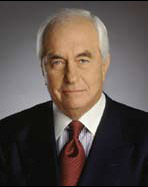
Roger Penske
 PENSKE AUTOMOTIVE GROUP
About Roger Penske
Roger S. Penske (age 88) is Chair of the Board and Chief Executive Officer of Penske Automotive Group (PAG), roles he has held since May 1999, and he serves on the Board’s Executive Committee . In 2024, PAG generated $30.5B revenue, $1.486B EBITDA, and EPS of $13.74, with five‑year total shareholder return up ~235% versus 192% for peers, evidencing multi‑year value creation despite a downshift in 2024 versus 2023 on EBITDA and net income . PAG is a NYSE “controlled company” via Penske Corporation’s voting agreement with Mitsui; a 2024 Voting Agreement requires votes above 43.57% to mirror outside shareholders, partially mitigating control concerns .
Past Roles
| Organization | Role | Years | Strategic Impact |
|---|---|---|---|
| Penske Automotive Group | Chair & Chief Executive Officer | 1999–present | Led portfolio growth across auto retail and commercial truck; long‑tenured CEO/Chair with deep OEM relationships . |
| Penske Corporation | Chair & Chief Executive Officer | 1969–present | Principal shareholder influence over PAG strategy; group synergies and related‑party transactions . |
| Penske Truck Leasing Corporation (PTS) | Chair of the Board | Since 1982 | Governance of 28.9%-owned affiliate providing recurring equity income and distributions to PAG . |
External Roles
| Organization | Role | Years | Notes |
|---|---|---|---|
| Penske Corporation | Chair & CEO | 1969–present | Private holding company; largest PAG shareholder . |
| Penske Transportation Solutions (PTS) | Chair | Current | PAG recorded $198.0M equity earnings from PTS in 2024; PTS operates >435,000 units fleet . |
| Universal Technical Institute (UTI) | Director (past 5 years) | Prior service | Prior public company board experience . |
Fixed Compensation
| Year | Base Salary ($) | Bonus ($) | Stock Awards ($) | All Other Compensation ($) | Total ($) |
|---|---|---|---|---|---|
| 2024 | 1,750,000 | — | 6,000,000 | 1,027,453 (primarily dividends on unvested RS) | 8,777,453 |
| 2023 | 1,600,000 | — | 5,000,000 | 828,439 | 7,428,439 |
| 2022 | 1,600,000 | — | 5,000,000 | 700,613 | 7,300,613 |
- CEO and President do not receive cash bonuses; equity awards are granted in lieu of cash based on LTI performance .
- Company uses restricted stock (not options) with back‑weighted vesting; no recent option grants .
Performance Compensation
2024 LTI structure and outcomes (paid Feb 2025 in restricted stock; CEO award $5.352M; 34,361 shares at $155.76 average) :
| Metric | Weight | Target | Actual/Result | Payout (% of Weight) |
|---|---|---|---|---|
| EBITDA | 20% | $1,646M (100%); $1,235M (0%); $1,721M (200%) | $1,486M | 12.2% |
| EPS (Comparative) | 10% | $14.87 (100%); >$15.61 (300%); <$11.15 (0%) | $13.74 | 7.0% |
| Stock price vs peers | 10% | Meet/exceed 2–5 of 5 peers scales 75–200% | 0 of 5 | 0.0% |
| U.S. customer satisfaction | 10% | 90% dealerships meet/exceed OEM reqs | Exceeds | 10.0% |
| No material weaknesses | 10% | Condition | Achieved | 10.0% |
| ESG – Global turnover | 10% | ≤ prior year +2% | Achieved | 10.0% |
| ESG – Gender diversity | 10% | ≥ NADA auto retail | Achieved | 10.0% |
| Committee discretion | 20% | Committee judgment | Awarded | 20.0% |
| Supplemental ESG – NPS | 10% | PAG NPS > peer NPS | Achieved | 10.0% |
| Total | 110% | — | — | 89.2% |
- 2023 plan paid 95% overall; the committee adjusted EBITDA/EPS for a $40.7M goodwill impairment and higher floorplan interest; CEO received $4.75M (31,722 shares at $149.74) .
- 2025 plan targets were reduced vs 2024 (EBITDA 100% at $1,548M vs $1,646M; EPS 100% at $13.87 vs $14.87), potentially easing hurdle rates; weighting remains heavy to EBITDA/EPS/ESG and discretion (110% total) .
Equity Ownership & Alignment
| Item | Detail |
|---|---|
| Total beneficial ownership | 34,462,799 shares (51.6% of outstanding) as of Mar 20, 2025; includes shares deemed owned by Penske Corporation; contains 241,369 unvested restricted shares . |
| If including Mitsui voting right | Would be 47,785,004 shares (71.6%) if Mitsui‑owned shares were deemed beneficially owned under stockholders agreement circumstances . |
| Unvested RS vesting schedule | 101,328 (Jun 1, 2025); 63,295 (Jun 1, 2026); 38,832 (Jun 1, 2027); 22,734 (Jun 1, 2028); 17,180 (Jun 1, 2029) . |
| Dividends on unvested RS | $977,452 received in 2024 (included in “All Other Compensation”) . |
| Ownership guidelines | CEO 8x salary; directors 10x annual retainer; excludes pledged shares; RS count toward compliance . |
| Hedging/10b5‑1 | Hedging/short selling prohibited; no officer/director Rule 10b5‑1 plans in 2024/2025 YTD . |
| Pledging | 50% of Penske Corporation’s shares deemed owned are pledged under a loan facility (red flag); guidelines exclude pledged shares from meeting ownership minima . |
Implications for selling pressure:
- Significant annual RS vesting tranches on June 1 could create episodic liquidity events; CEO does not use 10b5‑1 plans per 2024/2025 disclosure, which can concentrate activity around open windows .
Employment Terms
- No employment agreement; no pre‑arranged severance; no SERP; compensation clawback policy compliant with NYSE restatement rules .
- Change‑of‑control: restricted stock vests; no guaranteed CoC cash multiples; options are not used .
- Perquisites (2024): primarily dividends on unvested RS and participation in director charitable matching program ($50,000) .
Board Governance (service history, committees, independence)
- Board service: Director since 1999; Chair & CEO; Executive Committee Chair; not independent; Lead Independent Director is H. Brian Thompson .
- Committee service/attendance: 2024 Board attendance 98%; independent directors populate all key committees (Audit, Compensation & Management Development, Nominating & Corporate Governance) .
- Controlled company: More than 50% voting power held by Penske Corporation under stockholders agreement with Mitsui; PAG nevertheless maintains committees comprised solely of independent directors .
- Dual‑role implications: Combined CEO/Chair with majority control raises independence concerns; mitigants include a Lead Independent Director who presides over executive sessions and coordinates outside directors; a 2024 Voting Agreement requires Penske Corporation to vote “excess” voting securities (above 43.57%) proportionally with unaffiliated shareholders, adopted in response to stockholder litigation over share repurchases .
Related Party Transactions (conflicts, governance)
- Stockholders agreement with Mitsui through March 26, 2030; mutual board voting and tag‑along rights; Mitsui board observer and senior executive designation rights above ownership thresholds .
- Voting Agreement (Jan 23, 2024): Penske Corporation votes any excess stake above 43.57% in proportion to outside shareholder votes; litigation was dismissed as moot; PAG paid $995,000 in fees/expenses to plaintiff and counsel .
- PTS (28.9% owned): $98.4M distributions to PAG in 2024; ongoing commercial ties (e.g., commissions, asset transactions, consignment agreement) .
- Other transactions: Sponsorship of Porsche Penske Motorsport at ~$4.0M/year; office leasing and services with Penske Corporation; acquisition of Don Allen dealerships from a Penske affiliate in 2024 (final price $11.54M) .
- Oversight: Related‑party transactions reviewed under a written policy by Audit Committee/Board, with thresholds and recurring review .
Say‑on‑Pay & Compensation Committee
- Say‑on‑Pay approval: Over 98% in 2024 program (voted in 2025 proxy); over 99% in prior year vote .
- Compensation Committee: Chaired by Lead Independent Director H. Brian Thompson; uses peer benchmarking (Asbury, AutoNation, Group 1, Lithia, Sonic) but no targeted quartile; no outside consultant retained in 2024; emphasizes RS grants that vest 15%/15%/20%/50% .
Performance & Track Record (select metrics)
| Metric | 2020 | 2021 | 2022 | 2023 | 2024 |
|---|---|---|---|---|---|
| Net Income ($M) | 545.3 | 1,192.7 | 1,386.2 | 1,058.6 | 923.4 |
| EBITDA ($M) | 934.1 | 1,797.8 | 2,056.9 | 1,653.1 | 1,485.7 |
| TSR (value of $100) | 120.06 | 221.35 | 241.76 | 344.02 | 335.24 |
| Peer TSR (value of $100) | 152.87 | 200.63 | 174.37 | 253.43 | 292.01 |
- 2024 highlights: revenue +3% to $30.5B; service/parts revenue >$3B (record); EPS $13.74; quarterly dividend increased for the 17th straight time to $1.22 .
Director/Executive Compensation Governance Features
- Clawback policy; prohibition on hedging/shorting; stock ownership guidelines (CEO 8x salary; directors 10x retainer); no option usage; RS only; blackouts/pre‑clearance for trading; no 10b5‑1 plans by officers/directors in 2024/2025 YTD .
Equity Award Vesting Schedule (CEO unvested RS as of 12/31/24)
| Vest Date | Shares |
|---|---|
| Jun 1, 2025 | 101,328 |
| Jun 1, 2026 | 63,295 |
| Jun 1, 2027 | 38,832 |
| Jun 1, 2028 | 22,734 |
| Jun 1, 2029 | 17,180 |
Compensation Structure Analysis (signals)
- Mix: Highly equity‑centric at CEO/President level (no cash bonus), aligning with TSR but with meaningful committee discretion (20% of 2024/2025 plan) .
- Risk calibration: Back‑weighted vesting (70% in years 3–4) strengthens retention; absence of severance/SERP reduces downside for shareholders but increases executive exposure to equity performance .
- Metric rigor: 2025 EBITDA/EPS targets reduced vs 2024 (potentially easier), while ESG and CSI guardrails remain; peer TSR component persists but small (10%) .
- Vehicles: No option repricing risk as options are not used (RS only) .
Investment Implications
- Alignment is exceptionally high given 51.6% beneficial ownership, ongoing RS awards, and strong historical TSR; however, dual Chair/CEO role and controlled‑company status concentrate power, making the Lead Independent Director’s role and the 2024 Voting Agreement important mitigants .
- The 50% pledge of Penske Corporation’s PAG shares is a structural red flag (collateral/liquidity risk) but is excluded from ownership guideline calculations; monitor credit markets and any changes to loan terms affecting pledged shares .
- Near‑term insider supply risk is tied to annual June 1 RS vestings (notably ~101K shares in 2025), though no 10b5‑1 plans were in place in 2024/2025 YTD; watch trading windows around vest dates .
- 2025 performance target reductions suggest potential for higher payout probability if operating trends stabilize, but macro headwinds (floorplan interest, used vehicle dynamics, PTS earnings normalization) could cap upside; discretionary component provides committee flexibility .
- Say‑on‑pay support remains very strong (>98%), indicating low near‑term governance pressure; continued transparency on related‑party dealings (PTS, corporate services, sponsorships) and adherence to the Voting Agreement are key to preserving investor confidence .