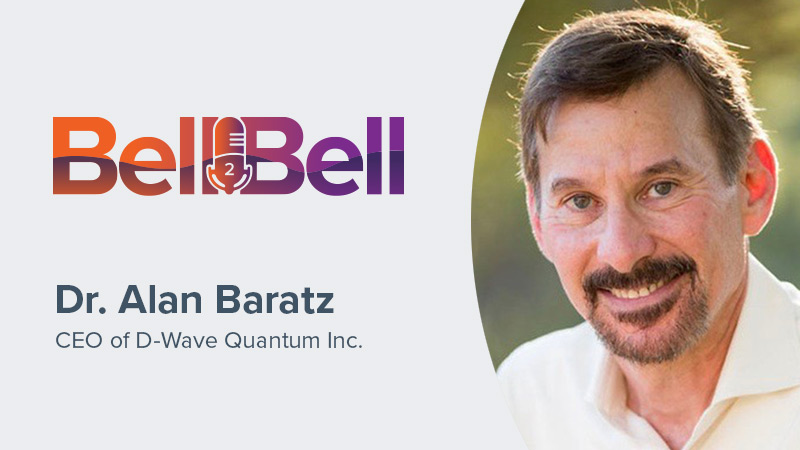
Alan Baratz
About Alan Baratz
Alan E. Baratz, age 70, is President, CEO, and a Class I Director of D‑Wave Quantum Inc. (QBTS). He became CEO of D‑Wave Systems in January 2020 and of D‑Wave Quantum at the August 2022 merger close. He holds a Ph.D. in Computer Science from MIT and previously led JavaSoft at Sun, driving Java’s adoption across Fortune 1000 enterprises. His biography highlights >25 years in product development and go‑to‑market roles at Sun/Java, Symphony, Avaya, Cisco, IBM, as well as CEO roles at Versata, Zaplet, and NeoPath Networks, and a managing director role at Warburg Pincus .
Board role and governance: Baratz is a management director (not independent). The board chair is independent (Steven M. West), and independent directors meet in executive session at every regularly scheduled board meeting—mitigating common CEO+Chair dual-role concerns (which QBTS does not have) .
Past Roles
| Organization | Role | Years | Strategic impact |
|---|---|---|---|
| Sun Microsystems (JavaSoft) | First President, JavaSoft | Not disclosed | Scaled Java from infancy to mission-critical platform in ~80% of Fortune 1000, broadening developer and enterprise adoption |
| Versata | CEO/President; Director | CEO years not disclosed; Director 2003–2005 | Led enterprise software operations; public board experience |
| Zaplet | CEO/President | Not disclosed | Led early-stage software company operations |
| NeoPath Networks | CEO/President | Not disclosed | Led product and go‑to‑market for storage/networking startup |
| Avaya, Cisco, IBM, Symphony | Executive roles | Not disclosed | Senior operating roles across communications, networking, and enterprise software |
| Warburg Pincus LLC | Managing Director | Not disclosed | Growth investing and portfolio leadership |
External Roles
| Organization | Role | Years | Strategic impact |
|---|---|---|---|
| TRW Inc. | Director | 2002 | Public company governance experience |
| Versata | Director | 2003–2005 | Public company governance experience |
Fixed Compensation
| Metric | 2022 | 2023 | 2024 |
|---|---|---|---|
| Base Salary ($) | 491,667 | 575,000 | 575,000 |
| Target Bonus (% of base) | 100% (effective 9/1/2022) | 100% | 100% |
| Actual Cash Bonus ($) | 273,333 | 316,250 | 517,500 (paid Feb 14, 2025 for FY24) |
| Other Cash/Perqs | $1,348 (tax prep) | — | — |
Total reported comp: $10,816,348 (2022); $1,045,150 (2023); $1,722,500 (2024) .
Performance Compensation
- Annual incentive plan: Based on “corporate objectives” (product/technology development, financial metrics, customer sales) and individual goals; specific weights and targets not disclosed. FY24 bonus paid $517,500 vs. 100% target opportunity on $575,000 base .
- Clawback: NYSE‑compliant policy requires recovery of erroneously awarded incentive comp after a restatement; company’s 2023 restatement did not require recovery because incentives were based on operational metrics unaffected by the adjustments .
| Plan/Instrument | Metric(s) | Weighting | Target | Actual | Payout/Vesting |
|---|---|---|---|---|---|
| FY2024 AIP | Corporate objectives and personal goals | Not disclosed | 100% of base | Not disclosed | $517,500 cash (paid 2/14/25) |
Equity awards (RSUs; see vesting below) comprise the majority of long-term incentives; option usage has been minimal post‑merger aside from a fully vested bonus grant in Jan 2024 .
Equity Ownership & Alignment
- Beneficial ownership: 4,725,648 common shares (1.77% voting power) as of April 9, 2025 .
- Anti‑hedging/pledging: Policy prohibits hedging and pledging of company stock—reducing misalignment/forced selling risk .
- Ownership guidelines: Compensation Committee monitors executive stock ownership guidelines, though specific multiples were not disclosed .
| Item | Detail |
|---|---|
| Options outstanding (exercisable) | 2,920,208 @ $0.91 expiring 5/5/2030; 213,232 @ $0.8455 expiring 1/10/2034 |
| Unvested RSUs (12/31/2024) | 843,750 units; market value $7,087,500 at $8.40 share price (12/31/2024) |
| Beneficial ownership (%) | 1.77% of total voting power (4/9/2025) |
| Hedging/Pledging | Prohibited for directors, officers, employees |
Vesting schedules (selected CEO awards):
- 1,500,000 RSUs (Long‑Term Retention, granted 10/27/2022): 50% on 1st anniversary; remaining 50% in two equal annual tranches over years 2–3 .
- 1,000,000 RSUs (Special Recognition, 10/27/2022): 50% on 1st anniversary; 50% on 2nd anniversary .
- 300,000 RSUs (3/27/2023): 25% at 1st anniversary (3/27/2024); remainder in 12 equal quarterly installments through 3/27/2027 .
- 300,000 RSUs (3/27/2024): 25% at 1st anniversary (3/27/2025); remainder in 12 equal quarterly installments through 3/27/2028 .
- As of 12/31/2024, 843,750 RSUs remained unvested; of these, 375,000 vest on 10/27/2025; 168,750 vest quarterly through 3/27/2027; and 300,000 follow the 3/27/2024 refresh schedule to 3/27/2028 .
Insider selling pressure indicators:
- Significant quarterly RSU vesting through March 2028 could create periodic supply; however, pledging and hedging are prohibited, and the CEO holds 1.77% beneficially, supporting alignment .
Employment Terms
- Agreement: Amended and restated employment agreement (Jan 2020; amended 10/27/2022) .
- Base/bonus: Base increased to $575,000 effective 9/1/2022; target bonus 100% of base .
- Severance (without cause): 12 months’ base salary plus a lump‑sum target bonus equal to 100% of base (lump sum and/or continuance), subject to conditions .
- Equity acceleration:
- RSUs: If terminated without cause, portion scheduled to vest in next 12 months vests immediately (award‑specific) .
- 2022 Plan CoC provisions: If awards are not assumed in a change in control, all unvested options/RSUs vest in full (subject to performance treatment). If awards are assumed and the executive is terminated without cause within 12 months post‑CoC, unvested options/RSUs vest in full (subject to performance treatment) .
- Legacy options: On a CoC, 24 months of option vesting accelerate; if terminated without cause within 12 months post‑CoC, the remaining unvested options fully vest .
- Post‑termination option exercise: Extended from 90 days to one year after termination (acknowledged Oct 23, 2023) .
- Restrictive covenants: Confidentiality, invention assignment, and 1‑year non‑solicitation of employees .
Board Governance (Director Service, Independence, Committees)
- QBTS Board service: Director since January 14, 2020; Class I term (expires at 2026 annual meeting) .
- Independence: Not identified as independent; board determined six other directors are independent .
- Committees: CEO/Director Baratz is not listed on audit, compensation, or nominating committees .
- Leadership structure: Independent Chair (Steven M. West); independent directors hold executive sessions at every regularly scheduled meeting .
- Attendance: Board met 10 times in 2024; each director attended at least 75% of applicable meetings .
- Director compensation policy (non‑employee): Cash retainer $35k; additional committee chair/member stipends; annual RSU grant ~$140k; Baratz is an employee director and thus not subject to non‑employee director pay .
Director Compensation (as Director)
- Baratz’s compensation is reported under executive compensation (employee director). The non‑employee director compensation framework is disclosed separately (see above); no additional director retainers are indicated for employee directors .
Say‑on‑Pay & Shareholder Feedback
- 2024 and 2025 proxies did not include an advisory say‑on‑pay proposal; ballots focused on director elections and auditor ratification (2024 also sought officer exculpation) .
- 2024 annual meeting results disclosed by 8‑K did not include a say‑on‑pay item .
Compensation Structure Analysis
- Shift to RSUs: Post‑merger CEO equity heavily RSU‑based (1.5M retention + 1.0M recognition in 2022; 300k annual refreshes in 2023 and 2024), with minimal new options aside from a fully vested 2023 bonus option grant in Jan 2024—indicating a move from options to time‑based RSUs (lower risk, clearer retention) .
- At‑risk mix: High equity weighting with multi‑year vesting; FY24 cash bonus near target ($517.5k vs. $575k target), reflecting operational goal achievement; specific performance metrics/weights not disclosed .
- Clawback: Enforced policy; 2023 restatement did not trigger recovery due to metric design (operational vs. financial reporting measures) .
- No tax gross‑ups or perquisites beyond nominal tax prep reimbursement previously disclosed .
Risk Indicators & Red Flags
- Accounting restatement (2023): Impacted non‑cash/non‑operating items; did not affect operational metrics used for incentives; clawback evaluation concluded recovery not required .
- Anti‑hedging/pledging and insider trading controls in place .
- Related party transactions disclosed (sponsor notes, term loan) but not tied to Baratz personally .
Equity Grants and Vesting Detail (CEO)
| Grant | Type | Grant date | Size | Vesting |
|---|---|---|---|---|
| Long‑Term Retention | RSU | 10/27/2022 | 1,500,000 | 50% at 1st anniversary; remaining 50% in two equal annual tranches over Y2–Y3 |
| Special Recognition | RSU | 10/27/2022 | 1,000,000 | 50% at 1st anniversary; 50% at 2nd anniversary |
| Annual Refresh | RSU | 3/27/2023 | 300,000 | 25% at 1st anniversary (3/27/2024); remaining in 12 equal quarterly installments through 3/27/2027 |
| Bonus (FY2023) | Options (fully vested) | 1/10/2024 | 213,232 | Fully vested at grant; strike $0.846; expires 1/10/2034 |
| Bonus (FY2023) | RSU (fully vested) | 1/10/2024 | 170,469 | Fully vested at grant |
| Annual Refresh | RSU | 3/27/2024 | 300,000 | 25% at 1st anniversary (3/27/2025); remaining in 12 equal quarterly installments through 3/27/2028 |
Employment Contracts, Severance, and CoC Economics
- Severance: If terminated without cause—12 months’ base (lump sum and/or continuance) plus a lump‑sum target bonus equal to 100% of base .
- RSU acceleration: If terminated without cause, RSUs scheduled to vest in the next 12 months vest immediately (award‑specific) .
- 2022 Plan CoC: If awards not assumed—full vesting; if assumed and terminated without cause within 12 months—full vesting; performance awards vest at actual/target per committee determination .
- Legacy option CoC: 24 months of vesting accelerate at CoC; if terminated without cause within 12 months post‑CoC, remaining unvested options fully vest .
- Post‑termination option exercise: Extended to one year after termination (acknowledged Oct 23, 2023) .
- Covenants: Confidentiality, invention assignment, and 1‑year non‑solicitation .
Board Service History and Dual-Role Implications
- Board class/tenure: Class I director since Jan 14, 2020; term to 2026 meeting .
- Governance mitigants: Independent Chair; independent executive sessions every regular meeting; Baratz not serving on audit/comp/nominating committees .
- Independence: Not designated as independent; six other directors are independent .
Investment Implications
- Alignment: 1.77% beneficial ownership and anti‑pledging/hedging policy show meaningful skin‑in‑the‑game with reduced financing risk from margin pledges; however, significant RSU tranching through March 2028 can create periodic sell‑side supply as awards vest .
- Retention: Multi‑year RSU structure plus extended post‑termination option exercise and severance/CoC protections provide retention and transition stability—supportive for long commercialization cycles in quantum .
- Pay‑for‑performance transparency: The company discloses categories of goals but not weights/targets; FY24 bonus near target suggests strong operational progress but limits external assessment granularity. Introduction of a robust clawback and restatement outcome (no recovery) are positives for governance hygiene, though restatements remain an overhang risk factor .
- Governance: Independent chair and fully independent key committees mitigate dual‑role concerns. No say‑on‑pay vote to gauge shareholder sentiment; investors may push for enhanced KPI disclosure and explicit ownership guidelines over time .